Candice Horbacz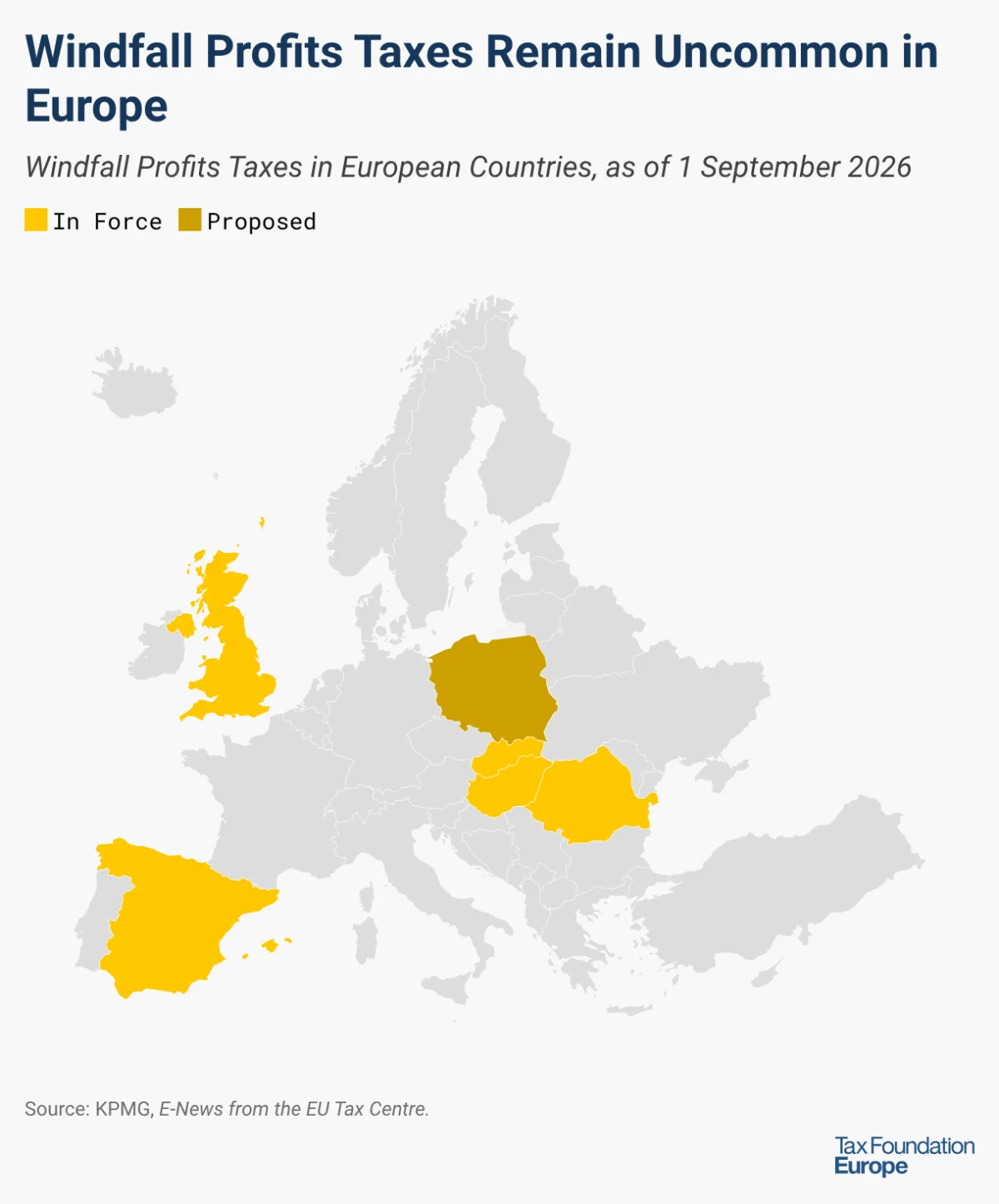
As the European Union’s economy navigates the tumultuous aftermath of the energy price shock triggered by Russia’s full-scale invasion of Ukraine, renewed geopolitical tensions in the Middle East have once again sent ripples through global oil and gas markets, constraining supplies and driving up energy prices. This cyclical volatility has reignited policy debates around windfall profit taxes – a one-time levy designed to capture large, unexpected profits accrued by companies or industries under extraordinary economic conditions. Policymakers, grappling with the dual challenges of energy security and consumer protection, are revisiting these controversial fiscal tools as a potential remedy for the latest market disruptions.
The Genesis of EU-Wide Windfall Tax Proposals
The concept of a pan-European windfall tax gained significant traction in the wake of Russia’s invasion of Ukraine in February 2022. The conflict dramatically altered the global energy landscape, causing natural gas and crude oil prices to soar to unprecedented levels. This surge resulted in exceptionally high profits for energy companies, leading to widespread public and political pressure for governments to intervene. Many argued that these "excess profits" were not a result of increased efficiency or innovation but rather a consequence of an unforeseen geopolitical crisis, making them a legitimate target for taxation to alleviate the burden on households and businesses.
In March 2022, the European Commission, recognizing the urgency of the situation and the severe impact on consumer bills, issued its REPowerEU communication. This ambitious plan outlined measures to rapidly reduce the EU’s dependence on Russian fossil fuels and accelerate the green transition. As part of this comprehensive strategy, the Commission recommended that Member States temporarily impose windfall profits taxes on all energy providers. The proposal was carefully framed around principles of technological neutrality, meaning it shouldn’t favor one energy source over another; non-retroactivity, to avoid punishing past legitimate business decisions; and a design that would not distort wholesale electricity prices or long-term market trends, aiming for a balanced approach that would address immediate crisis needs without undermining future investment or market stability.
However, the path from recommendation to implementation proved complex, reflecting the diverse economic structures and political priorities across the bloc. By October 2022, after intense negotiations, the Council of the European Union, representing the governments of the Member States, reached a political agreement to impose an EU-wide "solidarity contribution" specifically on fossil fuel companies, encompassing the oil, gas, coal, and refining sectors. While broadly aligning with the Commission’s intent to tax exceptional profits, the Council’s design diverged in its specifics, opting for a more targeted approach on upstream fossil fuel extraction and refining rather than a broader levy on all energy providers. Concurrently, a crucial complementary measure was introduced: a cap on market revenues for electricity generators utilizing infra-marginal technologies, such as renewables, nuclear power, and lignite. These technologies typically have lower operational costs once built, meaning their electricity production costs were not directly impacted by the soaring gas prices that dictated the market-clearing price. Capping their revenues aimed to prevent these generators from accruing "excess" profits derived purely from the high gas price rather than their own increased costs or efficiencies, thereby ensuring a more equitable distribution of crisis-related profits.
Anticipated Revenue vs. Reality: A Mixed Bag of Implementation
The EU institutions had high hopes for these coordinated fiscal measures. It was anticipated that the two policies—the solidarity contribution and the revenue cap—would jointly generate approximately €140 billion. Of this, an estimated €25 billion was projected to come directly from the solidarity contribution levied on oil and gas companies. The rationale was clear: these revenues would be channelled back to consumers, partially offsetting the crushing burden of high energy bills through "non-selective and transparent measures supporting all final consumers." This direct link to consumer relief was a key selling point, designed to demonstrate that governments were actively addressing the cost-of-living crisis and ensuring that companies benefiting from the crisis contributed to its resolution.
However, the practical implementation across the diverse 27 Member States revealed significant discrepancies and challenges, highlighting the difficulties of imposing uniform fiscal policies across a heterogenous economic union. A 2025 European Commission report, retrospectively assessing the solidarity contribution between 2022 and 2023, highlighted a fragmented landscape. Sixteen Member States applied the solidarity contribution directly, demonstrating a direct adoption of the EU framework. Another eight adopted equivalent national measures, indicating a commitment to the spirit of the tax but with designs tailored to their specific legal and economic contexts.
A notable challenge emerged with three countries—Luxembourg, Latvia, and Malta—reporting having no in-scope companies. This outcome, while understandable for smaller economies with limited fossil fuel extraction or refining sectors, immediately pointed to uneven application across the bloc and raised questions about the proportionality of the measure for all Member States.
More concerning were the instances of non-compliance or zero revenue. Finland, Lithuania, and Sweden reported zero revenues from this policy to the European Commission, with no publicly available data adequately explaining this outcome. This could be attributed to various factors, including specific national tax regimes that already captured such profits, legal challenges from energy companies, the actual profits of their energy companies falling below the thresholds for the tax to apply, or administrative hurdles in implementation. Cyprus, notably, never adopted the regulation at all, underscoring the limits of EU-wide recommendations in the face of national sovereignty and domestic political considerations. Furthermore, Croatia, while implementing a windfall tax, applied it broadly across all sectors of its economy, making it impossible to disaggregate revenues specifically from the energy sector as per the EU’s solidarity contribution framework, thus complicating comparative analysis.
Despite these implementation hurdles and the fragmented adoption, the aggregated revenue collected for fiscal years 2022 and 2023 from the solidarity contribution, amounting to €26.15 billion, slightly exceeded the initial €25 billion estimate. While this might appear a numerical success, the figures mask a deeper truth: only 19 out of the 27 EU Member States provided discernible revenue data from either the solidarity contribution or an equivalent measure. This fragmentation not only complicates comprehensive analysis of the policy’s effectiveness but also raises questions about the true equity and administrative efficiency of the EU-wide approach. Moreover, the Commission’s report starkly revealed that the revenues from the solidarity contribution constituted a mere 7 percent of the total €340 billion spent by Member States on energy support measures. This figure underscores that while politically significant and symbolically important, windfall taxes played a relatively minor role in the overall financial response to the energy crisis, with the vast majority of relief coming from national budgets and other fiscal interventions. This indicates that while they generated some revenue, they were not the primary solution to the unprecedented scale of the energy crisis.
The United Kingdom’s Parallel Path
Even outside the EU, the United Kingdom, no longer a Member State, mirrored the European sentiment by implementing its own windfall profits tax. In 2022, the British government introduced the Energy Profits Levy (EPL), specifically targeting companies engaged in oil and gas extraction within its continental shelf. Initially set at 25%, and later increased to 35% to bring the total headline tax rate on UK oil and gas profits to 75% (including corporation tax and supplementary charge), the levy aimed to claw back some of the "extraordinary profits" generated by surging commodity prices. The UK’s approach shared the EU’s core objective of using exceptional profits to fund public spending or consumer relief, but it was distinct in its scope, focusing exclusively on upstream fossil fuel producers rather than a broader energy sector or infra-marginal generators. Initially framed as a temporary measure, the UK’s levy has since been extended multiple times, with its application now slated to continue until 2030, highlighting a similar struggle with the ‘temporary’ nature of such crisis-driven taxes seen within the EU and raising concerns among energy companies about long-term investment certainty.
A Shifting Focus: From Energy to Finance
As energy markets began to stabilize and the exceptional profits of oil, gas, and coal sectors tapered off, some European countries pivoted their attention to another sector perceived to be benefiting disproportionately from prevailing economic conditions: the banking and financial sector. This shift was largely driven by the rapid rise in interest rates initiated by central banks, including the European Central Bank (ECB), to combat rampant inflation. Higher interest rates typically translate into wider net interest margins for banks, leading to increased profitability, often referred to as "excess" or "unearned" profits by proponents of the tax. Consequently, a new wave of windfall profit taxes emerged, targeting financial institutions. Currently, Hungary, Romania, Slovakia, and Spain have extended the scope of their windfall profits taxes to cover these sectors, citing reasons such as supporting public services or alleviating cost-of-living pressures.
The structures and tax rates of these new, and indeed the existing, European windfall taxes exhibit significant heterogeneity, reflecting national fiscal traditions and policy priorities. Rates range from a modest 0.5 percent on specific banking revenues in Romania to a proposed 60 percent on certain energy company profits in Poland, showcasing a wide spectrum of policy approaches. This divergence creates a complex regulatory environment and can lead to uneven competitive landscapes across the single market, potentially influencing investment decisions and operational strategies for multinational companies, and raising questions about market harmonization.
Design Flaws and Mounting Economic Concerns
Beneath the surface of revenue collection, many of these "windfall profit taxes" have been criticized by economists and industry experts for their flawed design, often extending beyond the strict definition of merely taxing unexpected, supernormal profits. For oil and gas companies, the EU’s regulation defined the windfall tax base as the difference between current profits and profits generated over a baseline period, typically the average of the previous three to five years. However, critics argue that these incremental profits are not necessarily "excess" or "supernormal" returns in an economic sense; they can reflect increased investment in exploration and production, efficiency gains, or simply market-driven price adjustments that are part of normal business cycles. Taxing these profits risks double taxation of regular, legitimately earned income, potentially disincentivizing future investment and distorting market signals crucial for supply.
A fundamental critique centers on the definition of the tax base itself. In many instances, the tax design does not exclusively capture the true windfall profits generated by specific spikes in energy and oil prices. For example, a tax on electricity sold over an arbitrarily determined price (as implemented by several European countries for infra-marginal generators) or on total sales (as seen in Spain) arguably resembles an excise tax or a revenue cap more than a genuine windfall profits tax. Such measures can penalize efficient producers, reduce overall supply by disincentivizing production beyond a certain threshold, and may not accurately target the "windfall" component of profits, potentially harming the very energy security they aim to support.
The application of windfall taxes to the banking sector has drawn particular scrutiny, especially from financial regulators. The European Central Bank (ECB), in its role as the guardian of financial stability in the eurozone, has vocally objected to such taxes. The ECB’s primary concern is that these levies not only reduce the amount of available capital within banks but also restrict their capacity to respond effectively to unforeseen financial crises or economic downturns. By eroding capital buffers, such taxes could weaken banks’ resilience, making them less able to absorb losses or extend credit to households and businesses when needed. This could, in turn, deter bank investors, raise the cost of capital for financial institutions, and ultimately hinder long-term economic growth by constricting the flow of credit essential for investment and expansion. The ECB specifically raised objections to windfall taxes imposed on banks in Spain, as well as previous measures in Lithuania and Italy, warning that they could lead to a contraction in credit supply and undermine the banking sector’s overall stability and its ability to support the real economy.
The Peril of Permanent "Temporary" Measures
A core principle enshrined in the EU regulation governing windfall profits taxes was their temporary nature. The regulation explicitly states that "the duration of the measure should be limited and tied to a specific crisis situation." This temporary characteristic is crucial, as it is intended to mitigate the long-term disincentive effects on investment and market function that permanent or long-lasting taxes can create. The understanding was that once the crisis subsided, the extraordinary measures would be lifted, allowing markets to return to normal functioning. However, this principle has been increasingly challenged in practice, giving rise to concerns about regulatory creep and uncertainty.
Several countries have shown a propensity to extend or even permanently embed these "temporary" crisis measures into their tax codes. Hungary, Slovakia, and Spain, for instance, continue to maintain such taxes in 2026, with some measures scheduled to remain in force through 2027. The United Kingdom, which introduced its windfall profits tax on fossil fuel companies in 2022, has extended its application to 2030, a duration that far exceeds the typical timeframe for a "temporary crisis measure" and has drawn significant criticism from the energy industry. Most notably, Romania’s windfall tax on banks has been made permanent, signaling a fundamental shift in its fiscal policy towards the financial sector. While other countries have indeed terminated their initial windfall taxes, the trend towards extended or permanent application in several key economies signals a worrying deviation from the original intent, creating regulatory uncertainty and potentially chilling long-term investment. Furthermore, new windfall tax proposals in Poland and Portugal are currently awaiting parliamentary approval, suggesting the debate and implementation of these taxes are far from over and may continue to shape Europe’s fiscal landscape.
Impact on Investment and the Green Transition
The flawed design and prolonged application of these windfall profits taxes have not been without consequences, particularly for investment and the critical energy transition. Research conducted by the European Parliament, drawing on historical precedents, indicates a correlation between windfall taxes and negative impacts on investment. The uncertainty introduced by such ad-hoc and potentially retroactive taxation can deter companies from committing capital to new projects, particularly those with long payback periods that require stable and predictable fiscal regimes. Investors, fearing that future profits might be subjected to similar unforeseen levies, become more risk-averse, diverting capital to jurisdictions with more stable tax environments.
Crucially, these taxes have been shown to threaten and even undermine critical domestic renewable energy investments. The former Spanish windfall tax and the current British levy, for example, have faced significant criticism from renewable energy developers and industry bodies for their adverse effects on green energy projects. This paradoxical outcome arises when the tax design either directly or indirectly includes renewable energy generators within its scope, or when the overall uncertainty in the energy sector’s fiscal regime, created by the introduction of such taxes, makes investors hesitant to commit to long-term, capital-intensive projects. For countries committed to ambitious decarbonization targets and energy independence, any policy that inadvertently stifles investment in renewables is counterproductive and undermines broader strategic goals. The reduction in available capital and the increased perceived risk translate into higher financing costs for new green projects, slowing down the pace of the much-needed energy transition and jeopardizing climate objectives.
Lessons Learned and Future Tax Policy
While some of these windfall taxes have indeed achieved their immediate revenue goals, their broader impact reveals a complex picture of market distortions and unintended consequences. By penalizing domestic production, reducing investment in crucial sectors (including green energy), and often targeting industries punitively without a sound and economically justified tax base, these measures risk undermining long-term economic stability and strategic objectives. The initial rationale for these taxes—to address an acute crisis and fund consumer relief—is understandable, but their execution has raised serious questions about their efficacy and collateral damage.
The experience of the past few years offers critical lessons for policymakers across Europe. In the face of future supply shortages