admin
admin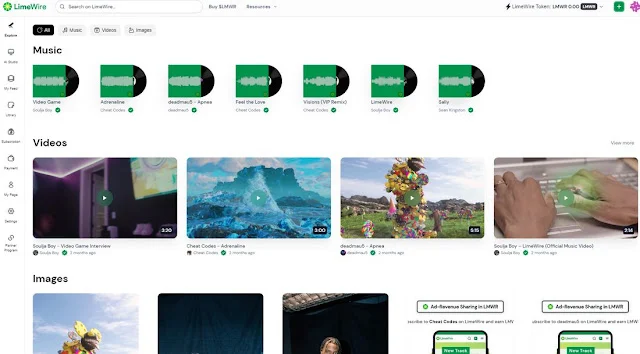
In a remarkable pivot from its controversial past, LimeWire has re-emerged as a cutting-edge platform at the forefront of generative artificial intelligence, offering creators a robust suite of tools for content generation, sharing, and monetization. This transformation positions the brand not merely as another entrant in the crowded AI landscape, but as a comprehensive ecosystem designed to empower artists and designers by leveraging blockchain technology and novel revenue-sharing models. The platform currently excels in AI image generation, with ambitious plans to integrate AI music and video creation, promising an expansive creative frontier for its growing user base.
From File-Sharing Infamy to AI Innovation: A Chronology of Reinvention
The name LimeWire evokes a distinct memory for many who navigated the internet in the early 2000s. Originally launched in 2000, LimeWire gained widespread notoriety as a peer-to-peer (P2P) file-sharing application, enabling users to freely share music, movies, and software. While immensely popular, its open architecture led to rampant copyright infringement, drawing the ire of the recording industry. This culminated in a protracted legal battle with the Recording Industry Association of America (RIAA), which ultimately led to a permanent injunction in 2010, forcing LimeWire to cease operations and effectively marking the end of an era for digital piracy.
For over a decade, the LimeWire brand lay dormant, its legacy primarily associated with legal disputes and the wild west days of the internet. However, in 2022, the brand announced a surprising comeback, spearheaded by Austrian entrepreneurs Paul and Julian Zehetmayr. Initially, the revival focused on establishing LimeWire as an NFT marketplace, aiming to provide a platform for digital collectibles with a particular emphasis on music. This move sought to leverage the burgeoning interest in Web3 technologies and offer artists new avenues for monetizing their work directly with fans, a stark contrast to the previous model that facilitated unauthorized distribution.
The subsequent evolution saw LimeWire strategically adapt to the rapid advancements in generative AI. Recognizing the explosive growth and transformative potential of AI in content creation, the platform broadened its scope beyond a pure NFT marketplace. It began integrating sophisticated AI generation tools, pivoting to become an all-encompassing AI content publishing platform. This strategic shift not only aligned LimeWire with the most significant technological trends of the decade but also offered a fresh, legally compliant, and creator-centric utility for a brand once synonymous with digital disruption. The current iteration, LimeWire Studio, is the culmination of this ambitious reinvention, providing a sophisticated environment for AI-powered creativity.
Empowering Creators: A Multi-faceted Platform for the Digital Age
LimeWire Studio offers a distinct proposition for content creators, combining accessible AI tools with innovative monetization strategies. At its core, the platform provides an intuitive interface for generating original AI content, which can then be shared and showcased within the LimeWire community. This ecosystem is designed to foster creativity and reward creators, moving beyond traditional social media models that often offer limited direct financial benefits.
The platform’s appeal is underscored by the involvement of established artists and musicians such as Deadmau5, Soulja Boy, and Sean Kingston. These figures have embraced LimeWire as a venue to publish content, including NFT music, videos, and images, lending credibility and demonstrating the platform’s capacity to bridge mainstream entertainment with cutting-edge Web3 and AI technologies. Their participation highlights a growing trend among artists seeking greater control over their intellectual property and more direct engagement with their fan bases through decentralized avenues.
Beyond content creation and sharing, LimeWire introduces two primary monetization models for users: ad revenue sharing and Non-Fungible Token (NFT) royalties. This dual-pronged approach aims to provide creators with sustainable income streams. When users publish content on LimeWire, they are eligible to receive a substantial 70% of all ad revenue generated from other users viewing their images, music, and videos on the platform. This revenue model is particularly beneficial for designers and artists experimenting with AI tools, offering a direct financial incentive for creative output.
Furthermore, LimeWire integrates seamlessly with the burgeoning NFT market. Every piece of content generated on the platform can be automatically minted as an NFT on either the Polygon or Algorand blockchain. This transformative step imbues digital artwork with a unique, verifiable digital signature, securing its authenticity and ownership in the decentralized realm. Creators retain ownership and can earn a 2.5% royalty each time their content is traded within the LimeWire community, providing an ongoing revenue stream from secondary market activity. This contrasts sharply with traditional art markets where creators rarely benefit from resales.
The flexibility extends to content publication options. Creators can choose to share their work freely with the public, fostering broader engagement and discoverability. Alternatively, they can opt for a premium subscription model, granting exclusive access to specialized content solely for their dedicated subscribers. This tiered access mechanism allows creators to build and nurture a loyal fan base while tailoring their monetization strategy to their unique content and audience.
Advanced AI Image Generation at Your Fingertips
Currently, LimeWire Studio’s primary focus lies in AI Image Generation, offering a spectrum of creative possibilities to its user base. The platform supports advanced generative AI models, including Stable Diffusion 2.1, Stable Diffusion XL, and DALL-E 2. These models represent some of the most sophisticated technologies in the field, capable of generating high-quality, diverse images from textual prompts. Stable Diffusion, known for its open-source nature and versatility, and DALL-E 2, recognized for its exceptional quality and ability to understand nuanced prompts, provide creators with powerful tools to realize their artistic visions.
The image generation tool is designed for versatility, catering to both novice and experienced creators. Users can initiate the creative process with prompts as simple as a few words or opt for more intricate instructions, allowing for precise control over the generated output. What distinguishes LimeWire is its seamless integration of different AI models and a wide array of design styles. Users can effortlessly switch between various AI models and explore diverse aesthetic styles such as cinematic, digital art, pixel art, anime, analog film, and more. Each style imparts a distinctive visual identity, enabling extensive creative exploration.
Additional features further enhance the user experience, including samplers that allow for fine-tuning the quality and detail levels of creations. Customization options and prompt guidance provide a user-friendly interface, democratizing access to advanced AI art generation. In a commitment to continuous innovation, LimeWire is actively developing its proprietary AI model. This forthcoming addition is expected to further expand the creative horizons for LimeWire users, promising unique capabilities and enhanced performance within the platform’s ecosystem.
The Role of LMWR Tokens and Sustainable Economics
The financial ecosystem within LimeWire is underpinned by its native cryptocurrency, LMWR tokens. All earnings generated from ad revenue sharing and NFT royalties are paid to creators monthly in LMWR tokens. This integration of a utility token serves several purposes: it provides a standardized, transparent, and efficient method for creator payouts, and it incentivizes participation within the LimeWire ecosystem.
Creators can then trade their LMWR tokens on various popular cryptocurrency exchange platforms, including Kraken, ByBit, and UniSwap, providing liquidity and flexibility. Furthermore, LMWR tokens can be utilized within the platform to pay for prompts when using LimeWire’s generative AI tools, creating a closed-loop economic system that supports and rewards engagement. This model aligns with the broader Web3 philosophy of decentralization and user empowerment, giving creators direct ownership and control over their digital assets and earnings.
Accessibility and Tiered Access
LimeWire emphasizes accessibility, offering a free tier that allows users to experiment with its AI tools without an initial financial commitment. Upon signing up, users receive 10 credits, enabling them to generate up to 20 AI images per day. This free tier also grants users a 50% share of ad revenue, providing an introductory glimpse into the platform’s monetization potential.
For creators seeking more extensive capabilities and enhanced benefits, LimeWire offers several premium subscription plans:
- Basic Plan ($9.99/month): Provides 1,000 credits per month (up to 2,000 image generations), early access to new AI models, and a 50% ad revenue share.
- Creator Plan ($29/month): Offers 3,750 credits per month (up to 7,500 image generations), early access to new AI models, and a 60% ad revenue share.
- Pro Plan ($49/month): Includes 5,000 credits per month (up to 10,000 image generations), early access to new AI models, and a 70% ad revenue share.
- Enterprise Plan ($99/month): Delivers 11,250 credits per month (up to 22,500 image generations), early access to new AI models, and a 70% ad revenue share.
All premium plans come with additional perks, including a Pro profile badge, full creation history, faster image generation speeds, and an ad-free experience. This tiered pricing structure caters to a diverse range of creators, from hobbyists to professional artists, ensuring that tools and benefits scale with creative demands.
Broader Implications and Future Outlook
LimeWire’s strategic re-entry into the digital landscape with a focus on generative AI and Web3 technologies holds significant implications for the future of content creation and the creator economy. By democratizing access to powerful AI tools and integrating direct monetization pathways, LimeWire is positioning itself as a leader in empowering digital artists. The platform effectively lowers the barrier to entry for content creation, allowing individuals without traditional artistic training to produce sophisticated digital art.
The commitment to innovation is further underscored by LimeWire’s ambitious plans to expand its generative AI tools to include music and video creation. The global generative AI market is projected to grow substantially, with estimates suggesting it could reach hundreds of billions of dollars in the coming decade. As AI models become increasingly capable of generating complex, multi-modal content, LimeWire’s move into music and video will unlock vast new possibilities for creators, potentially transforming industries such as film, gaming, and advertising. The ability to generate entire compositions or video clips from text prompts, coupled with automatic NFT minting and revenue sharing, could redefine the landscape of digital media production and distribution.
However, the rapid evolution of generative AI also presents challenges, particularly concerning intellectual property rights, ethical considerations, and the potential for deepfakes or misinformation. While LimeWire’s focus is on original creation and ownership through NFTs, the broader industry grapples with questions about the source data used to train AI models and the originality of AI-generated works. As LimeWire develops its proprietary AI model, adhering to ethical AI guidelines and transparent data practices will be crucial for maintaining trust and fostering a responsible creative environment.
In conclusion, LimeWire has undergone a profound transformation, shedding its controversial past to embrace a future driven by artificial intelligence and blockchain technology. By providing an inclusive platform where anyone can unleash their artistic potential, generate high-quality content, and effortlessly share and monetize their work, LimeWire emerges as a democratizing force in the creative landscape. Its innovative blend of AI tools, NFT integration, and direct revenue sharing models positions it as a significant player in the evolving digital economy, promising a future brimming with creative potential and endless artistic exploration. As the platform continues to evolve with the integration of AI music and video generation tools, its impact on the creator economy is poised to expand even further, solidifying its role as a pioneering force in the digital creative revolution.