Candice Horbacz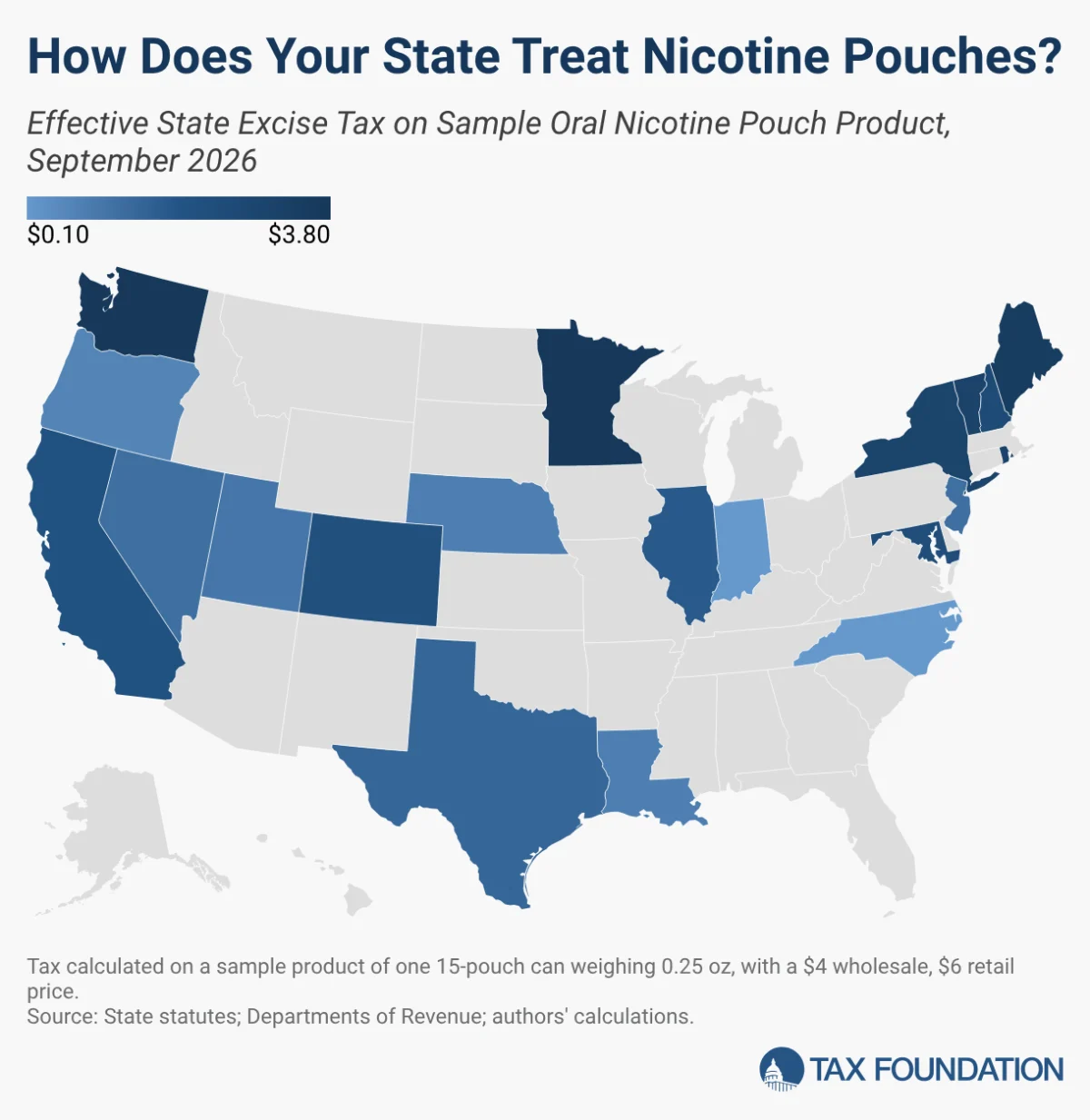
Oral nicotine pouches have rapidly emerged as a significant disruptor in the nicotine market, offering consumers an alternative to the well-documented harms associated with combustible cigarettes. These innovative products, often free of tobacco leaf and combustion, have successfully attracted a segment of the smoking population towards less harmful nicotine consumption methods. However, their rapid adoption has presented a complex challenge for state governments, who are now scrambling to integrate these novel "alternative nicotine products" (ANPs) into their existing tax frameworks, often with profound implications for both public health initiatives and state budgets.
The Evolving Landscape of Nicotine Consumption and Taxation
For decades, state governments have relied heavily on excise taxes levied on traditional tobacco products, particularly cigarettes, as a substantial and relatively stable source of revenue. These "sin taxes" served a dual purpose: discouraging smoking through higher prices and funding public health programs aimed at tobacco cessation and prevention. However, a remarkable public health success story—the consistent decline in cigarette consumption over recent decades—has simultaneously created a growing fiscal challenge. As fewer people smoke, the once-lucrative stream of cigarette tax revenue has begun to dwindle, leaving a significant "revenue crater" in many state budgets.
The emergence of ANPs like oral nicotine pouches introduces a new dynamic into this equation. These products offer nicotine delivery without the combustion and thousands of harmful chemicals found in traditional cigarettes, aligning with a public health strategy of "harm reduction." This approach acknowledges that while complete abstinence from nicotine is ideal, reducing the harm associated with its consumption for those who cannot or will not quit is a pragmatic and beneficial goal. However, the fiscal imperative to replace lost cigarette tax revenue often clashes with this harm reduction principle, forcing states to navigate a delicate trade-off: taxing ANPs can fill budget gaps, but excessively high taxes risk slowing the crucial migration of smokers away from more dangerous combustible products.
A Patchwork of Policies: How States Are Taxing Nicotine Pouches
As of September 2026, a growing number of jurisdictions—20 states and the District of Columbia—have moved to incorporate oral nicotine pouches into their tax systems. This rapid legislative response reflects both the increasing market presence of these products and the urgent need for states to address their shifting revenue bases. However, the approach taken by most states has been largely undifferentiated, often lumping nicotine pouches into pre-existing "Other Tobacco Products" (OTP) categories. This categorization, typically designed for products like cigars, loose leaf tobacco, and snuff, is increasingly seen by public health advocates and tax policy experts as a significant misstep.
The fundamental flaw in this "lumping" strategy lies in the nature of oral nicotine pouches themselves. Unlike traditional OTPs, many modern oral pouches are entirely tobacco-free, utilizing synthetic or extracted nicotine rather than processed tobacco leaf. More importantly, scientific consensus increasingly indicates that oral nicotine pouches are substantially less harmful than combustible cigarettes and even many traditional OTPs. By subjecting these less harmful products to the same tax rates as their more dangerous counterparts, states inadvertently undermine the public health benefits derived from alternative products that satisfy consumer demand for nicotine with substantially reduced risks to individual and public health. This undifferentiated approach effectively sends a contradictory message, failing to distinguish between products based on their relative harm profiles.
The Case for Differentiated Taxation: Ad Quantum vs. Ad Valorem
A more principled and effective tax policy, as advocated by numerous public health and economic organizations, would involve taxing oral nicotine pouches with their own specific, differentiated rate. Furthermore, the type of tax levied is crucial. An ad quantum tax, levied per can or per ounce, is generally considered superior to an ad valorem tax, which is based on the product’s price. Ad valorem taxes can disproportionately impact lower-priced, potentially more accessible harm reduction products, making them less attractive to price-sensitive consumers seeking to switch from combustible cigarettes. An ad quantum tax, by contrast, provides greater consistency and predictability, aligning more closely with the physical quantity of the product being consumed.
States that embrace this harm reduction philosophy can strategically generate necessary revenues while simultaneously fostering the growth and health benefits associated with innovative, less harmful nicotine products. This approach acknowledges the complex interplay between fiscal needs and public health outcomes, aiming to create a tax structure that incentivizes healthier choices without completely sacrificing revenue streams.
A Spectrum of State Tax Treatments and Its Behavioral Implications
The current landscape of nicotine pouch taxation across the United States is remarkably diverse, showcasing a wide range of rates and methodologies even among the less than half of states that have implemented such taxes. To illustrate this disparity, consider a sample product: one can containing 15 pouches, with a wholesale price of $4 and a retail price of $6.
At the higher end of the spectrum, states like Minnesota and Washington impose a significant burden, with an estimated tax of $3.80 on the sample product, stemming from their 95 percent wholesale tax rates. They are closely followed by Maine, with a $3.54 tax based on a weight-based system with a one-ounce minimum, Rhode Island at $3.20 (80 percent wholesale tax), and Vermont at $3.08 (weight-based with a 1.2-ounce minimum). These high tax rates mean that in some of these states, the tax alone can represent a substantial portion, if not exceeding, the wholesale cost of the product.
Conversely, some states have adopted a far more moderate approach. North Carolina, for instance, has one of the lowest taxes at $0.005 per pouch, translating to approximately $0.10 per standard can of 20 pouches. Indiana follows with an estimated $0.13 tax on the sample product, based on a $0.50 per ounce tax with no minimum weight. Oregon taxes a standard can at $0.65, while Louisiana and Nebraska both levy an estimated $0.80 on the sample product from a 20 percent wholesale tax.
This wide divergence in tax treatment carries significant economic and behavioral implications, mirroring the long-observed patterns in combustible cigarette taxation. Just as substantial disparities in cigarette excise taxes have historically incentivized cross-border smuggling and illicit trade, similar dynamics are expected to emerge for oral nicotine pouches. For example, a consumer in Washington, facing a $3.80 tax on a can of pouches, could save approximately $3.15 by crossing into neighboring Oregon, where the tax is $0.65 per standard can. Even greater savings, including avoiding excise taxes entirely, could be realized by shopping in Idaho, which currently does not tax nicotine pouches. Such significant tax differentials inevitably spur behavioral patterns, from legitimate cross-border shopping to more organized illicit enterprises seeking to arbitrage these price gaps, thereby diverting revenue from legal channels and undermining regulatory oversight.
The Role of Harm Reduction in Future Tax Policy
The principle of harm reduction is pragmatic and focuses on reducing harms rather than attempting to eliminate them entirely through prohibitive measures or excessive taxation. When applied to nicotine products, this means recognizing that while nicotine itself is addictive, it is not the primary cause of smoking-related diseases. The vast majority of harm comes from the combustion of tobacco and the thousands of toxic chemicals released in cigarette smoke. Alternative nicotine products, by eliminating combustion, play a vital role in effectively facilitating smoking cessation for many individuals by providing a less harmful method of consuming nicotine.
Policymakers considering future taxation of ANPs should adhere to this principle. Taxes on alternative products should be designed to incentivize smokers to switch to less harmful options. This means implementing reduced rates that are proportional to the reduced harms relative to combustible cigarettes. If the justification for levying an excise tax is ostensibly to mitigate associated harms, then the tax rates should logically align with those varying levels of harm. The Tax Foundation, among other policy organizations, has established a framework for taxing less harmful alternative products according to their relative potential harms. This framework suggests that since oral nicotine pouches are substantially less harmful than combustible cigarettes, excise taxes on pouches should be limited to a fraction of the taxes imposed on cigarettes.
By creating a significant tax differential that favors less harmful alternatives, states can actively encourage smokers to transition away from combustible products. Moderate taxes also serve to prevent market distortions, reduce incentives for cross-border trade, and allow the legal, taxed market to effectively compete with untaxed illicit markets. Unfortunately, many states, through their undifferentiated OTP taxation, are currently undermining the immense public health potential of these less dangerous alternative nicotine products by taxing them in excess of their relative harms.
Industry and Public Health Perspectives
The debate over ANP taxation involves various stakeholders with distinct perspectives. Manufacturers of oral nicotine pouches, such as those within the broader tobacco and nicotine industry, generally advocate for differentiated tax treatment. They argue that their products offer a viable harm reduction pathway for adult smokers and that excessive taxation stifles innovation and disincentivizes switching. They often highlight the tobacco-free nature of many pouches and their significantly reduced risk profile compared to traditional tobacco products. Their position aligns with the economic incentive to see their products grow in market share and be taxed equitably based on risk.
Public health organizations, while generally supportive of harm reduction strategies for existing adult smokers, often express concerns about the potential for ANPs to attract youth or non-nicotine users. They emphasize the addictive nature of nicotine itself and the importance of preventing initiation among vulnerable populations. While they may acknowledge the relative harm reduction benefits for adult smokers, their policy recommendations often include measures to restrict marketing, flavor bans, and ensuring that taxes, even if differentiated, are sufficient to deter youth use and contribute to public health funding. The challenge lies in crafting policies that balance these two critical objectives: promoting harm reduction for current smokers while preventing new nicotine addiction among youth.
State legislators and treasury departments, meanwhile, are primarily focused on revenue stability. With declining cigarette tax revenues, the temptation to tap into the growing ANP market is strong. Their challenge is to find a fiscal solution that is politically palatable, generates revenue, and ideally, aligns with public health goals, even if imperfectly.
The Road Ahead: Principled Policy-Making
As oral nicotine pouches continue to gain popularity, it is inevitable that more states will move to incorporate them into their tax frameworks. Iowa, for example, has already established a $0.05 per can tax on alternative nicotine pouches, set to go into effect in January 2027, signaling a move towards a specific, ad quantum approach. This trend underscores the critical need for policymakers to approach this task in a principled manner that embraces, rather than undermines, the harm reduction benefits offered by these products.
States that have yet to incorporate nicotine pouches into their tax schemes face a unique opportunity. Not taxing these less harmful products at all would maximize the tax differential, providing the strongest possible financial incentive for smokers to switch, thereby maximizing the potential for harm reduction. However, given the steady decline in smoking rates and the associated loss of revenue, many states will likely feel compelled to tax new alternative nicotine products. Should they choose to do so, it is imperative that they adopt principled tax policies that encourage smokers to transition to less harmful alternatives, distinguishing clearly between products based on their scientific risk profiles. This requires moving away from broad, undifferentiated OTP categories and towards specific, harm-proportionate, ad quantum taxes that support both fiscal stability and the overarching goals of public health. The future of nicotine policy, and the health of millions, depends on these judicious decisions.