Layla Zulfa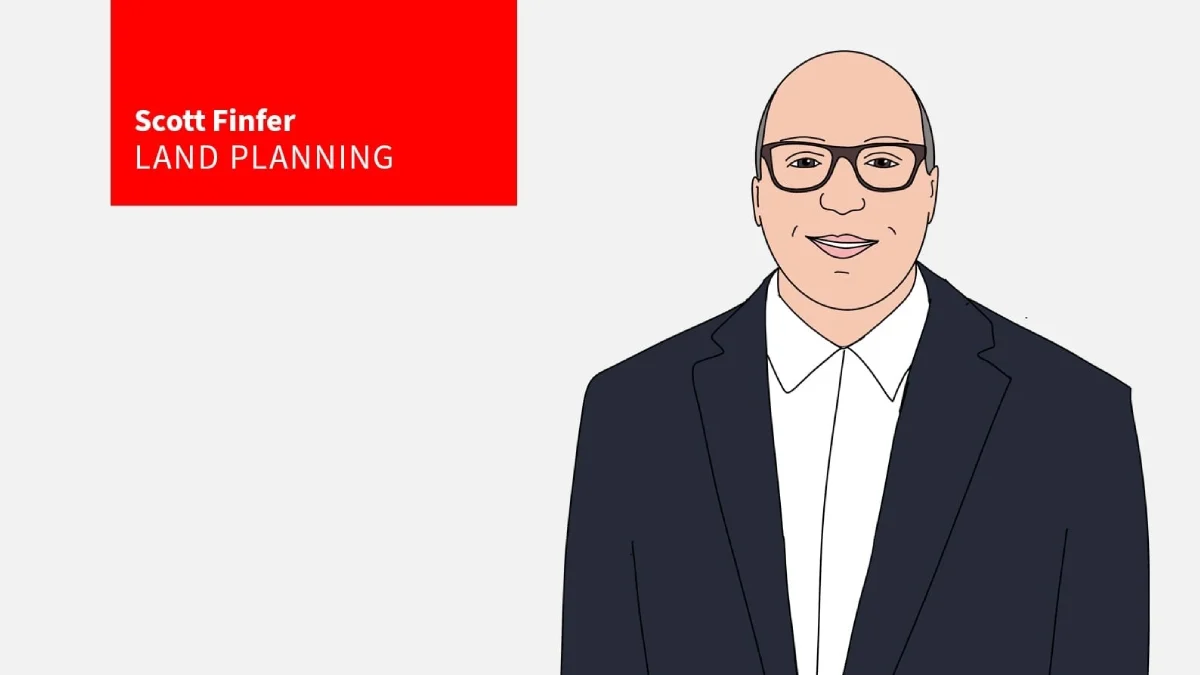
The housing industry, long reliant on the scarcity of land and established operational efficiencies, faces a critical inflection point. As the control of developable land increasingly shifts from homebuilders to specialized capital and land banks, a fundamental question emerges: what are homebuilders truly selling? According to industry veteran Scott Finfer, a Texas-based land developer and former division land executive at KB Home, the traditional answer—houses—is no longer sufficient. The future of homebuilding, Finfer argues, lies in cultivating a compelling consumer experience, driven by strategic technological adoption and a radical rethinking of operational paradigms. This perspective, while presented as Finfer’s opinion, offers a provocative blueprint for an industry grappling with evolving market dynamics and consumer expectations.
For decades, homebuilders operated under a model where control over prime land, desirable school districts, and consistent lot supply acted as a significant competitive advantage, often referred to as a "moat." This market dynamic allowed builders to command customer attention with relative ease. However, the proliferation of land banking, option agreements, and specialized land investment vehicles has diluted this traditional advantage. As more land transactions occur off the builder’s balance sheet, the physical product—the house itself—and its associated offerings, such as construction quality, interior finishes, and financing options, risk becoming commoditized. This convergence of similar lots, construction practices, interior designs, mortgage products, and sales incentives compels builders to seek new avenues for differentiation.
Finfer’s analysis posits that the operational "stack" that enabled scale and profitability in the past—focused on land acquisition, material purchasing, construction scheduling, inventory management, and efficient closings—was inherently designed to sell houses, not to cultivate a deep consumer connection. This legacy system, built for a different era, requires a fundamental re-evaluation. The challenge, as articulated by Finfer, is to move beyond simply modernizing existing technological infrastructure, which he warns can become a trap due to inherent legacy complexities. Instead, he advocates for building new systems in parallel with existing, stable operations, allowing market performance to dictate the survival of each.
"The instinct inside a large public builder will be to modernize the existing technology stack," Finfer writes. "I think that is the trap. Legacy technology debt is not simply old software. It is decades of integrations, custom workflows, reporting dependencies, accounting rules, vendor relationships and institutional habits wrapped around the software." This approach, he argues, can lead to enormous expenditure on systems that merely replicate existing complexities, rather than introducing true innovation.
The proposed solution is to "buy the commodity; build the moat." This philosophy mirrors strategies seen in industries like Formula 1 racing, where the objective is not to manufacture every component but to assemble the fastest machine by acquiring the best available technologies for visualizers, payment processing, scheduling, AI integration, and mortgage services. The builder’s competitive advantage, in this view, is not in developing proprietary software for every function, but in how effectively they leverage these acquired tools to create unique customer experiences. These unique advantages are to be built in areas such as product architecture, financing, underwriting, customer data management, and proprietary economic models.
Finfer draws a parallel to the efficiency he witnessed years ago at Green Leaf Homes in San Antonio, where Fred Ghavidel demonstrated a remarkably lean operation driven by automation and streamlined information flow. This experience underscored the idea that excessive complexity is not an inherent requirement of homebuilding, and that "lean" should be defined by productivity, not just size.
A core tenet of Finfer’s argument is that technology should serve to eliminate unnecessary work, not merely digitize existing inefficiencies. The practice of converting paper forms to electronic ones or reports to dashboards without questioning the underlying process is, in his view, a missed opportunity for true transformation. The critical question, he emphasizes, should be: "Why does this task exist? Can we eliminate it?"
The focus then shifts to building the "best customer company." This involves reimagining key stages of the homebuying journey, starting with the consumer’s initial interaction. Just as a luxury car manufacturer allows customers to configure their vehicle down to the finest details, homebuilders should offer a similar level of customization. This includes choices for elevations, rooflines, exterior materials, interior finishes, and even pricing and payment options, all rendered in real-time for the buyer. The implication is that if a superior visualization tool exists, it should be acquired rather than rebuilt.
The traditional design center, often relegated to an office building or job site, is also a target for reinvention. Finfer suggests transforming it into a "retail" experience, accessible to customers on weekends before they have even signed a contract. This would allow potential buyers to physically interact with materials, configure their homes, and see immediate price and payment adjustments, effectively turning a back-office function into a product differentiator.
This customer-centric approach redefines the role of sales. Instead of traditional salespeople focused on closing transactions, Finfer proposes "Client Experience Managers" who guide customers through the entire process, leveraging technology for transactional aspects while focusing on building relationships.
The model home tour, another area ripe for disruption, is envisioned as an "on-demand" experience. Instead of fixed hours, builders could partner with off-duty law enforcement officers to provide secure, private access to model homes during booked windows, facilitated by an app that offers information on the home, community, options, and financing. This model prioritizes safety, information, and privacy, removing sales pressure from the initial exploration phase.
Finfer also challenges the traditional model of Homeowners Associations (HOAs). He suggests that instead of focusing solely on the monthly fee, builders should compare it to the cumulative costs of separate services such as internet, gym memberships, coworking spaces, and concierge services that many households already incur. This opens the door to rethinking HOA dollars to provide more integrated services, potentially including healthcare or insurance.
A significant aspect of the proposed transformation lies in finance. The notion of buyers seeking mortgages after selecting a home is deemed outdated. Instead, financing should be "designed with the house," leveraging the builder’s scale and relationships to offer financial products that individual buyers could not negotiate alone. The goal is to enable buyers to configure their home, see the resulting payment, and place a deposit before leaving the initial design studio, subject to standard underwriting. This aims to reduce the uncertainty often associated with the financing process.
Further enhancing financial integration, Finfer suggests that builders should "underwrite their own product." Given their intimate knowledge of the collateral—the homes they build—builders could potentially offer collateral support or repurchase mechanisms to banks originating mortgages. This could lower financing costs by leveraging the builder’s expertise in managing and reselling properties if necessary.
Addressing buyer anxiety about market fluctuations, Finfer proposes offering a "defined first-year buyback" option. This would provide a clear exit strategy for buyers, potentially mitigating the fear of illiquidity and thereby stimulating sales, even with associated costs.
The warranty process is also reframed as "client care." Instead of adversarial interactions, builders should adopt a proactive, Lexus-like approach, focusing on resolving issues efficiently and using the data generated to eliminate recurring problems and improve product quality.
Compensation structures are also identified as a crucial lever for change. Finfer argues that incentives should be aligned with the desired outcomes, rewarding productivity, margin, customer satisfaction, low warranty expense, referrals, and repeat buyers, rather than solely focusing on metrics like closings or schedule adherence.
The article then turns to a specific public builder, KB Home, as a potential entity uniquely positioned to test these theories. KB Home’s "Built to Order" line, which allows buyers to customize their homes while maintaining profitability, is identified as a pre-existing "moat." Finfer suggests that this capability can be further amplified.
The proposed strategy for KB Home involves creating a parallel entity, perhaps named "KB Curated," operating alongside the existing business. This new venture would focus on a more curated, less complex selection of choices, akin to a special edition of a popular product. The core idea is "choice without complexity."
A key element of this curated offering is a partnership with Nebraska Furniture Mart (NFM). This collaboration would involve creating "KB Curated studios" within NFM locations. These studios would integrate home configuration with the ability to select furniture, appliances, and financing, creating a seamless retail experience. The model homes would become fully merchandised showrooms, offering a holistic view of the potential home.
This partnership aims to build "scale on scale," leveraging KB Home’s homebuilding scale and NFM’s retail scale. The model homes would serve as a dual purpose: showcasing KB Home’s offerings and acting as a retail showroom for NFM products, allowing customers to purchase the entire envisioned lifestyle.
The financing aspect is further integrated, suggesting that NFM or a partner could potentially support the initial deposit, streamlining the path from design to purchase. The objective is to "remove the distance between: I want it. And: I bought it."
The "Curate more; offer less" philosophy suggests that the "Built to Order" model can evolve by offering fewer, but better, coordinated choices, creating cohesive collections of finishes and fixtures. This reduces decision fatigue for consumers and purchasing complexity for the builder.
Dallas is proposed as the "laboratory" for this new model, a single market where a curated line, a retail partner, a clean technology stack, and a new client experience and warranty model can be tested. The performance of this experimental venture would be rigorously measured against the existing KB Home operations, with success dictating broader implementation.
Finfer concludes by reiterating that while traditional operational strengths like construction and land strategy remain important, they are increasingly becoming the "cost of admission." The "new moat" lies in customer-facing differentiators: the personalized configuration experience, the curated product selection, the seamless visualization and retail integration, compelling financial products, a reliable exit strategy, on-demand tours, exceptional client care, and a strong service promise. Underlying this new approach is a technological philosophy that prioritizes acquiring the best solutions rather than manufacturing them, enabling builders to "win the race" by building the future alongside the present, creating a more responsive, customer-centric, and economically viable homebuilding model.