Lina Irawan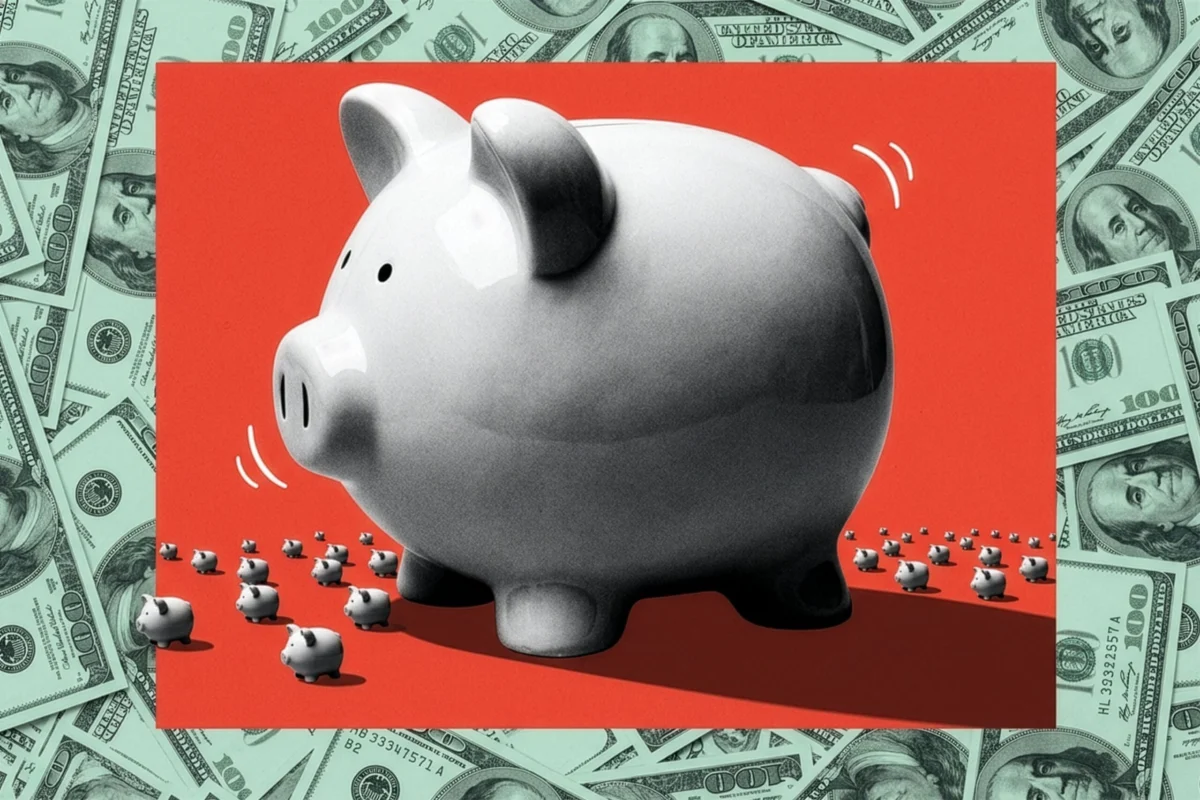
America’s wealthiest individuals, a cohort of 1,265 billionaires, collectively possess an staggering $6.7 trillion in wealth, a sum that eclipses the combined net worth of the bottom half of all U.S. households, according to recent analyses. This stark disparity underscores a persistent and widening chasm in wealth distribution across the nation, revealing a landscape where extreme affluence coexists with widespread financial precarity for millions of Americans.
The United States maintains its status as the global epicenter of billionaire wealth. The 2026 billionaire census from Altrata, released earlier this month, identifies 1,265 U.S.-based billionaires, representing approximately one-third of the global total of 3,795. This concentration is so profound that the number of billionaires in the U.S. surpasses the combined billionaire populations of the next seven countries. Globally, the wealth controlled by billionaires reached an estimated $15.1 trillion in 2025, with U.S. billionaires accounting for just under half of this monumental sum.
The Chasm: Billionaire Wealth Versus Mainstream America
To contextualize the vastness of $6.7 trillion, the collective net worth of these 1,265 American billionaires—precisely $6,688,000,000,000—is contrasted against the financial standing of ordinary American households. Federal Reserve data indicates that the bottom half of the country’s households possess a total net worth of $4.3 trillion. This figure includes a significant segment of the population grappling with negative net worth, meaning their liabilities exceed their assets. An estimated 13 million U.S. households currently have negative net worth, a factor that substantially diminishes the overall wealth of the bottom half.
Further analysis reveals the depth of this inequality: the wealth held by U.S. billionaires is equivalent to the combined net worth of approximately the bottom 57% of American households. Stated differently, U.S. billionaires control roughly 3.84% of total household wealth in the nation, a share mirrored by the lower 57% of the population. This calculation is derived from a meticulous Lorenz wealth distribution analysis, which compared the wealth held by U.S. billionaires against that of ordinary American households, leveraging data from the Federal Reserve’s 2022 Survey of Consumer Finances and its latest Distributional Financial Accounts release to ensure timeliness.
It is important to note a nuance in reporting methodologies. Altrata’s report determines a billionaire’s location based on their primary business address, not necessarily their citizenship or residency. This means a portion of the 1,265 U.S. billionaires might not be American citizens. To address this, an independent analysis conducted using Forbes’ latest list of U.S. billionaires, which is based on residency, yielded similarly striking results. According to Forbes’ early 2026 estimates, U.S. resident billionaires collectively hold $8.4 trillion, a figure surpassing the total wealth of the bottom 60% of Americans.
Historical Context of Widening Wealth Gaps
The current state of wealth inequality in the U.S. is not an anomaly but the culmination of decades-long trends. The share of wealth held by the richest 1% of the country is now at its highest point in over 30 years, a testament to a sustained period of wealth concentration. Following World War II, the U.S. experienced a period of relatively decreasing wealth inequality, driven by progressive taxation, strong labor unions, and investments in public services. However, this trend began to reverse in the late 1970s and early 1980s, coinciding with shifts in economic policy towards deregulation, tax cuts for the wealthy, and a decline in union power.
Key economic events have further accelerated this divergence. The tech boom of the late 1990s, the financialization of the economy in the 2000s, and particularly the recovery from the 2008 financial crisis disproportionately benefited those at the top, whose assets rebounded quickly and often grew exponentially. More recently, the economic disruptions caused by the COVID-19 pandemic, while devastating for many small businesses and low-wage workers, paradoxically created unprecedented opportunities for growth in sectors dominated by the ultra-wealthy, such as technology, e-commerce, and pharmaceuticals. Stimulus measures designed to prevent a deeper recession also injected liquidity into financial markets, further inflating asset values and benefiting asset-rich individuals.
Drivers of Billionaire Growth and Global Trends
The Altrata report highlights a global surge in the billionaire population, which reached an all-time high at the close of 2025. The firm attributes this robust growth, an 8.2% annual increase—the strongest in five years—to significant economic gains, particularly those stemming from advancements in artificial intelligence. Over the past decade, this exclusive population has expanded by almost 60%, indicating a powerful and accelerating trend of wealth accumulation at the very top.
The demographic profile of this elite group remains largely consistent: predominantly male and typically over 70 years old, with the average age of a global billionaire currently standing at 71. Women constitute a mere 13% of the billionaire population, underscoring persistent gender disparities in wealth accumulation. In the U.S., the growth in billionaires was even more pronounced, rising by 11.5%, largely propelled by the dynamism and robust performance of the technology sector. The immense valuations achieved by tech giants and innovative startups have minted new billionaires and significantly augmented the wealth of existing ones.
Economic Perspectives and Implications
Economists widely acknowledge the profound implications of such extreme wealth inequality for both the U.S. economy and society. Steven Durlauf, director of the Stone Center for Research on Wealth Inequality and Mobility at the University of Chicago, characterizes this level of disparity as "unhealthy." He argues that while economic growth and innovation are crucial, they "can be preserved with much smaller disparities," challenging the notion that extreme wealth concentration is an inevitable byproduct or even a prerequisite for a thriving economy.
The ramifications extend beyond mere statistics. High wealth inequality can stifle social mobility, making it increasingly difficult for individuals from lower economic strata to improve their financial standing, regardless of effort or talent. It can also lead to reduced overall economic growth by dampening consumer demand, as a large portion of the population lacks the disposable income to stimulate local economies. Furthermore, concentrated wealth often translates into concentrated political influence, potentially distorting democratic processes and leading to policies that favor the wealthy elite at the expense of broader public interest. This can exacerbate social tensions and political polarization, threatening societal cohesion.
Policy Debates and Potential Solutions
The pervasive issue of wealth inequality has ignited vigorous policy debates. Proponents of addressing the imbalance often advocate for progressive taxation measures, such as wealth taxes on billionaires and higher corporate tax rates. The argument is that such policies could generate substantial revenue for public services, reduce fiscal deficits, and redistribute wealth more equitably. Historically, periods of lower wealth inequality were often associated with higher top marginal income tax rates and robust estate taxes.
However, opponents of these interventions argue that they could have detrimental effects on the economy. Concerns are frequently raised about the potential for discouraging investment, incentivizing capital flight, or stifling entrepreneurial spirit. The Cato Institute, for instance, has published analyses suggesting that "failures of wealth taxation" could ultimately harm economic growth and innovation. Yet, Durlauf’s perspective offers a counter-argument, suggesting that the feared negative impacts are not guaranteed and that a more equitable distribution of wealth could coexist with, or even enhance, economic vitality. Other proposed solutions include strengthening labor unions, increasing minimum wages, expanding access to education and affordable healthcare, and reforming inheritance laws to reduce intergenerational wealth advantages.
The ongoing discourse around wealth inequality highlights a fundamental tension between economic efficiency and social equity. While the U.S. economy continues to generate immense wealth, particularly for those at the top, the challenge lies in ensuring that the benefits of this prosperity are more broadly shared. The latest data from Altrata and the Federal Reserve serve as a potent reminder of this persistent imbalance, urging a continued examination of its causes, consequences, and potential pathways toward a more equitable future.