Layla Zulfa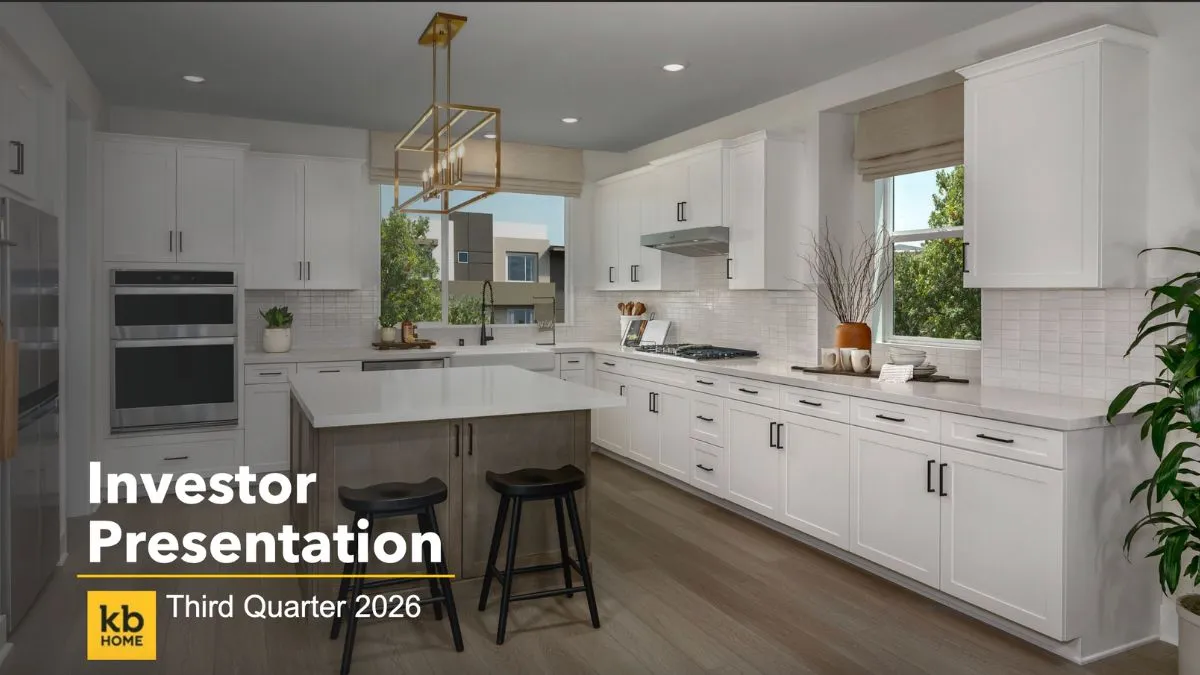
KB Home, a company long synonymous with customer-centric customization, is strategically recalibrating its business model back to its core strength: build-to-order (BTO) home sales. This pivot, accelerated by the intense demand and subsequent market shifts of the COVID-era building boom, signals a deliberate move to bolster profit margins even as overall revenue and deliveries face headwinds. The company’s third-quarter 2026 earnings call revealed a complex picture of operational resilience and consumer caution, highlighting the delicate balance KB Home is navigating in the current economic climate.
Strategic Realignment: The Build-to-Order Resurgence
For years, KB Home carved out a distinct niche by offering extensive customization options, allowing buyers to tailor their homes to individual preferences. However, the unprecedented surge in housing demand during the pandemic, coupled with supply chain disruptions and escalating costs, prompted a widespread industry shift toward building spec homes—pre-constructed houses ready for immediate purchase. This approach offered builders a way to maintain sales velocity and manage inventory in a rapidly evolving market. KB Home, like many of its peers, participated in this trend, temporarily de-emphasizing its signature build-to-order model.
However, the market dynamics have since shifted. Persistent inflation, rising interest rates, and a general economic slowdown have dampened consumer confidence and affordability. Recognizing these changes, KB Home embarked on a deliberate strategic re-engineering to reclaim its build-to-order mix. The company’s efforts have yielded significant results, with the proportion of BTO homes in its sales mix returning to historical levels. This strategic recalibration is not merely an operational adjustment; it’s a calculated maneuver to enhance profitability. Build-to-order homes, by their nature, typically command higher profit margins compared to spec homes. This is due to several factors, including the ability to lock in costs more effectively when a buyer is committed and the reduced need for significant price concessions that can sometimes be necessary to move spec inventory.
Q3 2026 Earnings: A Tale of Two Metrics
The implications of this strategic shift were laid bare in KB Home’s Q3 2026 earnings report, presented on Tuesday post-market close. The company reported a 20% year-over-year decline in revenue, largely attributable to a 19% decrease in home deliveries, which fell to 2,732 units. Homebuilding operating income also saw a substantial dip, dropping by nearly 50%. The average selling price (ASP) saw a slight decrease, settling at $473,000, down from $475,700 in the comparable period.
Furthermore, the company’s homebuilding operating margin compressed to 16.5% from 18.2% a year ago. This figure, while representing a decline, is still a significant improvement from the first and second quarters of 2026, which saw margins at 15.2%. This quarter-over-quarter improvement is a strong indicator that the renewed focus on BTO homes, which inherently carry stronger margins, is beginning to yield tangible financial benefits for the company.
However, the positive trend in quarterly margins was overshadowed by KB Home’s downward revision of its Q4 guidance for both average selling prices and overall sales. This adjustment, coupled with the year-over-year declines in revenue and deliveries, led to a dip in the company’s stock price on Wednesday. The lowered guidance serves as a stark reminder of the persistent affordability challenges and economic uncertainties that continue to weigh on prospective homebuyers, a significant portion of whom—approximately half—are first-time purchasers.
Consumer Hesitation and Market Headwinds
The concerns echoed by KB Home leadership are consistent with broader industry observations. Executives from Lennar, speaking at their Q3 2026 earnings call the previous week, painted a similar picture of a challenging housing market. They cited rising mortgage rates, elevated energy costs, pervasive inflation, and a general decline in consumer confidence, exacerbated by geopolitical instability, as key deterrents to buyer demand. Additionally, the resurgence of competition from the resale market has presented another significant hurdle for new-home sales.
KB Home’s Chief Executive Officer, Rob McGibney, corroborated these sentiments during the earnings call, highlighting the same macroeconomic factors that are causing potential buyers to adopt a cautious, wait-and-see approach. He noted a weakening in sales as the third quarter progressed, with a resilient June giving way to softer conditions in July and August.
“There are a lot of people out still looking for homes. They are just cautious, and there are a lot of things going on right now that they are trying to digest,” McGibney stated. He further elaborated on the impact of interest rate fluctuations, observing that even minor upticks, such as the 20 to 30 basis point increase seen since the end of August, require time for consumers to process and adjust their financial planning.
This cautious stance is largely driven by a desire to avoid overpaying for a home, particularly in an environment where interest rates have been volatile. Buyers are hesitant to commit if they perceive they might be purchasing at the peak of borrowing costs. As McGibney explained, “They do not want to feel like they overpaid for a house because they bought at the peak of the rates. So, they wait to see if rates are coming back down and they digest the rate move.”
The competitive landscape has also intensified due to the resale market. Homeowners looking to sell are increasingly willing to negotiate on price and offer concessions to attract buyers, making the existing home market a more formidable competitor than it has been in recent years. McGibney acknowledged this, stating, “I think we’re starting to see the sellers, the resale homeowners, get a little less patient…and starting to adjust [pricing]. So overall, I would agree resale levels have generally come up. It’s becoming more of a formidable competitor than it’s been over the last several years.”
These combined factors have led to a slowdown in sales velocity. Under normal market conditions, KB Home aims for an average of 4.0 sales per community per month. In the third quarter of 2026, the company averaged only 3.1 sales per community, a metric that McGibney indicated they are committed to improving, but not at the expense of profitability.
The Operational Advantages of Build-to-Order

The strategic return to a higher BTO mix is not without its operational benefits. A year ago, following its Q3 2025 earnings report, KB Home articulated a clear objective: to achieve a BTO sales mix of at least 70%. This goal was met and surpassed in the second quarter of 2026, with BTO homes accounting for 73% of orders. By the third quarter, this figure had climbed to 74%, a significant increase from approximately 50% just twelve months prior.
The BTO model offers distinct advantages for buyers. It allows them to secure their mortgage interest rate several months before their home is completed, effectively locking in borrowing costs at potentially lower levels. For instance, a buyer moving in September likely secured their financing earlier in the summer when rates were more favorable. This process can also reduce the need for builders to offer substantial incentives to close deals, a practice that can erode profit margins.
“The first approach that we take is we try to get everybody locked as early as possible. Sometimes buyers are not on board for that. They want to play the market and hope that rates come down, and we have seen in backlog some situations where we have had to make some minor adjustments, either just to keep them in the deal or to get them qualified. But it is minimal overall, especially when we can get them locked early and upfront,” explained Jeffrey Mezger, KB Home Executive Chairman.
From an operational standpoint, a BTO-heavy strategy provides a more predictable backlog. This enhanced visibility allows procurement and purchasing teams to negotiate more effectively for labor and material costs. It also supports a steadier production pace and contributes to a higher gross profit margin, estimated to be approximately 400 basis points above that of a typical spec home. McGibney succinctly summarized this benefit: the company is now “building for buyers who have already committed, not buyers we hope to find.”
While this strategy is proving effective in boosting margins from committed buyers, its trade-off is evident in the reduced number of deliveries and net new orders. However, the substantial margin uplift from these committed buyers is a primary driver behind the improved gross profit margins seen in recent quarters. McGibney emphasized the resilience of their business model, stating, “A market like this one tests what a business model is built on. Our built-to-order model was designed to perform in exactly these conditions.”
Operational Efficiencies Fueling the BTO Strategy
KB Home’s commitment to operational improvements is further bolstering its BTO strategy. Through value engineering initiatives and leveraging strong supplier relationships, the company has managed to slightly reduce its direct costs on homes that have commenced construction, year-over-year. These cost efficiencies directly contribute to the improved profit margins.
Perhaps the most significant factor enabling the BTO strategy’s success is the reduction in construction cycle times. In Q3 2026, the average BTO home took 99 days from start to completion, a notable improvement of 23 days, or 19%, compared to the previous year. Shorter build times not only allow KB Home to convert its backlog into completed homes more rapidly but also mean less waiting time for buyers.
“At just over three months, our buyers are not waiting long for a home built the way they want it, and they can more cost-effectively lock in their interest rate than they could when build times were longer,” McGibney commented. He added that faster build times also enhance inventory turnover and overall company efficiency. The company is actively pursuing a target of 90 days for construction cycle times, acknowledging that further improvements may be more gradual given the significant progress already made.
Regional Performance: A Tale of Two Californias
The company’s geographical performance presents a nuanced picture, particularly when examining its operations in California. Earlier in 2026, KB Home announced its intention to relocate its corporate headquarters from Los Angeles to Phoenix in 2027. Despite this strategic move, the builder maintains a strong commitment to the California market.
During its Q2 earnings call, executives had highlighted Northern California as a key area of strength, characterized by multiple high-priced communities generating robust margins. Performance in Northern California remained largely in line with expectations, with a modest projected increase in average sales prices for the fourth quarter.
However, these positive contributions were offset by weaknesses in Southern California. Slower-than-anticipated sales in the southern part of the state have led to a downward revision in the number of higher-priced homes expected to close in the current quarter. Additionally, a less favorable mix of Southern California communities scheduled for delivery in Q4 is also impacting the company’s overall outlook. This regional disparity is projected to contribute to a $20,000 decrease in the company-wide average selling price during Q4, underscoring the significant impact that regional performance can have on a builder’s consolidated financial results, especially given the concentrated nature of KB Home’s operations.
Revised Guidance Reflects Market Realities
In light of these prevailing market conditions, KB Home revised its financial guidance for the fourth quarter and full year. The company lowered its expectations for Q4 average selling prices and its full-year housing gross profit margin. The revised full-year gross profit margin is now projected to be between 16.0% and 16.2%, a slight decrease from the previously forecasted range of 16.1% to 16.5%. While seemingly a minor adjustment, this downward revision in margin expectations signals the ongoing pressures builders face as they approach the end of the fiscal year.
William Hollinger, KB Home’s Chief Accounting Officer, attributed the revised guidance to market conditions that have weakened since the last earnings call, presenting greater challenges to both demand and pricing than initially anticipated. “Market conditions have weakened since our last earnings call and remain challenging, with greater pressure on both demand and pricing than we had anticipated,” Hollinger stated.
Achieving a 74% build-to-order mix represents a significant operational milestone for KB Home, and its positive impact on margins has already been demonstrated in recent financial reports. The strategy has undeniably contributed to improved profitability. However, the critical question remains: can the build-to-order model continue to sustain its advantages if buyer hesitancy to commit deepens? Furthermore, the long-term success of this strategy will be tested as market conditions potentially improve, and the dynamics of buyer demand and builder strategy evolve once again. The company’s commitment to its core BTO model amidst current uncertainties is a clear indication of its belief in its long-term value proposition, even if it means navigating a more challenging short-term landscape.