Dwi Wanna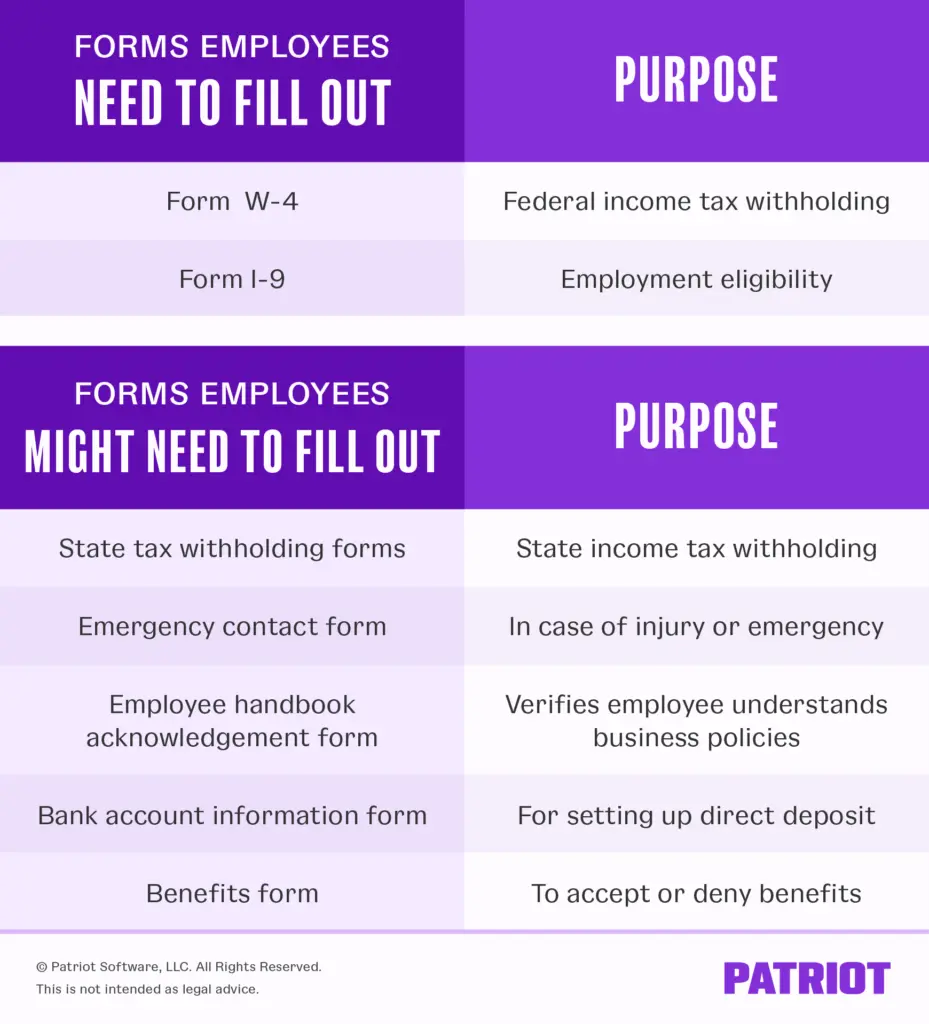
The process of integrating new talent into a business requires more than just an orientation session; it demands a rigorous adherence to federal and state regulatory frameworks through the completion of specific administrative documentation. Navigating the landscape of employment eligibility, tax withholding, and internal policy acknowledgment is a foundational responsibility for any enterprise operating within the United States. Failure to secure and maintain these documents not only jeopardizes a company’s legal standing but can also lead to substantial financial penalties during government audits. As the labor market continues to evolve with remote work and shifting tax laws, understanding the nuances of the onboarding paperwork cycle has become an essential competency for human resources professionals and small business owners alike.
The Legal Framework of Employment Eligibility: Form I-9
At the core of the American hiring process is the verification of a worker’s legal right to be employed in the country. This is governed by the Immigration Reform and Control Act (IRCA) of 1986, which mandates that all employers, regardless of size, verify the identity and employment authorization of every individual they hire. The primary instrument for this verification is Form I-9, Employment Eligibility Verification.
Form I-9 is structured into three distinct sections, each with its own timeline and requirements. Section 1 must be completed by the employee no later than their first day of work. In this section, the individual provides their biographical data and attests to their citizenship or immigration status. Section 2 is the employer’s responsibility and must be completed within three business days of the employee’s start date. During this phase, the employer must physically examine original documents—not photocopies—to confirm the employee’s identity and work authorization.
The United States Citizenship and Immigration Services (USCIS) categorizes acceptable documents into three lists. List A documents, such as a U.S. passport or Permanent Resident Card, establish both identity and authorization. If a List A document is not provided, the employee must present one document from List B (establishing identity, such as a driver’s license) and one from List C (establishing work authorization, such as a Social Security card or birth certificate). Recent regulatory shifts have introduced the E-Verify system, a web-based program that allows enrolled employers to confirm eligibility electronically. Furthermore, as of 2023, qualified employers who participate in E-Verify may utilize an alternative remote document examination procedure, a significant shift from the long-standing requirement for in-person verification.
Federal and State Tax Withholding: The W-4 Suite
The second pillar of onboarding documentation focuses on the fiscal relationship between the employee, the employer, and the government. To ensure accurate payroll processing and tax compliance, employers must collect Form W-4, the Employee’s Withholding Certificate.
The federal W-4 form underwent a significant redesign following the Tax Cuts and Jobs Act of 2017. The current version, implemented in 2020, eliminated the concept of "withholding allowances" in favor of a more data-driven approach designed to increase the accuracy of withholding. The form now asks for information regarding multiple jobs, spouse’s income, and dependents to determine the exact amount of federal income tax to withhold. If an employee fails to submit a W-4, the Internal Revenue Service (IRS) mandates that the employer withhold taxes at the highest rate: single with no other adjustments.
Beyond federal requirements, most states necessitate their own withholding certificates. While some states allow the federal W-4 to suffice for state-level withholding, others, such as California (Form DE-4) or New York (Form IT-2104), require specific state-issued forms. It is critical to note that nine states—Alaska, Florida, Nevada, New Hampshire, South Dakota, Tennessee, Texas, Washington, and Wyoming—currently do not impose a state income tax, thereby negating the need for state withholding forms in those jurisdictions. However, employers must remain vigilant regarding local or municipal income taxes, which may apply regardless of state-level requirements.
Internal Business Documentation and Policy Acknowledgment
While federal and state forms are legally mandated, internal business forms are essential for operational efficiency and risk management. These documents define the relationship between the employer and employee and provide a safety net in the event of workplace disputes or emergencies.

- Emergency Contact Information: This form is a safety prerequisite. It ensures that the employer has the necessary contact details for designated individuals if an employee suffers a medical crisis or an accident occurs on-site.
- Employee Handbook Acknowledgment: The handbook serves as the "constitution" of the workplace, detailing policies on harassment, attendance, dress code, and disciplinary procedures. Obtaining a signed acknowledgment form is a vital defensive measure in employment litigation, as it proves the employee was made aware of company standards.
- Direct Deposit Authorization: For businesses utilizing electronic payroll, this form collects the employee’s banking information, including routing and account numbers. Legal requirements for mandatory direct deposit vary significantly by state; some jurisdictions require employers to offer a paper check option or a payroll card if an employee opts out.
- Benefits Enrollment and Waivers: Whether offering health insurance, a 401(k) plan, or life insurance, employers must provide enrollment forms. Crucially, even if an employee chooses to decline benefits, a "waiver of coverage" should be signed to document that the benefit was offered and refused, which is often required for compliance with the Affordable Care Act (ACA).
Chronology of the Onboarding Documentation Cycle
To maintain compliance, employers should follow a standardized timeline for document collection and retention.
- Pre-Hire/Offer Phase: The employer should provide the candidate with an offer letter and a summary of benefits. This is also the time to initiate background checks, provided the applicant has signed a disclosure and authorization form under the Fair Credit Reporting Act (FCRA).
- Day One: Section 1 of Form I-9 must be completed. The employee should also submit their Federal and State W-4 forms, as well as direct deposit authorizations and emergency contact forms.
- Day Three: The employer must complete Section 2 of Form I-9 after examining the employee’s identification documents.
- Within 20 Days of Hire: Employers are required by federal law (the Personal Responsibility and Work Opportunity Reconciliation Act of 1996) to report all new hires to the designated state agency. This reporting is primarily used to facilitate child support enforcement and detect fraudulent unemployment or workers’ compensation claims.
- First 30 to 90 Days: This is the typical window for benefits enrollment, depending on the company’s specific waiting period policies.
Data-Driven Analysis of Compliance Risks
The stakes for administrative accuracy are remarkably high. According to data from the Department of Homeland Security (DHS), fines for Form I-9 violations can range from several hundred to several thousand dollars per individual form, even for technical errors such as missing dates or unchecked boxes. In cases of "knowing hire" violations, where an employer is found to have knowingly employed unauthorized workers, fines can exceed $20,000 per violation.
Furthermore, the IRS and state tax authorities maintain strict audit schedules for payroll compliance. Inaccuracies in withholding due to missing or improperly filed W-4 forms can result in the employer being held liable for the unpaid taxes, along with interest and penalties. The Society for Human Resource Management (SHRM) often highlights that the cost of defending a single "wrongful termination" or "wage and hour" lawsuit can exceed $100,000, a figure that is significantly mitigated when an employer possesses signed handbook acknowledgments and accurate payroll records.
Official Responses and Industry Perspectives
Regulatory bodies such as the IRS and USCIS frequently update their guidance to reflect technological advancements. The IRS has increasingly encouraged the use of electronic W-4 systems to reduce manual data entry errors. Similarly, the USCIS has modernized the I-9 process to accommodate the rise of decentralized workforces.
Industry experts and legal analysts emphasize that the onboarding process should be viewed as the first line of defense in corporate governance. "A well-documented onboarding process is not just about paperwork; it’s about establishing a culture of compliance and professional standards from the very first hour an employee joins the team," notes many labor law consultants. The consensus among human resource professionals is that automation through Human Resources Information Systems (HRIS) is the most effective way to manage these deadlines and ensure that no form is overlooked.
Broader Impact and Long-term Implications
The rigor of a company’s onboarding documentation has long-term implications for its scalability and reputation. For startups and small businesses, establishing these protocols early is essential for future audits, especially if the company seeks venture capital or plans for an acquisition. Investors and buyers frequently conduct "due diligence" on employment records; missing I-9s or irregular payroll documentation can be a significant red flag that devalues a company.
Moreover, the psychological impact on the employee cannot be overstated. A streamlined, professional onboarding process signals that the company is organized and values its employees’ legal and financial security. Conversely, a chaotic or negligent approach to paperwork can lead to immediate employee dissatisfaction and increased turnover.
In conclusion, the administrative burden of hiring a new employee is a necessary component of the modern regulatory environment. By adhering to the strict timelines of Form I-9, ensuring the accuracy of W-4 withholding, and maintaining comprehensive internal records, employers protect themselves from litigation and government sanctions. As the workforce continues to shift toward hybrid models and digital-first operations, the ability to execute these compliance tasks efficiently remains a hallmark of a successful and sustainable business.