Candice Horbacz
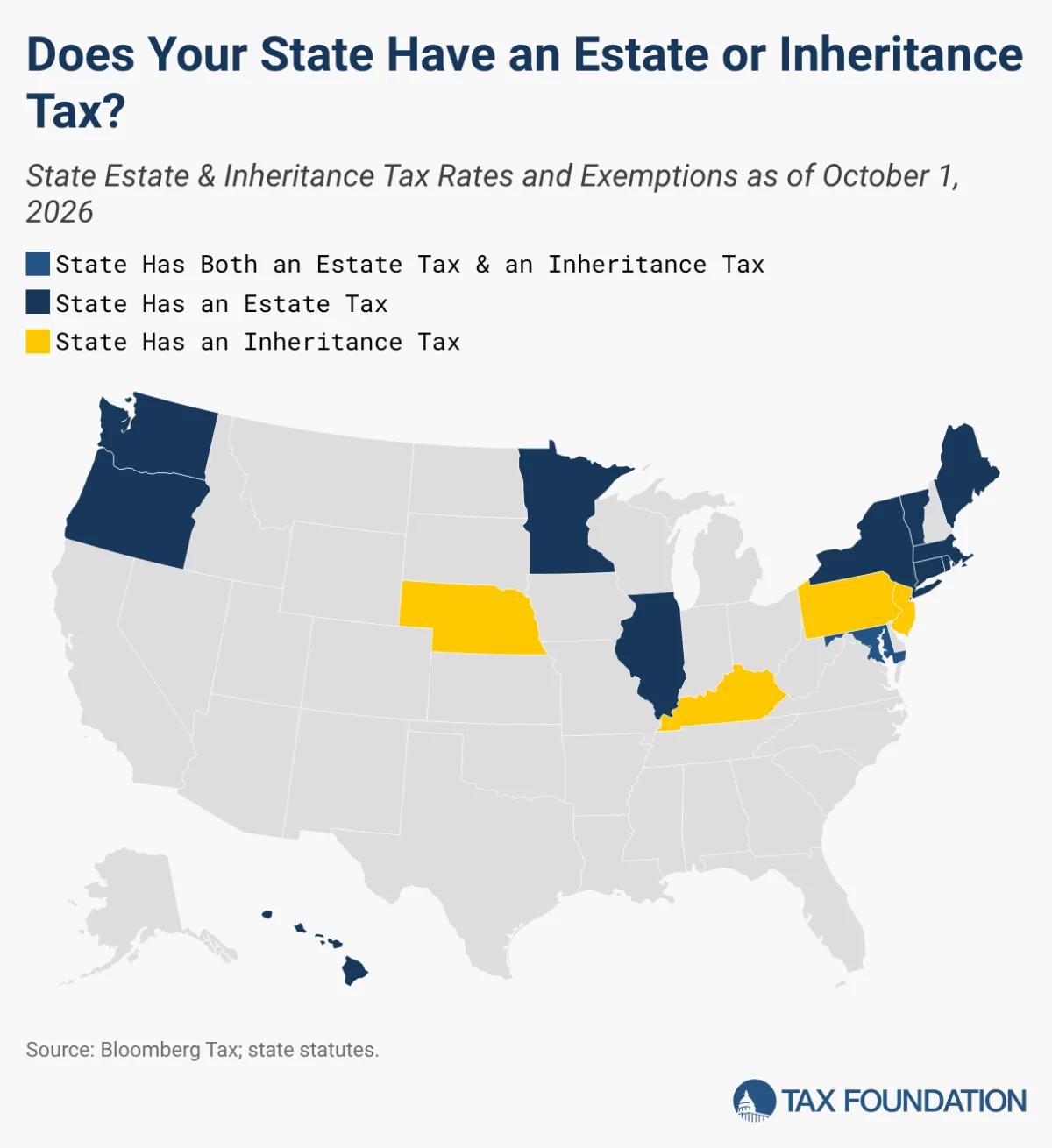
In addition to the federal estate tax, which currently imposes a top marginal rate of 40 percent, the United States presents a complex tapestry of wealth transfer taxation across its states. Twelve states and the District of Columbia maintain their own estate taxes, while five states levy inheritance taxes. Maryland stands alone in its unique position of imposing both an estate tax and an inheritance tax, adding another layer of complexity for its residents and their beneficiaries. This multifaceted system of taxation on wealth transfers has evolved significantly over time, influenced by federal policy shifts, state economic priorities, and ongoing debates about economic fairness and competitiveness.
Deconstructing Wealth Transfer Taxes: Estate vs. Inheritance
Understanding the distinction between estate and inheritance taxes is crucial for comprehending the landscape of wealth transfer taxation. These two forms of taxes, while both targeting assets transferred upon death, differ fundamentally in their incidence—who pays the tax—and their basis—what value is taxed.
Estate Taxes Explained:
An estate tax is levied on the net value of a decedent’s taxable estate, after any exclusions or credits, at the time of death. The tax is paid by the estate itself before assets are distributed to heirs. This means the tax burden falls directly on the accumulated wealth of the deceased, reducing the total pool of assets available for distribution. Estate taxes typically apply to the estates of residents who die while domiciled in the taxing state. Additionally, they can be imposed on nonresident decedents who owned taxable property within that state’s jurisdiction, ensuring that tangible assets like real estate are subject to local taxation regardless of the owner’s primary residence. The tax is calculated on the overall value of the estate, often encompassing a wide range of assets including real property, investments, business interests, and other valuables. Most estate taxes are structured progressively, meaning the tax rate increases as the value of the taxable estate rises beyond certain thresholds.
Inheritance Taxes Explained:
In contrast, an inheritance tax is levied upon the value of inherited assets received by a beneficiary after a decedent’s death. Unlike estate taxes, which are paid by the estate, inheritance taxes are remitted by the recipient or heir. This tax is based on the amount distributed to each individual beneficiary, rather than the total value of the decedent’s estate. The tax is paid to the state in which the decedent was domiciled or owned taxable property, irrespective of the heir’s geographic location. A defining characteristic of inheritance taxes is their often-variable rate structure, which typically depends on the proximity of the bequest recipient to the decedent. States commonly provide preferential treatment, such as lower rates and higher exemption thresholds, to close relatives like spouses, children, or direct lineal descendants, while taxing more distant beneficiaries or unrelated individuals at higher rates and with lower, or even no, exemption thresholds. This relationship-based approach is rooted in policy goals that aim to lessen the burden on immediate family members while capturing more revenue from less direct transfers of wealth. Some inheritance taxes are also progressive, with rates increasing based on the value of the inheritance received by each individual.
The Federal Framework and Its Transformative Evolution
The federal estate tax serves as the foundational layer of wealth transfer taxation in the United States, with a top marginal rate of 40 percent. However, its reach is limited by a substantial exemption threshold, which has undergone significant changes in recent years. The passage of the One Big Beautiful Bill Act (OBBBA) in 2025 marked a pivotal moment, increasing the federal estate tax exemption threshold to an impressive $15 million, effective starting in 2026. Furthermore, this threshold is slated to be indexed for inflation from 2027 onward, ensuring its value retains purchasing power over time and reducing the likelihood of "bracket creep" affecting more estates in the future. This move reflects a broader trend towards limiting the applicability of the federal estate tax to only the wealthiest estates, impacting a very small percentage of American households.
Historical Context: The 2005 Federal Credit Phase-Out
The current state of wealth transfer taxation at the state level cannot be fully understood without examining a critical federal policy shift that occurred in 2005. Prior to this year, the federal government had a system in place that actively incentivized states to assess their own estate taxes. This incentive came in the form of a federal credit against state estate taxes paid, effectively allowing taxpayers to offset their state estate tax liability against their federal estate tax bill. This meant that, for many high-value estates, the total amount of estate taxes paid—federal plus state—remained largely the same whether their state levied its own estate tax or not. For states, this presented an attractive option: they could collect revenue that would otherwise have gone to the federal government, without imposing an additional net burden on their residents.
However, in 2005, the federal government phased out this state estate tax credit. This change had profound implications. For states whose estate tax provisions were directly linked to the federal credit, the elimination of the credit effectively meant they stopped collecting estate taxes by default. Other states, which had their own independent estate tax statutes, were then forced to reconsider their policies. The removal of the federal offset meant that any state-level estate tax would now represent a new or additional tax burden on their residents, rather than merely redirecting existing federal tax dollars.
Impact of Federal Changes on State Policy:
The phase-out of the federal credit triggered a wave of legislative activity at the state level. Many states, recognizing the adverse economic impacts of these taxes—including concerns about disincentivizing in-state investment, encouraging tax avoidance strategies, and potentially driving high-net-worth individuals to more tax-friendly jurisdictions—began to re-evaluate their positions. Consequently, numerous states either repealed their estate taxes outright or significantly increased their exemption thresholds to reduce their burden and enhance their economic competitiveness. This period saw a significant reduction in the number of states imposing estate taxes, reflecting a growing consensus among policymakers regarding the potential negative consequences of such levies.
State-Level Estate Taxes: A Diverse and Evolving Landscape
The 12 states and the District of Columbia that currently impose estate taxes exhibit considerable diversity in their rates, exemption thresholds, and overall structures. This patchwork system creates a complex environment for estate planning and highlights varying state philosophies on wealth transfer.
Highest Rates and Exemptions:
At the pinnacle of state estate tax rates are Hawaii and Washington, both levying a top marginal rate of 20 percent. In Hawaii, this top rate applies to taxable estate values exceeding $10 million, with an exemption threshold of $5.49 million. Washington’s top rate, while also 20 percent, applies to taxable estate values exceeding $9 million. Despite a slightly lower threshold for its top rate, Washington’s estate tax is generally considered more burdensome. This is primarily due to its significantly lower exemption of $3 million, compared to Hawaii’s $5.49 million, which exposes a greater number of estates to taxation. Furthermore, Washington’s marginal rates escalate more rapidly than Hawaii’s, meaning estates are pushed into higher tax brackets more quickly.
Mid-Range Rates and Thresholds:
A significant contingent of eight states and the District of Columbia assess a 16 percent top estate tax rate. The thresholds at which this rate applies vary considerably, ranging from $5 million in Vermont to $10.1 million in states like Minnesota and New York. This variation underscores the individualized approach each state takes in balancing revenue generation with the desire to avoid overly burdensome taxation on inherited wealth.
Unique Structures: Flat Rates and Conformance:
Some states have adopted distinct approaches to their estate tax structures. Connecticut, for instance, levies its estate tax at a flat rate of 12 percent. What makes Connecticut particularly notable is its proactive stance in conforming its estate tax exemption to the federal threshold. With a high exemption value of $15 million, mirroring the federal level as of 2023, Connecticut’s estate tax is considered less burdensome than many others, despite its flat rate. This strategic alignment positions Connecticut favorably for future reforms and potentially even eventual elimination, as it harmonizes with the federal intent to tax only very large estates. Vermont also imposes a flat rate, set at 16 percent, but with a lower exemption compared to Connecticut.
Exemption Disparities and Inflation Indexing:
The disparities in state estate tax exemptions are a major factor in determining the tax burden. Currently, Connecticut stands alone in fully conforming its estate tax exemption to the federal $15 million threshold. New York has the second-highest exemption at $7.35 million, still significantly below the federal level but considerably more generous than many other states. At the other end of the spectrum, Oregon and Rhode Island have the least generous exemptions, set at only $1 million and $1,838,056, respectively. These low thresholds mean that even moderately sized estates can be subject to state estate taxes in these jurisdictions, impacting a much broader segment of the population.
A crucial aspect of modern tax policy is indexing for inflation, which prevents the erosion of exemption values over time due to rising prices. Four states—Connecticut, Maine, New York, and Rhode Island—along with the District of Columbia, currently index their exemption amounts for inflation, a practice that helps maintain the real value of these exemptions and provides greater predictability for taxpayers.
State-Level Inheritance Taxes: Relationship-Based Taxation
Beyond estate taxes, five states—Kentucky, Maryland, Nebraska, New Jersey, and Pennsylvania—continue to levy inheritance taxes. These taxes are unique in their structure, as they directly tie the tax rate and exemption levels to the beneficiary’s relationship with the decedent. This approach reflects a policy decision to differentiate the tax burden based on familial proximity, often granting preferential treatment to immediate family members.
Structure by Proximity:
In all five states with an inheritance tax, the rate varies significantly based on how closely related the bequest recipient is to the decedent. Close relatives, typically spouses, children, and sometimes grandchildren or parents, receive the most favorable treatment. This includes lower marginal rates, higher exemption thresholds, or even complete exemption from the tax. For example, many states entirely exempt spouses and lineal heirs (children, grandchildren) from inheritance tax. As the relationship becomes more distant—for example, siblings, nieces/nephews, or unrelated individuals—the tax rates generally increase, and the exemption thresholds decrease, leading to a higher tax burden on these beneficiaries. This structure necessitates careful estate planning, particularly for individuals wishing to leave assets to non-traditional family members or distant relatives, who may face substantial tax liabilities.
Rate Spectrum and Unique Cases:
Kentucky and New Jersey impose the highest top marginal inheritance tax rates, each reaching 16 percent. These rates can apply to certain classes of beneficiaries, typically the most distant relatives or unrelated individuals, above specific thresholds. Maryland, on the other hand, has the lowest top inheritance tax rate, applying a flat 10 percent on all recipients who are not spouses or lineal heirs. Maryland’s situation is particularly complex because it is the only state that imposes both an estate tax and an inheritance tax, meaning some estates and beneficiaries may face a dual layer of wealth transfer taxation. This dual imposition can significantly complicate estate administration and planning within the state. Nebraska, Pennsylvania, and the other states with inheritance taxes also employ tiered rate structures based on beneficiary relationship, with varying rates and exemption levels that require detailed consideration during estate distribution.
The Economic Debate: Harms, Justifications, and Policy Implications
The imposition of estate and inheritance taxes has long been a subject of intense economic and philosophical debate. Critics argue that these taxes carry significant economic harms, while proponents often point to issues of wealth inequality and revenue generation.
Arguments Against Wealth Transfer Taxes:
Opponents of estate and inheritance taxes frequently highlight several negative economic consequences:
- Disincentivizing In-State Investment: These taxes can deter individuals and businesses from investing capital within a state, as future wealth transfers will be subject to additional taxation. This can lead to capital flight or a preference for investing in jurisdictions without such taxes.
- Inefficient Tax Avoidance Strategies: The presence of these taxes incentivizes sophisticated, and often costly, tax avoidance strategies. High-net-worth individuals and their advisors spend considerable resources on complex estate planning, trusts, and other legal mechanisms to minimize tax liabilities. While legal, these activities divert capital and talent from productive economic endeavors into purely tax-driven strategies, creating "deadweight loss" for the economy.
- Driving High-Net-Worth Individuals Out of State: The burden of wealth transfer taxes can motivate wealthy individuals to relocate their domicile to states that do not impose these taxes. This exodus can lead to a reduction in the tax base for other state and local taxes, decreased philanthropic contributions, and a loss of economic activity associated with affluent residents.
- Impact on Family Businesses and Farms: One of the most frequently cited harms is the disproportionate impact on family farms and businesses. Owners of such enterprises are often "asset rich but cash poor," meaning their wealth is tied up in illiquid assets like land, equipment, or the value of the business itself, rather than readily available cash. When estate and inheritance taxes are levied on the assessed value of these illiquid assets, heirs may be forced to sell off portions of the farm or business—or even the entire enterprise—simply to generate the cash needed to pay the tax bill. This can disrupt generational transfers, jeopardize the continuity of long-standing family operations, and lead to job losses or reduced local economic stability.
- Overall Economic Activity Reduction: The cumulative effect of these factors—disincentivized investment, diverted resources into avoidance, and potential capital flight—can hamper overall economic growth and entrepreneurial activity within taxing states.
Arguments For Wealth Transfer Taxes (Counterpoint):
Despite these criticisms, proponents of estate and inheritance taxes offer counterarguments, often rooted in principles of fairness, equity, and revenue generation:
- Promoting Wealth Redistribution and Reducing Inequality: Advocates argue that these taxes serve as a mechanism to mitigate extreme wealth concentration and promote a more equitable distribution of wealth over generations. They posit that large inheritances contribute to persistent economic inequality.
- Generating State Revenue for Public Services: For states that maintain these taxes, the revenue generated, though often a small percentage of overall state budgets, can contribute to funding essential public services such such as education, infrastructure, or healthcare.
- Taxing "Unearned" Wealth: Some argue that inherited wealth, by its nature, is "unearned" by the recipient and therefore represents an appropriate source for taxation. This perspective suggests that wealth accumulated through labor and enterprise has already been taxed, but its transfer upon death can be subject to an additional levy.
- Ensuring Fairness in the Tax System: Proponents contend that without wealth transfer taxes, the tax system could be perceived as unfair, allowing vast fortunes to pass untaxed from one generation to the next, while income and consumption are consistently taxed.
The policy debate thus revolves around striking a balance between these competing objectives: the desire to fund public services and address wealth inequality versus concerns about economic distortions and the potential for capital flight.
A Timeline of Recent Reforms and Policy Shifts
The period following the 2005 federal credit phase-out has been marked by significant legislative activity at the state level, reflecting a general trend towards reassessing and often reducing the burden of wealth transfer taxes.
- 2018: Delaware notably repealed its estate tax in 2018, signaling a move towards a more tax-competitive environment. In the same year, New Jersey completed the phase-out of its estate tax, though it controversially chose to retain its inheritance tax, leaving beneficiaries in that state still subject to wealth transfer levies.
- 2021: Vermont undertook a "phase-up" of its estate tax exemption, nearly doubling it to $5 million, indicating an effort to reduce the number of estates subject to taxation while retaining the tax itself.
- 2023: Connecticut implemented a significant reform, phasing in an increase to its estate tax exemption over six years, ultimately matching the federal estate tax exemption by 2023. Concurrently, Connecticut transitioned to a flat estate tax rate, simplifying its structure. In the same year, Nebraska also made changes, increasing its inheritance tax exemptions and reducing its rates, aiming to lessen the burden on beneficiaries.
- 2025: Iowa completed a full repeal of its inheritance tax, effective as of 2025, further reducing the number of states with this form of taxation. This move reflects a legislative commitment to eliminate wealth transfer taxes in the state.
- 2025-2026 Biennium: Even in states where full repeal or major reforms have not yet materialized, the ongoing policy discussion is evident. During the 2025-2026 biennium, policymakers in Maryland, Minnesota, Nebraska, New Jersey, Oregon, and Rhode Island introduced structurally sound changes to their estate and inheritance taxes. Although these proposed reforms were not ultimately adopted, their introduction is highly significant. It reflects a clear acknowledgment by policymakers across various states that estate and inheritance taxes impose a burden and that there is an ongoing need to evaluate their efficacy and economic impact. These legislative efforts, even if unsuccessful in their immediate aims, keep the conversation alive and indicate a potential for future changes.
This chronology demonstrates a clear pattern: since the federal government removed its incentive for state estate taxes, many states have recognized the adverse economic impacts and have either increased their exemptions or eliminated these taxes completely to boost their economic competitiveness and reduce burdens on their citizens.
The Future Outlook: Calls for Harmonization and Elimination
Currently, 16 states and the District of Columbia continue to levy either estate taxes, inheritance taxes, or both. The ongoing debate surrounding these taxes underscores a persistent tension between state revenue needs, wealth redistribution goals, and the imperative of fostering economic growth.
The economic arguments against wealth transfer taxes are compelling for many policymakers. These taxes impose punitive burdens on generational transfers of wealth, particularly affecting family farms and businesses where assets are often illiquid. The "asset rich but cash poor" dilemma forces many recipients to sell inherited property, land, or business interests to meet their tax obligations, leading to the fragmentation or outright loss of family legacies. Beyond these direct financial impacts, the administrative burdens associated with compliance, the complex legal maneuvering required for avoidance, and the inherent deadweight loss from such activities demonstrably hamper economic growth and entrepreneurial activity.
In light of these concerns, a strong call persists for states to reconsider their approach to wealth transfer taxation. Policymakers are increasingly urged to phase out or entirely eliminate these taxes. Failing outright elimination, a crucial step would be to at least conform state exemption levels to the significantly higher federal threshold, as Connecticut has done. Such measures would promote the stability and continuity of family businesses and farms, minimize the economic distortions that arise from tax avoidance, and prevent further financial and emotional hardships imposed on families already grieving the loss of a loved one. The recurring introduction of reform bills, even if not yet passed, signifies that the conversation is ongoing, and the economic and social implications of these taxes remain a central focus for legislative consideration. The future trajectory of wealth transfer taxes in the U.S. will likely continue to reflect this dynamic interplay between fiscal policy, economic competitiveness, and social equity.