Lana Rhoades
The United States’ current-account deficit, a broad measure of international economic transactions, expanded by $33.4 billion, or 15.7 percent, to reach $246.0 billion in the second quarter of 2026. This widening trend, as detailed in statistics released today by the U.S. Bureau of Economic Analysis (BEA), indicates a growing imbalance in the nation’s trade in goods and services, income flows, and current transfers with the rest of the world. The revised figure for the first quarter of 2026 stood at a deficit of $212.6 billion.
This latest quarterly figure represents a notable shift, pushing the current-account deficit to 3.0 percent of current-dollar gross domestic product (GDP), an increase from the 2.7 percent recorded in the preceding quarter. This ratio is a key indicator of the magnitude of the deficit relative to the overall size of the U.S. economy, suggesting a growing reliance on foreign capital to finance domestic spending and investment.
Drivers of the Widening Deficit
The $33.4 billion expansion in the current-account deficit during the second quarter was primarily driven by a substantial increase in the deficit on goods. This segment of international trade, encompassing tangible products like manufactured goods, agricultural products, and raw materials, has historically been a significant contributor to the U.S. trade imbalance. The growing gap in goods trade suggests that imports of goods outpaced exports by a larger margin during the quarter.
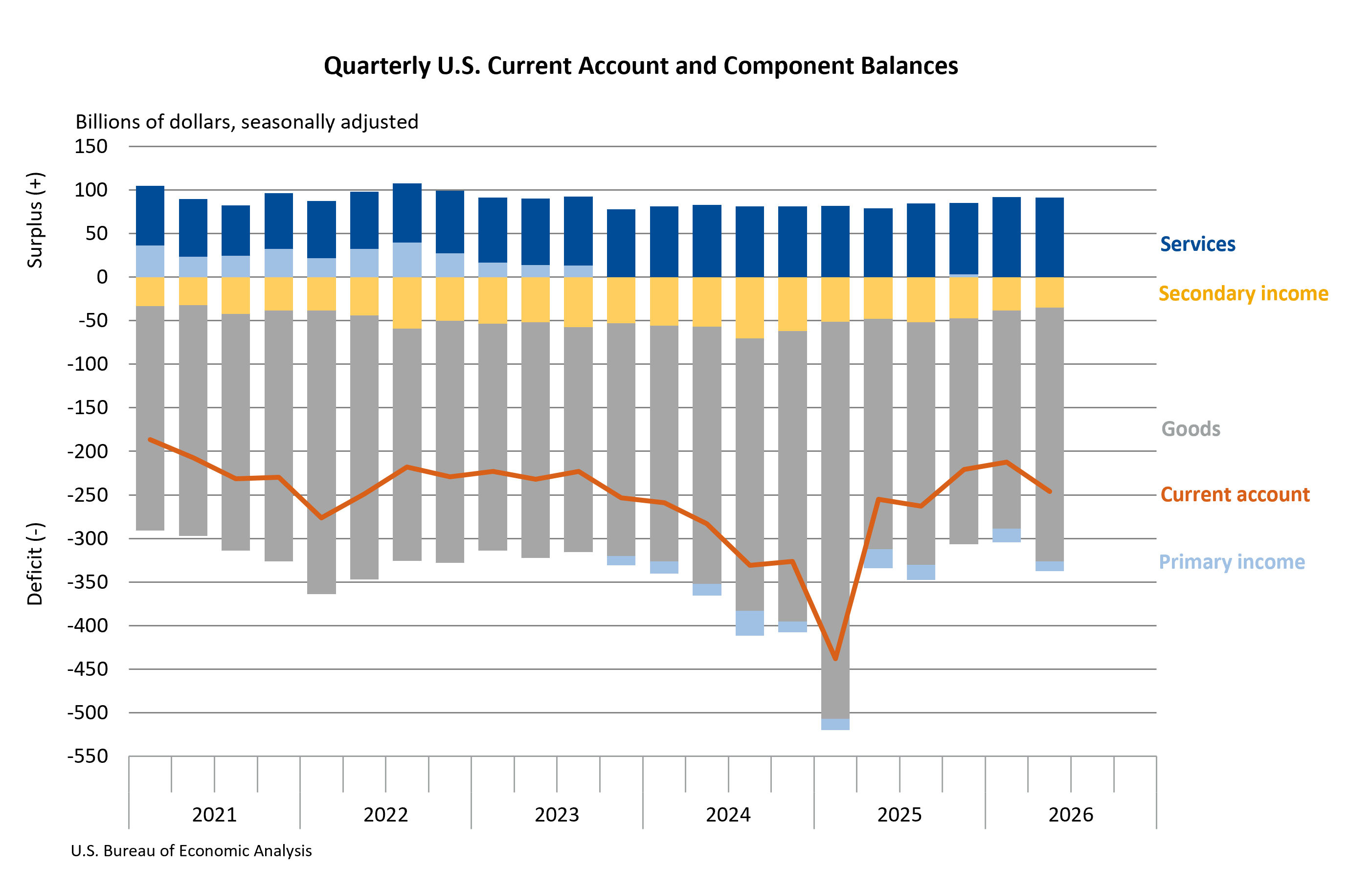
This widening goods deficit, however, was partially counteracted by a reduction in deficits related to primary and secondary income. The primary income balance reflects earnings on investments, such as dividends and interest payments, as well as compensation of employees working abroad. A reduced deficit in this area implies either higher income earned by U.S. residents from foreign investments or lower income paid to foreign residents on their U.S. investments. The secondary income balance, which encompasses current transfers like remittances and foreign aid, also saw a reduced deficit, indicating a net decrease in transfers sent abroad.
Trade in Goods and Services: A Deep Dive
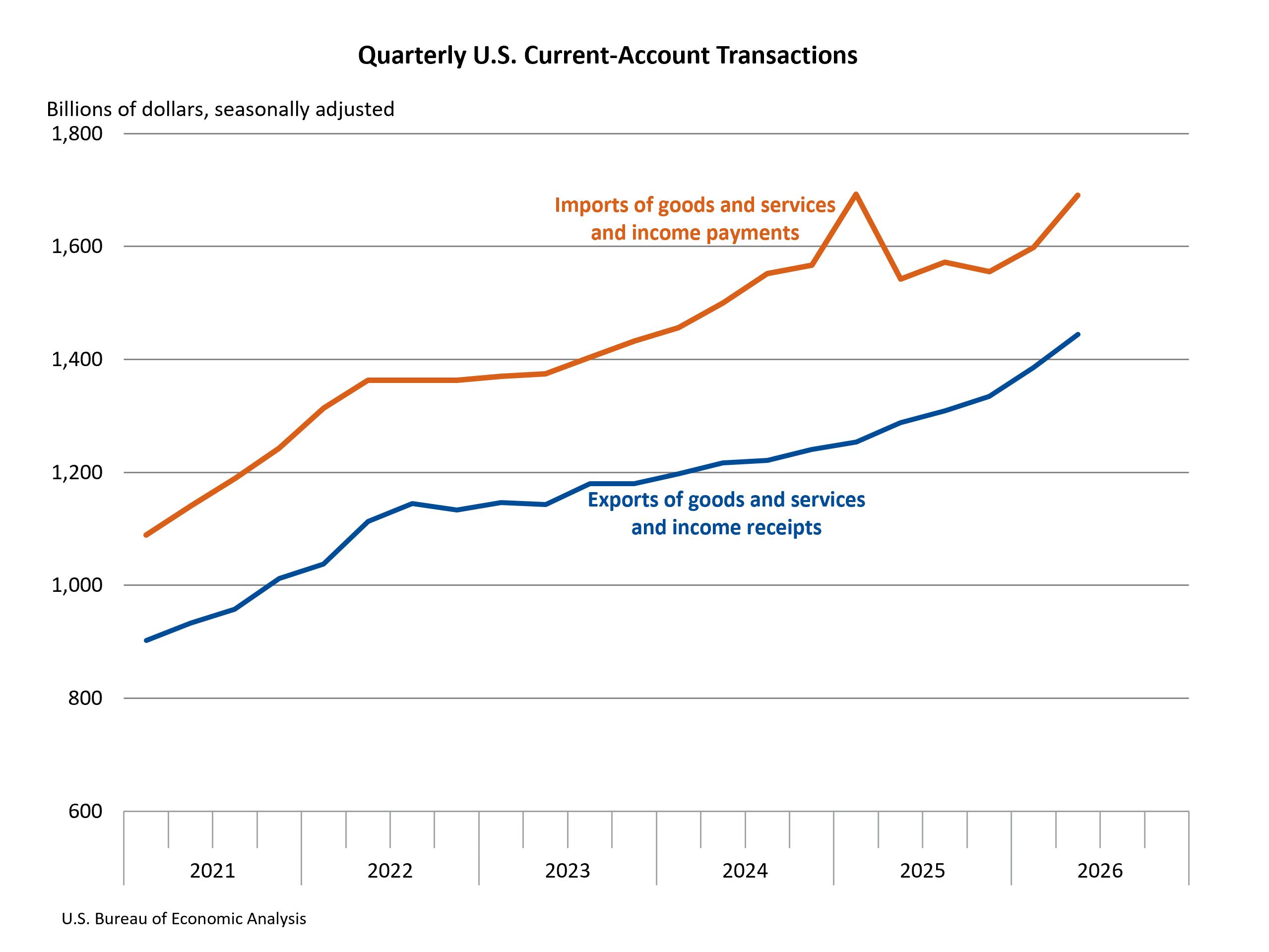
The BEA report highlighted that exports of goods and services to foreign residents, along with income received from foreign sources, saw a robust increase of $58.8 billion, bringing the total to $1.44 trillion in the second quarter. This growth in receipts was largely attributed to stronger performance in goods exports and a notable rise in primary income receipts. The increase in goods exports suggests a healthy demand for American products in international markets, potentially boosted by favorable exchange rates or increased global economic activity.
Conversely, imports of goods and services from foreign residents, coupled with income paid to foreign residents, experienced an even larger increase of $92.2 billion, reaching a total of $1.69 trillion. This surge in outflows was predominantly fueled by higher imports of goods and increased primary income payments. The greater increase in imports compared to exports underscores the widening trade gap in goods. This trend could be influenced by a variety of factors, including strong domestic consumer demand, shifts in global supply chains, or fluctuations in the value of the U.S. dollar, which can make imports cheaper for American consumers and businesses.
Income Flows and Transfers
The primary income component of the current account, which captures earnings from investments and compensation, played a dual role in shaping the overall deficit. While primary income receipts saw an increase, suggesting U.S. entities earned more from their foreign holdings, primary income payments also rose, indicating that foreigners earned more from their U.S. investments or employment. The net effect, as indicated by the reduced deficit, was a positive contribution to narrowing the current-account gap.
Secondary income, which comprises current transfers not related to the exchange of goods, services, or financial assets, also contributed to mitigating the deficit’s expansion. This category includes items like personal remittances sent by individuals working abroad to their families back home, and government aid. A reduction in the deficit here suggests either a decrease in these types of transfers sent out of the country or an increase in those received.
Capital Transfers and Financial Account
Beyond the current account, the BEA also reported on capital transfers, which are distinct from current transfers as they involve the transfer of ownership of fixed assets or the forgiveness of liabilities. In the second quarter, capital-transfer receipts decreased by $1.1 billion to $2.3 billion, while capital-transfer payments saw a reduction of $0.9 billion, settling at $1.0 billion. These movements had a minor impact on the overall international economic picture.
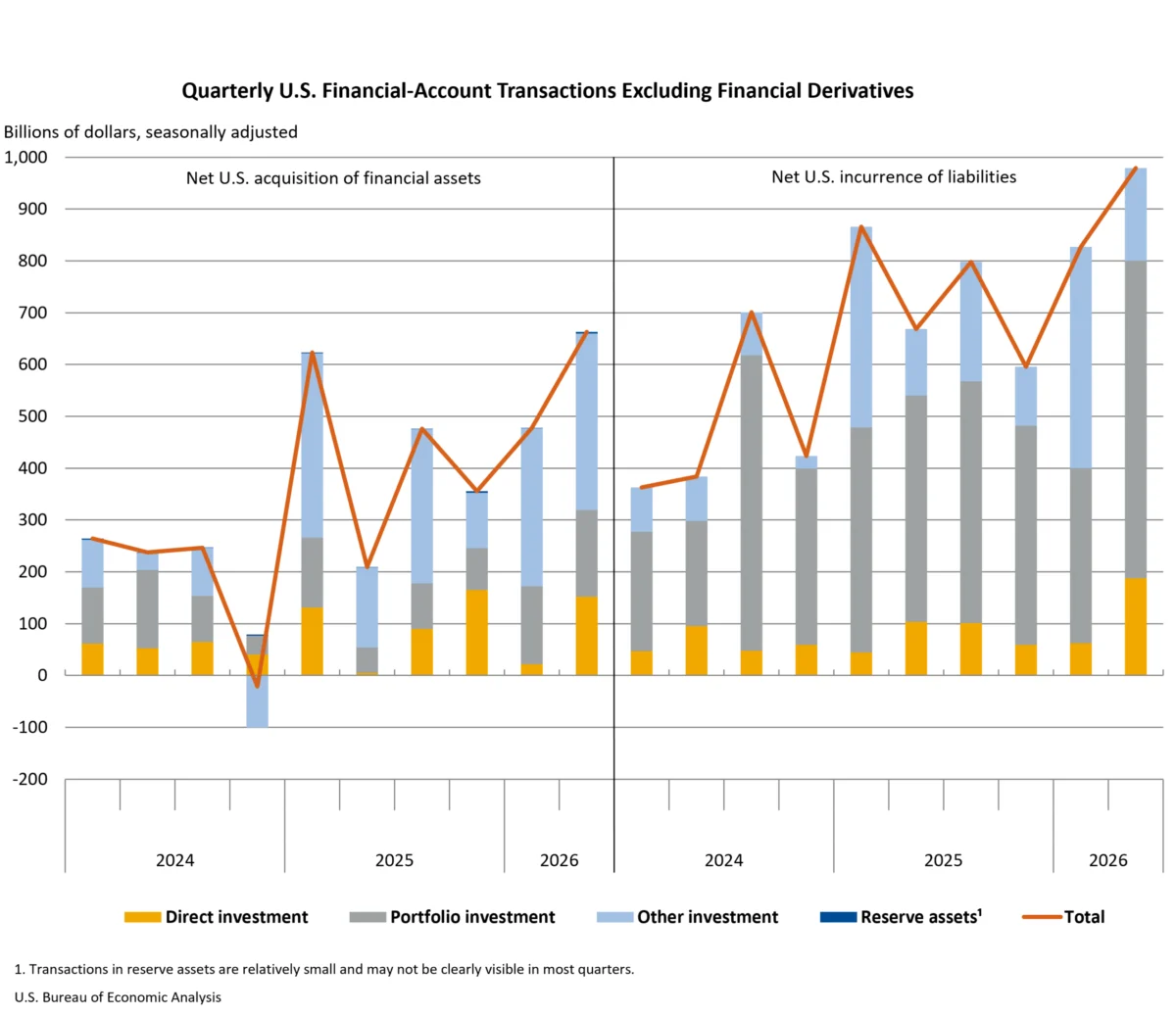
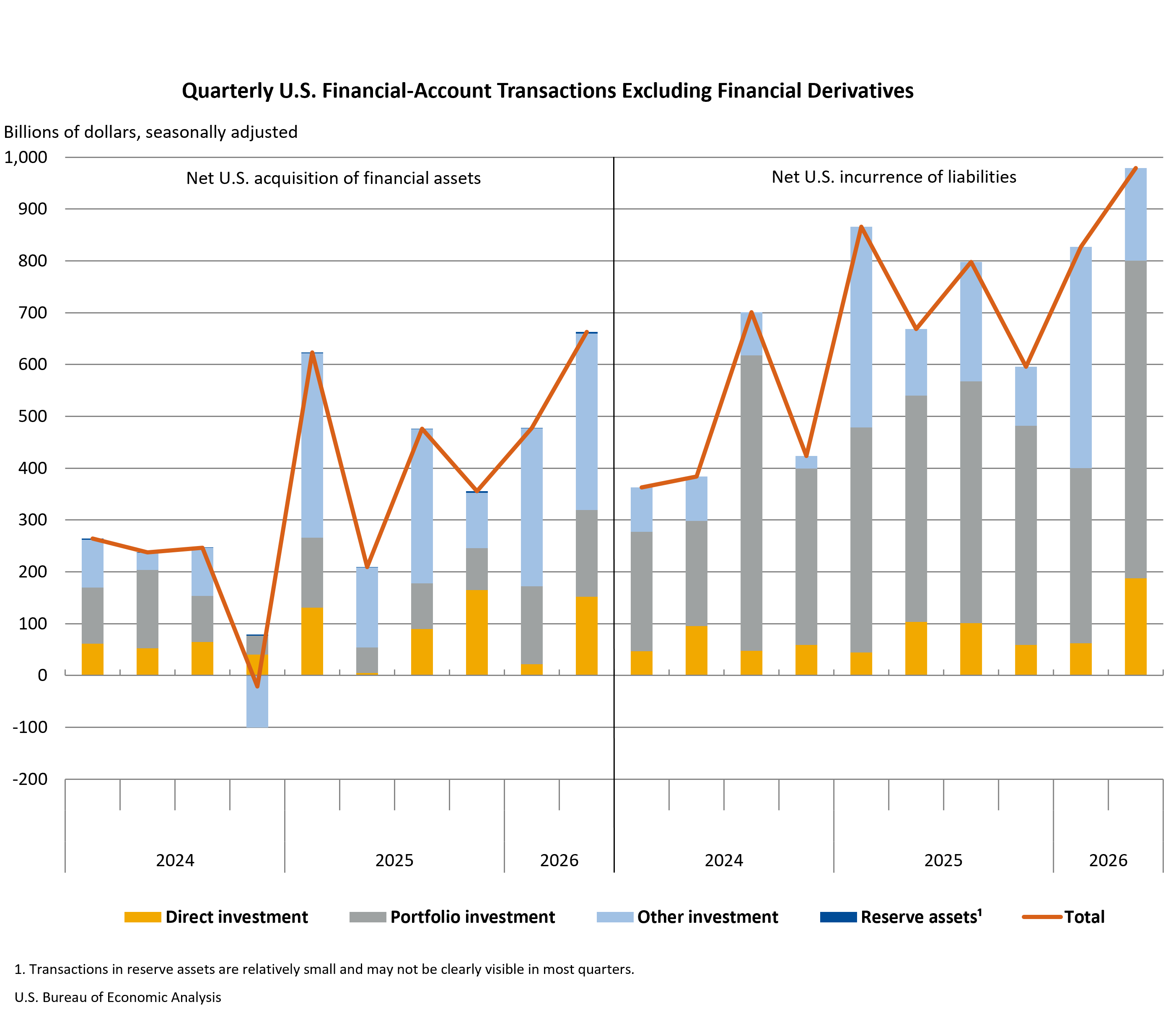
The financial account, which tracks international investment flows, presented a significant picture of net U.S. borrowing from foreign residents. Net financial-account transactions were recorded at -$369.7 billion in the second quarter. This figure reflects the net change in U.S. residents’ foreign financial assets and liabilities. Specifically, U.S. residents increased their holdings of foreign financial assets by $663.3 billion, while simultaneously increasing their liabilities to foreign residents by a larger $978.9 billion. This net outflow of capital underscores the U.S.’s role as a destination for foreign investment, which helps finance its current-account deficit.
U.S. International Investment Position
The cumulative effect of these international transactions is reflected in the U.S. net international investment position (NIIP). At the end of the second quarter of 2026, the NIIP stood at a deficit of -$22.42 trillion. This represents the difference between the value of U.S. residents’ foreign financial assets and their liabilities to foreign residents. U.S. assets abroad totaled $46.97 trillion, while liabilities to foreigners amounted to $69.39 trillion. This substantial negative net position has been a persistent feature of the U.S. economy for decades, indicating that the nation owes more to foreigners than foreigners owe to the U.S.
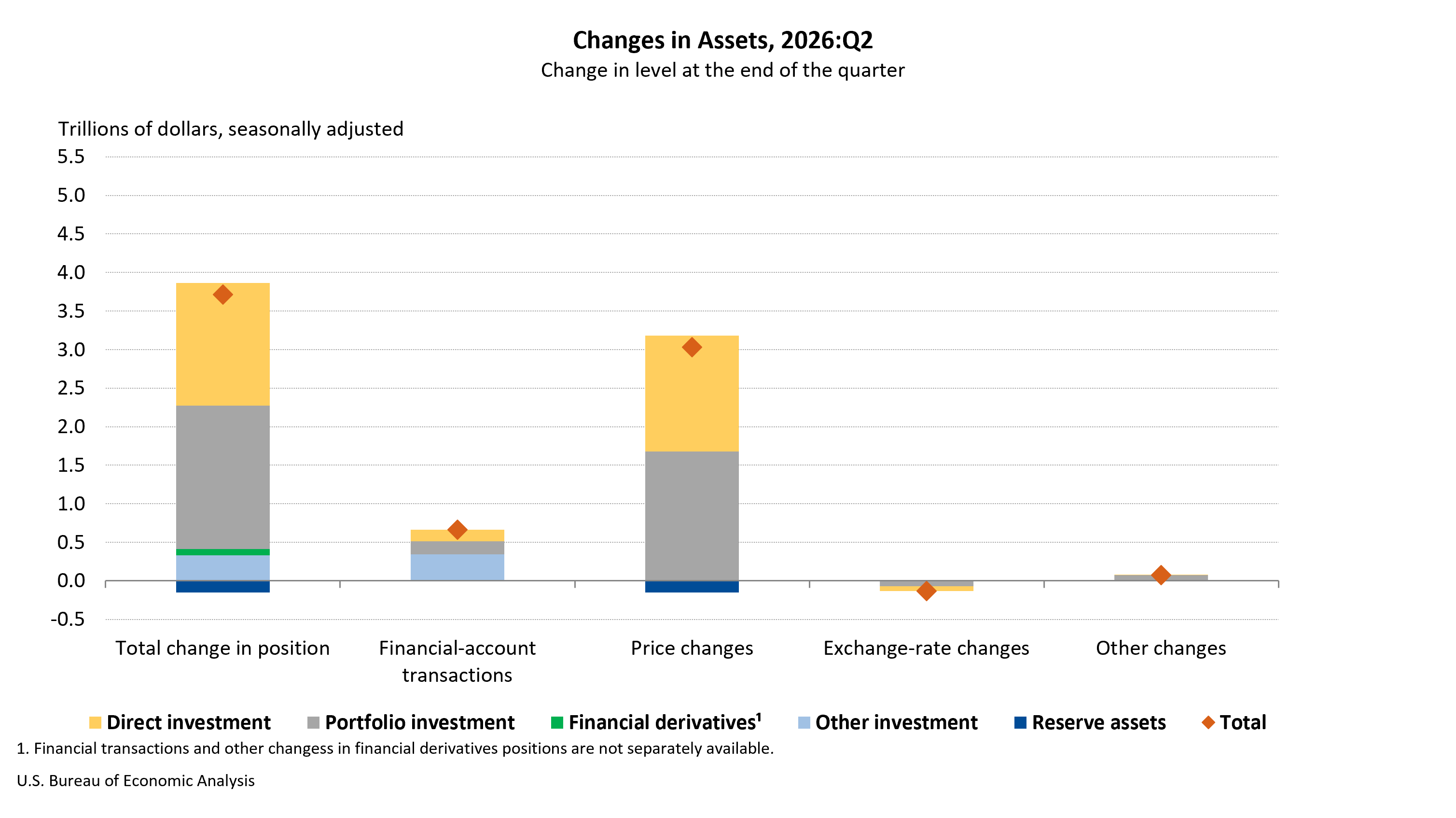
During the second quarter, U.S. assets saw an increase of $3.72 trillion. This rise was broadly distributed across major investment categories, with the exception of reserve assets. The significant growth in assets was driven by two primary forces: price changes, which accounted for $3.03 trillion of the increase, and financial transactions, which contributed $663.3 billion. Price appreciation, such as increases in the value of foreign stocks and bonds held by U.S. investors, played a dominant role in this asset growth.
Similarly, U.S. liabilities also experienced a substantial increase, rising by $4.87 trillion in the second quarter. This growth was observed across all major investment categories, with a particular emphasis on portfolio investment, which includes stocks and bonds. The overall increase in liabilities was driven by price changes amounting to $3.95 trillion and financial transactions totaling $978.9 billion. The larger increase in liabilities compared to assets further widened the net international investment position deficit.
Revisions to First-Quarter Data
The BEA’s release also included revised estimates for the first quarter of 2026. These revisions provided a clearer picture of the economic landscape leading into the second quarter. Notably, the current-account balance for the first quarter was revised upward to a deficit of -$212.6 billion, from preliminary estimates of -$226.8 billion. This revision was primarily due to adjustments in the services balance and the secondary income balance. The goods balance remained unchanged at -$250.9 billion, while the primary income balance saw a slight widening of its deficit.
In the financial account, the net financial-account transactions for the first quarter were revised significantly to -$295.2 billion, a substantial increase from the preliminary estimate of -$209.0 billion. This revision suggests that net U.S. borrowing from financial sources was greater than initially reported.
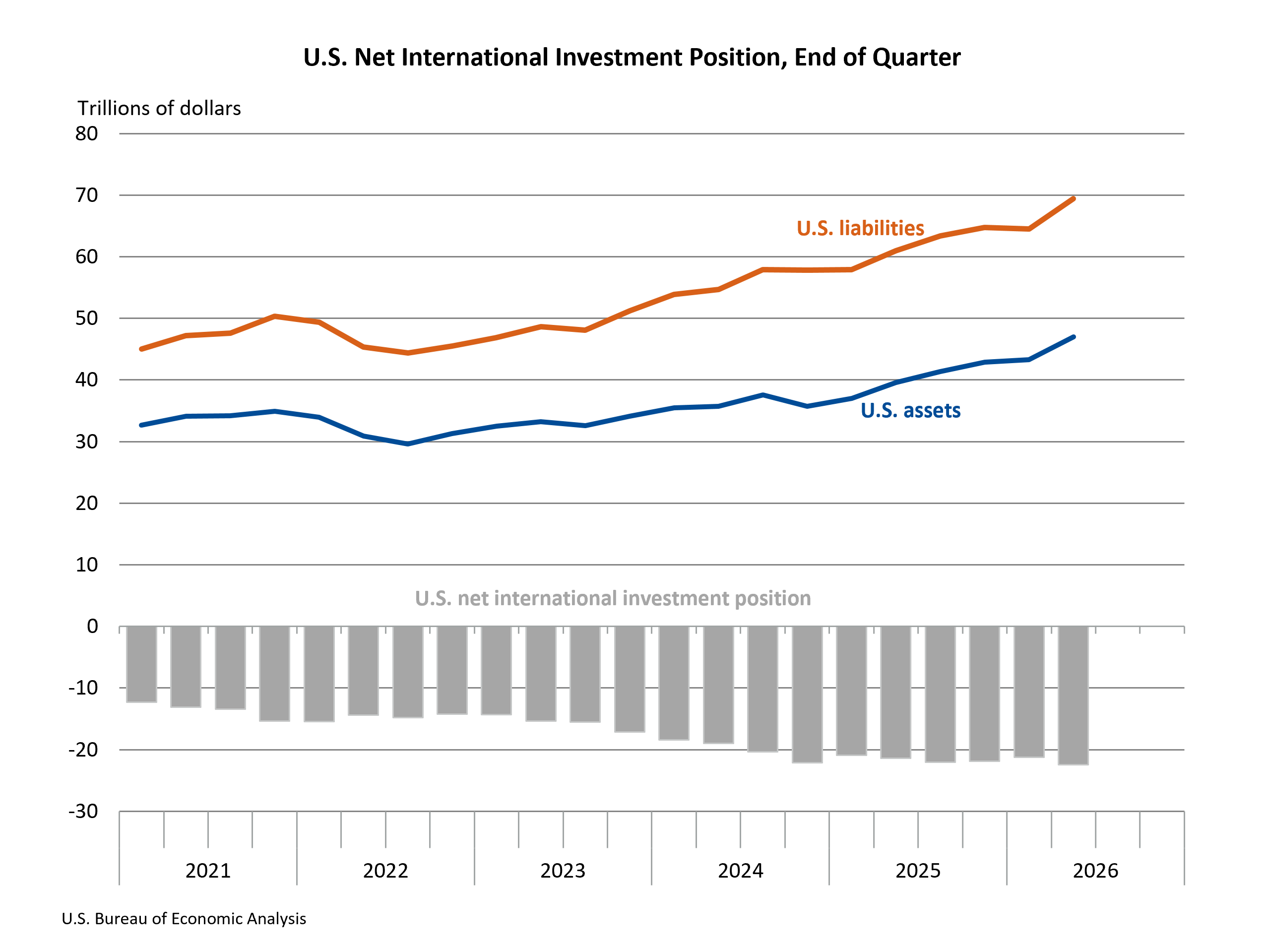
The U.S. net international investment position at the end of the first quarter remained unchanged at -$21.27 trillion, with minor revisions to the preliminary estimates of U.S. assets and liabilities.
Context and Broader Economic Implications
The widening current-account deficit is a complex economic phenomenon with multiple interpretations and potential implications. On one hand, a persistent deficit signifies that a country is consuming more than it produces, relying on foreign borrowing or investment to bridge the gap. This can lead to an accumulation of foreign debt and potentially make the economy more vulnerable to shifts in global capital flows.
On the other hand, a current-account deficit can also reflect a healthy and attractive investment environment. Foreign investors may be drawn to a country’s economic growth prospects, stable political climate, and profitable investment opportunities. The inflow of foreign capital can finance domestic investment in infrastructure, technology, and businesses, thereby contributing to long-term economic growth.
For the United States, the current-account deficit has been a long-standing feature of its economic landscape. Historically, the U.S. dollar’s status as the world’s primary reserve currency has facilitated this situation, as there is a consistent global demand for dollar-denominated assets. However, sustained large deficits can raise concerns about the sustainability of U.S. foreign debt and the potential for future adjustments, such as currency depreciation or trade protectionism, which could have ripple effects on global markets.
The BEA’s detailed breakdown of the components of the current account provides crucial insights for policymakers, businesses, and investors. Understanding whether the deficit is driven by trade in goods, services, or income flows helps in formulating appropriate economic strategies. For instance, a deficit primarily due to a decline in manufactured exports might necessitate policies aimed at boosting domestic production and competitiveness, while a deficit driven by strong consumer demand for imports might require fiscal or monetary policy adjustments.
The upcoming release of third-quarter 2026 statistics on December 18, 2026, will provide further clarity on whether the trend of a widening current-account deficit continues or if there are signs of stabilization or improvement. This ongoing monitoring of international transactions and investment positions is vital for navigating the complexities of the global economy and ensuring the long-term economic health of the United States. The BEA’s commitment to providing timely and detailed data remains a cornerstone for informed economic analysis and decision-making.