Dwi Wanna

The shift toward remote and hybrid work models has fundamentally altered the American professional landscape, transforming what was once a temporary pandemic-era necessity into a permanent fixture of the modern economy. While this transition has offered employees unprecedented geographic flexibility, it has simultaneously created a labyrinth of regulatory and fiscal challenges for employers. As workers migrate across state lines—seeking lower costs of living, proximity to family, or better lifestyle amenities—businesses are finding that their tax and payroll obligations are moving with them. The complexity of these obligations is not merely an administrative hurdle; it represents a significant compliance risk that can lead to substantial financial penalties and legal exposure if managed incorrectly.
The Landscape of the Remote Work Migration
Since 2020, the "Great Migration" of the American workforce has seen millions of employees relocate. According to data from the U.S. Census Bureau and various labor market analyses, interstate migration reached notable peaks as remote work became standardized. For a business, an employee’s relocation is not a private matter; it is a corporate event that triggers "nexus." Nexus is the legal term for a business’s presence in a state, a connection sufficient enough for that state to exert taxing authority over the entity.
Historically, nexus was established through physical storefronts, warehouses, or a concentrated sales force. In the contemporary digital economy, however, the presence of a single remote employee working from a home office is often enough to establish a physical nexus. This means a company headquartered in Delaware with one remote software engineer in Colorado may suddenly find itself subject to Colorado’s employment laws, income tax withholding requirements, and business registration mandates.
Understanding the Hierarchy of Nexus and Withholding
The fundamental principle governing payroll tax is the location where the work is physically performed. Most states tax wages based on the employee’s physical presence at the time of labor, regardless of where the company’s headquarters or bank accounts are located. This "source-based" taxation model requires employers to register with the Department of Revenue in the employee’s new state of residence almost immediately upon the relocation.
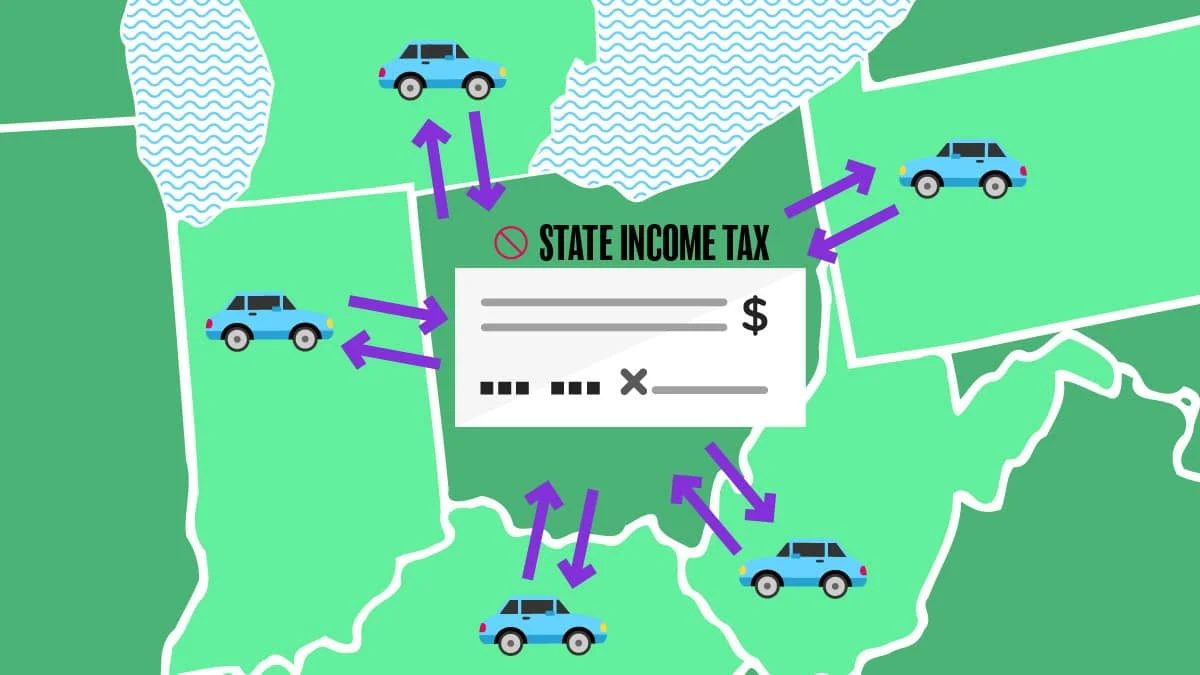
However, the application of these rules is rarely uniform. For instance, several states have established "reciprocal agreements." These are bilateral arrangements between neighboring states—such as those between Maryland, Virginia, and the District of Columbia, or between Pennsylvania and New Jersey—that allow residents to work in one state while paying income tax only to their home state. In these specific cases, the employer must collect a non-residency certificate from the employee to justify withholding for the home state rather than the work state.
Conversely, a more aggressive set of regulations known as "Convenience of the Employer" rules exists in states like New York, Delaware, and Nebraska. Under these rules, if an employee works remotely for their own convenience rather than the necessity of the employer, the "source" state may still claim the right to tax that income, even if the employee is physically located in a different state. This can lead to instances of double taxation, requiring sophisticated tax planning to resolve.
State Unemployment Tax and the Localization Test
Beyond income tax withholding, employers must navigate State Unemployment Tax Act (SUTA) requirements. Unlike income tax, which can sometimes be split between states, SUTA is generally paid to only one state per employee to avoid a fragmented benefits system. To determine which state receives these contributions, the U.S. Department of Labor utilizes a four-tier "localization of work" test.
The tiers are applied in descending order:
- Localization: Is the service performed entirely in one state, or is the work outside the state incidental?
- Base of Operations: If work is performed in multiple states, is there a specific base of operations in one of those states where the employee starts their work?
- Place of Direction and Control: If there is no base of operations, is there a specific location from which the employer directs the employee’s activities?
- Residence: If none of the above apply, the SUTA is typically paid to the state where the employee resides.
When an employee relocates permanently to a new state and works exclusively from there, the "localization" usually shifts to the new state. The employer must then close the unemployment account in the old state and open a new one, often starting at a new employer rate, which can fluctuate based on the state’s specific trust fund solvency and industry risk ratings.
Business Registration and Local Jurisdictions
A common oversight for small to mid-sized enterprises is the failure to register the business as a "foreign entity" in the employee’s new state. When an employee creates nexus, the state often requires the company to obtain a Certificate of Authority to conduct business. This registration typically involves the Secretary of State and may subject the company to annual report filings and franchise taxes.
Furthermore, local tax obligations can be even more granular than state-level requirements. Cities such as Philadelphia, Pittsburgh, and various municipalities in Ohio and Kentucky impose local occupational privilege taxes or earned income taxes. If a remote employee moves into a jurisdiction with local taxing authority, the employer is responsible for identifying the specific local tax rates and remitting those funds to the correct local collector. Failure to do so can result in "nuisance penalties" that, while small individually, can compound significantly over several years of non-compliance.
The Impact on Labor Law and Employee Benefits
Relocation also forces a shift in HR policy compliance. Labor laws are generally governed by the state where the employee is physically located. This includes:
- Minimum Wage: An employer must pay the higher of the federal, state, or local minimum wage. A move from a state with a $7.25 minimum wage to one like Washington or California can necessitate an immediate salary adjustment.
- Overtime and Rest Breaks: States like California have daily overtime requirements (after 8 hours) rather than just weekly requirements (after 40 hours), as well as mandatory meal and rest periods.
- Paid Sick and Family Leave: Many states, including Massachusetts and New York, have mandatory paid family and medical leave programs funded through employer and employee contributions.
- Pay Transparency: States such as Colorado and Washington require employers to disclose salary ranges in job postings, a rule that applies if the company is hiring for a position that could be filled by a resident of that state.
Chronology of a Compliant Relocation Process
To mitigate the risks associated with employee movement, organizations should adopt a standardized timeline for managing relocations.
- Notification Phase: Employees should be required to provide a minimum of 30 days’ notice before a permanent move. This allows the HR and finance departments to evaluate the tax implications of the new jurisdiction.
- Nexus Evaluation: The legal team or a tax professional determines if the move creates a new tax footprint. If the company already has operations in that state, the process is simplified.
- Registration and Permitting: The company registers with the new state’s Secretary of State, Department of Revenue, and Department of Labor.
- Payroll System Update: The payroll provider is notified of the new work location. New withholding forms (W-4 equivalents for the state) are collected from the employee.
- Benefit Review: Workers’ compensation insurance must be updated to include the new state, as most policies are state-specific. Health insurance networks should also be verified to ensure the employee remains covered in their new region.
- Closure of Old Accounts: Once the transition is complete, the employer must ensure that wages are no longer reported to the previous state to avoid "double-reporting" errors.
Broader Implications and Analysis
The administrative burden of multi-state compliance is driving a significant shift in how companies approach hiring. Some firms have implemented "geofencing" policies, where they only allow remote work in states where they already have an established nexus. Others have turned to Professional Employer Organizations (PEOs) or Employers of Record (EORs). These third-party entities legally employ the worker on behalf of the client company, handling all tax, payroll, and compliance duties in exchange for a service fee.
Market analysts suggest that the cost of compliance for a single employee in a new state can range from $2,000 to $5,000 in initial administrative and legal fees, not including the actual tax liabilities. For a small business, this cost can be prohibitive, leading to a "compliance gap" where many businesses operate in violation of state laws, often unknowingly. However, state governments are becoming increasingly sophisticated in their enforcement. Data-sharing agreements between state agencies and the increased scrutiny of "Form 1099" vs. "W-2" filings mean that the likelihood of an audit is higher than in previous decades.
Ultimately, while the geographic decoupling of work and the workplace offers significant benefits for talent acquisition and employee retention, it demands a higher level of operational maturity from the employer. Staying compliant requires a proactive strategy that treats every employee move not just as a change of address, but as a strategic expansion into a new regulatory environment. Companies that fail to adapt to this "borderless" reality face a future of back taxes, interest, and the potential for costly litigation.