Dwi Wanna
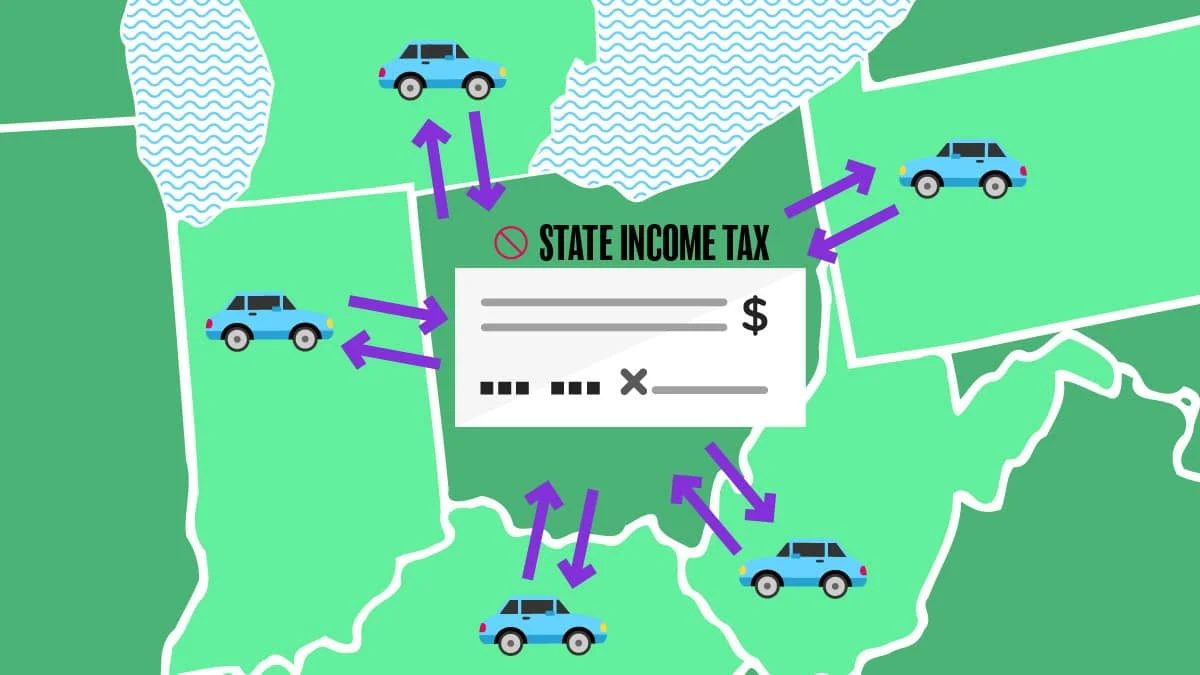
The modern American workforce is increasingly mobile, with millions of employees crossing state lines daily to reach their places of employment. In metropolitan hubs such as the Greater Philadelphia area, the Washington D.C. corridor, and the Chicago-Gary-Kenosha region, the intersection of residency and employment creates a complex web of tax obligations. To mitigate the administrative burden on both businesses and individuals, several states have established tax reciprocity agreements. These bilateral or multilateral pacts allow workers to pay income tax only to their state of residence, effectively streamlining the payroll process and simplifying annual tax filings. Understanding the nuances of these agreements is essential for payroll departments and human resources professionals tasked with ensuring regulatory compliance across multiple jurisdictions.
The Structural Mechanics of Reciprocal Tax Agreements
Tax reciprocity is a formal arrangement between two or more states that dictates how income tax is collected from non-resident workers. Under standard tax law, an individual is typically required to pay income tax to the state where the income is earned (the "work state") and then file a return in their home state (the "residence state"). While most states provide a credit to residents for taxes paid to other jurisdictions, this process necessitates the filing of at least two state tax returns and often results in temporary double-taxation until refunds are processed.
Reciprocity agreements bypass this dual-filing requirement. When a reciprocal agreement is in place, the work state agrees to waive its right to tax the wages of a non-resident, provided the individual’s home state offers the same courtesy to its residents working across the border. For the employee, this means they only owe income tax to the state where they live. For the employer, it simplifies withholding requirements, as they only need to remit taxes to the employee’s home state rather than managing split withholdings or non-resident tax protocols.
It is important to note that reciprocity applies strictly to state income taxes. It does not exempt employees or employers from federal obligations, including Social Security, Medicare, and federal income tax withholding. Furthermore, local taxes—such as those levied by cities, counties, or school districts—are frequently excluded from these agreements. For example, a worker living in a reciprocal state but working in a city with a local earnings tax, such as Philadelphia or Wilmington, may still be liable for those specific local assessments regardless of the state-level agreement.
The Evolution of Interstate Tax Cooperation
The history of tax reciprocity in the United States is rooted in the post-World War II expansion of suburban communities. As infrastructure improved and the middle class migrated to suburbs that often sat across state lines from industrial and commercial centers, states recognized that the administrative cost of processing thousands of non-resident returns often outweighed the revenue benefits.
Chronologically, many of the most robust agreements were solidified in the 1960s and 1970s. For instance, the agreement between Pennsylvania and New Jersey—one of the most significant in terms of the volume of affected workers—dates back to 1977. While these agreements are generally stable, they are subject to legislative changes. In 2016, New Jersey Governor Chris Christie briefly threatened to terminate the agreement with Pennsylvania to address budget shortfalls, highlighting the political nature of these pacts. Although the agreement was ultimately preserved, the incident underscored the importance for employers to monitor state-level legislative sessions for potential shifts in tax policy.
In the current era, the rise of remote and hybrid work models has added a new layer of complexity. While reciprocity traditionally focused on physical commuters, state departments of revenue are now grappling with "convenience of the employer" rules, which can sometimes conflict with traditional reciprocity if an employee works from home in a different state for reasons other than the employer’s necessity.
Administrative Responsibilities for Employers and Employees
Reciprocity is not an automatic benefit; it requires active participation from the employee. To trigger the exemption, the employee must submit a specific certificate of non-residence or an exemption form to their employer’s payroll department. This document serves as a legal declaration of the employee’s residency and their request to have taxes withheld for their home state rather than the work state.
Upon receipt of the completed form, the employer is legally authorized to stop withholding for the state of employment. At the conclusion of the fiscal year, the employer must accurately reflect these withholdings on the employee’s Form W-2. If an employer fails to obtain the correct form and continues to withhold for the work state, the employee faces a significant administrative hurdle. In such cases, the employee must file a non-resident tax return in the work state specifically to claim a refund of the erroneously withheld funds, while simultaneously paying the full tax liability to their home state.
Comparative Analysis: Reciprocity vs. The Credit System
In jurisdictions where reciprocity does not exist—such as between New York and Connecticut or California and Arizona—the "Credit for Taxes Paid to Another State" system prevails. Data from the Federation of Tax Administrators suggests that while this prevents true double taxation, it increases the "compliance cost" for the taxpayer.
A taxpayer in a non-reciprocal situation must calculate their liability in the work state first. When they file their home state return, they apply for a credit. However, this credit is usually capped at the amount the home state would have charged on that same income. If the work state has a higher tax rate than the home state, the worker essentially pays the higher rate and loses the difference. In contrast, reciprocity allows the worker to pay only the rate of their home state, which can be a significant financial advantage if they live in a lower-tax jurisdiction.
Comprehensive State-by-State Reciprocity Data
The following states maintain active reciprocal agreements. Employers operating in these regions should ensure they have the most current versions of the required exemption forms on file.
The Midwest and Great Lakes Corridor
The Midwest features some of the most extensive reciprocal networks in the country, largely due to the proximity of major population centers across state borders.
- Illinois: Maintains agreements with Iowa, Kentucky, Michigan, and Wisconsin. Employees must file Form IL-W-5-NR.
- Indiana: Reciprocates with Kentucky, Michigan, Ohio, Pennsylvania, and Wisconsin. The required filing is Form WH-47.
- Michigan: Has pacts with Illinois, Indiana, Kentucky, Minnesota, Ohio, and Wisconsin. Employees use Form MI-W4.
- Ohio: Works with Indiana, Kentucky, Michigan, Pennsylvania, and West Virginia. The necessary document is Form IT 4NR.
- Wisconsin: Reciprocates with Illinois, Indiana, Kentucky, and Michigan. Workers must submit Form W-220.
The Mid-Atlantic and Northeast
High-density commuting in the Northeast has led to several long-standing agreements, particularly surrounding the District of Columbia and Philadelphia.
- Pennsylvania: Maintains reciprocity with Indiana, Maryland, New Jersey, Ohio, Virginia, and West Virginia. Employees use Form REV-419.
- New Jersey: Has a primary agreement with Pennsylvania. The required document is Form NJ-165.
- Maryland: Reciprocates with D.C., Pennsylvania, Virginia, and West Virginia. Employees file Form MW507.
- Virginia: Agreements are in place with D.C., Kentucky, Maryland, Pennsylvania, and West Virginia. The filing is Form VA-4.
- Washington, D.C.: Offers a broad exemption for all non-residents who work within the District, provided they file Form D-4A.
The Western and Mountain States
Reciprocity is less common in the West due to the vast distances between major cities, but several key agreements exist.
- Arizona: Has specific agreements with California, Indiana, Oregon, and Virginia. Employees must file Arizona Form WEC.
- Montana: Maintains a reciprocal agreement with North Dakota. The required document is Form MW-4.
- North Dakota: Reciprocates with Minnesota and Montana. Workers submit Form NDW-R.
Broader Economic Impact and Future Implications
The existence of tax reciprocity has broader implications for regional economic development. By lowering the "tax friction" of crossing state lines, these agreements encourage a more fluid labor market. Economists argue that reciprocity allows businesses to tap into a wider talent pool, as workers are less likely to be deterred by the prospect of complex multi-state tax filings.
However, state revenue departments remain cautious. Reciprocity can lead to "revenue shifts" where a state with a high concentration of jobs but a low concentration of resident workers (like Delaware or D.C.) might lose out on potential tax income. This is why many states without reciprocity, such as New York, aggressively defend their right to tax non-residents who work within their borders.
For businesses, the primary impact is operational efficiency. In a 2023 survey of payroll professionals, "multi-state compliance" was cited as one of the top three administrative challenges. Utilizing reciprocity agreements effectively can reduce the likelihood of payroll errors, which in turn minimizes the risk of audits and penalties from state tax authorities.
As we move further into the decade, the stability of these agreements will likely depend on how states adapt to the "work-from-anywhere" culture. If a significant portion of the workforce stops physically commuting, the traditional justification for reciprocity—simplifying the lives of daily commuters—may be challenged, leading to a new era of interstate tax negotiations. For now, maintaining a rigorous understanding of current forms and state-specific rules remains the best defense for both employers and their cross-border employees.