admin
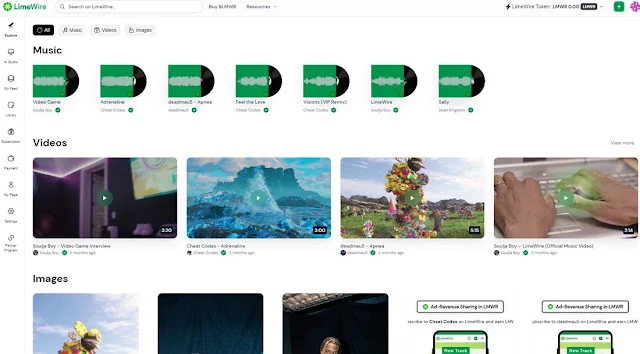
In a remarkable strategic pivot, LimeWire, a name once synonymous with the tumultuous early days of peer-to-peer file sharing, has undergone a profound transformation, re-emerging as a cutting-edge generative artificial intelligence (AI) content publishing and monetization platform. This ambitious reincarnation positions the brand at the nexus of two of the digital economy’s most rapidly evolving sectors: AI innovation and the Web3 creator economy. Far from its controversial past, the new LimeWire is designed to empower creators with sophisticated AI tools for content generation, coupled with robust mechanisms for sharing and monetizing their digital assets, primarily through Non-Fungible Tokens (NFTs) and direct ad revenue sharing.
The Genesis of a Digital Phoenix: From P2P Pioneer to Web3 Innovator
To fully appreciate LimeWire’s current trajectory, it is essential to contextualize its origins. The original LimeWire application, launched in 2000, quickly became a dominant force in the peer-to-peer (P2P) file-sharing landscape. Operating on the Gnutella network, it allowed users worldwide to directly exchange digital files, most notably music and movies, circumventing traditional distribution channels. At its peak, LimeWire boasted tens of millions of users, democratizing access to media but simultaneously becoming a focal point in the raging battles over intellectual property rights. The Recording Industry Association of America (RIAA) and other copyright holders initiated a series of high-profile lawsuits, culminating in a permanent injunction in 2010 that forced the shutdown of the original service. This saga underscored the complex challenges of digital distribution and ownership in the nascent internet era, leaving a legacy of both innovation and legal contention.
More than a decade later, the LimeWire brand was acquired by brothers Julian and Paul Zehetmayr, who envisioned a radical reinvention. Recognizing the seismic shifts in technology, particularly the advent of blockchain and advanced AI, they orchestrated the platform’s rebirth not as a file-sharing service, but as a legitimate and forward-looking platform for digital creators. This transformation is not merely a rebranding but a fundamental re-architecture, leveraging the principles of decentralization and AI-driven creativity to address many of the issues that plagued its predecessor. The timing of this re-entry into the digital arena, amidst the burgeoning interest in generative AI and the mainstreaming of NFTs, is highly strategic, aiming to capitalize on new paradigms of digital asset creation, ownership, and value.
Navigating the Generative AI Landscape: LimeWire’s Unique Value Proposition
The generative AI market has exploded in recent years, with tools like Midjourney, DALL-E 3, and Stable Diffusion capturing widespread attention for their ability to create stunning visuals, text, and other media from simple prompts. Industry analysts project the global generative AI market to grow from an estimated $11.3 billion in 2023 to over $51.8 billion by 2028, reflecting its transformative potential across numerous sectors. In this competitive environment, LimeWire seeks to carve out a distinct niche by integrating creation, sharing, and monetization into a single, cohesive ecosystem.
At its core, LimeWire Studio provides users with intuitive tools for AI content generation. Currently, its primary focus is on AI image generation, supporting sophisticated models such as Stable Diffusion 2.1, Stable Diffusion XL, and DALL-E 2. This allows creators to produce a wide array of visual content, from photorealistic images to abstract art, leveraging diverse design styles like cinematic, digital art, pixel art, anime, and analog film. The platform offers flexibility, enabling users to generate content with prompts ranging from a few words to intricate instructions, while also providing features like samplers, customization options, and prompt guidance to refine outputs.
A key differentiator for LimeWire is its ambitious roadmap for expansion. The platform has publicly announced plans to introduce AI music and video generation tools in the near future. This strategic move aims to create a comprehensive generative media suite, allowing artists to explore multimodal creativity within a single environment. Furthermore, LimeWire is actively developing its proprietary AI model, a significant investment that signals a long-term commitment to innovation and the potential for platform-exclusive features and enhanced performance tailored to its creator community. This dedication to developing its own AI capabilities could provide a crucial competitive edge in an rapidly evolving market, allowing for deeper integration with its Web3 monetization features.
The Web3 Creator Economy: Empowering Artists with Ownership and Revenue
LimeWire’s most innovative aspect lies in its integration with the Web3 creator economy, offering robust monetization pathways that go beyond traditional content platforms. This commitment to empowering creators with direct revenue streams and digital ownership is a central tenet of its redesigned identity.
Automated NFT Minting and Digital Ownership: Upon creating content, users have the option to publish their work, triggering an automated process to mint it as an NFT. These NFTs are minted on either the Polygon or Algorand blockchains. The choice of these networks is strategic; both offer high transaction speeds, lower gas fees, and greater scalability compared to the Ethereum mainnet, making frequent minting and trading economically viable for a broad user base. Minting content as an NFT imbues it with a unique digital signature, establishing verifiable authenticity and immutable ownership on a decentralized ledger. This stands in stark contrast to traditional digital content, which is often easily duplicated and lacks clear ownership provenance.
Creators retain significant control over the accessibility of their NFT creations. They can opt for a public release, making their content discoverable by anyone and fostering a vibrant community around tradeable digital collectibles. Alternatively, creators can choose to share posts exclusively with their premium subscribers, creating an intimate and personalized experience for dedicated fans. This flexibility allows artists to tailor their distribution strategy to their specific goals, whether it’s broad exposure or exclusive content for a loyal following.
Direct Revenue Streams and Royalty Models: Beyond initial sales, LimeWire introduces a compelling royalty model for secondary market transactions. Each time a creator’s NFT content is traded within the LimeWire community, the original creator earns a 2.5% royalty. This passive income stream incentivizes creators to produce high-quality, desirable content that retains long-term value and encourages ongoing engagement from collectors. Such a model directly addresses a long-standing challenge for digital artists, who traditionally lose out on value appreciation after the initial sale of their work.
In addition to NFT-based earnings, LimeWire implements an ad revenue sharing model. Creators receive a substantial 70% of all ad revenue generated from users viewing their images, music, and videos on the platform. This direct revenue share is significantly higher than what many traditional social media or streaming platforms offer, presenting a more beneficial income stream for designers and artists. This dual monetization strategy—NFTs for ownership and secondary market value, plus ad revenue for engagement—provides creators with diverse avenues to earn from their work.
LMWR Tokens: The Platform’s Economic Backbone: All earnings on LimeWire are distributed in LMWR tokens, the platform’s native cryptocurrency. This token serves as the primary medium of exchange within the ecosystem. Creators receive their monthly earnings in LMWR, which can then be traded on popular cryptocurrency exchange platforms such as Kraken, ByBit, and UniSwap, providing liquidity and convertibility to fiat currency or other cryptocurrencies. Furthermore, LMWR tokens can be used to pay for prompts and other services when utilizing LimeWire’s generative AI tools, creating a circular economy within the platform that drives demand and utility for the token. The integration of a native cryptocurrency is a hallmark of Web3 platforms, fostering a self-sustaining economic model and often offering community governance opportunities, though the latter is not explicitly detailed in LimeWire’s current offerings.
The Role of Community and Celebrity Engagement: LimeWire Studio is designed as a creative hub where content creators can not only craft personalized AI-focused content but also share it directly with fans and followers. This fosters a direct relationship between artists and their audience, reminiscent of direct-to-fan models. Fans can subscribe to creators’ pages, immersing themselves in the creative journey and gaining ownership of digital collectibles.
The platform has already attracted notable artists and musicians, including Deadmau5, Soulja Boy, and Sean Kingston, who have utilized LimeWire to publish content in the form of NFT music, videos, and images. The involvement of such acclaimed figures lends credibility and visibility to the platform, signaling its potential as a legitimate distribution channel for established artists seeking to engage with their audience in new, Web3-native ways. Their participation underscores a growing trend among musicians and artists to leverage blockchain technology for direct fan engagement, novel monetization, and greater control over their intellectual property.
Accessibility and Pricing Models: A Spectrum of Creative Opportunities
LimeWire employs a freemium business model, ensuring accessibility while offering enhanced benefits through premium subscriptions. New users can sign up for free, receiving 10 credits per month, enabling the generation of up to 20 AI images per day. This free tier also grants creators a 50% share of ad revenue, providing an entry point for experimentation and initial monetization.
For more prolific creators or those seeking advanced features, LimeWire offers several premium plans:
- Basic ($9.99/month): 1,000 credits/month (up to 2,000 image generations), early access to new AI models, 50% ad revenue share.
- Pro ($29/month): 3,750 credits/month (up to 7,500 image generations), early access to new AI models, 60% ad revenue share.
- Expert ($49/month): 5,000 credits/month (up to 10,000 image generations), early access to new AI models, 70% ad revenue share.
- Master ($99/month): 11,250 credits/month (up to 22,500 image generations), early access to new AI models, 70% ad revenue share.
All premium plans include additional perks such as a Pro profile badge, full creation history access, faster image generation speeds, and an ad-free experience. This tiered pricing structure caters to a range of users, from hobbyists to professional artists, providing scalable resources and enhanced revenue potential as creators become more invested in the platform.
Broader Implications and Future Outlook
LimeWire’s re-emergence as a generative AI and Web3 platform carries significant implications for the creative industries. It represents a tangible example of how legacy brands can reinvent themselves to stay relevant in a rapidly evolving digital landscape. Its model challenges traditional content distribution paradigms by offering creators unprecedented control over their intellectual property and direct access to monetization channels.
Challenges Ahead: Despite its innovative approach, LimeWire faces several challenges. The generative AI space is intensely competitive, with new models and platforms emerging constantly. Maintaining technological leadership and attracting a critical mass of both creators and consumers will be crucial. The volatile nature of the cryptocurrency and NFT markets also presents a risk, as the value of LMWR tokens and the tradeability of NFTs can fluctuate significantly. Furthermore, the ethical considerations surrounding AI-generated content, such as potential for misuse (e.g., deepfakes), copyright issues with training data, and the need for clear attribution, will require ongoing attention and robust platform policies.
Opportunities and Impact: Conversely, LimeWire is well-positioned to capitalize on several major trends. The demand for generative AI tools is projected to continue its exponential growth, driven by both professional and amateur creators. The Web3 creator economy, while still nascent, offers immense potential for empowering artists with greater autonomy and fairer compensation models. By combining these two powerful forces, LimeWire could foster a unique and thriving ecosystem that attracts a new generation of digital artists and collectors. Its commitment to expanding into AI music and video generation tools promises to unlock even more creative possibilities, potentially becoming a leading multimodal generative media platform.
In conclusion, LimeWire’s journey from a controversial file-sharing service to a pioneering generative AI and Web3 content platform is a testament to the dynamic nature of digital innovation. By democratizing access to powerful AI tools and integrating robust monetization mechanisms through NFTs and ad revenue sharing, LimeWire aims to empower creators to unleash their artistic potential, share their work effortlessly, and earn revenue in ways previously unattainable. As the platform continues to evolve, particularly with its planned expansion into AI music and video, it stands poised to play a significant role in shaping the future of digital content creation, ownership, and distribution.