Lana Rhoades
The global e-commerce landscape has reached a pivotal juncture in 2026, with total online retail sales projected to surpass $8.1 trillion. For modern retailers, this growth brings not only immense opportunity but also an increasingly intricate web of regulatory obligations. Central to these obligations is the concept of sales tax nexus—a legal term defining the level of connection between a business and a taxing jurisdiction that requires the business to collect and remit sales tax. As digital storefronts continue to transcend geographical borders, understanding and managing nexus has evolved from a back-office accounting task into a foundational element of corporate risk management and financial strategy.
The current regulatory environment is largely a byproduct of a decade of legal transformation. In 2026, the "physical presence" standard that once governed interstate commerce has been largely superseded by "economic nexus" standards, creating a reality where a business may owe taxes in a state where it has no offices, no employees, and no inventory. For e-commerce entities, failing to keep pace with these shifting rules can lead to retroactive tax liabilities, severe financial penalties, and the looming threat of multi-state audits.
The Historical Shift: From Quill to Wayfair and Beyond
To understand the 2026 tax landscape, one must look back at the judicial milestones that dismantled the previous status quo. For decades, the governing principle was established by the 1992 Supreme Court case Quill Corp. v. North Dakota, which ruled that a state could only require a business to collect sales tax if that business had a physical presence in the state. This "physical presence" rule provided a significant advantage to early e-commerce pioneers, allowing them to sell goods across state lines without the administrative burden of calculating various local tax rates.
However, as e-commerce began to erode traditional "brick-and-mortar" tax bases, state governments lobbied for change. This culminated in the landmark 2018 decision in South Dakota v. Wayfair, Inc. The Supreme Court overturned the Quill precedent, ruling that states could mandate tax collection based on economic activity alone. In the years following Wayfair, states rapidly adopted their own versions of economic nexus laws.
By 2024, nearly every state with a general sales tax had implemented economic thresholds. In 2025 and early 2026, the trend shifted toward simplification and refinement, with many states removing "transaction count" thresholds (such as the common 200-transaction rule) to focus solely on gross revenue. This evolution was designed to relieve the burden on micro-sellers while ensuring that significant players in the $8.1 trillion market contributed their share to state coffers.
Defining Modern Sales Tax Nexus: Physical and Economic
In 2026, nexus is categorized into two primary forms: physical and economic. While economic nexus receives the most headlines, physical nexus remains a potent and often overlooked trigger for tax liability.
The Persistence of Physical Nexus
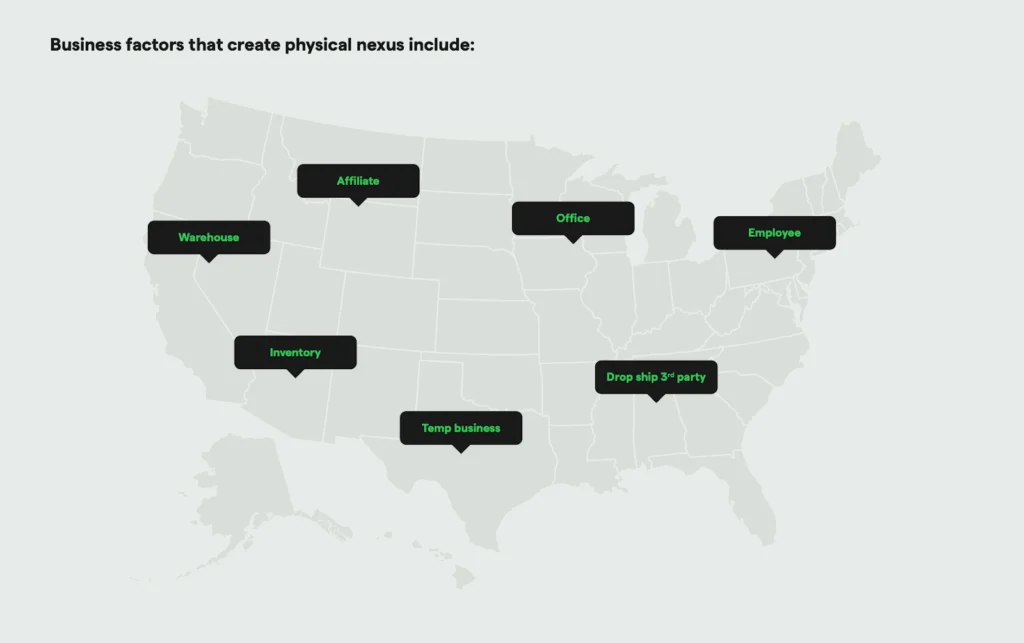
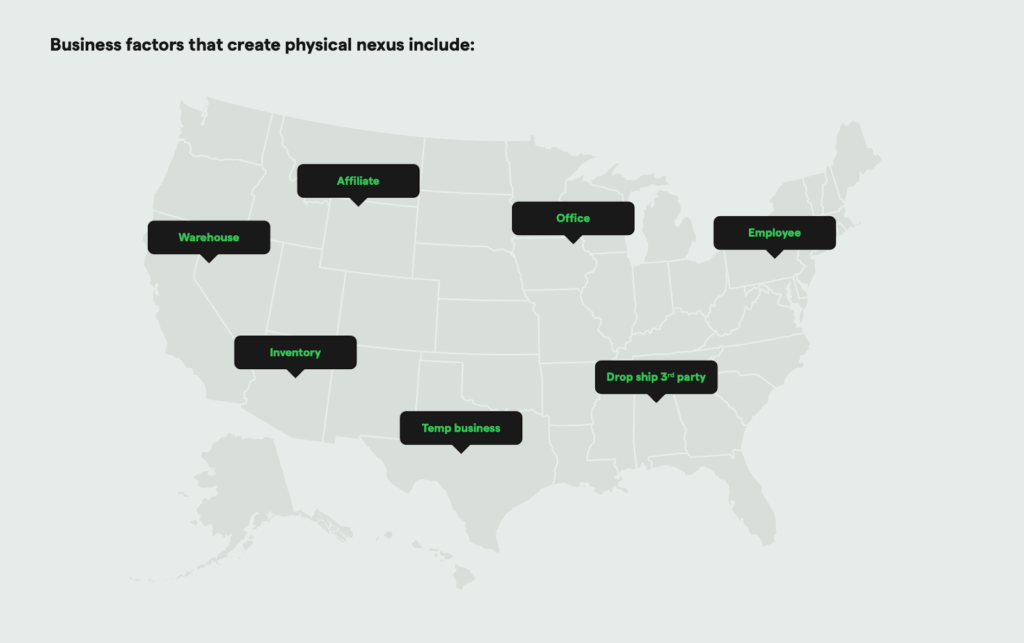
Physical nexus is established through traditional business connections. However, in a decentralized economy, the definition of "physical" has expanded. Key triggers in today’s market include:
- Inventory Storage: Utilizing Third-Party Logistics (3PL) providers or services like Fulfillment by Amazon (FBA) often creates nexus in any state where a seller’s goods are stored, even if the seller has no control over where the marketplace chooses to house those goods.
- Remote Workforce: With the permanence of remote work, having a single employee or even an independent contractor performing services in a state can trigger physical nexus for the entire business.
- Trade Show Participation: Many states consider attending a trade show for as few as three days to be a nexus-creating event.
- Affiliate Relationships: "Click-through" nexus laws remain in effect in several jurisdictions, where a business establishes a connection through in-state affiliates that drive traffic to its website.
The Mechanics of Economic Nexus
Economic nexus is governed by specific financial thresholds. These vary significantly by state, creating a "patchwork" of compliance requirements. For example, California maintains a high threshold of $500,000 in annual sales. Conversely, states like Illinois require compliance if a business exceeds $100,000 in gross receipts or 200 separate transactions within a 12-month period.
Market analysts note that the trend in 2026 is toward "revenue-only" thresholds. States like Maine and Indiana have recently led the charge in eliminating the transaction count requirement, recognizing that a seller could reach 200 transactions with low-value items without generating enough revenue to justify the administrative cost of tax compliance.
Product Taxability and the Challenge of Exemptions
Determining where to tax is only half the battle; retailers must also determine what to tax. While most tangible personal property—items such as furniture, electronics, and apparel—is taxable, the definitions of "necessities" vary across state lines.
Variations in Taxable Goods
As of 2026, several categories of goods face inconsistent tax treatments:
- Clothing: Some states, like Pennsylvania, exempt most clothing, while others tax it fully or only exempt items below a certain price point.
- Groceries and Supplements: The line between a "grocery staple" and a "taxable supplement" remains a frequent point of contention in audits.
- Digital Goods and SaaS: Software as a Service (SaaS) and digital downloads (ebooks, streaming) represent the most volatile area of tax law. Some states tax SaaS as a service, some as tangible property, and others do not tax it at all. Furthermore, some jurisdictions apply different rates depending on whether the software is for personal or business use.
Retailers must maintain a robust product-mapping system to ensure that the correct tax rate is applied to the correct SKU in each of the more than 11,000 taxing jurisdictions across the United States.
Data-Driven Compliance: A Strategic Necessity
The sheer volume of data required to manage nexus in 2026 has made manual tracking virtually impossible for growing enterprises. Financial experts emphasize that the cost of non-compliance far outweighs the investment in automation.
The Risks of Audits and Penalties
State revenue departments have become increasingly sophisticated, utilizing data-sharing agreements and advanced analytics to identify non-compliant out-of-state sellers. An audit can result in:
- Back Taxes: Businesses may be held liable for years of uncollected taxes, which often must be paid out of the company’s profit margins since they cannot be retroactively collected from customers.
- Interest and Penalties: Late filing penalties and compounded interest can often double the original tax liability.
- Reputational Damage: For companies seeking venture capital or preparing for an acquisition, unresolved tax liabilities are a major red flag during due diligence.
The Role of Automation
To mitigate these risks, the industry has turned to automated nexus management solutions. These platforms integrate directly with e-commerce storefronts to monitor sales volumes in real-time, alerting businesses as they approach state-specific thresholds. By automating the "start date" of nexus—the moment a business surpasses a threshold or places inventory in a new state—companies can register for permits and begin collection before a liability gap forms.
A Roadmap for Compliance in 2026
For retailers navigating this landscape, a structured approach to nexus management is essential. Experts recommend the following five-step roadmap:
- Nexus Audit: Conduct a comprehensive review of where employees are located, where inventory is stored, and the total sales volume by state.
- Threshold Monitoring: Implement software to track sales against the unique economic thresholds of all 45 states (plus D.C.) that collect sales tax.
- Permit Acquisition: Once nexus is established, a business must register for a sales tax permit with the state’s Department of Revenue. It is illegal to collect tax without a valid permit.
- Tax Calculation and Collection: Configure the checkout process to calculate taxes based on the buyer’s exact ship-to address, accounting for state, county, city, and special district taxes.
- Filing and Remittance: Ensure that returns are filed on time—whether monthly, quarterly, or annually—even if no tax was collected during that period (zero-tax returns).
Broader Implications and Future Outlook
The complexity of sales tax nexus in 2026 has sparked renewed calls for federal intervention. Advocacy groups for small businesses argue that the current system places a disproportionate burden on entrepreneurs, who must navigate thousands of different tax rules. While the "Streamlined Sales and Use Tax Agreement" (SSUTA) aims to harmonize these rules, only about half of the states with sales tax are currently members.
As the e-commerce sector marches toward the $10 trillion mark later this decade, the intersection of technology and tax law will only deepen. For the modern retailer, nexus is no longer a static "yes or no" question but a dynamic, data-driven reality of doing business in a hyper-connected world. Those who prioritize compliance as a core business function will be better positioned to scale, while those who ignore the "tangled web" of state laws face significant financial headwinds in an increasingly competitive global market.