Nila Kartika Wati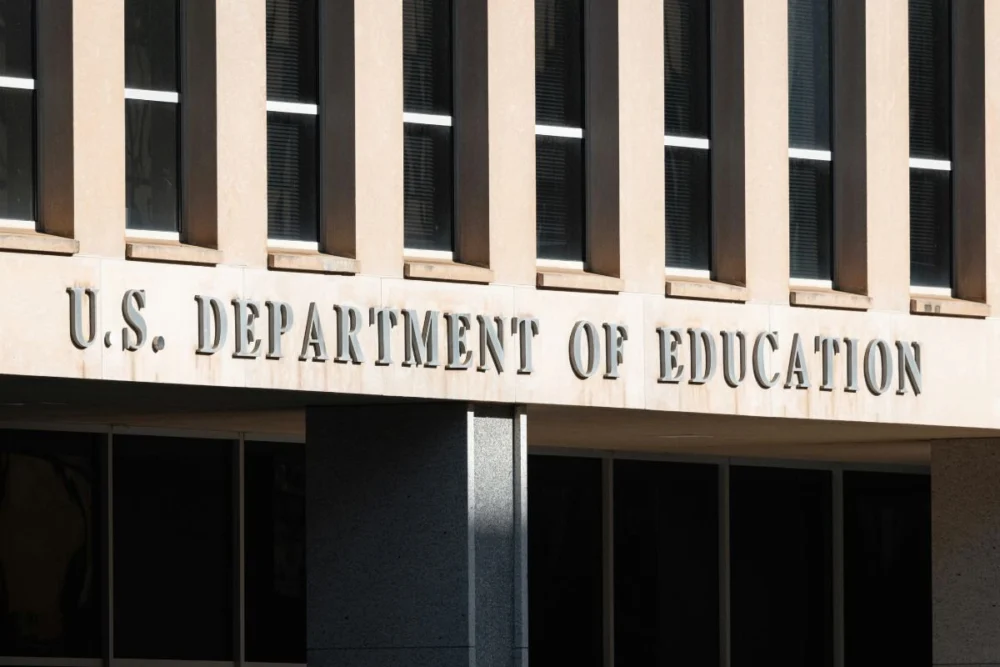
A significant shift in federal student loan policy is poised to reshape the landscape of American graduate education, specifically targeting the financial pipelines for nursing and public health professionals. Under new guidelines signed into law by President Donald Trump in July, the Department of Education has introduced a bifurcated system of borrowing limits based on the classification of graduate degrees. While students pursuing "professional degrees"—such as dentistry, pharmacy, and chiropractic medicine—will maintain access to a higher federal loan ceiling of $200,000, those enrolled in nursing and public health programs have been categorized under "standard graduate degrees," effectively halving their borrowing capacity to a lifetime limit of $100,000.
This reclassification, scheduled to take full effect in July 2026, has sent ripples of concern through the healthcare and academic communities. Critics argue that the move fails to recognize the clinical complexity and societal necessity of advanced nursing and public health roles, while proponents in the administration maintain that the caps are a necessary intervention to curb rising tuition costs and reduce the nation’s burgeoning $1.7 trillion student debt portfolio. As the deadline for implementation approaches, the debate has centered not only on fiscal responsibility but on the potential for these limits to exacerbate racial disparities and weaken the nation’s healthcare infrastructure.
The Divergence in Degree Classification
The crux of the policy change lies in the interpretation of the Higher Education Act of 1965. The administration’s decision to exclude nursing and public health from the "professional" designation is based on a literal reading of the decades-old statute, which provides a non-exhaustive list of examples for professional degrees but does not explicitly name nursing or public health. By sticking to this narrow definition, the Department of Education has established a two-tiered system that creates a massive financial gap for students in fields that often require extensive clinical hours and specialized master’s or doctoral training.
The Department of Education has defended the decision as a market-correcting measure. According to official statements, graduate students have accounted for more than half of all new federal student loans in recent years. By limiting the amount of federal capital available to these programs, the administration believes universities will be forced to lower tuition rates to remain accessible to students who can no longer bridge the gap with federal aid. "These loan limits will help drive down the cost of graduate programs and reduce the debt students have to take out," the Department noted in a recent press release, framing the move as a victory for long-term affordability.
However, academic leaders, such as Laura Magaña, president of the Association of Schools and Programs of Public Health (ASPPH), argue that this logic is flawed. At a recent media briefing, Magaña characterized the exclusion of public health as "short-sighted," noting that the field is the backbone of the nation’s prevention and preparedness infrastructure. She emphasized that the classification fundamentally misunderstands the practical application of these degrees in the modern workforce.
Humanizing the Impact: The Student Perspective
For students like Shawnie Allen, the policy change represents a direct threat to a career path born out of personal necessity and a desire for systemic reform. Allen, a 23-year-old master’s student at the University of South Florida, transitioned into public health after a 2023 experience in a hospital room where she felt judged and unsupported by a nurse while inquiring about abortion options. That interaction led Allen to research racial disparities in maternal health, eventually focusing her studies on maternal and child health.
Allen’s journey, like many of her peers, has been funded through federal student loans. For students of color, who historically lack the generational wealth to self-fund graduate education, these loans are often the only viable pathway to the workforce. Without the ability to borrow beyond the $100,000 cap, many students may find themselves unable to complete advanced degrees, particularly as the cost of living and tuition in major metropolitan areas continues to climb.
Similar sentiments are echoed by Chloe Urias, a 23-year-old student at the Vanderbilt School of Medicine. As the daughter of a Mexican immigrant, Urias views education as the primary tool for social mobility and advocacy. She expressed "devastation" at the prospect of the pipeline being severed for those following her. Urias noted that the COVID-19 pandemic highlighted the desperate need for a robust public health infrastructure, making the timing of these loan limits particularly counterintuitive.
A Chronology of Policy Shifts
The path to the July 2026 implementation has been marked by several key legislative and administrative milestones:
- November 2025: The Department of Education releases a preliminary list of definitions for "professional degrees," notably omitting nursing and public health despite heavy lobbying from healthcare associations.
- July 2025: President Trump signs the broader legislative package containing the loan limit provisions, touted as a measure to bring "transparency and accountability" to the higher education market.
- Early 2026: Negotiated rulemaking sessions conclude, with the administration maintaining its stance on the $100,000 cap for standard graduate degrees.
- July 2026: The projected date for the new loan limits to take effect for all new loan originations.
This timeline suggests a rapid overhaul of the federal financial aid system, leaving little time for universities to adjust their tuition models or for students to seek alternative funding sources.
Statistical Analysis of Debt and Diversity
The potential for this policy to disproportionately affect women and people of color is supported by a wealth of demographic and economic data. According to the American Association of University Women (AAUW), women of color carry the highest levels of student debt in the United States. This is attributed to a combination of the gender pay gap and the necessity of higher degrees to reach salary parity with their male counterparts.
Furthermore, data from the Bureau of Labor Statistics (BLS) indicates that as of 2024, people of color accounted for only 32 percent of all healthcare practitioners. In fields like nursing and public health, representation is even more critical, as studies have consistently shown that patients experience better health outcomes when treated by providers who share their cultural background and lived experiences.
The financial math of the new caps is equally stark. A Doctor of Nursing Practice (DNP) or a Master of Public Health (MPH) at a top-tier institution can easily exceed $100,000 in tuition and fees alone, not including the cost of living. If students are capped at $100,000 in federal loans, they are often forced into the private loan market, which typically offers higher interest rates and fewer consumer protections, such as income-driven repayment plans or public service loan forgiveness.
Implications for Rural and Underserved Communities
One of the most profound risks associated with the loan caps is the potential for a "brain drain" in medically underserved and rural areas. Advanced practice nurses, including nurse midwives and nurse practitioners, often serve as the primary source of care in regions where physicians are scarce. These professionals are qualified to deliver babies, provide primary care, and manage chronic conditions.
Veronica Vital, president of the National Association of Hispanic Nurses (NAHN), warned that the policy would "compound already significant obstacles" for nurses of color. She argued that by weakening the pipeline of diverse providers, the administration is inadvertently threatening the health and safety of communities that already face significant equity gaps. "When the culture and lived experiences between provider and patient are shared, that enhances trust and ultimately enhances outcomes," Vital stated.
The public health sector faces a similar crisis. Public health practitioners are responsible for everything from tracking infectious diseases to implementing workplace safety standards. Brittany Vang, a 31-year-old doctoral student at Mercer University and the daughter of Hmong refugees, highlighted the importance of cultural competence in these roles. Vang noted that without diverse practitioners who understand the nuances of different backgrounds, the "melting pot" of America will continue to see uneven quality in preventative care.
The Future of Public Health Infrastructure
The debate over student loan limits ultimately points to a larger question about how the United States values various sectors of its healthcare workforce. By labeling pharmacy and dentistry as "professional" while relegating nursing and public health to "standard" status, the administration is making a value judgment that many experts find disconnected from reality.
As the 2026 deadline looms, stakeholders are calling for a reassessment of the definitions used to categorize these degrees. They argue that the $1.7 trillion debt crisis should be addressed through tuition reform and predatory lending oversight rather than by limiting the aspirations of those entering essential service fields.
The immediate future for students like Allen, Urias, and Vang remains uncertain. While they may finish their current programs before the most restrictive caps take hold, the next generation of healthcare leaders faces a significantly more difficult financial path. The consensus among many health professionals is that the proposal comes at "exactly the wrong moment," threatening to undo decades of progress in diversifying the healthcare workforce and ensuring that the American public is protected against future health crises.