Candice Horbacz
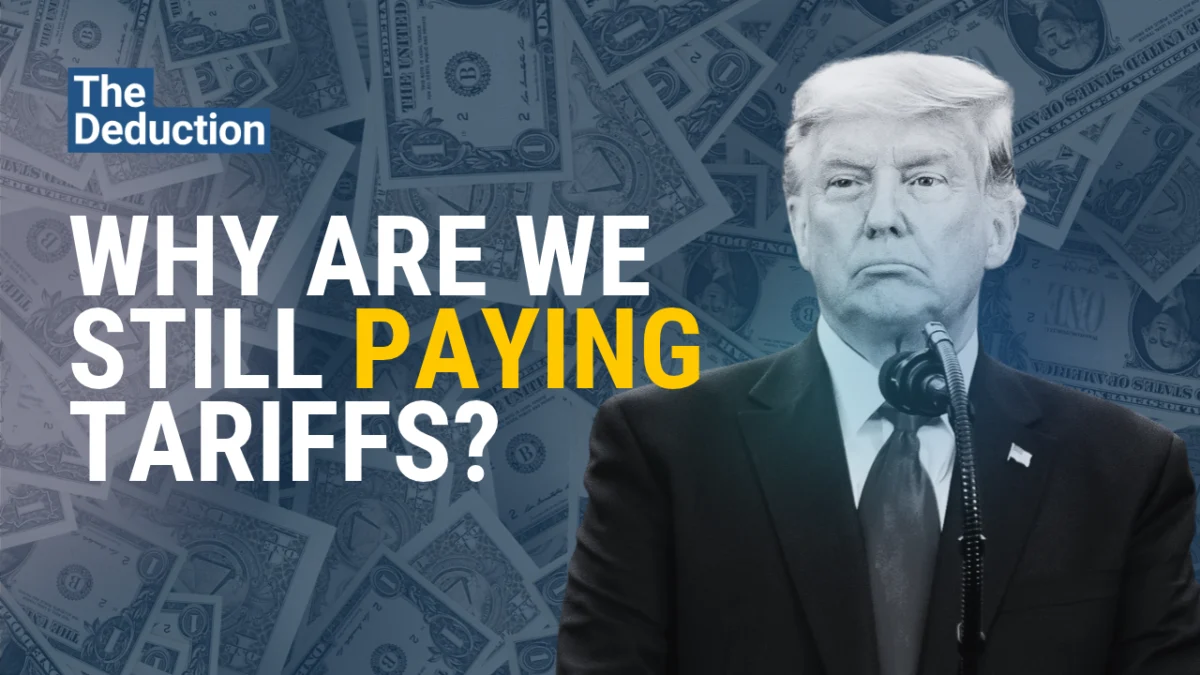
Despite a February Supreme Court decision striking down tariffs imposed under the International Emergency Economic Powers Act (IEEPA), American consumers and businesses continue to face significant import taxes, as the administration swiftly replaced the invalidated measures, first with temporary Section 122 tariffs and subsequently with 10 to 12.5 percent Section 301 tariffs on a broad array of goods from numerous trading partners. This rapid succession of trade barriers has ignited renewed debate among economists and policymakers regarding their economic impact, particularly how they may counteract domestic investment incentives and influence ongoing legal challenges.
The Shifting Landscape of U.S. Trade Policy
The recent developments mark a turbulent period in U.S. trade policy, characterized by the administration’s persistent reliance on tariffs as a tool for economic leverage and national security. The Supreme Court’s decision earlier this year concerning IEEPA tariffs was a landmark moment, challenging the executive branch’s expansive use of emergency powers in trade matters. These IEEPA tariffs, often justified under national security pretexts, had been a significant point of contention for industries reliant on global supply chains. However, the relief anticipated by many following the court’s ruling was short-lived.
Within days of the Supreme Court’s verdict, the administration announced the implementation of temporary tariffs under Section 122 of the Trade Act of 1974. This section grants the President authority to impose import restrictions in response to balance-of-payments issues. While presented as an interim solution, these Section 122 tariffs quickly transitioned into more permanent and expansive Section 301 tariffs, drawing their authority from another provision of the Trade Act of 1974. Section 301 is typically invoked to address unfair trade practices by foreign countries, such as intellectual property theft or subsidies that harm U.S. industries. The current iteration, imposing duties of 10 to 12.5 percent, affects a wide range of imported goods, fundamentally altering the cost structure for businesses and the prices paid by consumers across the United States.
A Chronology of Tariff Implementation and Legal Challenges
The timeline of these events underscores the administration’s determination to maintain a tariff-heavy trade posture:
- Pre-February: Tariffs under the International Emergency Economic Powers Act (IEEPA) are in effect, targeting various goods and countries, often citing national security concerns. These tariffs are met with legal challenges from importers and industry groups.
- February [Specific Date Noted in Original Article]: The Supreme Court issues a ruling striking down certain IEEPA tariffs. While the specific grounds for the ruling would typically be detailed, it generally centered on the scope of presidential authority under IEEPA regarding trade policy. This decision was widely seen as a victory for proponents of free trade and a check on executive power.
- Immediately Post-February Ruling: The U.S. administration responds by implementing temporary tariffs under Section 122 of the Trade Act of 1974. These temporary measures served to bridge the gap created by the invalidated IEEPA tariffs, ensuring a continuous application of import duties.
- Subsequent Weeks/Months: The temporary Section 122 tariffs are replaced by more comprehensive and ostensibly longer-term Section 301 tariffs. These new tariffs, ranging from 10 to 12.5 percent, are applied to a broad spectrum of goods and from "nearly every US trading partner," indicating a sweeping application rather than targeted actions against specific countries previously associated with Section 301, like China. This broad application marks a significant expansion of tariff policy.
- Ongoing: New legal challenges against these Section 301 tariffs are emerging, with affected businesses and trade associations arguing that the administration’s justification and implementation may exceed statutory authority or violate international trade agreements.
Economic Implications: Tariffs vs. Investment Incentives
The persistence of these tariffs, particularly their broad application, has raised significant concerns among economic analysts. Kyle and Erica York, cohosts of "The Deduction" podcast and economic policy experts, recently discussed how these tariffs could undermine domestic economic initiatives, specifically the benefits derived from "full expensing" provisions in the tax code.
Full expensing allows businesses to immediately deduct the full cost of certain investments in new or improved technology, equipment, or buildings. This tax policy is designed to alleviate a bias in the tax code that otherwise discourages capital investment. By allowing immediate deductions, full expensing reduces the after-tax cost of investment, thereby incentivizing companies to upgrade their facilities, adopt new technologies, and expand operations. Economists widely agree that increased business investment, in the long run, leads to higher worker productivity, boosts real wages, and creates more jobs throughout the economy. It is a cornerstone policy aimed at fostering long-term economic growth and competitiveness.
However, the imposition of widespread tariffs directly counteracts these investment incentives. Tariffs are taxes on imported goods. While they are levied at the border, their economic burden is typically borne by domestic consumers and businesses in the importing country, as import costs rise. This leads to several adverse effects:
- Increased Input Costs: Many U.S. manufacturers and businesses rely on imported components, raw materials, and machinery. Tariffs on these inputs directly increase production costs, making it more expensive for domestic companies to manufacture goods, even if they are selling in the U.S. market.
- Reduced Competitiveness: Higher input costs can erode the profit margins of U.S. companies, making them less competitive globally and potentially hindering their ability to invest in expansion or innovation, despite the benefits of full expensing.
- Higher Consumer Prices: Increased production costs are often passed on to consumers in the form of higher retail prices for finished goods. This can reduce consumer purchasing power and contribute to inflationary pressures.
- Supply Chain Disruptions: Tariffs can force businesses to reconfigure their supply chains, seeking alternative, often more expensive or less efficient, domestic or foreign suppliers, adding complexity and cost.
- Uncertainty: The unpredictable nature of tariff policy creates economic uncertainty, which is a significant deterrent to long-term investment. Businesses may delay major capital expenditures if they are unsure about future import costs or trade relations.
In essence, while full expensing aims to lower the cost of capital and encourage investment, tariffs raise the cost of inputs and create market friction, effectively negating some, if not all, of the intended positive effects of the investment incentive. The net result could be slower growth in productivity, stagnant wage growth, and fewer job opportunities than would otherwise be possible.
Official Reactions and Stakeholder Perspectives
The administration’s rationale for maintaining and expanding tariffs typically centers on national security, protecting domestic industries from unfair foreign competition, and leveraging trade negotiations to achieve broader geopolitical objectives.
- Administration Officials have consistently argued that tariffs are necessary to level the playing field for American businesses and workers, counter state-sponsored subsidies or intellectual property theft by foreign governments, and safeguard critical supply chains. They might contend that the economic costs are outweighed by the strategic benefits of promoting domestic production and ensuring economic resilience. They may also highlight the revenue generated by tariffs, although this revenue is typically a small fraction of overall federal income and is effectively a tax on domestic entities.
- Industry Groups exhibit mixed reactions. Domestic industries that directly compete with imported goods, such as certain steel or aluminum producers, may welcome tariffs as a form of protection, potentially leading to increased sales and market share. However, a much broader coalition of industries, including manufacturers, retailers, agricultural exporters, and technology companies, often voice strong opposition. They cite increased costs, reduced consumer demand, retaliatory tariffs from other countries impacting their exports, and disruptions to established supply chains. For instance, the National Retail Federation or the U.S. Chamber of Commerce would likely argue that tariffs are a tax on American consumers and businesses, leading to higher prices and reduced economic activity.
- Economists generally view tariffs with skepticism, often citing historical evidence that they tend to harm overall economic welfare. Organizations like the Tax Foundation, where Kyle and Erica York are associated, frequently publish analyses demonstrating that tariffs result in a net economic loss, reducing national income and distorting efficient resource allocation. They would point to the fact that tariffs are essentially a consumption tax on imported goods, ultimately paid by domestic consumers and businesses.
- Legal Experts are closely watching the ongoing court cases challenging the new Section 301 tariffs. The central arguments often revolve around whether the administration has exceeded its statutory authority under the Trade Act of 1974, or if the process for implementing these tariffs adhered to administrative law requirements. A successful legal challenge could once again force the administration to re-evaluate its trade strategy, potentially leading to another round of policy shifts.
Broader Impact and Future Implications
The widespread application of Section 301 tariffs, particularly on "nearly every US trading partner," signals a significant departure from traditional multilateral trade policies and could have profound global implications.
- International Relations: Such broad tariffs risk alienating key allies and trading partners, potentially leading to retaliatory measures and escalating trade disputes. This could undermine international cooperation on other critical issues, from climate change to geopolitical stability.
- Inflationary Pressures: In an environment already grappling with elevated inflation, tariffs add another layer of cost, contributing to higher prices for a vast array of goods, from electronics and apparel to industrial machinery. This directly impacts household budgets and the purchasing power of American consumers.
- Global Supply Chains: Businesses have spent decades optimizing global supply chains for efficiency and cost-effectiveness. Persistent tariffs force a costly and often less efficient restructuring of these chains, leading to higher operational costs and potentially reducing innovation.
- Investment Climate: Beyond counteracting full expensing, the uncertainty and increased costs associated with tariffs can deter both domestic and foreign direct investment in the United States. Companies may choose to invest in countries with more stable and predictable trade environments.
- Consumer Choice and Innovation: Tariffs can limit the availability of certain imported goods and reduce competitive pressure, potentially stifling innovation and offering consumers fewer choices at higher prices.
The ongoing legal battles represent a critical juncture for U.S. trade policy. The outcome of these cases will not only determine the legality of the current Section 301 tariffs but could also set precedents for future administrations regarding the scope of executive authority in trade matters. For businesses and consumers alike, the immediate future appears to be one of continued vigilance, as the costs and benefits of these expansive trade barriers continue to be weighed against the broader goals of economic growth and global competitiveness. The fundamental question remains: can the economic benefits of domestic investment incentives truly flourish under the persistent shadow of widespread import tariffs?