
 Candice Horbacz

Digital Services Taxes (DSTs), levied on the gross revenues of large companies from specific digital activities, represent a significant and growing area of contention in international taxation. Primarily targeting large software and internet companies, many of which are based in the United States, these taxes are predominantly implemented by European nations. While ostensibly designed to ensure that multinational tech giants pay their "fair share" in jurisdictions where they generate substantial revenue, a comprehensive analysis by Tax Foundation Europe highlights their inherent nonneutrality and the resulting economic inefficiencies. This detailed examination delves into the structure of DSTs, their modeled macroeconomic impact on Belgium and the United Kingdom, and the broader, often unquantified, distortions they introduce into national and global economies.
Understanding Digital Services Taxes: A Global Overview
Digital Services Taxes emerged as a unilateral response by various countries, particularly in Europe, to address perceived shortcomings in the international corporate tax system. The traditional tax framework, largely designed for brick-and-mortar businesses, struggled to capture the value generated by highly digitized, often borderless, business models. Concerns over "base erosion and profit shifting" (BEPS) and the ability of tech companies to book profits in low-tax jurisdictions, irrespective of where their users or customers were located, fueled the push for new taxation mechanisms. DSTs, typically applied to revenues from digital advertising, social media, and online marketplaces, were introduced as an interim measure while international bodies like the OECD and G20 worked towards a global consensus on taxing the digital economy.
The design of DSTs varies, but a common thread is their application to gross revenues rather than profits. This fundamental characteristic distinguishes them sharply from traditional corporate income taxes. Most DSTs also include high revenue thresholds, implicitly or explicitly targeting only the largest global players, which disproportionately affects U.S.-based tech companies. This discriminatory targeting, coupled with the gross receipts base, forms the bedrock of their nonneutrality, creating an uneven playing field that distorts economic decisions and stifles growth. The ongoing international efforts, notably the OECD/G20 Inclusive Framework on BEPS’s "Pillar One" and "Pillar Two" solutions, aim to provide a multilateral alternative, but until a global agreement is fully implemented, unilateral DSTs persist, creating complexity and friction in the global tax landscape.
The Core Flaw: Economic Nonneutrality and Inefficiency
At the heart of the critique against DSTs lies their profound nonneutrality, a concept central to sound tax policy. A neutral tax system minimizes distortions in economic decision-making, allowing resources to be allocated based on genuine market signals rather than tax incentives. DSTs, however, inherently violate this principle through several mechanisms.
Firstly, they discriminate by industry and business model. By singling out specific digital activities, they impose a higher effective tax burden on companies operating in these sectors compared to those in traditional industries, even if both generate similar economic value. This creates an artificial disadvantage for digital businesses, potentially hindering innovation and growth in a crucial sector of the modern economy.
Secondly, the implicit discrimination through revenue thresholds and carve-outs further exacerbates nonneutrality. While designed to shield smaller domestic businesses, these features concentrate the tax burden on a select group of large, often foreign, companies. This creates an unfair competitive environment where businesses just below the threshold face no DST, while those just above face a significant new cost, regardless of their profitability.
Thirdly, and most significantly, the gross receipts base is a critical flaw. Unlike taxes on profits, a gross receipts tax is levied regardless of a company’s profitability. This means a struggling digital company with high revenues but low or no profits could still incur a substantial DST liability, potentially pushing it into financial distress or deterring investment. Such taxes can also cascade through the supply chain, as explained later, leading to multiple layers of taxation on the same economic activity. The economic theory underpinning this critique posits that such nonneutralities inevitably lead to deadweight losses – a reduction in overall economic welfare because resources are misallocated, and beneficial transactions are foregone solely due to the tax.
Case Study: Belgium’s Proposed Digital Tax
Belgium, like several other European nations, has explored implementing its own digital tax. Tax Foundation Europe’s testimony before the Belgian Finance and Budget Committee on August 31, 2026, provided a detailed analysis of a proposal, which, though not explicitly named a DST, exhibits identical economic properties. This proposal introduces an extra layer of complexity: instead of directly taxing gross receipts, it imputes income based on a static, assumed profitability percentage, and then taxes a percentage of that deemed income. However, as the analysis meticulously demonstrated, this intermediate step is largely cosmetic; mathematically, it reduces to a tax on gross receipts multiplied by a combined percentage.
Modeling results for Belgium, while modest due to the relatively small size of the tax compared to the overall economy, reveal unfavorable outcomes. The proposal, effectively a proportional tax on gross output with partial corporate income tax deductibility, is projected to reduce Belgium’s Gross Domestic Product (GDP) and total labor compensation. This reduction stems from two primary sources: a slight decrease in labor efficiency and a marginal contraction in overall labor supply. The DST subtly diminishes the overall returns to work by reducing the after-tax purchasing power for Belgian consumers and discouraging investment by Belgian firms, thereby lowering the productivity of Belgian labor. These combined effects incentivize workers to shift towards non-market activities, leading to a quantifiable, albeit small, economic loss.
The revenue modeling for Belgium’s proposed tax draws on techniques used for the existing French DST, while the economic modeling employs neoclassical production functions and long-established public finance principles. This approach, consistent with Tax Foundation’s broader methodology, relies on critical economic elasticities to estimate the impact on labor and capital.
Case Study: The United Kingdom’s Existing DST
The United Kingdom introduced its Digital Services Tax in April 2020, becoming one of the first major economies to implement such a measure. In the tax year 2024/25, the UK’s DST generated approximately £808 million in revenue. Similar to the Belgian proposal, the UK’s DST is modeled as a proportional output tax, and its economic effects share common characteristics.
A key distinction, however, lies in the deductibility of the DST from corporate income tax under British law. This deductibility partially mitigates the negative impact on capital, as highlighted by HMRC’s Digital Services Tax Manual (DST47100). Were the DST non-deductible, its adverse effects on output would be demonstrably stronger.
The modeling reveals a less sizable impact on output in the UK compared to Belgium. This difference is largely attributable to Britain’s more moderate taxation of labor at the margin. The DST adds a small wedge to the tax on labor, and labor supply responds directly to the after-tax wage. With additional labor compensation taxed at approximately 35.9 percent in Britain, versus 65.0 percent in Belgium (or 49 percent and 84 percent, respectively, after consumption taxes for an average single worker), the same proportional wedge translates into a larger effective hit to a Belgian worker’s take-home pay. Consequently, labor supply and total output contract more significantly in Belgium. This comparative analysis underscores how existing tax structures in different jurisdictions can amplify or temper the distortions introduced by a new, nonneutral tax like a DST.
Beneath the Surface: Macroeconomic Modeling of DSTs
Dynamic policy modeling of Digital Services Taxes presents significant challenges, even for experienced institutions like Tax Foundation. While qualitative critiques of DSTs — highlighting their complexity, nonneutrality, and pyramiding effects — are frequently advanced, these very properties often complicate their quantitative modeling. The inherent difficulties in capturing the full spectrum of harms mean that current modeling efforts are frequently conservative or understated, primarily due to limitations in available data, researched elasticities, and computational capacity.
Tax Foundation’s modeling methodology is rooted in principles of public finance, emphasizing tax neutrality as a cornerstone of sound policy. While both quantitative and qualitative analyses are employed, they serve distinct yet complementary roles. Quantitative models offer tangible, measurable effects on key economic indicators like GDP, labor supply, and investment. Qualitative analysis, conversely, helps articulate effects for which precise quantitative modeling methods may not yet exist or are impractical to implement. The models, while necessarily simplifying certain aspects for practical reasons, are designed to capture the fundamental economic relationships. More robust or complex modeling, if feasible, would likely further strengthen the case against DSTs.
The Spectrum of Economic Distortions
DSTs create several layers of economic deadweight losses, some common to many taxes, others unique to policies with particular structural defects. Understanding these distortions is crucial for a complete assessment of their impact.
-
Shifting Towards Non-Market Activities: A fundamental effect of almost any tax is that it alters the relative value of activities outside formal markets, such as leisure or informal work, compared to market activities. By taxing market activity, DSTs implicitly encourage individuals to engage less in formal work and more in non-market pursuits. While non-market activities hold inherent value, this shift is a tax-induced distortion, leading to a reduction in overall market output. This effect is quantifiable through labor supply elasticity, with Tax Foundation Europe’s modeling using an elasticity of 0.2, implying that a 1 percent reduction in real after-tax compensation leads to a 0.2 percent decrease in work effort. Crucially, this burden persists regardless of whether the tax is "passed on" to consumers or "passed back" to workers, as it ultimately reduces the value of market activity after the complete cycle of earning and spending. The interaction of DSTs with existing income and consumption taxes further amplifies this effect, as deadweight losses tend to vary with the square of the tax rate, leading to a disproportionately larger combined impact.
-
Distorted Consumption Patterns: A uniform tax on consumption primarily distorts the market-versus-nonmarket margin. However, a nonneutral consumption tax, like a DST that falls only on certain digital goods or services, introduces a second form of distortion within market activities themselves. Consumers are incentivized to shift their spending from heavily taxed digital services to lightly taxed or untaxed alternatives, even if the latter are less preferred. This tax-motivated shift reduces consumer surplus – the difference between what consumers pay and what they would have been willing to pay – signifying a loss of economic welfare. While the benchmark of neutral taxation, as established by economists Anthony Atkinson and Joseph Stiglitz (1976), remains the ideal, adequately modeling this complex inefficiency at scale is incredibly challenging. It would necessitate a vast catalog of goods and services, along with intricate elasticities of substitution between each, a data and computational hurdle that currently exceeds practical capabilities.
-
The Peril of Tax Pyramiding: Digital Services Taxes, as gross receipts taxes, often lack effective crediting or deductibility mechanisms to prevent double taxation, leading to a phenomenon known as tax pyramiding. This issue is particularly pronounced in multi-firm supply chains where the same value-added is explicitly or implicitly taxed multiple times as it moves between in-scope businesses. Economists have long understood the drawbacks of taxing intermediate inputs, advising against it since the seminal work of Peter Diamond and James Mirrlees (1971). Unfortunately, DST designs frequently ignore this wisdom. As Tax Foundation research has illustrated with stylized examples, a specialized chain of diverse software providers can quickly find itself paying a DST multiple times on the same activity. This pyramiding amplifies the nonneutrality problems, creating an even wider disparity in effective tax rates across different economic activities. Because deadweight losses increase quadratically with tax rates, double taxation is more than twice as distortive. Beyond consumption allocation, taxing business inputs also distorts production allocation. In open economies, like those in Europe, a nonneutral tax on intermediate inputs can artificially alter the profitability of different production processes, particularly for export industries. Companies might choose to export less valuable services purely to avoid the DST on inputs that would otherwise lead to more lucrative exports, introducing a unique inefficiency not present in consumption tax systems. Quantifying these pyramiding effects systematically across a complex economy remains an immense challenge due to the sheer number of goods, production processes, and unknown preferences.
-
Impact on Investment and Capital Formation: DSTs can also impact investment decisions by influencing the cost of capital. An economy’s productive capacity is intrinsically linked to its labor and capital inputs, as described by production functions like the Cobb-Douglas model. If a DST contributes to the cost of a capital good – whether software, equipment, or intellectual property – it raises the user cost of capital, affecting business investment decisions and, ultimately, the time structure of production. Taxing the process of creating capital goods inevitably leads to fewer of them being produced. The seminal framework for the after-tax user cost of capital, developed by Robert Hall and Dale Jorgenson (1967), provides the theoretical foundation for understanding this. Recent research by Tax Foundation (Durante and Pomerleau, 2026) and the American Enterprise Institute (Pomerleau et al., 2026) on tariffs in the U.S. has shown that even with corporate income tax systems offering full expensing, distortive taxes on business inputs can still impact the user cost of capital. DSTs share similarities with tariffs in this regard, acting as an unrebated tax wedge on the creation of capital goods, particularly when digital services are integral to their development or acquisition. Therefore, modeling DSTs as impacting not just the labor factor but also the capital production factor is justified, with corporate income tax deductibility playing a crucial role in mitigating this incidence where applicable.
Unquantified Costs: Legal, Compliance, and Administrative Burdens
Beyond the quantifiable macroeconomic effects, DSTs impose a range of unquantified, yet significant, costs on businesses and economies. Tax Foundation’s qualitative analysis of the Belgian DST proposal, for instance, explicitly noted legal disputes, relabeling disputes, treaty obligations, and administrative complexity as additional drawbacks. These issues, while outside the scope of traditional quantitative modeling, divert valuable productive resources – such as legal and accounting professionals – who could otherwise be engaged in more economically beneficial activities. The ambiguity surrounding the scope and application of DSTs can lead to costly litigation, uncertainty for businesses, and strained international relations, particularly concerning existing bilateral tax treaties. The administrative burden of complying with varying DST regimes across multiple jurisdictions adds another layer of cost for multinational companies, further reducing overall economic efficiency. These "friction costs" represent a tangible economic drag, even if they are difficult to precisely measure and incorporate into macroeconomic models.
Broader Implications and the Path Forward
The findings from the analysis of Belgian and UK DSTs, coupled with the detailed examination of their economic distortions, carry significant implications for international tax policy. They underscore the inherent challenges and inefficiencies of unilateral tax measures designed to address complex global issues. While the desire to ensure fair taxation of the digital economy is understandable, the chosen instrument of nonneutral, gross-receipts-based DSTs creates more problems than it solves.
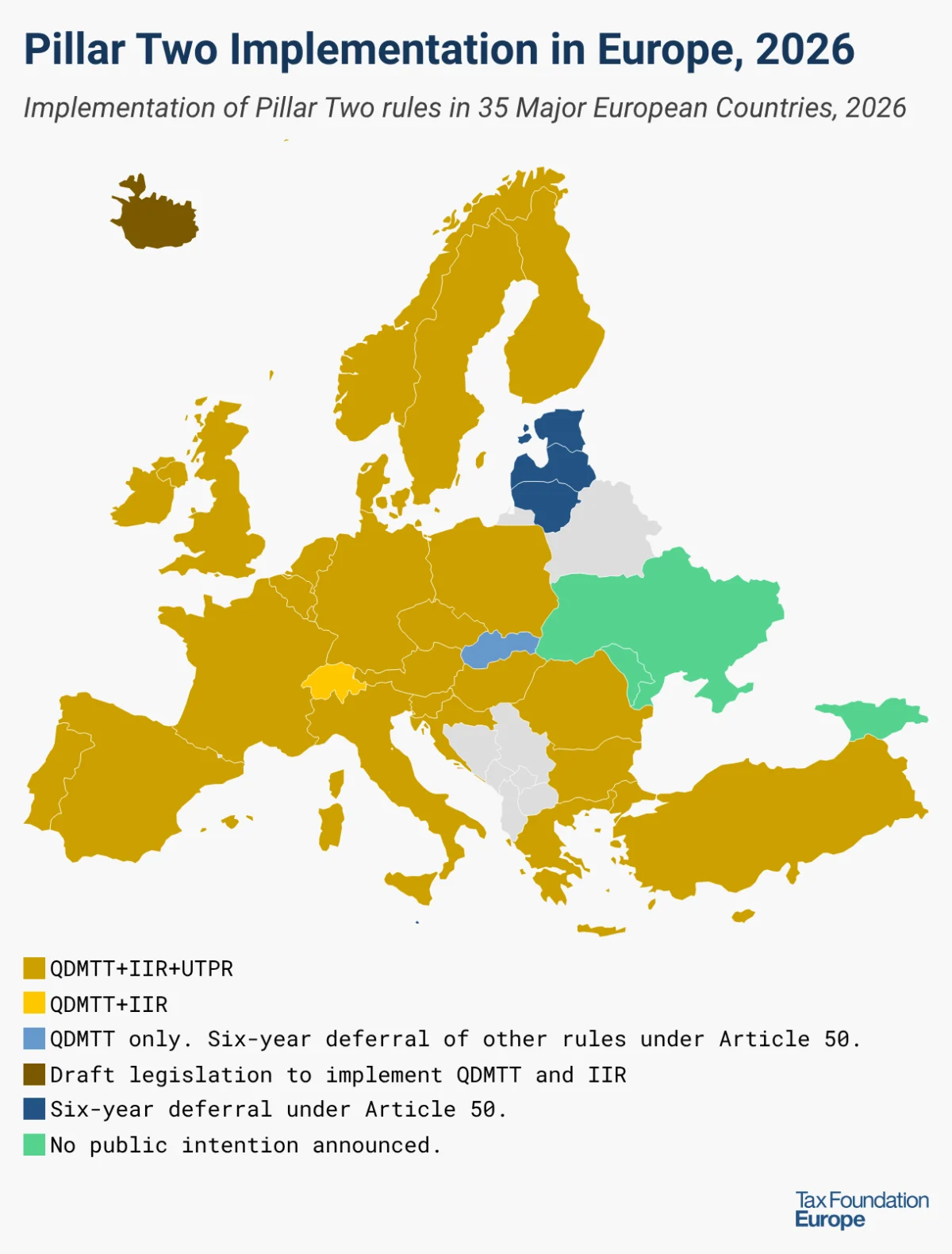
The continued proliferation of DSTs risks fragmenting the international tax system, fostering trade disputes, and ultimately undermining global economic growth. The current global efforts under the OECD/G20 Inclusive Framework, particularly the Pillar One and Pillar Two initiatives, represent a crucial attempt to forge a multilateral, consensus-based solution. Pillar One aims to reallocate a portion of taxing rights over the profits of the largest and most profitable multinational enterprises to market jurisdictions, while Pillar Two establishes a global minimum corporate tax rate. A successful implementation of these global reforms would ideally lead to the withdrawal of unilateral DSTs, paving the way for a more stable, predictable, and neutral international tax environment.
In conclusion, while the modeled effects of DSTs on Belgium and the UK may appear modest in isolation, they are consistently negative. More importantly, these models likely understate the full economic harm by failing to capture the extensive and complex distortions related to consumption shifts, tax pyramiding, and investment disincentives. The inherent nonneutrality of DSTs, coupled with their unquantified legal and administrative burdens, paints a clear picture: these taxes are comparatively harmful per unit of revenue raised, hindering economic efficiency, distorting market signals, and ultimately diminishing overall prosperity. A commitment to tax neutrality and a concerted push for multilateral solutions remain paramount to navigating the complexities of taxing the digital economy effectively and equitably.