Nila Kartika Wati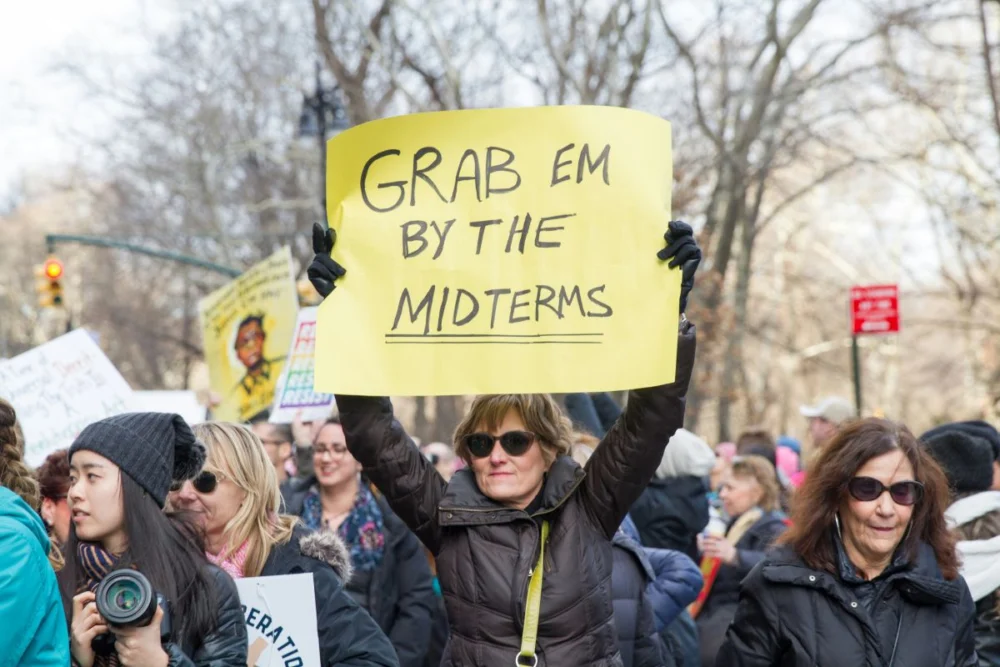
Since Donald Trump was inaugurated for his second presidential term, his administration has moved with unprecedented speed to reshape the federal government, successfully enacting over half of the policy recommendations outlined in Project 2025. This 900-page conservative blueprint, authored by the Heritage Foundation, serves as the operational manual for the current administration, touching on everything from the reclassification of civil service workers to the wholesale restructuring of federal agencies. Experts suggest that many of these structural shifts, particularly those affecting environmental regulations and judicial appointments, could take decades to reverse. However, as the 2026 midterm elections approach, the political landscape remains highly volatile. Competitive congressional races are emerging across the country, offering a potential shift in the balance of power, especially given the historical precedent that the sitting president’s party almost always loses seats during the midterms.
President Trump has expressed acute awareness of this historical trend and has frequently vocalized his desire to shield the Republican party from such losses. In a high-profile January interview with Reuters, the President lamented the looming possibility of losing his legislative majority. During the exchange, he questioned the necessity of the upcoming contests, stating, “When you think of it, we really shouldn’t even have an election.” While the executive branch lacks the constitutional authority to cancel federal elections, civil rights advocates and legal scholars have raised alarms regarding the administration’s potential to influence the electoral process through federal agencies. Consequently, a coalition of voting rights organizations has mobilized to ensure the 2026 midterms remain safe, secure, and accessible to all eligible citizens.
Preparing for a Protracted Legal Conflict
Since the early months of 2025, policy organizations and voting rights watchdogs, including the Brennan Center for Justice, have been issuing warnings regarding federal attempts to subvert the 2026 midterm cycle. Jasleen Singh, senior counsel focusing on democracy at the Brennan Center, recently authored an expert brief detailing the specific methods the administration might use to influence the outcome. Singh noted that because the President previously challenged the results of a federal election in 2020, his current administration’s interest in state-level election data is being viewed with heightened scrutiny.
A primary point of contention involves the Department of Justice’s (DOJ) recent push to collect comprehensive voting rolls from individual states. These requests often include sensitive personal identification data, such as Social Security numbers and driver’s license information. Dan Vicuña, the senior policy director for voting at Common Cause, described this move as an "unprecedented power grab" that lacks judicial authorization. While approximately 10 states have complied with the DOJ’s demands, the majority have refused, citing privacy laws and state sovereignty. In response, the Trump administration has initiated lawsuits against more than 20 states to compel the release of this data.
Advocates are particularly concerned that this data will be used to purge voter rolls. Vicuña explained that the administration likely intends to cross-check state voter lists against federal databases that were never designed to verify voter eligibility. This process frequently results in "false positives," where naturalized citizens are incorrectly identified as non-citizens because federal records may not reflect their updated status. Common Cause has filed several nationwide lawsuits to protect these vulnerable populations, and early judicial rulings in California and Oregon have already favored the states, dismissing the DOJ’s arguments for data seizure.
Chronology of Recent Election Interference and Raids
The tension between federal authorities and local election officials reached a boiling point in early 2026. In Fulton County, Georgia—a frequent target of the President’s rhetoric—the FBI conducted a raid on the local election office, seizing records dating back to 2020. Federal officials claimed the raid was necessary to investigate claims of long-standing voter fraud, but local advocates viewed the move as a direct attempt to intimidate election workers and undermine local control ahead of the midterms.
This atmosphere of scrutiny has also led to legal consequences for those who breached election protocols in the past. In late 2024, Tina Peters, a former elections clerk in Colorado and a prominent proponent of election fraud theories, was sentenced to nine years in prison. Her conviction stemmed from her role in providing an unauthorized person access to the county’s secure election system. This case serves as a backdrop for the current legal battles, highlighting the stakes for those tasked with maintaining the integrity of the voting infrastructure.
Systemic Confusion During the 2026 Primary Cycle
The primary elections held in early 2026 have already provided a glimpse into the challenges awaiting voters in the general election. In Texas, the NAACP has reported widespread confusion and interference that disproportionately affected Black voters. Despite a record turnout of over 2.5 million participants during the early voting period, significant logistical hurdles emerged on Election Day.
In Dallas and Williamson counties, two major population centers, voters were suddenly unable to cast ballots at any polling location within their county—a convenience they had enjoyed for years. This change occurred because the local Republican Party, citing unsubstantiated concerns over voter fraud, opted out of the countywide voting system. Under Texas law, both major parties must agree to use the system for it to remain in place.
The resulting confusion was exacerbated by the Texas Secretary of State’s office, which failed to provide updated precinct maps on the state’s official website in a timely manner. NAACP President and CEO Derrick Johnson characterized the Texas primary as a "warning to the entire nation," arguing that partisan officials are choosing conspiracy theories over functional systems that have worked for years. Without immediate intervention, advocates fear these issues will lead to massive disenfranchisement during the general election in November.
The Resurgence of Voter Suppression in the South
In North Carolina, the fight for voting rights has taken on a renewed intensity. Ashley Marshall, co-founder of Forward Justice, noted that public education has become the most critical tool for combating voter suppression. During the 2026 primary, over 240,000 North Carolina voters received letters from the State Board of Elections asking them to verify their identities. Many recipients, fearing their registration had been canceled, were deterred from participating. Forward Justice had to launch a rapid-response social media campaign to inform voters that the letters did not legally impact their ability to vote.
North Carolina has a long history of restrictive voting legislation. Following the 2013 Supreme Court decision in Shelby County v. Holder, which gutted sections of the Voting Rights Act, state Republicans passed what became known as the "Monster Law." This legislation implemented strict voter ID requirements, eliminated same-day registration, and cut early voting days. Although a federal court eventually struck down the law for targeting African Americans with "surgical precision," many of its themes have resurfaced in 2026.
One of the most significant recent developments in the state is the removal of early voting sites from college campuses. North Carolina Agricultural and Technical State University (A&T), the nation’s largest Historically Black College or University (HBCU), lost its on-campus voting site following a vote by the Republican-led state Board of Elections. Despite student protests and lawsuits, a judge ruled that reopening the site so close to the election would "cause confusion." Brian Kennedy, a senior policy analyst for Democracy North Carolina, noted that North Carolina has become the "blueprint" for modern voter suppression strategies.
The SAVE Act and the Future of Federal Voting Requirements
On the legislative front, the SAVE Act has emerged as a central pillar of the administration’s electoral strategy. First proposed in 2025, the act would require all Americans to present documentary proof of citizenship—such as a birth certificate or passport—to register for federal elections. While proponents argue the measure is necessary to prevent non-citizen voting, critics point out that millions of eligible American citizens, particularly young people, low-income individuals, and the elderly, do not have immediate access to these documents.
The SAVE Act has already passed the House of Representatives and is currently awaiting a vote in the Senate. Forward Justice and other advocacy groups are urging citizens to petition their representatives against the bill, arguing that it creates unnecessary barriers to a fundamental right.
Beyond legislative hurdles, the physical safety of voters has become a pressing concern. During the North Carolina primaries, a flash-bang device was detonated near an early voting site in Aberdeen. While no injuries were reported, the incident underscored the rising threat of voter intimidation. Ashley Marshall emphasized that in this climate of fear and misinformation, it is more important than ever for elected officials to affirm the right to a safe and secure ballot.
Broader Implications and Analysis
The cumulative effect of these legal battles, administrative actions, and legislative proposals suggests a fundamental shift in the American electoral landscape. The 2026 midterms are not merely a contest for congressional seats; they represent a test of the durability of the nation’s democratic institutions under the pressure of an expansive executive branch.
The implementation of Project 2025 has already centralized significant power within the White House, and the administration’s focus on election data suggests a desire to influence the composition of the electorate itself. For voting rights groups, the strategy is twofold: continue the "trench warfare" of litigation in the courts while simultaneously conducting massive public education campaigns to ensure voters are not sidelined by confusion or intimidation. As the general election approaches, the outcome may depend less on traditional campaigning and more on which side successfully defines the rules of the game.