Lana Rhoades
The U.S. current-account deficit, a key indicator of a nation’s international economic transactions, expanded by a substantial $33.4 billion, or 15.7 percent, to reach $246.0 billion in the second quarter of 2026. This widening, as reported by the U.S. Bureau of Economic Analysis (BEA) today, marks a notable shift from the revised first-quarter deficit of $212.6 billion. The deficit now represents 3.0 percent of current-dollar gross domestic product (GDP), an increase from 2.7 percent in the preceding quarter, underscoring the growing imbalance in the nation’s international financial dealings.
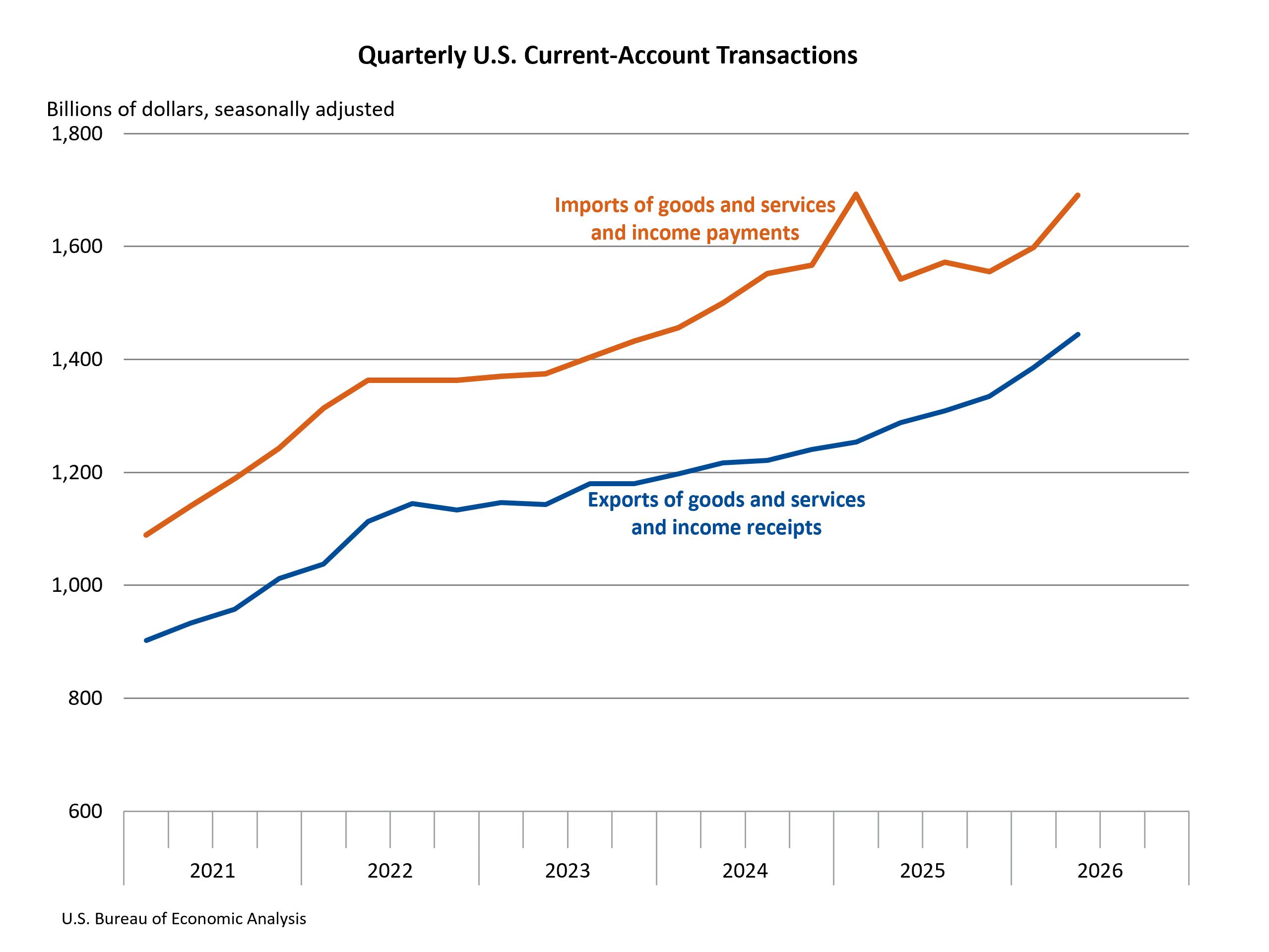
This significant expansion of the current-account deficit in the second quarter was primarily driven by a deteriorating balance on goods, which was only partially offset by a reduction in deficits related to primary (earned) income and secondary income (current transfers). The BEA’s detailed statistics reveal that while overall exports of goods and services, along with income received from foreign residents, saw a healthy increase of $58.8 billion to $1.44 trillion, imports of goods and services and income paid to foreign residents surged by a more considerable $92.2 billion, reaching $1.69 trillion. This disparity in growth rates between imports and exports, particularly in the goods sector, played a pivotal role in the widening deficit.
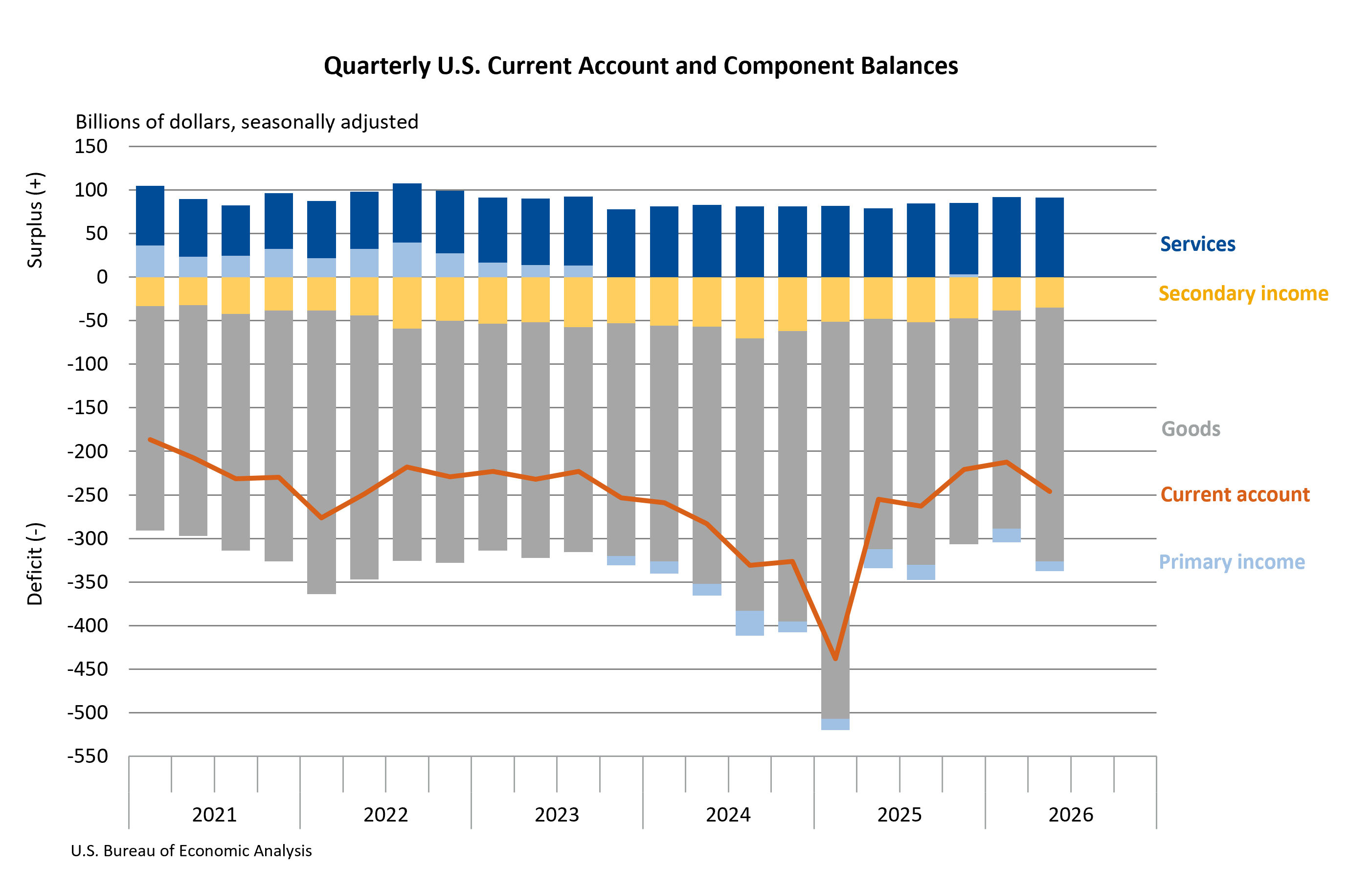
The increase in imports was largely attributed to a greater volume of goods being brought into the United States, a trend that economists suggest could be linked to sustained domestic consumer demand and potentially higher inventory restocking by businesses. Simultaneously, while exports of goods also grew, they did not keep pace with the import surge. The primary income balance, which includes earnings on foreign investments and compensation of employees, also contributed to the deficit’s expansion, indicating that U.S. residents’ payments on foreign investments and compensation abroad outpaced receipts from foreign investment in the U.S. and compensation of foreign nationals working in the U.S. However, the deficit on secondary income, which encompasses current transfers like remittances and foreign aid, narrowed, providing a slight counterweight to the overall deficit increase.
A Deeper Dive into the Components of the Current Account
The current account is a broad measure that encompasses trade in goods and services, primary income (such as investment income and compensation), and secondary income (current transfers). Understanding the dynamics within each of these components offers crucial insights into the drivers of the overall deficit.
The Goods Balance: The most significant contributor to the widening current-account deficit was the goods balance. In the second quarter of 2026, the deficit in goods trade widened considerably. While the BEA did not provide the exact figures for the goods deficit in the second quarter in the released text, historical trends and the overall deficit increase suggest a substantial deterioration. This implies that the value of goods imported by the U.S. exceeded the value of goods exported, a persistent challenge for the U.S. economy. Factors such as global supply chain adjustments, shifts in international trade policies, and differing rates of economic recovery across trading partners can all influence the goods balance.
The Services Balance: The services sector, a relative strength for the U.S. economy, continued to exhibit a surplus. Exports of services outpaced imports, contributing positively to the current account. However, the growth in services exports was not sufficient to fully offset the widening deficit in goods. The BEA’s data shows that services exports and primary income receipts increased in the second quarter, indicating a robust performance in sectors like financial services, intellectual property licensing, and tourism, which attract foreign spending.
Primary Income: The primary income balance saw its deficit widen in the second quarter. This component reflects the net flow of income earned by residents from their foreign investments and by foreign residents from their U.S. investments. An increasing deficit here suggests that U.S. residents are earning less income from their overseas assets than foreign residents are earning from their U.S. assets, or that payments made by U.S. entities to foreign investors and workers are growing faster than receipts from foreign entities to U.S. investors and workers. This can be influenced by factors such as interest rate differentials, dividend payments, and foreign direct investment flows.
Secondary Income: The deficit in secondary income, which includes remittances, foreign aid, and other current transfers, narrowed in the second quarter. This indicates that net outflows for these types of transactions decreased. While typically a smaller component of the current account, movements in secondary income can reflect changes in international aid commitments, migration patterns, and the economic conditions of countries receiving remittances.
The Financial Account: Mirroring the Current Account Imbalance
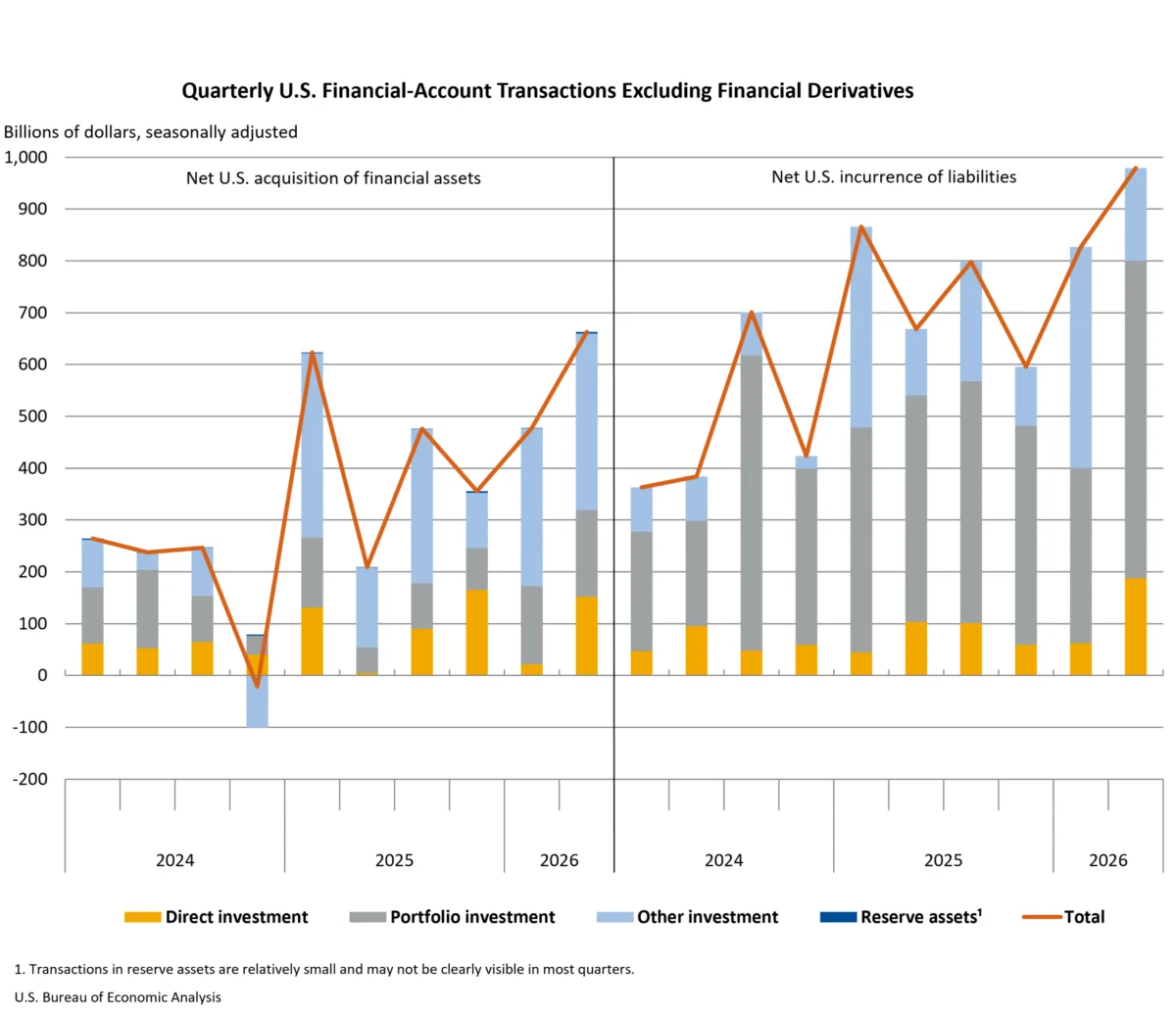
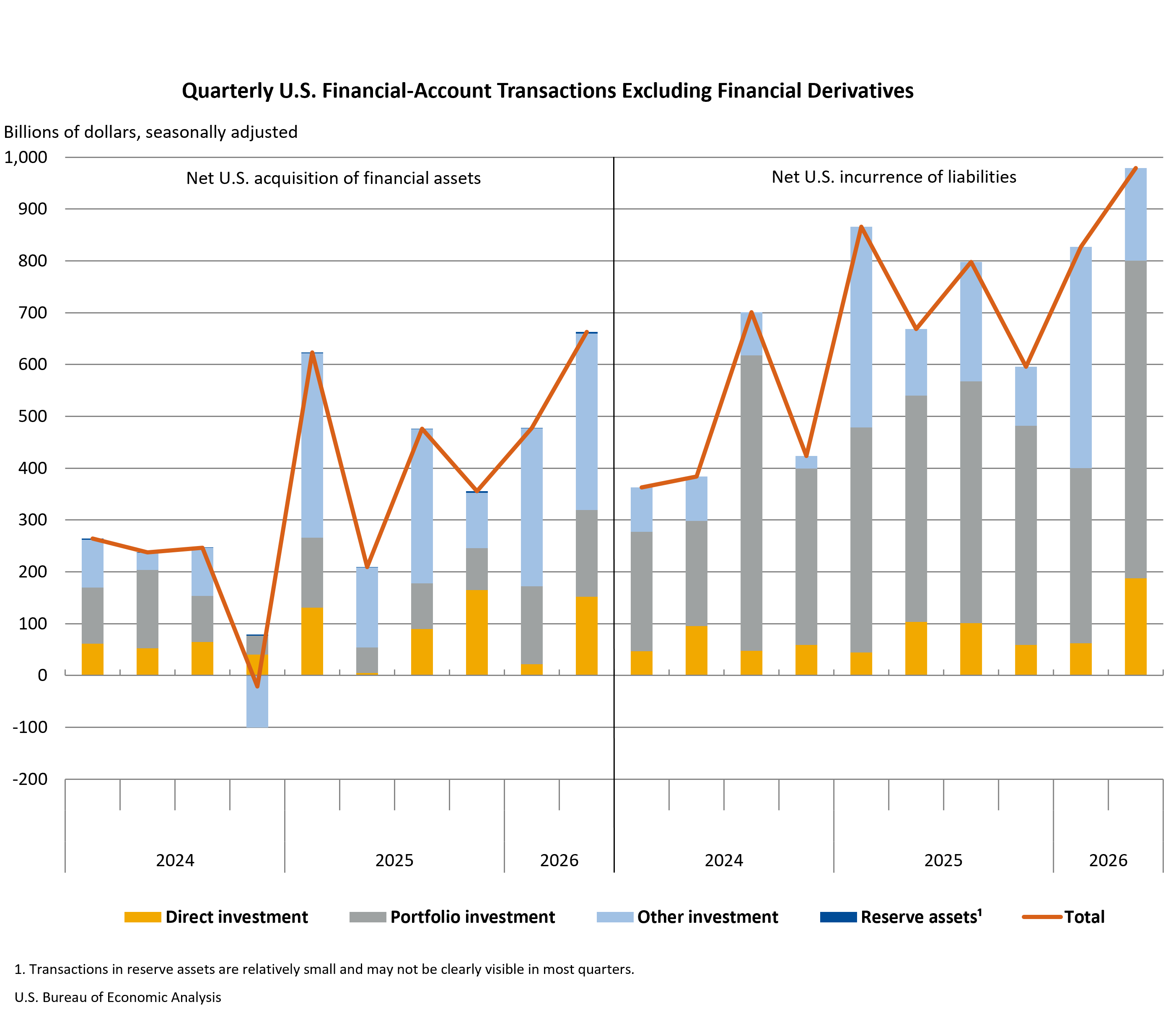
The financial account of the balance of payments provides a mirror image of the current account. A current-account deficit implies that a country is spending more on foreign goods, services, and income than it is earning, and this excess spending must be financed by borrowing from or selling assets to foreigners. Indeed, the BEA reported that net financial-account transactions were -$369.7 billion in the second quarter, signifying net U.S. borrowing from foreign residents.
During the second quarter, U.S. residents’ acquisition of foreign financial assets increased by $663.3 billion. Concurrently, U.S. liabilities to foreign residents – essentially what foreigners own in the U.S. or what the U.S. owes to foreigners – increased by a larger $978.9 billion. This differential in the growth of liabilities compared to assets is a direct consequence of the current-account deficit, requiring the U.S. to attract foreign capital to fund its international expenditures.
Net International Investment Position: A Growing External Debt
The cumulative effect of these ongoing international transactions is reflected in the U.S. net international investment position (NIIP), which represents the difference between U.S. residents’ foreign financial assets and liabilities. At the end of the second quarter of 2026, the U.S. NIIP stood at a negative $22.42 trillion. This substantial negative position indicates that U.S. liabilities to foreign residents ($69.39 trillion) significantly outweigh U.S. assets held abroad ($46.97 trillion).
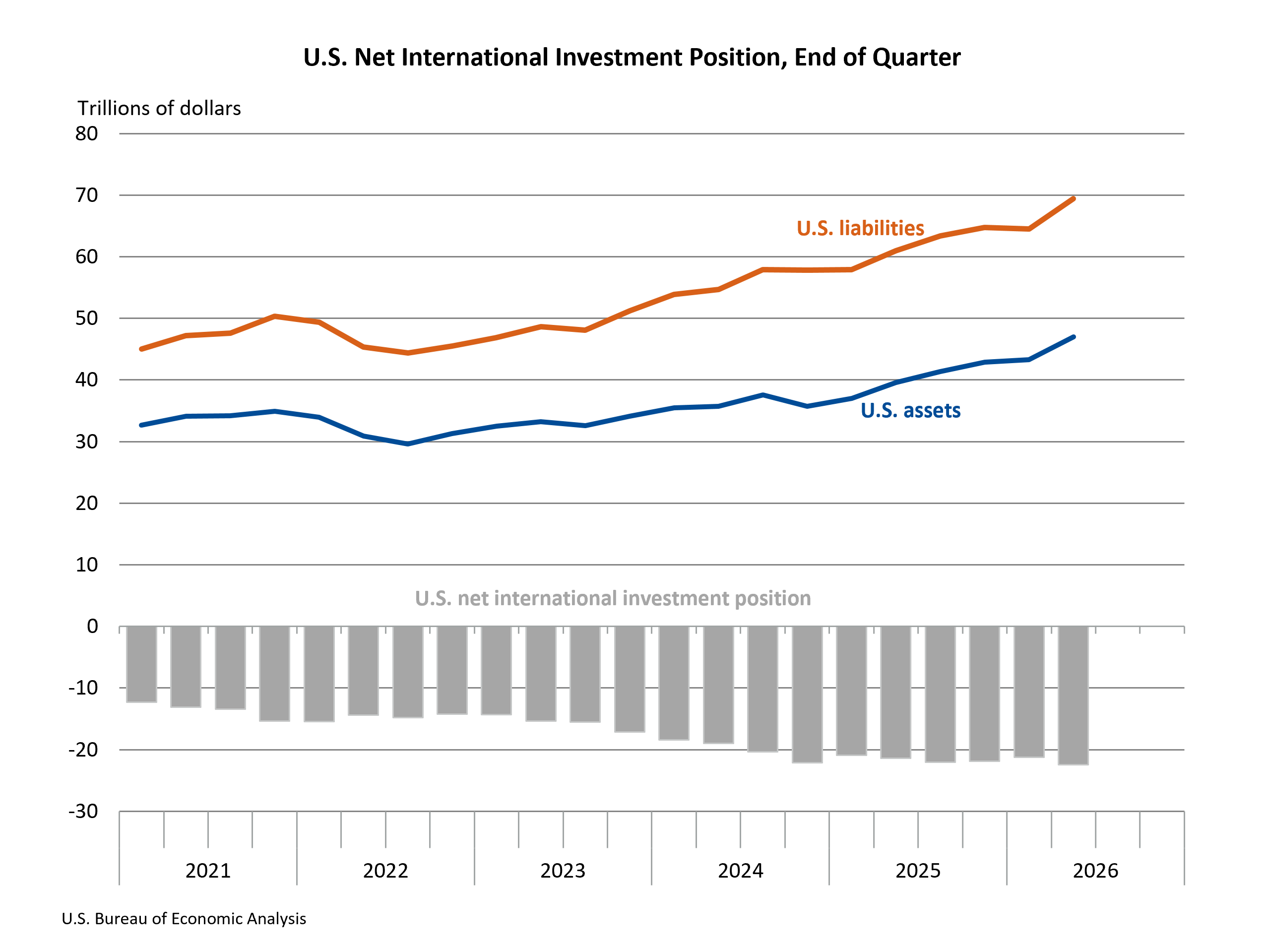
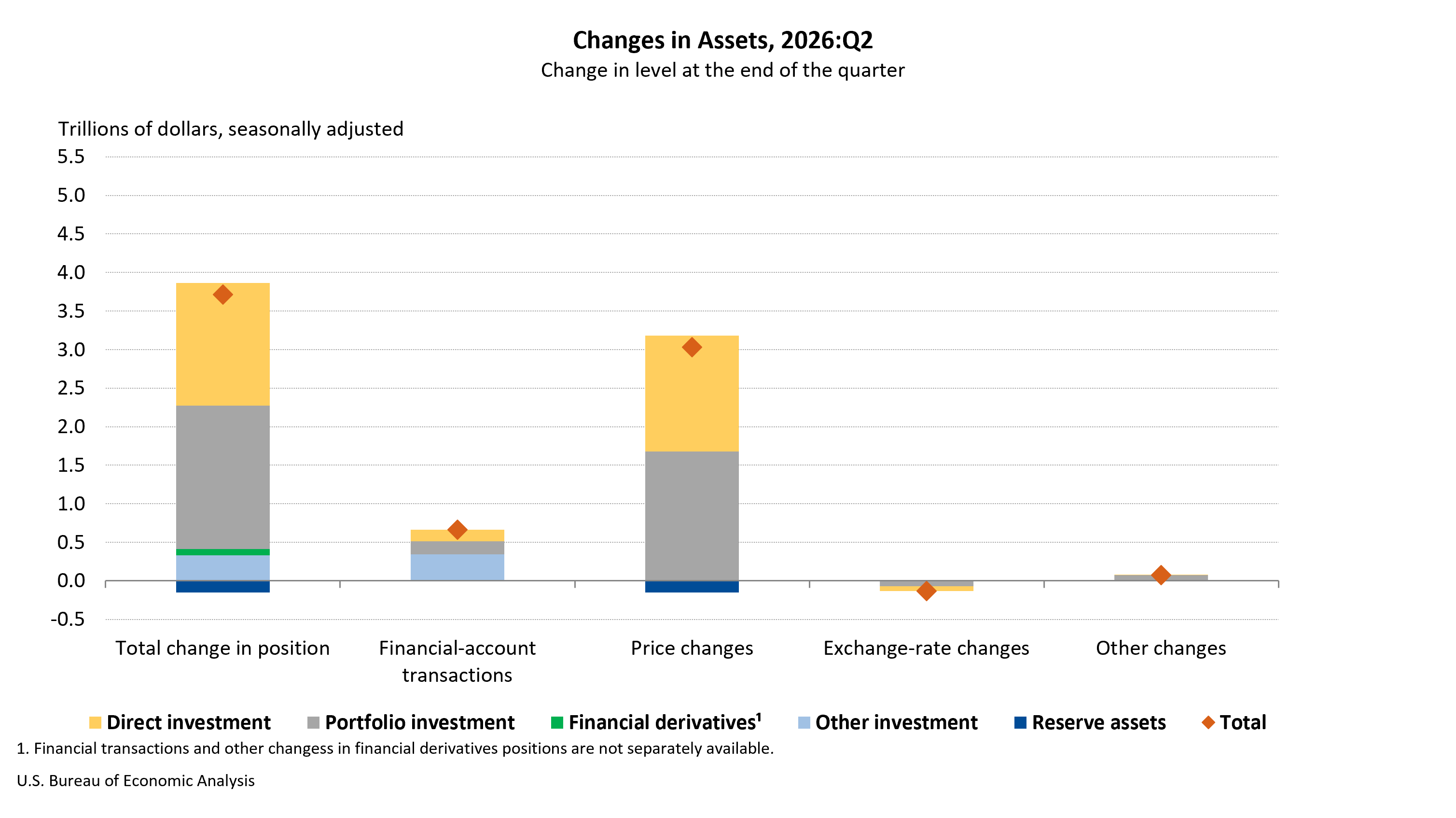
The NIIP saw a deterioration from the revised -$21.27 trillion at the end of the first quarter of 2026. This widening negative position is a testament to the sustained accumulation of foreign claims on U.S. assets and U.S. obligations to foreign entities over time. The increase in U.S. assets during the second quarter was $3.72 trillion, driven by both price changes and financial transactions. Similarly, U.S. liabilities increased by a substantial $4.87 trillion, also influenced by price appreciation and increased financial transactions. The larger increase in liabilities compared to assets further contributes to the worsening net investment position.
Revisiting First Quarter Adjustments
The BEA’s release also provided revised estimates for the first quarter of 2026, offering a clearer picture of prior-period performance. The current-account deficit for the first quarter was revised upwards from preliminary estimates of -$226.8 billion to -$212.6 billion. This revision was primarily driven by upward adjustments in the services balance and secondary income balance, partially offset by a downward revision to the primary income balance. The net financial-account transactions for the first quarter were also revised significantly, from -$209.0 billion to -$295.2 billion, indicating a larger net inflow of foreign capital than initially estimated. The U.S. net international investment position remained unchanged at -$21.27 trillion in the revised first-quarter estimates.
Implications and Potential Economic Commentary
The widening U.S. current-account deficit in the second quarter of 2026 is likely to draw attention from economists and policymakers. A persistent and growing current-account deficit can have several implications:
- Increased Foreign Debt Burden: A larger deficit necessitates greater foreign borrowing or asset sales, leading to an accumulation of external debt. This can make the U.S. economy more vulnerable to shifts in global financial markets and potentially lead to higher interest payments to foreign creditors in the future.
- Exchange Rate Pressures: While not directly indicated in the provided data, a sustained widening of the current-account deficit can, under certain circumstances, put downward pressure on the U.S. dollar as demand for foreign currency to purchase imports increases relative to demand for dollars from exports. However, the dollar’s strength is influenced by a multitude of factors, including interest rate differentials, geopolitical stability, and capital flows into U.S. assets for investment purposes.
- Potential for Protectionist Measures: In some political climates, a growing trade deficit can fuel calls for protectionist trade policies, such as tariffs or import quotas, aimed at reducing the imbalance. Such measures, however, can also lead to retaliatory actions from trading partners and disrupt global supply chains.
- Impact on Domestic Investment: The reliance on foreign capital to finance domestic spending and investment can influence the availability and cost of capital for U.S. businesses.
Economists from various institutions, while not directly quoted in the release, would likely be analyzing these trends in the context of global economic growth, monetary policy stances in major economies, and the specific drivers of import and export performance. For instance, a representative from a major financial institution might comment, "The continued expansion of the U.S. current-account deficit, particularly driven by goods trade, highlights the ongoing demand for imports and the challenges in boosting export competitiveness. While the U.S. economy benefits from foreign investment, sustained large deficits warrant careful monitoring of external debt levels and potential vulnerabilities."
Looking Ahead
The next release of U.S. International Transactions and Investment Position statistics, scheduled for December 18, 2026, will provide data for the third quarter of 2026. This upcoming report will offer crucial insights into whether the trend of a widening current-account deficit persists or if there are signs of moderation. The BEA’s consistent reporting and the availability of interactive data tables allow for ongoing analysis and a deeper understanding of the complex web of international economic interactions that shape the U.S. economy. The data released today serves as a critical snapshot, underscoring the dynamic and evolving nature of the United States’ engagement with the global economic landscape.