Dwi Wanna
The financial architecture of maintaining a workforce in the United States extends far beyond the negotiation of gross salaries, as employers are legally mandated to contribute a significant percentage of their revenue to federal and state social insurance programs. For the 2027 fiscal year, these obligations—collectively known as payroll taxes—remain a critical variable in corporate budgeting and human resource management. Understanding the nuances of these taxes is essential for business owners, as the cost of employing a worker is often 18% to 30% higher than the stated hourly wage or annual salary once taxes and mandatory benefits are factored in. This comprehensive analysis explores the current tax rates, the escalating wage bases for Social Security, and the specific responsibilities of both employers and self-employed individuals under the Internal Revenue Service (IRS) guidelines.
The Foundations of FICA: Social Security and Medicare
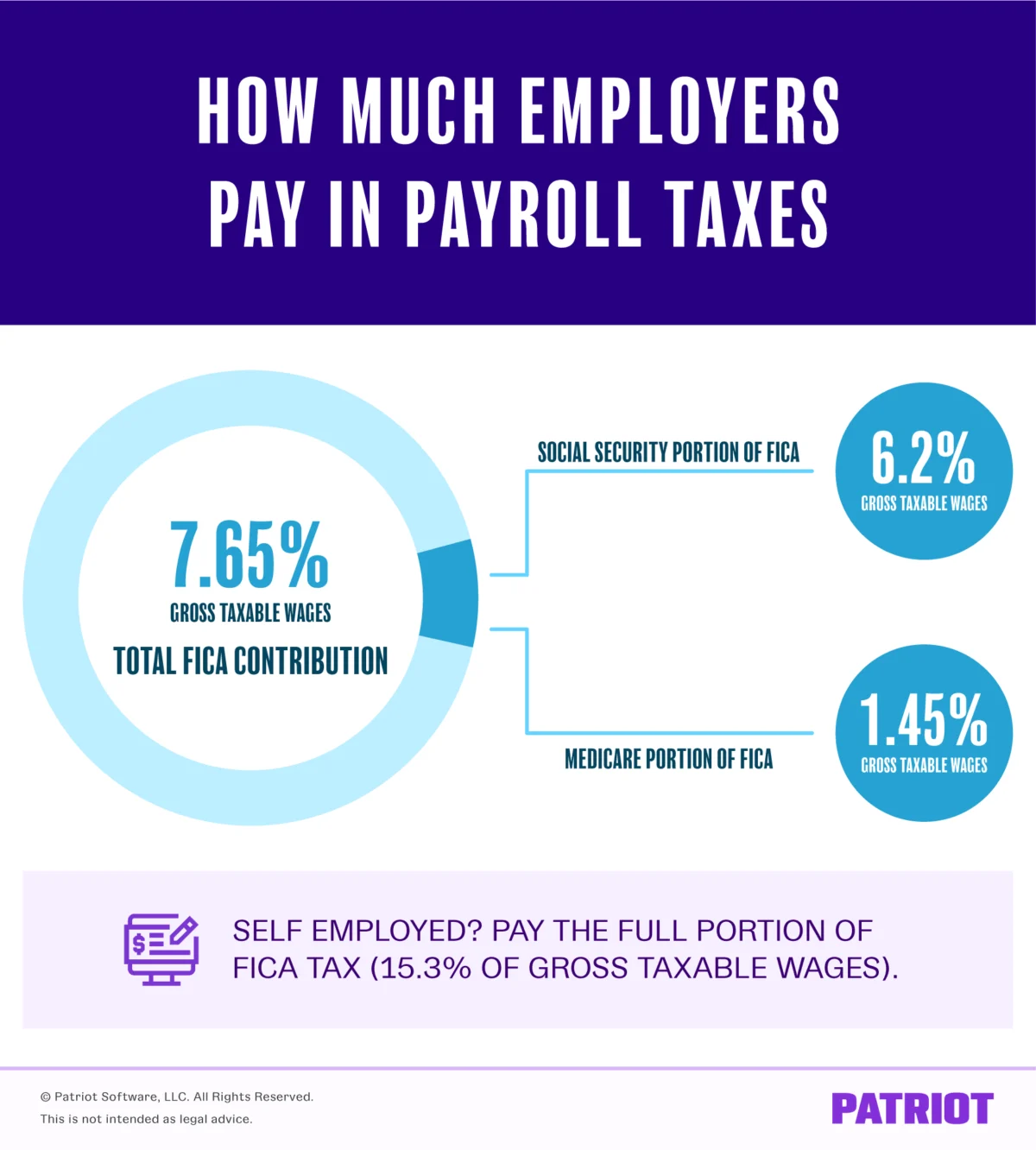
At the heart of federal payroll taxation is the Federal Insurance Contributions Act (FICA), a law that mandates the collection of taxes to fund Social Security and Medicare. FICA is structured as a shared responsibility; both the employer and the employee contribute equal percentages of the employee’s gross taxable wages. The total FICA tax rate stands at 15.3%, which is bifurcated into two distinct components: Social Security (Old-Age, Survivors, and Disability Insurance) and Medicare (Hospital Insurance).
The Social Security portion of the tax is calculated at 12.4% of taxable wages. In the employer-employee relationship, this cost is split, with the employer paying 6.2% and the employee paying 6.2%. The Medicare portion is calculated at 2.9%, split into 1.45% for the employer and 1.45% for the employee. While these percentages remain relatively stable, the total dollar amount paid by employers has seen a consistent upward trajectory due to annual adjustments in the Social Security wage base.
Chronology of the Social Security Wage Base: 2025–2027
A pivotal factor in payroll tax calculation is the Social Security wage base, which serves as a ceiling on the amount of earnings subject to the 6.2% tax. Once an employee’s year-to-date earnings surpass this threshold, the employer and employee are no longer required to contribute to the Social Security fund for the remainder of the calendar year.
The Social Security Administration (SSA) adjusts this base annually to reflect changes in the national average wage index. In 2026, the wage base was established at $184,500. For the 2027 tax year, the IRS and SSA have confirmed an increase to $192,300. This $7,800 increase represents a direct rise in the maximum possible tax liability for employers of high-earning individuals. For an employee earning at or above the 2027 cap, the employer’s total Social Security contribution will be approximately $11,922.60 ($192,300 x 6.2%), compared to the 2026 maximum of $11,439.
This upward trend reflects a decade-long pattern of base increases designed to keep the Social Security Trust Fund solvent amidst inflationary pressures. Business analysts note that while the percentage rate has not changed in years, the "bracket creep" of the wage base functions as a de facto tax increase for mid-to-large-sized enterprises with highly compensated staff.
Medicare and the Additional Medicare Tax Provisions
In contrast to Social Security, the standard 1.45% Medicare tax has no wage base limit. Employers must contribute this percentage on every dollar of an employee’s gross taxable wages, regardless of how much the employee earns. This ensures a continuous stream of funding for the Medicare program from the highest earners in the workforce.
However, the Affordable Care Act (ACA) introduced a nuance known as the Additional Medicare Tax. This 0.9% tax applies to employees whose earnings exceed specific thresholds—typically $200,000 for single filers or $250,000 for married couples filing jointly. A critical distinction for payroll departments is that the Additional Medicare Tax is an employee-only obligation. While employers are responsible for withholding this 0.9% from the employee’s pay once they cross the $200,000 threshold, the employer does not match this amount.
For example, if an executive earns $300,000 in 2027, the employer pays 1.45% on the full $300,000 ($4,350). The employee pays 1.45% on the full $300,000 ($4,350) plus an additional 0.9% on the $100,000 that exceeds the threshold ($900), bringing the employee’s total Medicare contribution to $5,250.
The Impact of Pre-Tax Deductions on Taxable Gross
Calculating payroll taxes is not as simple as multiplying the gross salary by the tax rate. The IRS allows for certain "pre-tax" deductions that reduce the "taxable gross" amount, thereby lowering the tax liability for both the employer and the employee. The most common of these are Section 125 plans, often referred to as "cafeteria plans," which include health insurance premiums, Health Savings Accounts (HSAs), and Flexible Spending Accounts (FSAs).
When an employee contributes $500 per month to a health insurance plan via a Section 125 deduction, that $500 is subtracted from their gross pay before FICA taxes are calculated. If an employee earns $5,000 in a pay period but has $500 in qualified pre-tax deductions, the employer only pays the 6.2% Social Security and 1.45% Medicare tax on $4,500. For small businesses, encouraging the use of these plans can result in thousands of dollars in annual payroll tax savings.

Employer-Only Obligations: FUTA and SUTA
Beyond the shared FICA taxes, employers are solely responsible for funding the nation’s unemployment insurance system through the Federal Unemployment Tax Act (FUTA) and the State Unemployment Tax Act (SUTA).
Federal Unemployment Tax (FUTA)
The standard FUTA tax rate is 6.0% on the first $7,000 of each employee’s annual wages. However, the federal government provides a substantial tax credit of up to 5.4% to employers who pay their state unemployment taxes on time. Consequently, most employers pay an effective FUTA rate of 0.6%. This equates to a maximum of $42 per employee per year ($7,000 x 0.006). If a state fails to repay federal loans used to fund unemployment benefits, it may become a "credit reduction state," which reduces the 5.4% credit and increases the employer’s FUTA costs.
State Unemployment Tax (SUTA)
SUTA tax rates and wage bases vary significantly by state. Unlike the federal rate, SUTA is "experience-rated," meaning companies with a history of high turnover and frequent unemployment claims pay higher rates than stable businesses. New employers are typically assigned a standard "new employer rate" until they have been in operation long enough to establish their own experience rating. Wage bases for SUTA can range from $7,000 in some states to over $60,000 in others, making state-level compliance a complex variable for multi-state operators.
The Self-Employed Dynamic: SECA Tax
For freelancers, contractors, and sole proprietors, the distinction between employer and employee disappears, but the tax obligation does not. Under the Self-Employment Contributions Act (SECA), self-employed individuals must pay both the employer and employee portions of FICA, totaling 15.3%.
To mitigate this burden, the IRS allows self-employed individuals to deduct the "employer-equivalent" portion of their self-employment tax (7.65%) when calculating their adjusted gross income on Form 1040. This deduction does not reduce the self-employment tax itself but lowers the individual’s overall federal income tax liability. For 2027, self-employed individuals are subject to the same $192,300 Social Security wage base and the Additional Medicare Tax rules as W-2 employees.
Economic Implications and Industry Reactions
The rising cost of payroll taxes, particularly the 2027 increase in the Social Security wage base, has drawn reactions from various economic sectors. Small business advocacy groups, such as the National Federation of Independent Business (NFIB), have frequently pointed out that payroll taxes are "regressive" for business owners because they must be paid regardless of whether the company is profitable.
Economists note that high payroll tax burdens can lead to "tax incidence" shifts, where employers offset the cost of taxes by offering lower wage increases or reducing fringe benefits. Furthermore, in an era of increasing automation, the rising cost of human labor—compounded by payroll taxes—often serves as a catalyst for companies to invest in AI and automated systems to replace entry-level or repetitive roles.
"The payroll tax is essentially a tax on job creation," notes financial analyst Marcus Thorne. "When you increase the wage base, you increase the friction of hiring high-skill talent. While necessary for the social safety net, it forces firms to be extremely precise with their headcount management."
Compliance and the Shift Toward Automation
As the regulatory environment becomes more complex, with shifting wage bases and varying state mandates, the margin for error in payroll administration has narrowed. The IRS imposes strict penalties for the late deposit of payroll taxes or the miscalculation of withholdings. These penalties can range from 2% to 15% of the unpaid amount, depending on the length of the delay.
This has led to a massive shift toward cloud-based payroll software and professional employer organizations (PEOs). These systems automate the calculation of FICA, FUTA, and SUTA, and automatically update for new wage bases like the $192,300 cap for 2027. By integrating with time-tracking and benefit systems, these platforms ensure that pre-tax deductions are accurately applied, protecting the employer from overpayment and the employee from tax-season surprises.
In summary, the employer cost of payroll taxes in 2027 is a multifaceted expense requiring diligent oversight. With the Social Security wage base rising to $192,300 and the continued requirements of Medicare and unemployment taxes, businesses must integrate these figures into their long-term financial strategies. Understanding the interplay between gross wages, pre-tax deductions, and federal mandates remains a cornerstone of successful enterprise management in the modern American economy.