Dwi Wanna
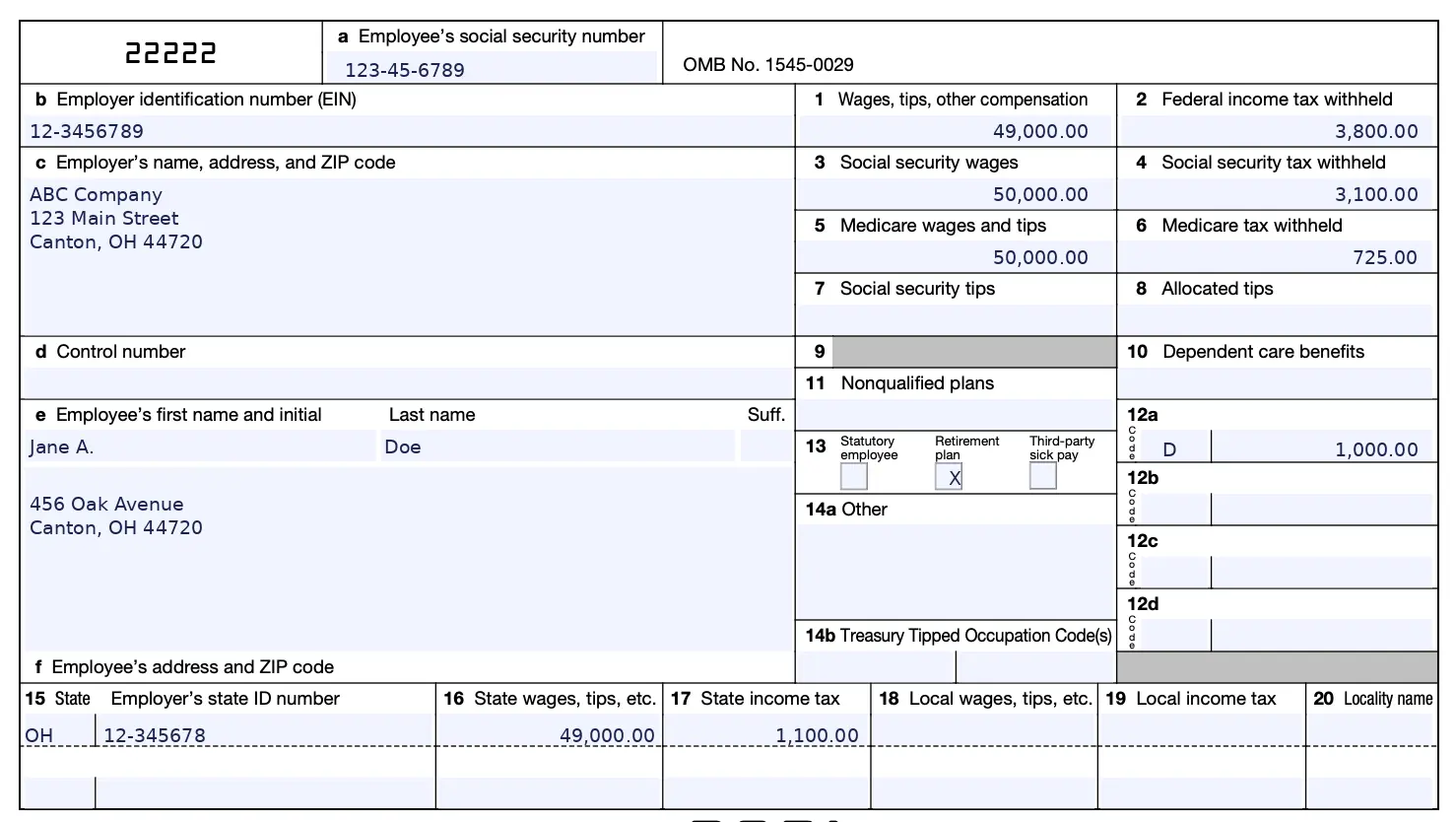
The Internal Revenue Service (IRS) Form W-2, officially designated as the Wage and Tax Statement, serves as the fundamental reporting mechanism for an employee’s annual compensation and the various taxes withheld from their earnings. For employers, the accuracy of this document is paramount, as it facilitates the reconciliation of tax liabilities between the business, the individual worker, and the Social Security Administration (SSA). As the regulatory landscape evolves—highlighted by significant changes anticipated for the 2026 and 2027 tax years—understanding the nuances of each box on the form is no longer a clerical luxury but a compliance necessity. Failure to accurately report these figures can result in significant penalties for the employer and delayed tax refunds or audits for the employee.
The Regulatory Framework and Recent Legislative Updates
The filing of Form W-2 is a mandatory annual requirement for every employer engaged in a trade or business who pays remuneration, including non-cash payments, for services performed by an employee. The document must be provided to employees and filed with the SSA by January 31 of the year following the tax year in question. In recent years, the IRS has moved toward stricter electronic filing mandates. As of 2024, employers filing 10 or more information returns (including W-2s and 1099s) are required to file electronically, a shift from the previous 250-form threshold.
The upcoming 2026 tax year introduces specific adjustments to the form to accommodate new legislative priorities. Notably, the Social Security wage base—the maximum amount of earnings subject to the Social Security tax—is projected to rise to $184,500 in 2026, with a further increase to $192,300 scheduled for 2027. Additionally, new reporting codes, such as Code TA for "Trump accounts" and Code TT for "qualified overtime premium pay," reflect shifting federal tax policies that employers must integrate into their payroll systems.
Identification Data: Boxes A through F
The initial section of Form W-2 focuses on the identification of both the employer and the employee. While seemingly straightforward, errors in these boxes are the most common cause of "no-match" letters from the SSA.
Box A: Social Security Number (SSN)
This box must contain the employee’s nine-digit SSN. If an employee has applied for a card but not yet received it, the employer should enter "Applied For" on the SSA copy. Once the card arrives, a Form W-2c (Corrected Wage and Tax Statement) must be filed immediately to ensure the employee’s earnings are properly credited to their Social Security record.
Box B: Employer Identification Number (EIN)
The EIN is the federal equivalent of a Social Security number for a business. It must be entered in the format XX-XXXXXXX. Employers are strictly prohibited from using their personal SSNs in this field, even if they are sole proprietors.
Box C: Employer’s Name, Address, and ZIP Code
This field requires the legal business address of the entity. Discrepancies between the address on the W-2 and the physical location where the employee works are common, particularly for large corporations or remote-work environments. Employers should clarify to staff that the address listed is the legal headquarters for tax purposes.

Box D: Control Number
This is an optional field used for internal payroll tracking. If the business does not utilize a control numbering system, the box is left blank.
Boxes E and F: Employee Name and Address
The name entered must match the name on the employee’s Social Security card. The use of nicknames or middle names as first names can cause significant processing delays.
The Financial Core: Boxes 1 through 6
These boxes represent the heart of the W-2, detailing the income subject to federal taxes and the amounts already remitted to the government.
Box 1: Wages, Tips, and Other Compensation
Box 1 reports the total taxable compensation paid to the employee. This figure is often lower than the employee’s gross salary because it excludes pre-tax deductions such as 401(k) contributions, health insurance premiums, and certain fringe benefits. It includes bonuses, commissions, and the taxable portion of group-term life insurance.
Box 2: Federal Income Tax Withheld
This reflects the total amount of federal income tax withheld from the employee’s pay throughout the year. This figure is determined by the information provided by the employee on their Form W-4.
Box 3 and 4: Social Security Wages and Tax
Box 3 lists the total wages subject to the 6.2% Social Security tax, capped at the annual wage base ($184,500 for 2026). Box 4 shows the actual tax withheld. For 2026, the maximum amount reported in Box 4 should not exceed $11,439.00. Unlike Box 1, Box 3 includes elective deferrals to retirement plans.
Box 5 and 6: Medicare Wages and Tax
Medicare wages (Box 5) are generally similar to Social Security wages but have no ceiling. Every dollar of earned income is subject to the 1.45% Medicare tax. If an employee earns more than $200,000, the employer must also withhold an Additional Medicare Tax of 0.9%, which is reflected in the total for Box 6.
Specialized Compensation: Boxes 7 through 11
These fields handle specific types of income, such as tips and deferred compensation distributions.
Box 7: Social Security Tips
Employees must report tips to their employers. These amounts are included in Boxes 1 and 5, but specifically broken out in Box 7 for Social Security accounting. The sum of Box 3 and Box 7 cannot exceed the annual Social Security wage base.
Box 8: Allocated Tips
This box is used by large food and beverage establishments to show tips allocated to employees. Crucially, these amounts are not included in Boxes 1, 3, 5, or 7. Instead, employees must calculate the tax on these amounts themselves using Form 4137.
Box 10: Dependent Care Benefits
Employers must report the total amount of dependent care benefits paid or incurred. Under current guidelines, benefits up to $7,500 (or $3,750 for married individuals filing separately) are nontaxable. Any amount exceeding these thresholds must be included in the taxable wages in Boxes 1, 3, and 5.
Box 11: Nonqualified Plans
This box reports distributions made to an employee from a nonqualified deferred compensation plan. This allows the SSA to determine if any portion of the amount reported in Boxes 1, 3, or 5 was earned in a prior year.
Modern Compliance: Boxes 12, 13, and 14
The latter portion of the W-2 has become a repository for various legislative and benefit-related data points.
Box 12: Codes and Amounts
This box uses a series of letter codes (A through HH) to report everything from retirement contributions (Code D for 401(k)) to the cost of employer-sponsored health coverage (Code DD). New for the 2026 tax year is Code TA for "Trump accounts" and Code TT for "qualified overtime premium pay," representing specific tax-advantaged categories. Employers must also use Code TP to report total cash tips.
Box 13: Checkboxes
This box contains three specific indicators:
- Statutory Employee: For workers whose earnings are subject to Social Security and Medicare taxes but not federal income tax withholding.
- Retirement Plan: Checked if the employee was an active participant in a plan like a 401(k) during any part of the year.
- Third-Party Sick Pay: Checked if the employee received sick pay from an outside insurer.
Box 14: Other
This is a "catch-all" box for items like state disability insurance (SDI) withholdings, union dues, or vehicle lease payments. Starting in 2026, Box 14 is subdivided. Box 14b is specifically reserved for Treasury Tipped Occupation Codes (TTOCs), which identify roles qualifying for tip-related tax deductions.
State and Local Reporting: Boxes 15 through 20
The final section of the W-2 facilitates compliance with sub-federal tax jurisdictions.
Boxes 15, 16, and 17: State Data
Employers must list the state, the state EIN, and the total state taxable wages. Because state tax laws often differ from federal laws, the amount in Box 16 may not match Box 1.
Boxes 18, 19, and 20: Local Data
These boxes are used for municipal or county taxes. The name of the locality must be clearly identified in Box 20 to ensure the funds are correctly allocated by state revenue departments.
Timeline, Chronology, and Impact Analysis
The W-2 lifecycle begins long before the January 31 deadline. Effective payroll management requires a quarterly reconciliation of Form 941 (Employer’s Quarterly Federal Tax Return) with internal payroll records to ensure that the year-end W-2 totals will match the aggregate data reported to the IRS throughout the year.
Chronology of Filing:
- December: Final payroll run and year-end adjustments (e.g., fringe benefits, personal use of company cars).
- January 1-31: Preparation of W-2 forms.
- January 31: Deadline to mail or electronically deliver W-2s to employees and file Copy A with the SSA.
- February-April: Correction period for any errors discovered during the employee filing season.
The implications of W-2 accuracy extend beyond simple bookkeeping. Economically, the data gathered from W-2s informs the SSA’s calculations for future benefit disbursements and provides the Treasury with a snapshot of national wage growth. For the employer, errors carry a financial sting: penalties for filing incorrect information or filing late can range from $60 to $330 per form, depending on how late the correction is made, with a maximum penalty for large businesses exceeding $3.5 million annually.
As the 2026 and 2027 tax years approach, the introduction of TTOCs and the expansion of the Social Security wage base signal a period of increased complexity. Employers are encouraged to audit their payroll software configurations early to ensure these new codes and thresholds are correctly implemented, thereby avoiding the administrative burden of widespread W-2 corrections. In a journalistic and regulatory sense, the W-2 remains the most vital link between the American workforce and the fiscal health of the federal government.