Layla Zulfa
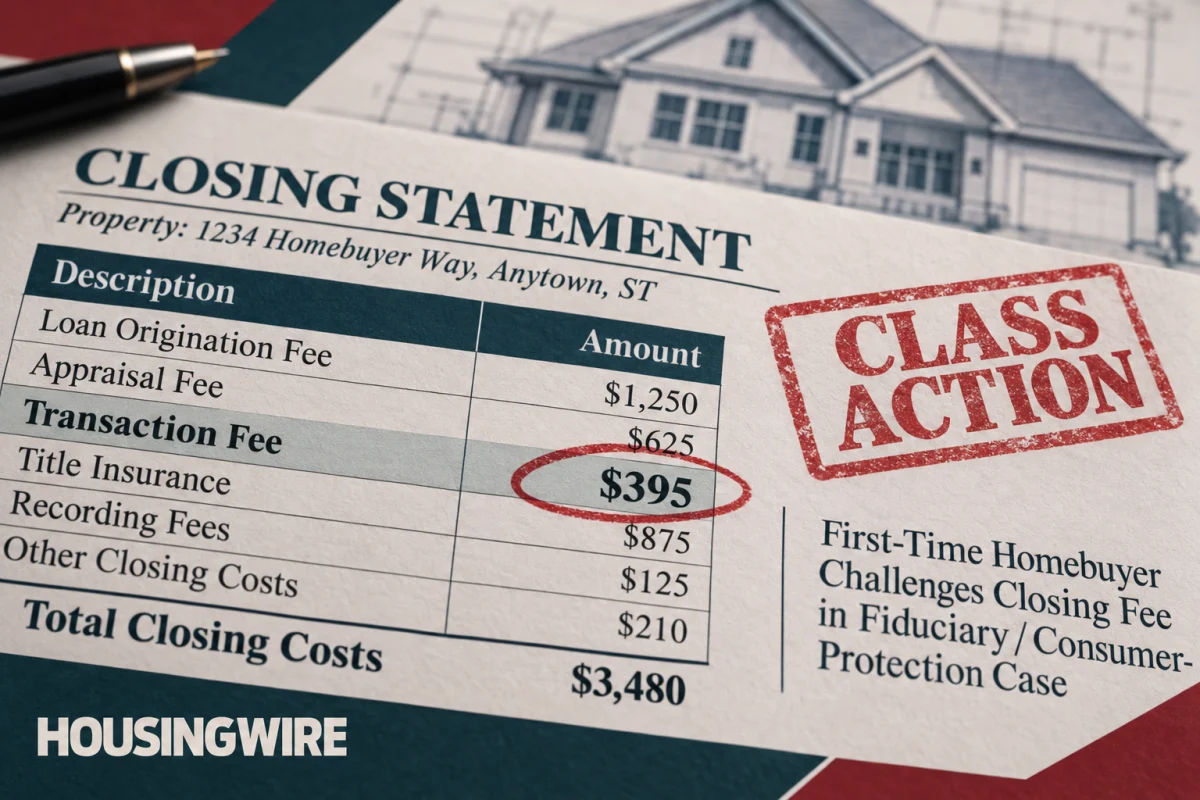
Howard Hanna Real Estate Services, a prominent player in the U.S. real estate market, is now entangled in a legal battle concerning a "Realtor Transaction Fee" that a consumer alleges was unfairly imposed during a real estate transaction. This development places Howard Hanna among a growing number of real estate firms facing scrutiny over such charges, which critics argue represent an undisclosed or unjustified cost to consumers.
The Genesis of the Lawsuit
The legal action was initiated by Dena Bergamasco, a first-time homebuyer, who filed a lawsuit against Howard Hanna earlier this month. Bergamasco contends that she was charged a $395 "Realtor Transaction Fee" in addition to the buyer broker commission she had already paid in connection with her home purchase in October 2021. The lawsuit, filed on behalf of Bergamasco by the law firm Kopelowitz Ostrow P.A., asserts that this fee was an unjustified expense that breached Howard Hanna’s fiduciary duty to her as her buyer broker and violated Florida’s Unfair Trade Practices and Consumer Protection Law.
Kopelowitz Ostrow P.A. is no stranger to these types of legal challenges. The firm is also representing Gregory Deivert in a separate transaction fee lawsuit filed last month against a Keller Williams franchise in Pennsylvania. This parallel litigation underscores a broader pattern of legal challenges targeting the fees assessed by real estate brokerages.
Allegations of Deception and "Cash Grab"
Attorneys for Bergamasco argue that the $395 fee was essentially a "cash grab" with no discernible service or cost associated with it. The complaint explicitly states that the fee was charged "for nothing" and lacked "no service behind it, no cost behind it, and no name that accurately describes it." The core of the accusation is that the brokerage exploited its position of trust by extracting money from a client it was obligated to represent in good faith.
Further details within the complaint paint a picture of how the fee was allegedly integrated into the closing process. Bergamasco’s legal team claims the fee was "wedged" into the closing disclosure between legitimate third-party charges, such as a pest inspection fee and an owner’s title insurance premium. This placement, the suit suggests, may have made the fee appear as a standard or unavoidable component of the closing costs.
The complaint also alleges that Howard Hanna’s internal practices involve coaching agents to present these transaction fees to clients as mandatory, often characterizing them as necessary for "processing" or "administrative" purposes. This alleged directive, if proven, could suggest a deliberate strategy to normalize and embed these fees within transactions, irrespective of their actual utility.
Financial Context of the Transaction
The financial details of Bergamasco’s home purchase, as outlined in the lawsuit, highlight the contentious nature of the $395 fee. She purchased her home for $217,000. The majority of this amount, $213,069, was financed through a federally insured mortgage, with an additional $10,850 coming from a second loan provided by the Pennsylvania Housing Finance Agency. Furthermore, the sellers contributed a $7,300 credit towards Bergamasco’s closing costs.
According to the filing, Bergamasco’s out-of-pocket cash contribution to the closing was a mere $788.95. The lawsuit emphasizes that this amount was less than double the disputed $395 transaction fee, suggesting that the fee represented a significant portion of her immediate cash outlay for the closing.
Crucially, the home purchase occurred prior to the groundbreaking Sitzer/Burnett commission lawsuit settlement. In this context, the complaint states that Bergamasco’s buyer broker commission was paid by the home seller. Her own cash contributions were primarily directed towards paperwork handled by the settlement agent and the title insurance provider. This assertion aims to underscore that the $395 fee was not for services rendered by the settlement agent or title company, nor was it a typical buyer broker commission.
Legal Aims and Broader Implications
Bergamasco’s lawsuit is seeking class action status, aiming to represent a larger group of consumers who may have been subjected to similar fees. She has also demanded a jury trial. The plaintiff is seeking monetary damages and a permanent injunction that would prevent Howard Hanna from levying such transaction fees on future clients.
Howard Hanna Real Estate Services has not yet responded to requests for comment from HousingWire regarding the lawsuit. The firm’s silence, while not unusual in the early stages of litigation, leaves the allegations unanswered.
A Growing Trend of Litigation
The lawsuit against Howard Hanna is not an isolated incident. The complaint itself notes that the practice of charging consumers "transaction fees" is not unique to this brokerage. This year has seen a surge in similar legal actions targeting prominent real estate firms.
One notable case involves a lawsuit filed against a Keller Williams Elite franchise over an alleged $650 "broker fee." Additionally, a lawsuit previously filed against Compass concerning a $475 transaction fee was voluntarily dismissed. These cases, alongside Bergamasco’s suit, suggest a systemic issue within the industry regarding the transparency and justification of these fees.
The "Junk Fee" Phenomenon in Real Estate
The increasing litigation surrounding transaction fees aligns with broader concerns about what are often termed "junk fees" in the real estate sector. Reports from organizations like the Consumer Policy Center have highlighted the substantial financial burden these fees can place on consumers. Some estimates suggest that consumers collectively pay up to $2 billion annually in brokerage transaction fees.
These fees, often presented as administrative or processing charges, are criticized for being opaque and potentially inflated. Critics argue that they can inflate the overall cost of buying or selling a home without providing proportional value or transparently disclosed services. The Sitzer/Burnett settlement, which addressed commission structures, has inadvertently brought further attention to other fee structures within real estate transactions.
Historical Context and Regulatory Landscape
The current wave of lawsuits can be traced back to evolving interpretations of antitrust laws and consumer protection regulations, coupled with increasing consumer awareness and advocacy. For decades, commission structures in real estate were largely standardized, with buyer broker commissions often paid by sellers. However, the complexities of these arrangements and the potential for conflicts of interest have been under scrutiny for years.
The National Association of Realtors (NAR) has historically played a significant role in shaping industry practices. While the recent settlement in the Sitzer/Burnett case aims to reform how buyer brokers are compensated, it has also spurred a re-examination of other fees and charges within the transaction process. The allegations against Howard Hanna and others suggest that the reforms may extend beyond just the buyer broker commission.
The legal framework governing real estate transactions is intricate, involving federal laws like the Real Estate Settlement Procedures Act (RESPA), which aims to protect consumers from kickbacks and unearned fees in real estate settlements. State-specific laws, such as Florida’s Unfair Trade Practices and Consumer Protection Law, also provide avenues for consumers to seek recourse against deceptive or unfair business practices.
Analysis of the Legal Arguments
The core of Bergamasco’s legal argument rests on two main pillars: breach of fiduciary duty and violation of consumer protection laws.
-
Breach of Fiduciary Duty: As a buyer broker, Howard Hanna owed Bergamasco a fiduciary duty, meaning they were legally obligated to act in her best interest. The lawsuit alleges that by charging an unexplained and allegedly unnecessary fee, the brokerage prioritized its own financial gain over Bergamasco’s. This duty encompasses transparency and honesty in all dealings.
-
Violation of Consumer Protection Law: Florida’s Unfair Trade Practices and Consumer Protection Law (and similar statutes in other states) prohibits deceptive, unfair, or unconscionable acts or practices in the conduct of trade or commerce. The claim that the fee was a "cash grab" with no discernible service or value behind it directly implicates these prohibitions. The alleged coaching of agents to misrepresent the fee’s purpose further strengthens this argument.
The inclusion of the specific financial details of Bergamasco’s transaction serves to underscore the alleged unfairness of the fee. By showing her limited cash at closing, the lawsuit implies that the fee was a significant imposition on her financial resources, particularly when it was purportedly for services already covered by other fees or commissions.
The Road Ahead
The lawsuit against Howard Hanna Real Estate Services is still in its nascent stages. The firm’s response, whether through a legal filing or public statement, will be closely watched. If the case proceeds as a class action, it could have significant implications for real estate brokerages nationwide.
The broader impact of these transaction fee lawsuits extends beyond individual brokerage firms. They contribute to a growing demand for greater transparency and accountability in the real estate industry. Consumers are increasingly empowered to question fees and seek clarity on how their money is being spent. This legal pressure, combined with regulatory oversight and media attention, could lead to a more equitable and consumer-friendly real estate transaction process in the future.
The legal battles initiated by consumers like Dena Bergamasco are shaping the ongoing conversation about fair practices and the true cost of real estate transactions, potentially ushering in a new era of consumer protection within the industry.