Candice Horbacz
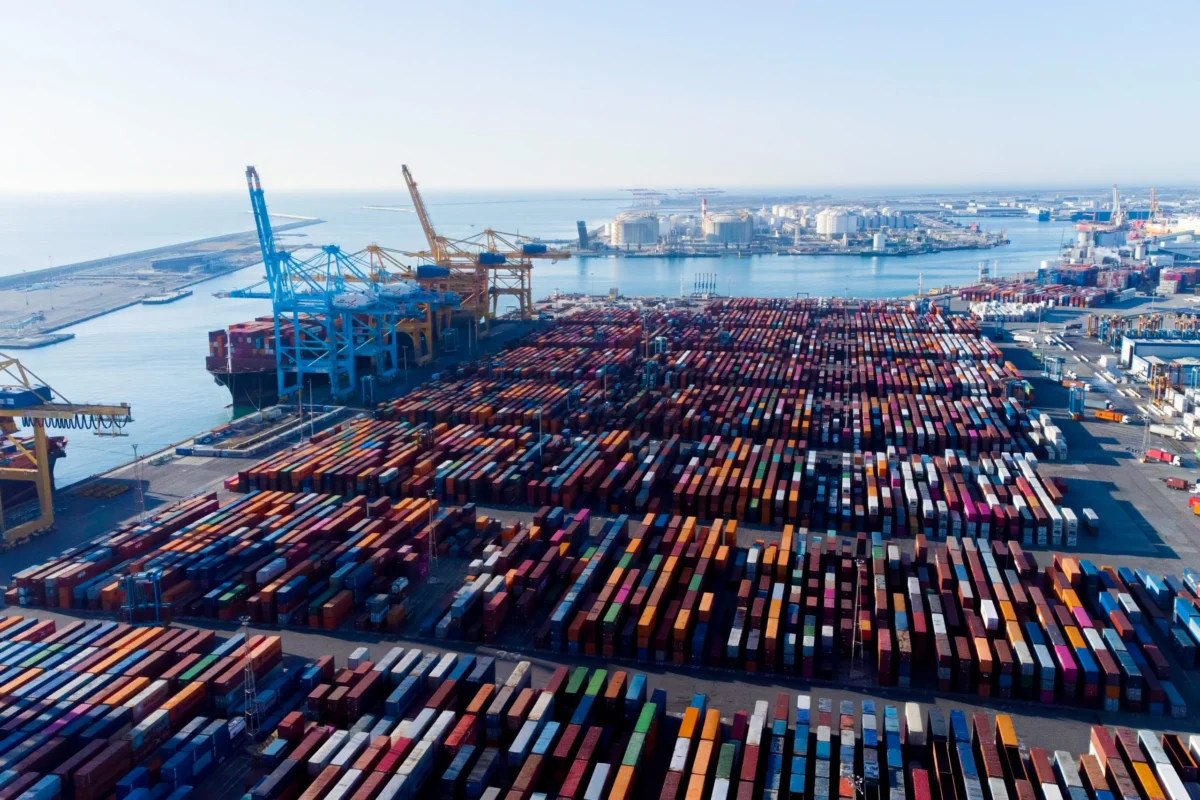
The imposition of tariffs, particularly those initiated by former President Donald Trump and largely continued, has aimed to recalibrate US trade relationships and reduce reliance on specific partners, notably China. However, the intricacies of modern global supply chains mean that traditional trade statistics often fail to capture the true origin and economic contribution of imported goods. This fundamental disconnect between conventional trade metrics and the reality of value creation within multinational production networks presents significant challenges for policymakers seeking to target specific countries or achieve precise economic outcomes through tariffs. Understanding "trade in value-added" (TiVA) is crucial to discerning the actual economic footprint of tariffs, revealing a complex web of interdependencies where a tariff on one country can ripple through numerous others, affecting consumers and industries far removed from the initial target.
The Genesis of US Tariffs: A Brief History
The Trump administration’s trade policy marked a significant departure from decades of multilateral trade liberalization. The overarching rationale for these tariffs, particularly against China, stemmed from concerns over persistent trade deficits, alleged intellectual property theft, forced technology transfers, and what the administration viewed as unfair trade practices. Beginning in early 2018, the US initiated a series of tariff actions under Section 232 of the Trade Expansion Act of 1962 (on steel and aluminum imports) and, more extensively, under Section 301 of the Trade Act of 1974 (targeting Chinese goods). The Section 301 tariffs on China were rolled out in several tranches throughout 2018, escalating from initial lists of goods to broader categories, eventually covering hundreds of billions of dollars worth of Chinese imports. These measures were intended to compel China to address structural trade issues and to encourage the reshoring of manufacturing jobs to the United States. While the Biden administration has largely maintained these tariffs, it has also engaged in strategic reviews, indicating a nuanced approach to trade enforcement that acknowledges both the geopolitical and economic dimensions of US-China relations. The continuity of these tariffs underscores a bipartisan consensus on the need to address perceived imbalances with China, even as the methods and their efficacy remain subjects of intense debate.
Beyond Gross Statistics: Understanding "Trade in Value-Added"
Conventional trade statistics record the gross value of goods crossing borders, attributing the entire value of a product to the last country from which it was shipped. This "country of origin" rule, often based on "substantial transformation," fails to account for the fragmented nature of modern manufacturing, where different stages of production, from raw materials to final assembly, occur in multiple countries. The "Trade in Value-Added" (TiVA) methodology, pioneered by the OECD and WTO, addresses this by disaggregating trade flows to reflect the economic contribution (value-added) of each country involved in the production of a good or service. This approach provides a more accurate picture of global supply chains, revealing how much of a product’s final value truly originates within a particular economy versus being imported as intermediate inputs.
Consider the ubiquitous iPhone, a product that, ironically, has often been exempt from the most stringent tariffs. While it is predominantly assembled in China, classifying it solely as a Chinese import obscures its truly global lineage. The iPhone’s sophisticated components are sourced from a diverse array of countries: advanced chips are manufactured in Taiwan and, increasingly, at affiliate facilities in Arizona; memory and storage components largely originate in Japan and South Korea; the durable glass display is produced in Kentucky; and the high-resolution camera modules come from Japan. Furthermore, the invaluable intellectual property, design specifications, software, and brand development – the "intangibles" that constitute a significant portion of the iPhone’s market value – are primarily generated in the United States. Under traditional trade accounting, the entire import value of an iPhone shipped from China is attributed to China. However, a TiVA perspective would meticulously break down this value, crediting each contributing nation for its share, including the substantial American input in design and critical components. This discrepancy highlights how traditional statistics can distort perceptions of trade balances and the actual economic impact of tariffs, which, when applied to a finished product like the iPhone, would effectively tax value-added from multiple allied nations, including the US itself.
Unpacking the Data: Value-Added Shares in US Imports (2022)
The OECD’s "Trade in Value-Added" database provides compelling evidence of these complex interdependencies. An analysis of 2022 data for the top 10 goods exporters to the US reveals a nuanced picture that challenges simplistic notions of bilateral trade.
| Partner | US imports ($bn) | Own share | US share | China share |
|---|---|---|---|---|
| China | 453 | 82.20% | 1.60% | – |
| EU-27 | 422 | 78.70% | 4.30% | 2.80% |
| Mexico | 334 | 59.00% | 14.10% | 8.50% |
| Canada | 318 | 74.30% | 12.20% | 2.80% |
| Japan | 110 | 75.80% | 2.70% | 5.00% |
| South Korea | 98 | 60.80% | 4.50% | 7.90% |
| Vietnam | 95 | 50.20% | 3.10% | 17.20% |
| India | 86 | 67.90% | 2.80% | 3.60% |
| Taiwan | 54 | 62.60% | 4.20% | 6.50% |
| UK | 51 | 67.60% | 5.20% | 2.70% |
Source: OECD, "Trade In-Value Added"; Tax Foundation calculations.
The data clearly illustrates varying degrees of domestic integration and reliance on global supply chains among US trading partners. China, despite being the primary target of US tariffs, exhibits a relatively high "own share" of 82.2 percent in its goods exports to the US. This figure suggests that a substantial portion of the value embedded in goods classified as Chinese imports originates within China itself, indicating deep domestic industrial capacity beyond mere assembly. However, even for China, a small but notable 1.6 percent of its export value comes from US-made components, highlighting an underlying interdependence.
In stark contrast, countries like Vietnam and Mexico, which have seen increased trade with the US following tariff-induced supply chain shifts, show significantly lower "own shares." Vietnam’s "own share" stands at just 50.2 percent, the lowest among the top exporters. Critically, 17.2 percent of the value-added in Vietnamese exports to the US originates from China, indicating that Vietnam often acts as an intermediary, processing or assembling Chinese-made components before re-exporting them to the US. Similarly, Mexico’s "own share" is 59.0 percent, with a substantial 14.1 percent of its export value to the US coming from American components and 8.5 percent from China. This pattern suggests that tariffs intended to reduce reliance on China have, in some instances, led to a geographical re-routing of supply chains rather than a fundamental reshoring or decoupling from Chinese inputs. Goods may now transit through third countries like Vietnam or Mexico, but still contain significant Chinese value-added, effectively circumventing the direct tariff burden but not necessarily altering the underlying sourcing.
Other key partners, such as South Korea and Taiwan, also exhibit lower "own shares" (60.8 percent and 62.6 percent, respectively) and notable contributions from China (7.9 percent and 6.5 percent). This underscores how deeply integrated East Asian economies are within regional supply networks that often feature China as a central hub for various stages of production. Even the European Union (EU-27), Japan, Canada, India, and the UK, while having higher "own shares," still incorporate value-added from the US and China, reinforcing the notion that virtually no major economy operates in isolation.
The Ripple Effect: Economic and Geopolitical Implications
The complexities revealed by value-added trade data have profound economic and geopolitical implications. Economists widely contend that tariffs, rather than acting as surgical tools, often function as blunt instruments. When a tariff is imposed, it primarily acts as a tax on the importing country’s businesses and consumers. These costs can be passed on through higher prices for goods, reducing consumer purchasing power, or absorbed by businesses, potentially leading to reduced profits, investments, and job growth. For instance, studies conducted in the years following the initial imposition of tariffs estimated that American consumers and businesses bore the brunt of nearly 100% of the tariff costs, contradicting the notion that foreign exporters would primarily absorb them.
The effort to reduce reliance on China has undeniably spurred significant supply chain restructuring. Companies have explored strategies such as "de-risking" (reducing exposure to single points of failure or geopolitical risks) and "friend-shoring" or "near-shoring" (relocating production to allied countries or geographically closer nations). While this has created opportunities for countries like Mexico and Vietnam, the TiVA data shows that these shifts are not always straightforward decoupling. Instead, they often involve embedding Chinese value-added within new production pathways, leading to increased complexity rather than complete disengagement. This has necessitated substantial investments in new facilities, logistics, and labor training in these emerging hubs, incurring significant costs and requiring lengthy transition periods for global businesses.
From a geopolitical perspective, the intricate nature of supply chains complicates efforts to exert pressure on specific adversaries without inadvertently harming allies. When tariffs on Chinese goods inadvertently tax components sourced from Japan, South Korea, or the US itself, they create friction and undermine broader economic cooperation. This reality highlights the need for multilateral approaches and careful diplomacy in trade policy, as unilateral actions can have unintended consequences that strain international relationships.
Policymaker’s Dilemma: Navigating Complexity
The enduring presence of tariffs, even after the Supreme Court’s ruling earlier this year which upheld the executive’s authority to impose such measures, ensures that they remain a potent, if complex, tool in the US trade arsenal. The Section 301 tariffs, including the across-the-board 12.5 percent tariff on Chinese imports imposed in July, continue to stack on top of earlier levies, leaving some goods facing rates as high as 37.5 percent. This sustained pressure has undoubtedly altered trade flows; in the years following their initial imposition, these tariffs led to significant reductions in imports from China, estimated at approximately $130 billion compared to pre-tariff levels. However, as the TiVA data demonstrates, these reductions do not necessarily equate to a complete disengagement from Chinese economic influence.
The challenge for policymakers lies in balancing strategic objectives, such as national security and economic resilience, with the practical realities of a deeply interconnected global economy. Industry associations have frequently voiced concerns about the cumulative impact of tariffs on input costs, competitiveness, and ultimately, consumer prices. They often advocate for more targeted measures, such as export controls on specific technologies, rather than broad-based tariffs that can penalize entire sectors. Government officials, while acknowledging the complexities, often justify tariffs as necessary leverage to address systemic trade abuses or to protect critical domestic industries. Yet, the evidence from value-added trade underscores that achieving precise policy outcomes through tariffs is exceedingly difficult, and unintended consequences for non-targeted countries and domestic industries are almost inevitable. It calls for an elevated level of sophistication in economic analysis, moving beyond gross trade figures to embrace granular data that maps the true origins of value in global production.
The Path Forward: Adapting to an Interconnected World
The global trade landscape is in a constant state of flux, shaped by technological advancements, geopolitical shifts, and evolving economic policies. The lessons learned from the past few years of intense tariff activity, illuminated by the "Trade in Value-Added" framework, suggest that future trade policy must be grounded in a comprehensive understanding of these underlying complexities. Relying solely on traditional trade statistics risks misdiagnosing economic challenges and implementing policies that yield suboptimal or even counterproductive results.
Moving forward, effective trade policy will require greater transparency, more sophisticated data analysis, and potentially more collaborative international approaches. Policymakers must continually evaluate not just where goods are assembled, but where the true economic value is created, where innovation originates, and how supply chains can be made more resilient without sacrificing efficiency. The imperative is to craft trade strategies that are nuanced enough to address specific concerns while acknowledging the indelible reality of global economic interdependence, ensuring that efforts to protect domestic interests do not inadvertently harm the very consumers and businesses they aim to serve.