Layla Zulfa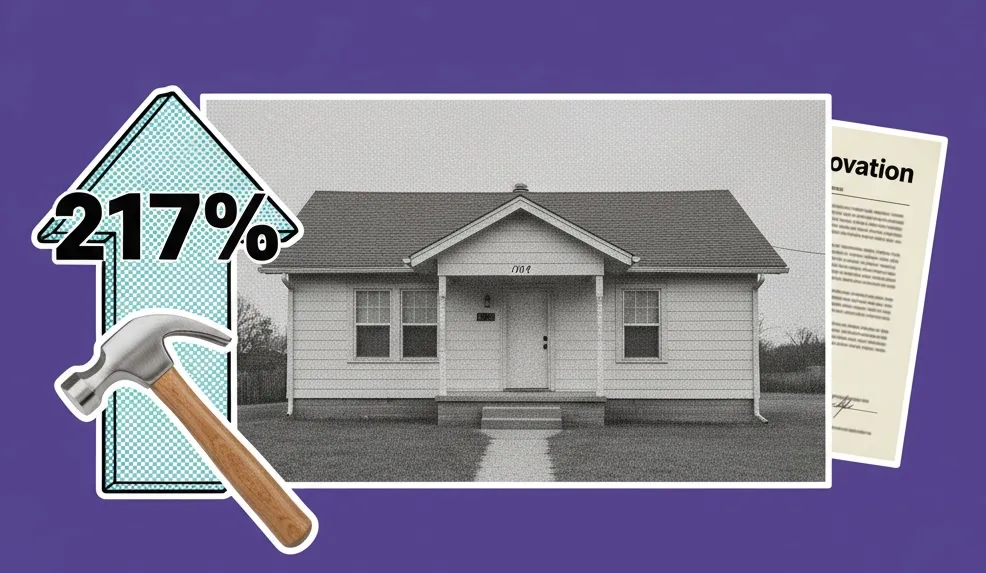
A groundbreaking report released by New Western, a leader in distressed and transitional real estate, reveals a significant shift in the supply chain for entry-level housing. The company’s 2026 Flip Side Report, analyzing residential real estate investing trends from the previous year, found that independent real estate investors were instrumental in delivering a substantially larger volume of starter homes compared to traditional homebuilders. In 2025, these small, local investors brought 120,193 homes into the starter-home price range, a figure that dwarfs the 37,931 homes supplied by builders. This indicates that investors supplied an astonishing 217% more entry-level inventory than was produced by new construction.
The report, which delves into the intricate dynamics of the residential real estate market, argues that the nation’s persistent housing affordability challenge is not solely a matter of overall housing stock but is critically linked to the scarcity of accessible entry-level properties for first-time homebuyers. Homes priced below $300,000 are generally considered the gateway for individuals and families looking to enter the housing market for the first time, as well as essential workers striving for homeownership. The New Western analysis highlights that this particular segment of the market is experiencing the most acute supply constraints.
Compounding this issue, the report points to a significant underutilization of existing housing stock. Data from the U.S. Census Bureau indicates that approximately one in every ten homes across the United States stands vacant, representing a substantial reservoir of potentially available housing that is currently not contributing to the market.
Kurt Carlton, president and co-founder of New Western, emphasized that these findings underscore a fundamental transformation in how starter housing supply enters the market. "What if the real housing crisis isn’t that we haven’t built enough homes, but that we’re letting millions of starter homes disappear?" Carlton posed. "Fixing today’s housing challenge isn’t just about building more homes. It’s about whether attainable housing actually exists at the entry point. In 2025, small, local independent investors quietly became the largest suppliers of starter homes in America."
Carlton further elaborated on the methodology employed by these investors. "They aren’t building subdivisions – they’re revitalizing existing homes that would otherwise remain underutilized and returning them to productive use," he stated. "The Great Renovation is restoring the first rung of the housing ladder." This perspective frames investor activity not as a competitor to traditional development, but as a crucial force in rehabbing and repositioning existing, often neglected, properties to meet the pressing demand for affordable starter homes.
Investors Dominate Entry-Level Supply Amidst Builder Focus on Higher Tiers
The New Western report provides granular data illustrating the dominance of investors in the lower price brackets. Investors were responsible for an overwhelming 83.75% of new housing inventory priced below $215,000 and 69.5% of inventory priced below $250,000. This stark contrast highlights a divergence in market focus between investors and homebuilders.
In contrast, new construction activity in 2025 remained predominantly concentrated at higher price points. The report indicates that just under 11% of all new homes built during that year were delivered within the starter-home price band, defined as $261,000 or less. This suggests that while builders are actively contributing to the overall housing supply, their focus is less aligned with the specific needs of first-time homebuyers and those seeking the most affordable entry into homeownership.
A significant factor contributing to the robust investor supply is their acquisition of properties that are not typically visible on the open market. The report found that a substantial 72% of homes purchased by investors required significant repairs and were therefore unlikely to attract traditional buyers seeking move-in-ready properties. These were often distressed or outdated homes that, without investor intervention, might have remained vacant or deteriorated further.
The Untapped Potential of Vacant Stock and Local Market Trends
The scale of unused housing inventory is substantial. The New Western analysis estimates that there are over 15 million vacant homes across the United States. In addition to these vacant properties, an estimated 6.7 million occupied homes require substantial repairs, further underscoring the potential for revitalization. Investor activity plays a critical role in unlocking this underutilized housing stock, transforming these properties back into functional and desirable homes.
Beyond the direct impact on housing supply, investor-driven transactions also generate significant economic activity throughout the broader housing sector. The report estimates that the combined purchases and resales of homes facilitated by investor renovations generated more than $20.9 billion in listing agent commissions in 2025 alone. This economic ripple effect extends to various interconnected industries, including real estate brokerage services, mortgage lending, title insurance, and a multitude of local businesses that support the renovation and resale process.
The report’s findings are particularly pronounced in several major metropolitan areas, where investor activity is dramatically outpacing new construction in the creation of entry-level housing inventory. For instance, in St. Louis, investor activity resulted in 1,069% more starter homes being supplied than by builders. Boston also demonstrated a significant disparity, with investors supplying 571% more homes in the entry-level segment compared to new construction. Other metropolitan areas such as Atlanta and Charlotte also reported substantial differences, with investors delivering 296% and 149% more starter homes, respectively. These examples highlight a nationwide trend where local investors are filling a critical gap in the starter home market.
The Crucial Role of Starter Homes in Market Dynamics
Starter homes are widely recognized as a foundational element of a healthy housing market. They serve as the critical first step for first-time buyers to achieve homeownership, which in turn facilitates movement across higher price tiers. When the supply of entry-level homes is constrained, it creates a bottleneck effect throughout the entire market. Fewer buyers can enter homeownership, leading to a slowdown in transactions at all levels as existing homeowners delay selling or upgrading to larger homes due to the difficulty their potential buyers face in finding starter homes.
For real estate agents and brokers, the findings presented in the New Western report offer valuable insights into a burgeoning source of housing inventory that is increasingly shaping entry-level transactions. Investor-driven renovations are crucial in converting distressed or outdated properties into move-in-ready homes that can then be listed and sold through traditional brokerage channels. As the overall supply of entry-level inventory remains tight in many regions, these renovated homes are likely to represent a larger proportion of properties available to first-time buyers. This dynamic has significant implications for real estate professionals, influencing where they focus their efforts, particularly in building and maintaining relationships with local investors who are consistently acquiring and reselling properties.
Implications for Policy and Future Market Development
The report’s conclusions carry significant implications for policymakers and stakeholders concerned with housing affordability and market stability. The reliance on small, independent investors to supply entry-level housing suggests that strategies aimed at addressing housing shortages should consider not only incentives for new construction but also measures that support the rehabilitation and repurposing of existing housing stock.
One area of potential policy focus could be streamlining the renovation process for investors, such as through property tax incentives for rehabilitation projects or simplified permitting procedures for minor to moderate repairs. Additionally, fostering greater transparency and access to data on vacant and underutilized properties could help investors identify opportunities more efficiently.
The report also implicitly raises questions about the long-term sustainability of a market where a significant portion of entry-level supply is dependent on investor activity. While investors play a vital role in revitalizing older homes, concerns may arise regarding the pace of renovation, the quality of repairs, and the potential for investor-driven price inflation in specific neighborhoods. Understanding these nuances will be critical for developing comprehensive and equitable housing solutions.
Furthermore, the economic contributions of investor activity, as highlighted by the report’s estimates of commission generation, underscore the interconnectedness of the real estate ecosystem. Supporting investor activity in a responsible and sustainable manner could yield broad economic benefits, provided that efforts are made to ensure that the primary goal remains the creation of accessible and affordable housing for a diverse range of buyers.
As the housing market continues to evolve, the role of small, local investors in revitalizing existing homes and bringing them back into the starter home market is a trend that warrants continued attention and analysis. The data presented by New Western offers a compelling narrative of how a segment of the market, often operating behind the scenes, is playing an indispensable role in addressing one of the nation’s most pressing economic challenges. The "Great Renovation," as described by Carlton, appears to be a significant, albeit quiet, force in reshaping the landscape of homeownership opportunities for millions of Americans.