Layla Zulfa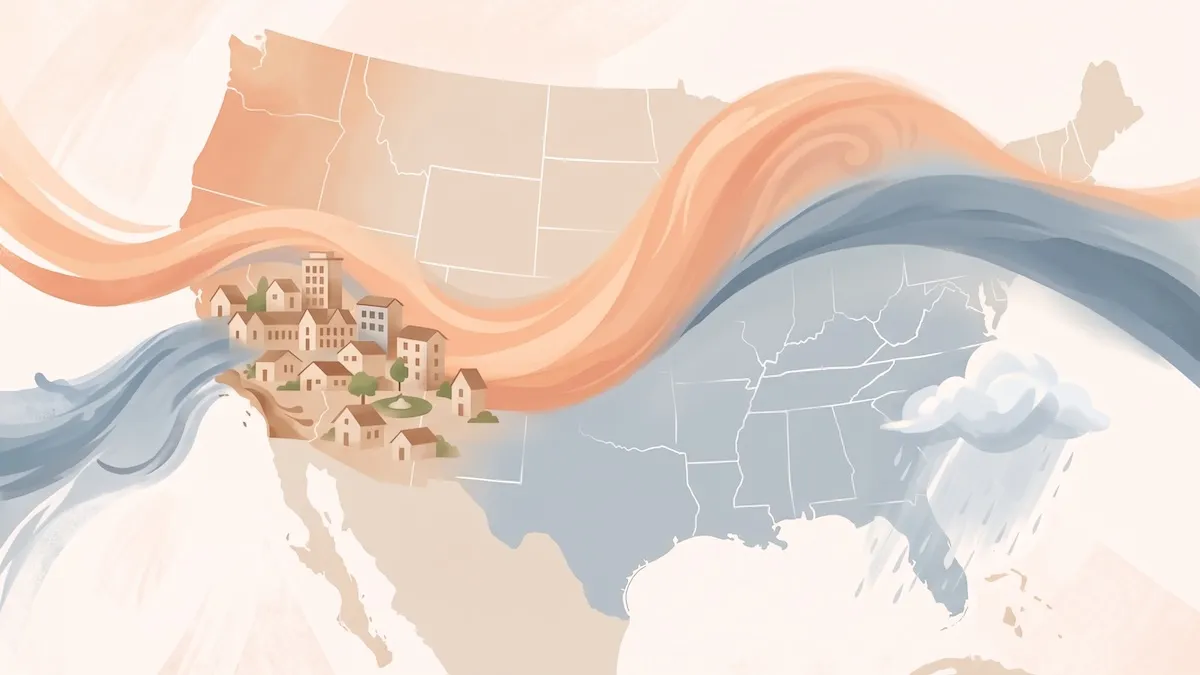
A potent El Niño phenomenon, currently intensifying in the Pacific Ocean, is poised to significantly influence the U.S. housing market throughout the upcoming winter. This climatic event is not expected to create new risks but rather to expose existing vulnerabilities within residential properties, presenting considerable challenges for real estate professionals, insurance providers, property appraisers, and prospective homebuyers across a wide geographical spectrum, from the West Coast to the Gulf Coast.
Howard Botts, chief scientist at Cotality, a firm specializing in climate risk analysis, emphasized that the forthcoming weather patterns will act as a reveal, rather than a generator, of risks. He explained that even properties that may not suffer direct physical damage could experience a discernible impact on their marketability and overall valuation.
“El Niño events occur periodically, typically every two to seven years, so their occurrence is not an unprecedented phenomenon,” Botts stated in an interview with HousingWire. “However, with sea surface temperatures reaching record high elevations, all indicators point towards a ‘super’ El Niño event. While our focus may remain predominantly on the West Coast, particularly California, historical data shows that El Niño patterns tend to shift the prevailing wind currents southward.”
This southerly shift in the jet stream means that it will likely flow over the southern United States. For California, this typically translates into a substantial increase in atmospheric rivers originating from the Pacific, bringing with them increased precipitation.
Botts’s personal experience living in the Pacific Palisades, situated below a former wildfire burn scar, underscores the growing necessity for robust storm preparedness in affected areas. “I witness firsthand, multiple times a week, neighbors discussing and preparing for potential mudflows ahead of anticipated storm events,” he shared. This heightened awareness is a direct consequence of the increased risk of debris flows following wildfires, where burned soil loses its ability to absorb water, making it highly susceptible to being carried away by heavy rainfall.
Coastal flooding is another significant concern, exacerbated by the recent passage of two Pacific hurricanes. These storms have accelerated coastal erosion along the shores of Orange County and Los Angeles County. “As ocean waters warm, they expand,” Botts explained. “Consequently, sea levels are currently elevated along the coast, potentially by as much as six inches or more. When this is combined with storm surges, king tides, and full moons, the incidence of coastal flooding is likely to increase significantly.” This phenomenon, known as thermal expansion, contributes to rising sea levels independently of ice melt.
While the Southeast has experienced a suppression of hurricane activity during the summer months, attributed to the influence of El Niño, Botts cautioned against interpreting this as a long-term reprieve from severe weather. “The shift in the jet stream is expected to bring cooler, wetter conditions to the Southeast and the Gulf Coast as we transition into late fall and winter,” he predicted. “However, this pattern is also likely to foster more severe convective storms, potentially leading to an increase in tornado activity in these regions.”
Conversely, the Pacific Northwest is anticipated to experience drier conditions, which could heighten the risk of wildfires by late spring and summer. These drier conditions extending across the northern tier of states also carry significant implications for the agricultural sector, Botts added, potentially impacting crop yields and water resources.
Insurance: The Early Indicator of Climate Risk
For Botts and his colleagues at Cotality, the insurance market serves as a critical early warning system for impending climate-related risks to the housing sector. “Insurance is an area of significant concern for us at Cotality, and in many respects, it acts as the canary in the coal mine,” Botts observed. “The observed increases in insurance rates or the increasing difficulty in obtaining coverage can serve as an early indicator of the risks that the market is anticipating for homes.”
Cotality also closely monitors transaction cancellations, which can often signal that a property has failed an inspection or appraisal, or that a buyer has been unable to secure necessary hazard insurance. This trend highlights the interconnectedness of property condition, insurance availability, and the successful completion of real estate transactions.
A prevalent and potentially dangerous misconception, Botts noted, is that homeowners residing outside of designated Special Flood Hazard Areas (SFHAs), commonly referred to as 100-year flood zones, are automatically protected from flood damage. “We are likely to see events associated with El Niño that manifest as flash flooding or pluvial flooding, as it is technically known,” he stated. “This occurs when intense rainfall rapidly overwhelms drainage systems, leading to significant water accumulation. Typically, SFHAs are designed to address riverine flooding and may not adequately cover these types of intense rainfall-induced events.”
Botts shared a personal anecdote from his own neighborhood in a canyon near the coast, situated above a creek. “I’ve observed neighbors who have begun purchasing flood insurance, not solely due to a general apprehension about the unknown implications of this year’s weather, but also because of the history of severe wildfires in the region,” he explained. “Following these fires, intense rainfall events significantly increase the likelihood of mudflows. Last year, in a neighboring canyon, we witnessed a five-foot wall of mud inundate several homes and businesses.” This illustrates how post-fire landscapes become acutely vulnerable to even moderate rainfall.
For prospective buyers and their real estate agents, Botts strongly recommended a meticulous examination of individual property characteristics rather than relying solely on broad regional climate forecasts. “If you are an agent representing a buyer, it is imperative to scrutinize the individual structure,” he advised. “Assess the property’s grading; ensure that the ground slopes away from the foundation. I firmly believe that anyone looking to purchase a home, or their agent, should leverage comprehensive property risk reports.” These reports can provide detailed information on a property’s susceptibility to various climate-related hazards.
Appraisers Observe Value Pressures, Even Without Direct Damage
Michael Romano, vice president of staff appraisers for valuation at ServiceLink, corroborated the notion that a wet or stormy season can negatively impact a property’s value, irrespective of whether the property itself sustains direct damage. “The absence of direct damage to a property does not necessarily mean that factors negatively influencing buyers will not emerge,” Romano stated. “The same applies to neighboring properties or those within the broader community. Marketing periods may extend, asking prices might decrease, and sellers may become more amenable to offering incentives, all of which can contribute to a depreciation of property values.”
He further elaborated, “Just as favorable weather can stimulate market activity and positively influence home sales, adverse weather conditions can have a detrimental effect on the volume of home sales and, consequently, on prices.”
External factors can also exert downward pressure on property values. As buyers become more informed about the risks associated with certain locations, Romano suggested, they may exhibit a reduced inclination to purchase in areas perceived to be at higher risk. “A decline in buyer demand typically leads to an increase in supply, which, in turn, usually places downward pressure on prices,” he explained. “If external factors result in increased insurance premiums, property taxes, or community maintenance fees, it is highly probable that prices will decline in conjunction with overall property values.”
Appraisers are equipped to track these trends over time by comparing market conditions before, during, and after a natural disaster, or when external factors begin to demonstrably affect marketability. This comparative analysis allows for a nuanced understanding of how external environmental and economic forces shape property valuation.
Insurance Challenges Translate into Valuation Challenges
Romano clarified that appraisers do not directly compare the insurance costs of one home to another. This is due to the multitude of variables that influence insurance rates, many of which may not be fully known to the appraiser. However, he noted that the market inherently adjusts to these pressures.
“The market will inevitably adjust, for better or worse, as buyers may become less willing to purchase properties due to elevated insurance rates, taxes, or utility costs,” Romano observed. “The collective actions of buyers and sellers, or the resulting market reaction, are precisely what appraisers analyze when determining property value.”
When questioned about whether buyers are already factoring higher climate or insurance risks into their purchasing decisions by discounting properties, Romano indicated that appraisal methodologies primarily focus on market data and observed trends rather than explicitly quantifying climate or insurance risks at the individual property level. “While these factors are not specifically quantified during the valuation process for a subject property, they do manifest in aggregated data that influences the broader market outside of the appraisal development itself,” he explained.
On the Ground in Miami: A Different Perspective
While the real estate and insurance industries are bracing for the anticipated impacts of El Niño on the West Coast and Gulf Coast, Alfredo Pujol, chairman of Miami Realtors + RWorld, reported that the weather pattern has thus far registered minimally in discussions with buyers and sellers in South Florida.
“What has become a more prominent topic of conversation, and something we are actively observing, is the continued presence of cash buyers and the focus on financing – specifically, whether interest rates remain elevated,” Pujol stated.
Pujol indicated that Miami is on track to surpass its annual record of over 10 million home sales. He posited that any potential displacement caused by El Niño’s effects in California could lead to increased migration towards Florida. “I anticipate that migration from California and other affected states will persist as residents seek more stable environments,” he predicted.
Pujol highlighted Florida’s proactive measures to bolster both its housing stock and its insurance market. The state’s My Safe Florida Home program, for instance, has provided assistance to homeowners for the installation of impact windows and other structural reinforcements. Concurrently, state regulators have reported a slight decrease in homeowners’ insurance rates, a positive development attributed to these mitigation efforts and market reforms.
“Programs such as My Safe Florida Home have been instrumental in strengthening properties across the state,” Pujol commented. “These initiatives benefit sellers by enhancing property resilience and provide buyers with greater peace of mind regarding their investments.”
For real estate agents fielding inquiries from out-of-state buyers concerned about climate-related risks, Pujol stressed the importance of emphasizing robust construction standards and preparedness. “Building codes were significantly revised after Hurricane Andrew, resulting in demonstrably stronger homes,” he noted. “Through our collaborative efforts with Miami and RWorld and Florida Realtors, we have engaged with elected officials to advocate for reforms in the insurance sector. Properties equipped with impact glass or storm shutters are positioned far more favorably to withstand severe weather events.”
Pujol acknowledged that severe weather events and the broader implications of climate change are realities that Florida must continuously address. However, he reiterated that new construction is consistently adhering to enhanced building codes and incorporating robust reinforcement measures. “The key is ensuring that clients are well-informed about the specific area, the necessary repairs for their chosen property, and the availability of insurance programs designed to mitigate risk,” he concluded.
General Outlook: A Nationally Diverse Impact
Looking ahead, Botts provided a comprehensive overview of the potential nationwide impacts, painting a varied picture of challenges and concerns across different regions.
In California, the primary concerns revolve around atmospheric rivers, increased instances of flooding, and the potential for landslides, particularly in fire-prone areas. Along the Gulf Coast, Texas, and Florida’s coastal plains, the outlook suggests a heightened risk of flooding and severe convective storms, including potential tornadoes. The Northeast and New England regions may experience more coastal storms and nor’easters, bringing significant rainfall and wind. Conversely, the Pacific Northwest could face prolonged drought conditions, escalating wildfire risk. The Midwest and Great Lakes regions are likely to contend with winter flooding, often accompanied by mixed precipitation.
“Each region of the country will have its own set of climate-related concerns, but the most substantial impacts are anticipated to be concentrated in California and along the Gulf Coast, encompassing the entire southern tier of states,” Botts summarized.
His overarching message to industry professionals remains consistent and has been widely disseminated to neighbors and colleagues alike: “A strong El Niño does not create risk; rather, it exposes it,” Botts reiterated. “Therefore, it is crucial to diligently assess and understand the individual vulnerabilities inherent in each home.” This emphasis on granular, property-specific risk assessment is paramount in navigating the complexities of a changing climate and its impact on the real estate market.