Pevita Pearce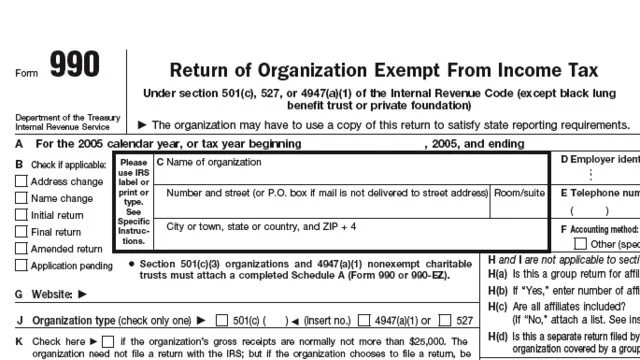
Preparing an IRS Form 990, the annual information return for tax-exempt organizations, is frequently perceived as a purely accounting-driven undertaking. While it fundamentally involves the meticulous reconciliation of revenues and expenses, confirmation of compensation packages, completion of pertinent schedules, and detailed governance questionnaires, its scope extends far beyond mere financial accounting. The Form 990 serves as a public declaration of an organization’s operational, financial, and governance integrity. It is a crucial document that, except for specific contributor details, is generally accessible to the public under Internal Revenue Code Sections 6033 and 6104, making its accuracy paramount. For Certified Public Accountants (CPAs), the challenge lies not in identifying every potential accounting anomaly, but in discerning when the integrity of the return hinges on resolving underlying legal complexities that cannot be addressed solely through accounting adjustments or explanatory notes. This article delves into seven critical scenarios that warrant heightened scrutiny during Form 990 preparation, signaling that the return’s accuracy may depend on legal counsel.
Shifting Missions: When Activities Diverge from Exempt Purpose
A cornerstone of tax-exempt status is the alignment of an organization’s activities with its stated charitable, educational, religious, or other qualifying purpose. Over time, however, the operational landscape of a nonprofit can evolve significantly from its initial recognized exempt status. New leadership, evolving societal needs, or strategic expansion can lead to the introduction of new programs, engagement in commercial ventures, or operational shifts that may not have been contemplated in the organization’s foundational documents or initial exemption application.
Part III of Form 990 specifically mandates that organizations describe their mission and significant program services. These descriptions must be consistent with a comprehensive review of the organization’s articles of incorporation, governing bylaws, IRS determination letter, prior tax filings, public-facing website content, grant proposals, and, most importantly, its actual day-to-day operations. While minor linguistic variations between these sources may not be problematic, a material divergence in the organization’s core purpose or its programmatic activities can represent a significant compliance issue.
The instructions accompanying Form 990 require organizations to report substantial changes in their activities and certain alterations to their governing documents. A CPA discovering that an organization has, in effect, adopted a new mission must recognize this as more than a simple drafting or formatting challenge. Legal counsel may be essential to determine if amendments to the organization’s foundational documents, new state filings, formal disclosures to the IRS, or other corrective legal actions are necessary to maintain its tax-exempt status and ensure compliance. For instance, a charity established solely for local community outreach that begins operating a national-scale vocational training program without appropriate legal and IRS notification could face challenges to its exempt status. Such a shift, if not properly addressed, could expose the organization to unrelated business income tax or, in severe cases, revocation of its tax-exempt status, impacting its ability to receive tax-deductible donations and operate freely.
Compensation Concerns: Unaddressed Approval Processes
The reporting of compensation on Form 990 extends beyond simply filling in the correct figures in Part VII. For public charities and certain other tax-exempt entities, Section 4958 of the Internal Revenue Code imposes excise taxes on "excess benefit transactions." This occurs when an organization provides an economic benefit to a "disqualified person" that exceeds the fair market value of the goods or services received in return. Disqualified persons can include founders, officers, directors, key employees, substantial contributors, or their family members, depending on the specific facts and circumstances.
The risk of excise taxes is significantly mitigated when compensation decisions are supported by robust, documented processes. Specifically, compensation that is approved in advance by an authorized body, composed of individuals without conflicts of interest, based on reliable comparability data, and contemporaneously documented, is less likely to be challenged. Treasury Regulation § 53.4958-6 provides detailed guidance on establishing this "rebuttable presumption of reasonableness."
However, the absence of such a formal approval process does not automatically equate to an illegal excess benefit transaction, nor does meeting the criteria for the rebuttable presumption definitively confirm the transaction’s permissibility. When a CPA encounters compensation arrangements lacking this documented approval framework, a comprehensive review is warranted. The organization may require legal expertise to assess the reasonableness of compensation, reimbursements, bonuses, housing allowances, vehicle usage, loans, or payments made to related entities. Failure to properly document and approve compensation can lead to substantial penalties for both the individual receiving the benefit and potentially for the organization itself, including fines and reputational damage.
Governance Gaps: Discrepancies Between Policy and Practice
Part VI of Form 990 delves into the critical area of organizational governance, posing questions about board independence, the management of family and business relationships, conflict of interest policies, whistleblower protections, document retention practices, compensation approval processes, and the board’s review of the Form 990 itself. These inquiries are designed to ascertain the organization’s actual governance practices, not its aspirational ideals.
A common pitfall arises when policies are adopted or formalized after the close of the tax year. Such post-year-end actions generally do not permit an organization to claim that the policy was in effect during the completed tax year. Similarly, a board member’s independence cannot be assumed simply because the organization has never formally identified a specific conflict of interest; proactive measures and clear declarations are often required.
CPAs must diligently compare the proposed answers to these governance questions with the organization’s foundational documents, including bylaws and articles of incorporation, minutes from board meetings, annual disclosure statements, employment agreements, vendor contracts, and information provided by officers and directors. When the organization’s documented records contradict management’s proposed responses regarding governance practices, this discrepancy must be thoroughly investigated and resolved before the Form 990 is filed. A governance structure that appears sound on paper but is not consistently implemented can expose an organization to scrutiny, potentially leading to challenges from donors, regulators, or even litigation from stakeholders who believe their interests have not been adequately protected.
Insider Transactions: Informality and Inadequate Documentation
Schedule L of Form 990 is dedicated to reporting specific types of transactions involving "interested persons" or "disqualified persons." This includes excess benefit transactions, loans made to or from insiders, grants or assistance provided to insiders, and certain business transactions with related parties. Common issues flagged by Schedule L include undocumented cash advances to officers, personal expenses paid via organizational credit cards, rental agreements with directors, contracts with companies owned by board members, and amounts carried on the books for extended periods as "due from officer."
The instructions for Schedule L often mandate reporting of certain transactions irrespective of their monetary value. For instance, an outstanding loan to an officer does not cease to be a loan simply because the organization characterizes it as an "advance." Likewise, a transaction does not automatically become an "arm’s-length" agreement merely because its price appears reasonable in retrospect.
When such transactions are identified, legal counsel may be necessary to determine several critical factors: Was the transaction properly authorized by the board? Does the transaction need to be corrected or unwound? Does Section 4958 apply, potentially triggering excise taxes? Is Form 4720 (for excise taxes) required to be filed, or are there state-law implications that necessitate action? Inadequate documentation of insider transactions can lead to serious compliance failures, including private inurement violations, which can jeopardize an organization’s tax-exempt status. For example, a pattern of undocumented loans to executives could be interpreted as private benefit, leading to severe penalties and the potential revocation of exemption.
Uncharted Territory: The Complex Web of Related Entities
Many nonprofit organizations operate within a network of affiliated entities. This can include supporting organizations, subsidiary limited liability companies (LLCs), management service organizations, title-holding companies, or entities that share overlapping board memberships. Understanding and accurately reporting these relationships is crucial for compliance.
Schedule R of Form 990 requires detailed reporting concerning certain related organizations and their inter-entity transactions. Information about related organizations can also profoundly impact other sections of the Form 990, including compensation reporting, board independence assessments, revenue recognition, liability disclosures, and other financial and operational aspects.
A significant challenge arises because the legal definition of "control" or "relationship" may not align with an organization’s informal understanding of its affiliations. An entity described by management as "completely separate" might still be legally considered related due to factors such as board appointment rights, common ownership, shared control mechanisms, or specific provisions within governing documents.
Before completing Schedule R, CPAs may need to go beyond management’s descriptions and request an organizational chart that is substantiated by the relevant governing documents, rather than relying solely on verbal assurances. Failing to accurately map and disclose these relationships can lead to misreporting, which might result in incorrect tax assessments, penalties, or an incomplete picture of the organization’s overall financial health and governance structure. For example, if a management company controlled by an executive’s family is not properly identified and disclosed, the compensation paid to that company could be misconstrued, leading to potential excess benefit issues.
Misappropriation of Funds: Unauthorized Use of Restricted Assets
A critical issue that often surfaces during Form 990 preparation involves the use of restricted funds for purposes other than those designated by the donor or grantor. Financial records may reveal that donor-restricted funds, proceeds from specific grants, endowment assets, or funds held for sponsored projects have been diverted for general operational expenses.
While accounting treatments for such diversions are important, the core issue often lies in the organization’s legal obligations. The organization may have binding commitments under gift instruments, grant agreements, fiscal-sponsorship arrangements, state charitable trust laws, or contracts with government agencies. The Form 990 must accurately reflect the financial position of these funds, but accurate reporting does not retroactively legitimize an unauthorized use.
Before filing the return, legal counsel must assess the situation. This may involve evaluating the necessity of restoring the misappropriated funds, obtaining consent from the donor or grantor, securing appropriate board resolutions, fulfilling disclosure obligations to relevant parties, or implementing other corrective measures. Failure to address the unauthorized use of restricted funds can lead to breaches of fiduciary duty, potential legal action from donors or grantors, and reputational damage. In some cases, it could even trigger investigations by state attorneys general or other regulatory bodies responsible for overseeing charitable assets. The erosion of trust that results from such actions can have long-lasting detrimental effects on an organization’s fundraising capacity and public perception.
Unfixable Conduct: When the Return Becomes a Disclosure of Past Wrongs
In some instances, the process of preparing the Form 990 may uncover significant operational conduct that cannot be rectified solely through adjustments on the tax return. This can include a range of issues, such as unreported payroll liabilities, misclassification of workers as independent contractors instead of employees, private use of charitable assets by individuals, substantial unrelated business activities, prohibited political campaign intervention, excessive lobbying, questionable foreign activities, or outright diversion of assets.
Many of these situations necessitate the filing of additional tax forms beyond the Form 990. For example, unreported payroll may require filing corrected employment tax returns, and unrelated business activities might necessitate Form 990-T. More seriously, some of these issues can directly threaten an organization’s tax-exempt status, create exposure to significant excise taxes, or implicate complex state law concerns. This juncture often represents the first opportunity for an independent professional to conduct a thorough review and identify potential problems that may have been overlooked by internal management.
While Schedule O provides a space to explain events or circumstances, it cannot serve as a substitute for legal authorization, the restoration of improperly used funds, the correction of unlawful payments, or the creation of governance records that never existed. When the books reveal conduct that fundamentally violates tax law or fiduciary duties, the primary problem shifts from preparing an accurate return to addressing the underlying legal violations. The organization’s leadership must be advised that the Form 990 may serve as a disclosure document for these issues, rather than a mechanism for their resolution. This can lead to audits, penalties, and potential legal action, underscoring the importance of proactive legal counsel.
Conclusion: Moving Beyond Return Preparation
CPAs are not expected to function as legal diagnosticians for every potential issue that arises with their nonprofit clients. However, they are frequently the first professionals to encounter a comprehensive view of an organization’s financial health, operational practices, and governance structure. The detailed examination of general ledgers, payroll records, contracts, board minutes, and the specific questions within the Form 990 can reveal inconsistencies and potential compliance gaps that may not have been recognized by individual members of management.
When the correct reporting position on Form 990 hinges on resolving fundamental legal questions—such as whether an activity was authorized, a payment was lawful, an entity is genuinely controlled, funds were used appropriately, or a transaction requires correction—the scope of the engagement has transcended simple return preparation. At such critical junctures, the most valuable service a CPA can provide to their client is not to find a more artful way to describe the situation on the return, but to identify the underlying legal problem before the organization formally signs and publicly files its tax return. Proactive engagement with legal counsel in these scenarios is essential to protect the organization, its mission, and its stakeholders.