Nila Kartika Wati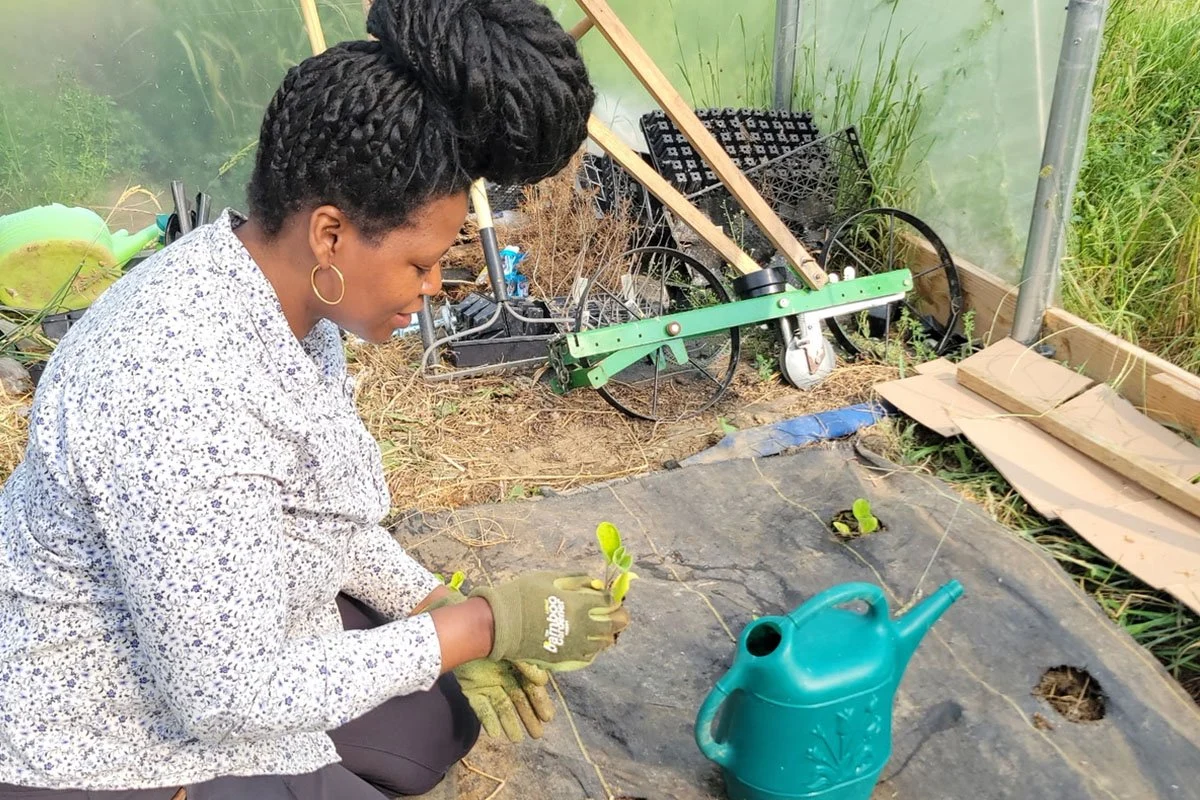
Located on 89 acres of rolling landscape in Washington County, New York, Black Yard Farm represents a modern intersection of agricultural production, social restorative justice, and cooperative economic theory. Founded by Ashanti Williams, the farm currently manages a diverse array of livestock and produce, including 48 chickens—part of a cycle that sees hundreds raised annually—a resident pig named Pedro, 11 cats, and a turkey. The operation is slated for expansion into small ruminants, including sheep and goats, to complement the 43 varieties of vegetables cultivated each season.
The farm’s emergence comes at a critical juncture for American agriculture, particularly as the industry grapples with an aging workforce and a historical legacy of land dispossession among minority operators. For Williams, the project is not merely an exercise in food production but a deliberate attempt to restructure the relationship between Black communities and the land. By integrating housing, education, and community-building into the agricultural model, Black Yard Farm seeks to establish a sustainable ecosystem that mirrors natural biodiversity through human cooperation.
From the Bronx to Washington County: A Chronology of Growth
The foundations of Black Yard Farm were laid decades ago in the Highbridge neighborhood of The Bronx. In the early 1990s, Williams’ grandfather, Abu Talib, was a central figure in the establishment of Taqwa Community Farm. Built on a vacant, city-owned lot, Taqwa was a response to the systemic food insecurity and urban decay that characterized much of the borough during that era. By the age of 11, Williams was already deeply embedded in this work, assisting her family in the management of a youth-run farmers market. This early exposure to urban agriculture provided a blueprint for how land could serve as a site for both nutritional sustenance and community empowerment.
In 2020, amidst the global disruption of the COVID-19 pandemic, the formal concept of Black Yard Farm was launched. Initially conceived as a collaborative project involving six individuals, the venture faced early logistical hurdles. Challenges regarding the original property’s lease and internal team dynamics necessitated a relocation. The search for a permanent home eventually led Williams to Washington County, a region traditionally known for its dairy production and proximity to the Hudson Valley markets.
The current 89-acre site was secured through a partnership with landowners who sought to transition a primarily residential property back into active agricultural use. Under the current agreement, Williams holds a favorable lease that includes a first-option-to-purchase clause, which is set to be triggered in the spring of 2025. This transition from tenant to owner is a pivotal moment for the farm, representing a shift toward long-term stability and the realization of a permanent cooperative hub.
The Cooperative Ecosystem Model
The vision for Black Yard Farm departs from the traditional American model of the isolated, family-owned homestead. Instead, Williams is developing a "producer cooperative" framework. This model envisions multiple agricultural and farm-adjacent businesses operating on the same acreage, sharing infrastructure, costs, and market presence while maintaining individual autonomy over their specific crafts.
Planned enterprises within this ecosystem include:
- Specialty Production: Maple syrup processing, honey bee apiaries, and mushroom cultivation.
- Educational Programming: Workshops on sustainable growing techniques and land stewardship.
- Culinary Partnerships: On-site residency programs for visiting chefs to utilize farm-grown ingredients.
- Residential Integration: The development of housing for cooperative members to ensure the farm remains a lived-in, working community.
This cooperative approach is strategically designed to mitigate the high barriers to entry that plague the agricultural sector. In New York State, where land prices have risen steadily due to development pressure, the cost of land, machinery, and infrastructure is often prohibitive for new farmers. By pooling resources, the cooperative model allows small-scale and Black farmers to achieve economies of scale that would otherwise be out of reach.
Data and Context: The Crisis of Black Land Ownership
The mission of Black Yard Farm is framed against a stark historical backdrop of land loss. According to data from the United States Department of Agriculture (USDA), Black land ownership in the U.S. peaked in 1920, with roughly 925,000 Black farmers owning about 14 million acres. By the early 21st century, those numbers had plummeted; today, Black farmers represent less than 2 percent of all operators, and they own less than 1 percent of American farmland.
Research into this decline often points to systemic factors, including the denial of USDA loans, the "heirs’ property" legal trap, and the lack of access to legal and financial counsel. The landmark class-action lawsuit Pigford v. Glickman (1999) and its subsequent settlement, Pigford II, officially acknowledged decades of racial discrimination by the USDA in the allocation of farm loans and assistance. However, many advocates argue that the settlements did not go far enough to restore the lost land base or the generational wealth that agriculture historically provided to white families.
Williams’ emphasis on reparations is grounded in this economic history. In the text The Color of Money: Black Banks and the Racial Wealth Gap, author Mehrsa Baradaran details how the American economy was built on the foundation of enslaved labor and the global cotton trade. Williams posits that modern agricultural initiatives must acknowledge this history to be truly restorative. The farm is positioned as a space to correct the "liquid asset" status historically forced upon Black bodies, transforming them from tools of production into owners and stewards of the land.
Navigating Federal Policy and Political Uncertainty
As Black Yard Farm prepares for the purchase of its land in 2025, it faces a complex regulatory and political landscape. Federal programs, such as those funded through the Inflation Reduction Act (IRA), have recently aimed to provide debt relief and assistance to "distressed borrowers" and "underserved farmers." Specifically, Section 22007 of the IRA allocated $2.2 billion for farmers who experienced discrimination in USDA lending programs.
However, these programs have faced significant legal challenges. In recent years, several federal courts have issued injunctions against race-based loan forgiveness programs, citing constitutional concerns over equal protection. This has created a climate of uncertainty for Black-led agricultural businesses. Williams notes that the application process for federal funding remains burdensome, often requiring a mastery of bureaucratic language that may not align with the unconventional structure of a cooperative ecosystem.
Furthermore, the current political discourse surrounding Diversity, Equity, and Inclusion (DEI) initiatives has added a layer of risk. As these programs come under increased scrutiny, businesses that explicitly identify as Black-led may face heightened hurdles in securing public and private capital. For Black Yard Farm, the reliance on federal funding to exercise the purchase option in 2025 remains a point of both necessity and vulnerability.
Broader Impact and Regional Implications
The success of Black Yard Farm carries implications beyond its 89 acres. In Washington County and the broader Upper Hudson Valley, the agricultural sector is undergoing a transition. As older farmers retire, there is a growing movement to ensure that land remains in production rather than being sold for residential subdivisions. Organizations such as the Rural Advancement Foundation International-USA (RAFI) and Farm School NYC (FSNYC) are actively working to support this transition by connecting new farmers with resources and advocacy.
The "Voices from the Land" series, of which Williams’ story is a part, highlights the critical role of policy in determining the future of the American food system. The upcoming reauthorization of the Farm Bill—the massive omnibus legislation that governs everything from crop insurance to food stamps—will be a defining moment for operations like Black Yard Farm. Advocates are pushing for provisions that simplify the application process for cooperative entities and provide more robust support for climate-resilient, regenerative practices.
Conclusion: A Radical Vision for a Capitalist Society
Black Yard Farm stands as a living laboratory for a different kind of capitalism—one that prioritizes communal stability over individual accumulation. By viewing the farm as an "ecosystem" where human cooperation is as essential as soil health, Williams is challenging the traditional narratives of rural American life.
The farm’s goals are ambitious: to serve as a hub for education, a provider of high-quality produce, and a site for the restoration of Black land ownership. In a society where the wealth gap continues to widen along racial lines, the effort to secure 89 acres in upstate New York is more than a business venture. It is an assertion of a right to the future, rooted in an unyielding acknowledgment of the past. As the spring of 2025 approaches, the transition of Black Yard Farm from a leased project to a permanent, cooperative-owned institution will serve as a bellwether for the viability of restorative agriculture in the 21st century.