Candice Horbacz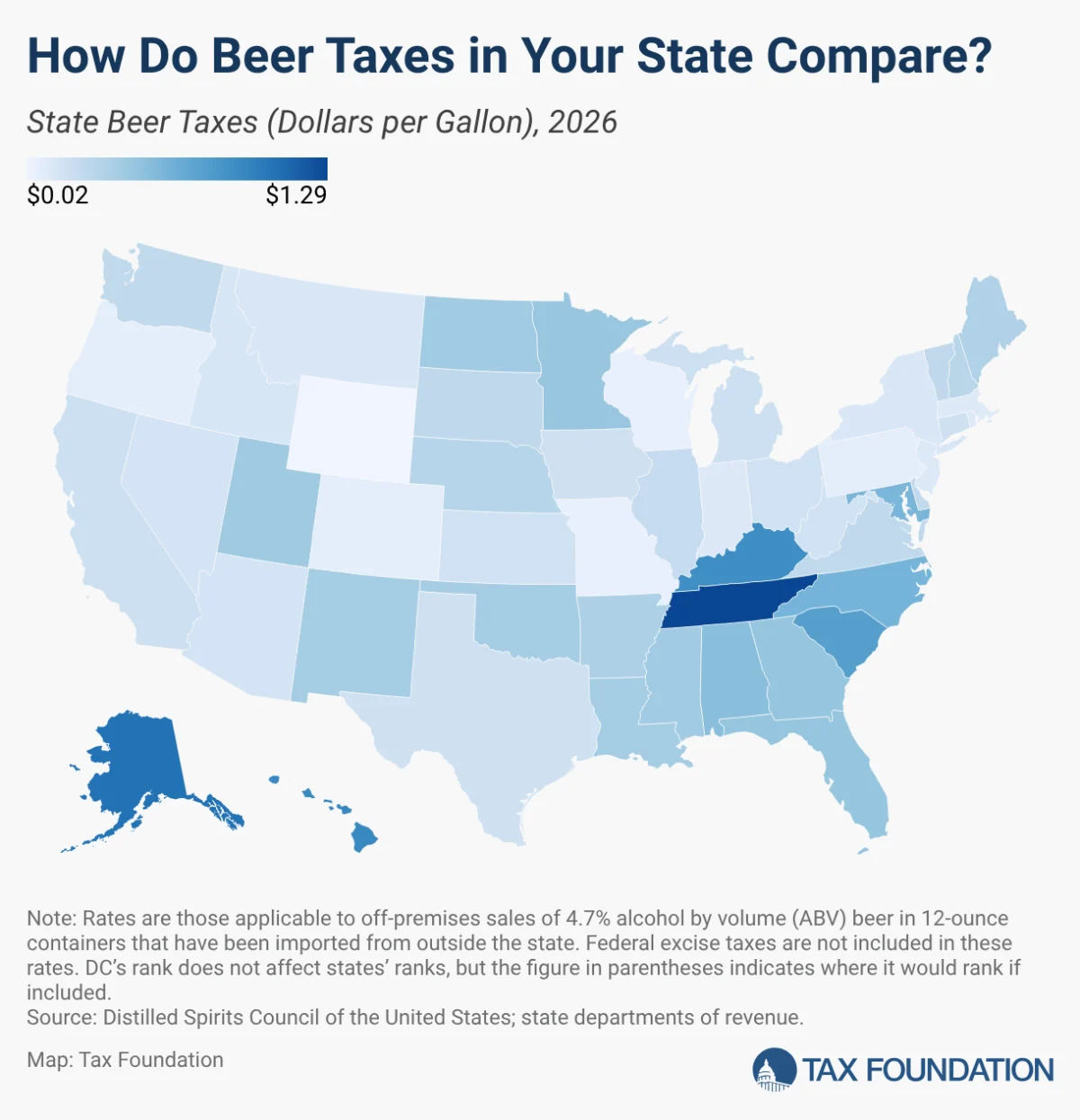
As the United States transitions into the warmer summer months, a familiar ritual for many Americans involves unwinding with a cold beer after a demanding day. However, beneath the refreshing foam and crisp taste lies a complex and often overlooked financial reality: taxes represent the single most expensive component in the production and sale of beer across the nation, a burden that significantly shapes both industry dynamics and consumer pricing. This intricate web of federal, state, and local levies collectively accounts for a staggering portion of the final retail price, frequently exceeding the combined costs of labor and raw materials, and can constitute as much as 40.8 percent of what consumers pay at the register.
The Unseen Cost: Deconstructing the Beer Tax Burden
The notion that taxes could eclipse the cost of malt, hops, yeast, water, and the labor required to brew and package beer might seem counterintuitive, yet it is a well-documented economic reality. The primary mechanism for this significant tax burden is the excise tax, a specific charge levied on particular goods or activities. In the U.S., a federal excise tax is applied to beer, with rates varying based on the volume produced and whether the beer is domestic or imported. Small domestic brewers, defined by specific production thresholds, benefit from a reduced rate of $0.113 per gallon for their first 60,000 barrels. This rate escalates significantly for larger brewers and imports, reaching $0.581 per gallon. This tiered system is a deliberate policy choice, designed in part to support the growth and competitiveness of smaller, independent breweries.
Beyond the federal layer, each of the 50 states and the District of Columbia imposes its own excise tax on beer, creating a diverse and often confusing landscape of taxation. These state-level excise taxes are then often compounded by additional state and local sales taxes, further inflating the final price. The complexity doesn’t end there; the total tax burden on beer integrates various forms of taxation, including traditional ad quantum excise taxes (a fixed amount per unit, like per gallon), retail sales taxes specifically targeting alcohol, various case and bottle fees, and ad valorem taxes (a percentage of value) levied on producers or wholesalers in some jurisdictions. This multi-layered approach ensures that taxes permeate every stage of beer production and distribution, from the brewery to the consumer.
A Patchwork of Policies: State-by-State Disparities
The variation in state-level excise taxes creates significant disparities in beer prices across the country. States with the highest tax burdens on beer include Tennessee, where consumers face an average of $1.287 per gallon, followed by Alaska at $1.07 per gallon, and Hawaii at $0.93 per gallon. These elevated rates reflect a combination of state policy choices, revenue needs, and sometimes, historical precedents.
Conversely, states that impose the lightest tax burdens offer a stark contrast. Wyoming leads with an exceptionally low rate of $0.019 per gallon, making it the most tax-friendly state for beer consumption. Missouri follows closely at $0.06 per gallon, and Wisconsin, a state with a rich brewing heritage, taxes beer at $0.065 per gallon. These lower rates can stimulate consumption, support local breweries, and potentially attract beer tourism, though their impact on state revenue generation from alcohol sales is commensurately smaller.
It is crucial to note that the per-gallon rates often represent a generalized average, typically reflecting the tax applicable to an off-premises sale of 4.7 percent alcohol by volume (ABV) beer in a standard 12-ounce container. However, in at least 16 states, the tax rate is not static and can vary based on several factors: alcohol content, the beer’s place of production, the size of the container, or even the place of purchase (on-premises vs. off-premises). For instance, Virginia employs a tiered system, levying different taxes per bottle for containers up to 7 ounces, up to 12 ounces, and those greater than 12 ounces. Idaho provides another example of complexity, tripling the tax rate if a beer exceeds 5 percent ABV, treating it statutorily as wine and taxing it at $0.45 per gallon instead of the standard $0.15 per gallon. Missouri recently made headlines by cutting taxes on beer manufactured in American breweries to a mere $0.02 per gallon, a move aimed at boosting domestic production and economic development within the state.
Local Levies and Hidden Fees: Adding to the Complexity
Beyond federal and statewide taxes, localities in many states possess the authority to levy additional taxes, which further complicate the pricing structure and are not always reflected in statewide averages. The Municipality of Anchorage, Alaska, for example, imposes a local sales tax on alcohol, adding an extra 5 percent to sales of beer and other alcoholic beverages. Similarly, Alabama and Georgia implement a statewide uniform local tax on beer that adds approximately another 50 cents per gallon to beer sales within those jurisdictions. These local taxes, while often smaller individually, collectively contribute to the overall tax burden and can lead to significant price differences even within the same state.
Furthermore, states generate substantial revenue through various licensing fees and permits required for beer distributors and retailers. These administrative costs are invariably passed down the supply chain and ultimately factored into the retail price. Some states even manipulate the price of beer directly by establishing statewide minimum price levels, which indirectly influences the minimum amount of ad valorem tax collected. This intricate tapestry of taxes, fees, and regulations means that the price of a single beer reflects a multitude of policy decisions and revenue-generating strategies.
Historical Roots and Policy Evolution
The extensive taxation of alcoholic beverages in the United States is deeply rooted in history, with precedents stretching back to the earliest days of the republic. Alexander Hamilton, the first Secretary of the Treasury, famously introduced an excise tax on whiskey in 1791, sparking the Whiskey Rebellion and establishing alcohol as a source of federal revenue. However, the most significant inflection point for alcohol taxation was Prohibition (1920-1933). Its repeal brought about a new era of strict regulation and taxation, driven by a dual objective: to control alcohol consumption for public health and safety reasons, and to generate substantial tax revenue for both federal and state governments.
In the post-Prohibition era, alcohol taxes became a cornerstone of public finance. Federal and state governments recognized the potential for a steady revenue stream from a widely consumed product, while also using taxation as a tool to discourage excessive consumption. Over time, the structure evolved, with distinct categories for beer, wine, and spirits, each subject to different rates and regulations. This categorical system, while historically significant, has faced increasing challenges in adapting to modern industry innovations and changing consumer preferences.
Industry Perspectives and Economic Impact
The American brewing industry, a vibrant sector supporting hundreds of thousands of jobs and contributing billions to the economy, has recently faced a confluence of challenges. Tariff-related cost increases on raw materials, such as aluminum for cans and imported brewing ingredients, have squeezed profit margins. Simultaneously, broader consumer trends indicate a general reduction in alcohol consumption, particularly among younger demographics who are increasingly opting for low- or no-alcohol options, seltzers, or other alternative beverages.
Industry organizations like the Brewers Association, representing small and independent craft brewers, and the Beer Institute, representing larger brewers, frequently voice concerns about the disproportionate tax burden. They argue that high taxes can stifle innovation, limit growth, and ultimately hurt consumers by driving up prices. Brewers often emphasize that while they are significant contributors to local and state economies through job creation, capital investment, and tourism, the tax structure can hinder their ability to compete effectively, especially for smaller entities that operate on tighter margins. They infer that a more equitable and modernized tax system could allow them to invest more in their businesses, create more jobs, and offer more competitive pricing to consumers.
The economic footprint of the beer industry extends far beyond the breweries themselves. It encompasses agricultural producers supplying ingredients, manufacturing companies making packaging, transportation and logistics providers, wholesalers, retailers, and the vast hospitality sector including bars and restaurants. Each dollar spent on beer ripples through these various sectors, generating economic activity and supporting livelihoods. Therefore, understanding the impact of taxation on this industry is not just about the price of a pint, but about its broader societal and economic implications. Policymakers, in turn, often infer the need to balance revenue generation with supporting a vital industry and mitigating potential negative health externalities associated with alcohol.
The Consumer’s Blind Spot: Taxes Baked In
One of the most significant aspects of beer taxation, from a consumer perspective, is its inherent invisibility. Unlike a sales tax, which is explicitly itemized on a receipt, federal and state excise taxes on beer are typically levied on the manufacturer, wholesaler, or retailer. This means the tax burden is "baked into" the final retail price rather than being presented as a separate line item. Consequently, many consumers remain largely unaware of the substantial portion of their purchase that goes directly to government coffers.
This lack of transparency can lead to a disconnect between the consumer’s perception of beer prices and the underlying tax structure. Without a clear understanding of the tax component, consumers may attribute higher prices solely to production costs or retailer markups, rather than recognizing the significant governmental share. This "hidden tax" phenomenon contributes to the general public’s lack of engagement with alcohol tax policy, despite its direct impact on their wallets.
The Push for Modernization: A Simpler System?
The intricate and often archaic categorical system for taxing alcohol, which treats beer, wine, and spirits differently even after adjusting for alcohol content, has spurred calls for modernization. Advocates for reform, including many within the industry and tax policy experts, argue that moving towards a system that taxes according to actual alcohol content (ABV-based taxation) would offer numerous benefits.
Such a modernized system would be simpler and more neutral. It would eliminate the arbitrary distinctions between different alcohol categories that often lead to inconsistencies and competitive disadvantages. For instance, a high-ABV craft beer might be taxed at a significantly different rate than a wine or spirit with comparable alcohol content, despite serving similar consumer occasions. An ABV-based system would create a more level playing field, fostering fairer competition and making the tax code easier for both producers to navigate and for regulators to administer.
Furthermore, an ABV-based system would be more adaptable to innovation within the industry. The rapid proliferation of new products like hard seltzers, ready-to-drink cocktails, and flavored malt beverages often strains the traditional categorical tax framework, leading to debates over how these new products should be classified and taxed. A system based purely on alcohol content would inherently treat these innovations more consistently.
However, transitioning to an ABV-based system is not without its challenges. It would require significant legislative changes at both federal and state levels, potentially disrupting established revenue streams and requiring careful calibration to avoid unintended consequences for specific segments of the alcohol industry. Stakeholders, including producers, distributors, and public health advocates, would need to reach consensus on new rate structures and implementation timelines.
Looking Ahead: Implications for Policy and Industry
As consumer preferences continue to evolve, with many opting for low- or no-alcohol alternatives, policymakers must remain mindful of the suitability of excise taxes for raising general revenues. Fixed ad quantum taxes, which are a set amount per unit, lose real value over time due to inflation (currency debasement). Meanwhile, ad valorem taxes, which are a percentage of the value, are subject to significant fluctuations based on behavioral changes and market shifts. State governments that depend heavily on beer taxes for general spending may find themselves facing unforeseen budget gaps if consumption patterns continue to trend away from traditional beer.
The landscape of beer taxation is a complex interplay of historical legacy, public policy objectives, economic realities, and consumer behavior. Understanding this framework is not just crucial for industry stakeholders, but also for consumers who implicitly bear the burden, and for policymakers tasked with crafting fair, efficient, and adaptable tax systems. As one of America’s most cherished beverages continues to evolve, so too must the policies that govern its production, distribution, and consumption, ensuring that the toast of summer remains both enjoyable and economically sustainable.