Lina Irawan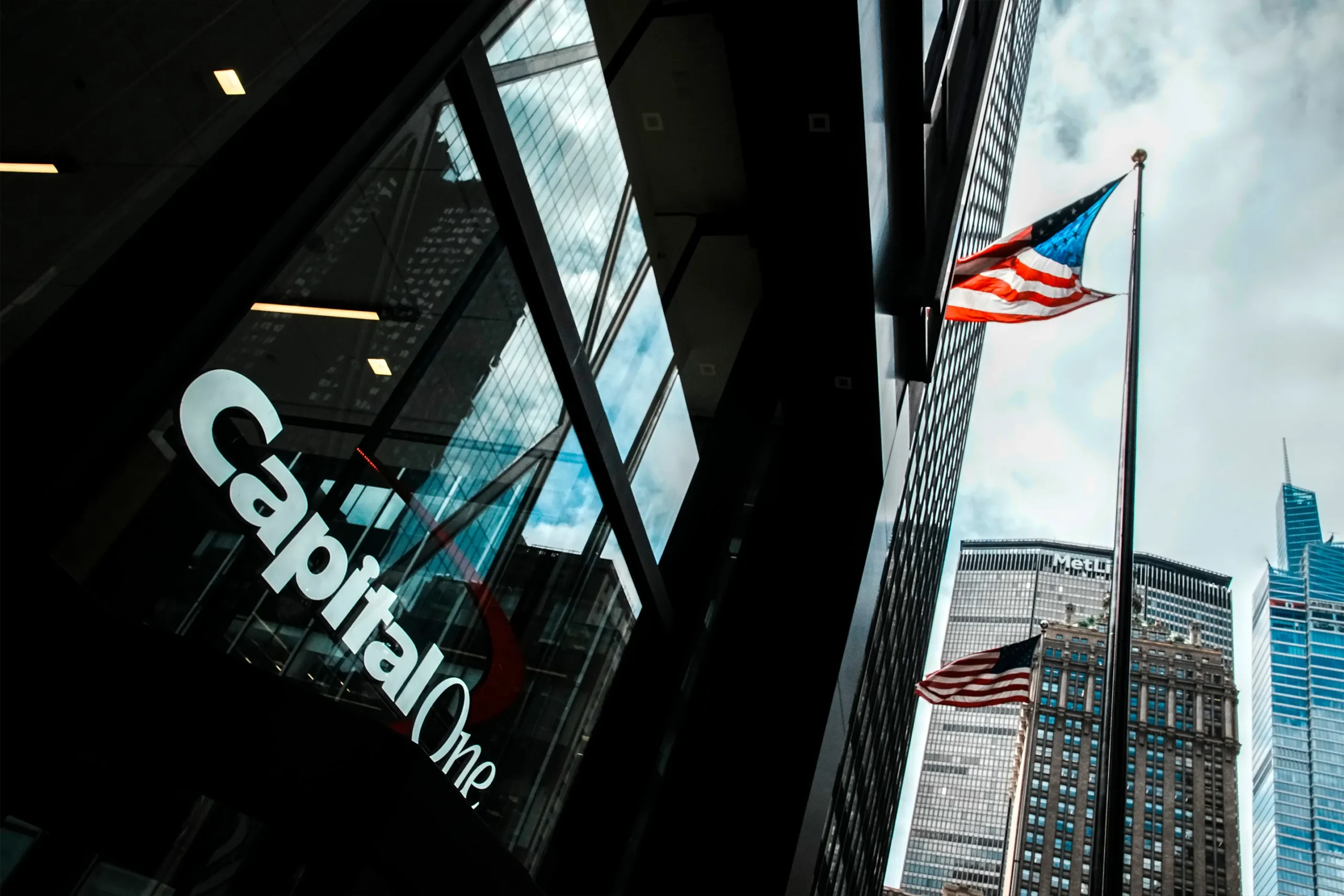
A highly anticipated $425 million class-action settlement involving Capital One, poised to distribute payments to over 5 million customers this week, has been unexpectedly delayed by an appeal seeking to overturn the agreement. This development means millions of eligible individuals, who were impacted by alleged discrepancies in interest rates on Capital One 360 Savings accounts, will now face a potentially year-long or longer wait for their compensation. The settlement administrator confirmed the indefinite postponement, citing an objector’s appeal to the U.S. Court of Appeals for the Fourth Circuit, which aims to return the matter to litigation.
The core of the dispute revolves around allegations that Capital One paid significantly lower annual percentage yields (APYs) on its standard 360 Savings accounts compared to its newer 360 Performance Savings accounts, despite the two products being "otherwise identical" in function. This perceived disparity, which widened dramatically during a period of aggressive Federal Reserve interest rate hikes, prompted multiple lawsuits and ultimately led to the substantial settlement. However, the appeal contends that the agreed-upon sum is grossly inadequate, shortchanging class members by hundreds of millions, if not billions, of dollars.
The Genesis of the Litigation: A Tale of Two Savings Accounts
The legal battle against Capital One originated from a fundamental accusation: that the financial giant engaged in deceptive practices by offering two nearly identical savings products with vastly different interest rates. The controversy began in September 2019 when Capital One introduced its 360 Performance Savings accounts. Almost immediately, customers holding the older, standard 360 Savings accounts observed a significant divergence in APYs. At the launch of the Performance Savings option, the new accounts offered a 1.9% APY, while the existing 360 Savings accounts languished at 1%. This 0.9 percentage point difference, while seemingly minor to some, translated into substantial lost earnings for customers with sizable balances over time.
As the financial landscape shifted dramatically in 2022 and 2023, driven by the Federal Reserve’s aggressive campaign to combat inflation through successive interest rate increases, the gap between the two Capital One accounts widened even further. The Fed’s benchmark federal funds rate, which influences consumer savings rates, rose from near zero in early 2022 to over 5% by mid-2023. While Capital One’s 360 Performance Savings accounts reflected these market changes by offering competitive rates – reaching 4.35% from April to September 2024 – the 360 Savings accounts remained dismally low, paying a mere 0.3% during the same period. This created a staggering 4.05 percentage point difference, sparking outrage among affected customers who felt they were being unfairly penalized for their loyalty or lack of awareness regarding the newer product.
Multiple lawsuits swiftly followed, filed across various states including California, New Jersey, New York, Ohio, and Virginia. These complaints consistently argued that Capital One had underpaid interest to its 360 Savings customers. By June 2024, these disparate legal actions were consolidated into a single proceeding in the U.S. District Court for the Eastern District of Virginia, setting the stage for the eventual class-action settlement. Capital One, while denying any wrongdoing, ultimately agreed to the $425 million settlement to resolve the claims and avoid the protracted uncertainties and costs of further litigation.
Terms of the Settlement: A $1 Billion Valuation Amidst Controversy
On April 20, a judge granted final approval of the "Capital One 360 Savings Account Interest Rate Litigation" settlement. Beyond the headline figure of a $425 million settlement fund, the agreement included additional significant concessions from Capital One. The bank committed to matching the 360 Performance Savings rate on all 360 Savings accounts and pledged to continue offering both products for at least two years. A special master appointed in the case estimated the total value of the settlement, including these non-cash commitments, to exceed $1 billion.
The $425 million cash fund was slated for distribution after deducting legal fees, administrative costs, and service awards to the named plaintiffs. The remaining amount would then be divided among eligible class members based on the "approximate amount of interest each Settlement Class Member would have earned if their 360 Savings account(s) had paid the interest rate then applicable to the 360 Performance Savings account." This formula naturally meant that customers with larger average balances over the class period – defined as individuals who held a 360 Savings account at any point between September 18, 2019, and June 16, 2025 – would receive the largest payouts. Individual estimates of compensation were not made publicly available prior to the appeal.
For many class members, the settlement represented a long-awaited resolution, offering some recompense for what they perceived as years of lost interest. The automatic qualification process, which did not require customers to file a claim form, streamlined participation, with eligible individuals only needing to elect their preferred payment method by March 30. This simplicity, combined with the substantial overall sum, fostered a sense of impending finality and relief for millions.
The Appeal: A Challenge to the Settlement’s Adequacy
Just as the distribution process was set to commence, the entire settlement was thrown into uncertainty by an appeal filed on June 17. The appellant is Michelle Coles, a former attorney in the Civil Rights Division of the Department of Justice, who is representing herself in this action and is an active member of the Washington, D.C., bar. Coles initiated the appeal by posting a $25,000 appeal bond, a fraction of the $6 million requested by class counsel, but still a significant personal commitment.
Coles’ central argument is that the $425 million settlement is woefully inadequate, falling short by "hundreds of millions of dollars" and potentially amounting to a mere fraction of what class members are truly owed. In earlier filings, Coles and other objectors had contended that "Capital One and class counsel have reached an agreement to settle this litigation worth as much as $9 billion for a mere $425 million." This stark contrast in valuation lies at the heart of the legal disagreement.
According to the settlement website, the $425 million fund represents approximately 38% to 57% of what class members might have recovered if the case had proceeded to trial. However, Coles vehemently disputes this figure, asserting that it represents no more than about 15% of the actual damages. "That means they’re keeping 85% of our damages," she stated, elaborating, "If they’re paying us $425 million, that means they’re keeping $2.5 billion dollars of the interest that they owe us." Coles based her objection on her personal experience, noting that her own 360 Savings balance averaged around $70,000 during the class period, leading her to initially believe she was owed roughly $10,000.
Judicial Perspective and the "Risk/Reward" Calculus
The arguments presented by Michelle Coles and other objectors were heard during the April 20 settlement hearing before Judge David Novak in the U.S. District Court for the Eastern District of Virginia. The court transcript reveals a nuanced perspective from the judge, who acknowledged the validity of the underlying grievances while emphasizing the practicalities of litigation.
Referencing Coles’ background at the Justice Department, Judge Novak remarked, "You understand that in any litigation, it’s a risk/reward. You have to look at what is the likelihood of success versus what is your outcome, right. It’s kind of like the old Rolling Stones song, ‘you don’t always get what you want, but you get what you need.’" This sentiment, while intended to underscore the compromises inherent in legal settlements, was perceived by Coles as a "slap in the face," as she felt the agreement primarily rewarded Capital One for its alleged misconduct.
Despite his ultimate approval of the settlement, Judge Novak did not shy away from expressing his disapproval of Capital One’s actions. During the hearing, he stated, "I don’t agree with what Capital One has done here. I think what they did is wrong, which is why they’re writing such a big check." However, he reiterated the necessity of balancing the risks of prolonged litigation for the plaintiffs against the potential rewards of a certain settlement, a calculation he believed class counsel had adequately performed.
Ultimately, Judge Novak approved the settlement, setting the appeal bond at $25,000 – a figure significantly lower than the $6 million requested by class counsel, which was intended to deter appeals. Coles confirmed that while others had expressed interest in appealing, she was the only one willing to post the required bond, highlighting the financial and personal commitment often required to challenge such agreements. Class counsel, for their part, continue to view the appeal as "meritless" and maintain that the settlement is "overwhelmingly favorable to the class," a stance echoed on the official settlement website.
The Appeal Process and Its Implications for Class Members
The initiation of the appeal immediately halts the distribution of settlement payments, plunging millions of class members into an extended period of uncertainty. For those eagerly awaiting their checks, the current situation demands patience, as there is no action they need to take at this stage. The automatic qualification means their eligibility remains intact, but the timeline for any payment has now shifted significantly.
Michelle Coles expects to file her comprehensive appeal documents around September, though the U.S. Court of Appeals for the Fourth Circuit has yet to establish a formal briefing schedule. The appellate process itself can be lengthy, involving the submission of briefs from both sides, potential oral arguments, and then a period for the court to deliberate and issue a ruling. This entire process could easily extend for well over a year, as indicated by the settlement administrator.
From Coles’ perspective, the delay, while frustrating for class members, is a necessary step to ensure a truly fair outcome. She argues that class members have been "deceived" into believing the $425 million agreement is equitable and that waiting longer for potentially appropriate payments is justified. "I am acting in the class’s interest," Coles asserted, emphasizing that many customers have already been waiting "six years for Capital One to pay us the interest that they owe us."
Appeals are a common, though not always successful, feature of large class-action settlements. While most appeals ultimately fail to overturn a final settlement approval, they are frequently the cause of significant payment delays. The legal system balances the need for finality and efficiency with the right of aggrieved parties to challenge perceived injustices. In this case, the Fourth Circuit will review whether Judge Novak abused his discretion in approving the settlement, considering the arguments regarding its fairness and adequacy. The court will examine the methodologies used to calculate damages, the risks of litigation, and the overall benefit to the class.
Broader Impact and Future Outlook
The Capital One settlement appeal carries broader implications for consumer banking practices and the landscape of class-action litigation. For Capital One, the appeal means continued legal expenses and prolonged reputational scrutiny, even as it denies wrongdoing. The commitment to match rates on 360 Savings accounts and continue offering both products for two years remains in effect, a tangible benefit stemming from the initial litigation.
For the banking industry as a whole, this case highlights the growing expectation among consumers for transparency and fairness in financial product offerings. The significant disparity between seemingly identical savings accounts, especially during a period of rising interest rates, underscores the importance of clear communication and equitable treatment of long-standing customers. Banks are increasingly under pressure to ensure that product differentiations are genuinely distinct and that loyal customers are not inadvertently penalized.
For class-action law, the appeal serves as a reminder of the inherent complexities and trade-offs involved in achieving mass redress. While settlements offer a path to resolution and compensation for millions, they often involve compromises that may not satisfy all parties. The tension between achieving a swift, certain payout and maximizing the potential recovery remains a constant challenge. The outcome of Michelle Coles’ appeal will not only determine the fate of millions of dollars for Capital One customers but could also influence how future class-action settlements are structured and challenged.
As the legal proceedings unfold in the Fourth Circuit, the 5 million-plus class members are left to endure an extended period of anticipation. The hope for a swift resolution has given way to the reality of a protracted legal battle, underscoring the adage that in the world of class-action litigation, patience is often the most critical virtue. The ultimate decision will determine whether the current $425 million settlement stands, or if the court believes a greater measure of justice is due to those who entrusted their savings to Capital One.