Pevita Pearce
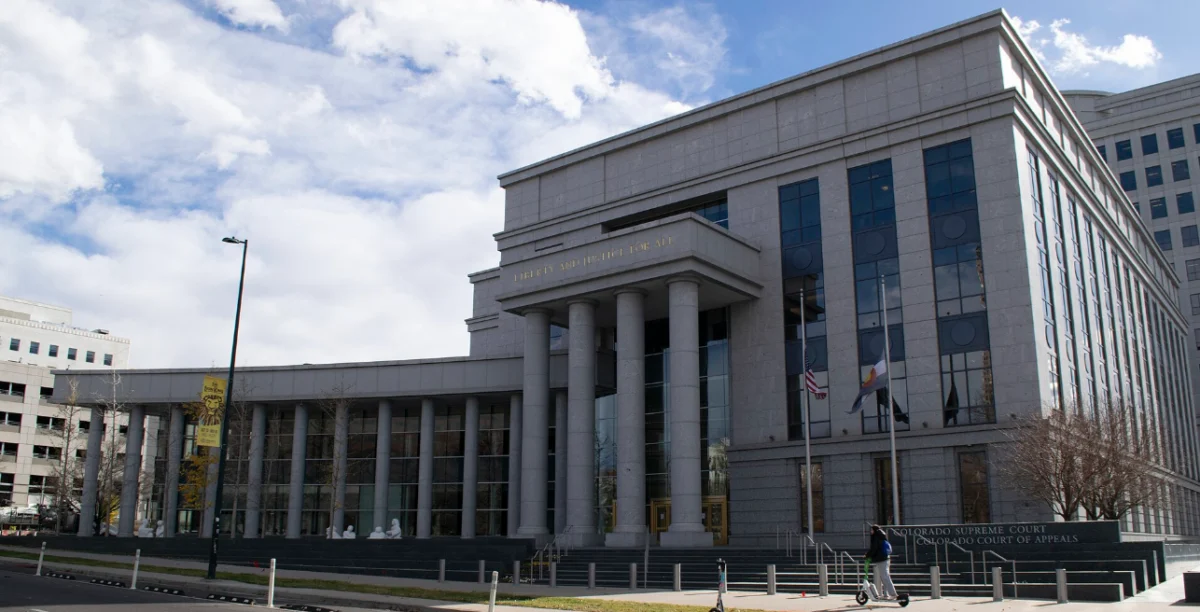
The Colorado Supreme Court has decisively rejected an attempt to nullify the upcoming vote on Amendment 87, a ballot initiative aimed at restructuring the state’s income tax system by imposing a higher rate on its wealthiest residents. The ruling allows the measure, which has ignited a contentious debate across the state, to proceed to the voters as scheduled. The legal challenge, spearheaded by conservative activist Michael Hancock, sought to disqualify Amendment 87 based on allegations of procedural irregularities in the signature-gathering process.
The lawsuit, filed in mid-September, approximately two weeks after the ballot was officially certified and just three weeks before voters began receiving their mail-in ballots, centered on claims that paid signature gatherers had failed to adhere to state registration requirements. This legal maneuver aimed to halt the amendment’s progression before Coloradans could cast their ballots on a proposal that could significantly alter the state’s fiscal landscape.
A Denver District Court judge initially addressed the case on October 21, ruling that Hancock had not met his legal burden to demonstrate that any alleged failures by the petition circulators constituted a violation of laws designed to prevent misconduct in the petitioning process. A key point of contention involved the training of some paid signature gatherers. While a handful were found not to have completed mandatory training administered by the Colorado Secretary of State’s Office, they had indeed received instruction on petitioning laws from the amendment’s proponents.
On Friday, the state’s highest court concurred with the district court’s findings, issuing a brief, unsigned order that affirmed the earlier decision. A more comprehensive written opinion is expected to be released "in due course," according to the court.
Voices of Support and Opposition
Chris deGruy Kennedy, co-chair of Protect Colorado’s Future, the group advocating for Amendment 87, and president of the Bell Policy Center, expressed strong approval of the Supreme Court’s decision. "Twice now, Colorado courts have said that more than 130,000 voters who signed this petition deserve to have their signatures count, and that Coloradans deserve to decide this question for themselves," Kennedy stated in a prepared release.
Kennedy acknowledged that there were "administrative oversights" related to the registration of some paid circulators. However, he emphasized that the campaign fully disclosed this information once its petitions were submitted. He asserted that the campaign was "substantially complying with the letter and spirit of the law." Kennedy further characterized the legal challenge as an attempt by "dark-money-funded lawyers" to "deprive Colorado voters of the opportunity to vote on Amendment 87," accusing them of a "perversion of the law."
Attorneys representing Michael Hancock did not immediately respond to requests for comment following the Supreme Court’s ruling.
Amendment 87: A Closer Look
Amendment 87, if passed by voters, would fundamentally reshape Colorado’s tax policy. The core of the amendment proposes the creation of a graduated income tax system. Under the current system, a flat rate of 4.4% applies to all income earned by individuals and corporations. Amendment 87 seeks to replace this with a tiered structure, where income exceeding $500,000 per year would be subject to a significantly higher tax rate.
Proponents of the amendment argue that this shift would provide much-needed revenue for state services while offering tax relief to the majority of Coloradans. They contend that the current flat tax disproportionately burdens lower and middle-income families, while the wealthiest individuals and corporations contribute a smaller percentage of their income in taxes compared to many other states with progressive tax systems. Data from the U.S. Census Bureau indicates that Colorado’s median household income has steadily risen over the past decade, yet state tax revenues have not kept pace with the demands of a growing population and infrastructure needs, particularly in areas like education and transportation.
Opponents, however, raise concerns about the potential economic impact of such a tax increase on high earners and businesses. They argue that it could disincentivize investment and job creation in the state, potentially leading to capital flight or reduced economic competitiveness. Critics also express apprehension about the complexity of implementing and administering a graduated income tax system and worry about potential loopholes that could benefit the very individuals the amendment seeks to tax more heavily.
The Road to the Ballot: A Chronology
The journey of Amendment 87 from its inception to the ballot has been marked by significant political and legal activity.
- Early 2023: Discussions and drafting of potential tax reform measures begin among various advocacy groups and policy centers in Colorado, focusing on addressing perceived inequities in the state’s tax structure.
- Spring/Summer 2023: The "Protect Colorado’s Future" campaign formally launches its initiative to place a graduated income tax amendment on the ballot, beginning the process of collecting the required number of signatures from registered voters.
- August 2023: The campaign submits its petitions to the Colorado Secretary of State’s Office, initiating the verification process.
- Early September 2023: The Secretary of State’s Office certifies that Amendment 87 has garnered enough valid signatures to qualify for the November ballot. This certification triggers the official ballot title and submission for voter consideration.
- Mid-September 2023: Conservative activist Michael Hancock files a lawsuit in Denver District Court, challenging the validity of Amendment 87’s placement on the ballot due to alleged issues with paid signature gatherer registration and training.
- October 21, 2023: The Denver District Court rules against Hancock, finding that the challenger had not provided sufficient evidence to warrant nullifying the amendment’s place on the ballot.
- Late October/Early November 2023: Voters begin receiving their mail-in ballots, with Amendment 87 being one of the key propositions for consideration.
- Early November 2023: The Colorado Supreme Court hears the appeal of the district court’s decision.
- [Date of Supreme Court Ruling – assumed to be Friday as per original article]: The Colorado Supreme Court upholds the district court’s ruling, allowing Amendment 87 to remain on the ballot.
Broader Implications and Analysis
The Colorado Supreme Court’s decision to allow Amendment 87 to proceed to a vote has significant implications for the state’s future fiscal policy and political landscape.
Fiscal Ramifications:
If Amendment 87 passes, it would represent a substantial departure from Colorado’s long-standing flat tax system. The projected revenue generated from the increased tax rate on high earners is intended to fund critical state services. For instance, proponents suggest that increased revenue could bolster funding for public education, address infrastructure deficits, and potentially support social programs. According to analyses by the Bell Policy Center, a progressive think tank, the graduated tax could generate hundreds of millions of dollars annually, depending on economic conditions and the exact tax brackets implemented.
Conversely, opponents express concerns about the potential for economic contraction. Historically, states that have implemented higher top marginal income tax rates have seen varied economic outcomes. Some studies suggest that such policies can lead to a slowdown in business investment and a migration of high-net-worth individuals and corporations to states with more favorable tax environments. The debate hinges on whether the revenue gains outweigh potential economic losses and whether the proposed tax structure is sufficiently competitive to retain economic activity.
Political Landscape:
Amendment 87 has become a focal point in Colorado’s political discourse, highlighting the ongoing tension between progressive and conservative ideologies regarding taxation and wealth distribution. The battle over the amendment reflects national trends in discussions about income inequality and the role of government in addressing it.
The involvement of "dark-money-funded lawyers," as alleged by the amendment’s proponents, points to the increasing influence of well-funded advocacy groups on ballot initiatives. The successful defense against the legal challenge, however, underscores the legal framework in place to protect the initiative process, which is a cornerstone of direct democracy.
The outcome of the vote on Amendment 87 will not only determine the state’s tax structure but also signal the electorate’s appetite for progressive fiscal policies and their willingness to embrace significant changes to the state’s economic model. The robust debate surrounding the amendment suggests that voters are deeply engaged with the issue, and the final decision will likely have a lasting impact on Colorado’s economic trajectory and social services for years to come. The comprehensive opinion from the Supreme Court, when released, is expected to offer further insights into the legal reasoning behind this pivotal decision.