Candice Horbacz
On Election Day, Coloradans will get to decide on two competing measures on income taxes: an initiated statute that would cap income taxes at the current 4.4 percent rate; and a constitutional amendment that would authorize a graduated-rate individual and corporate income tax, paired with an initiated statute setting new rates, with a top rate of 8.4 percent. This dual ballot initiative presents a stark philosophical and economic crossroads for the Centennial State, determining its fiscal trajectory for years to come. The decision will impact everything from state revenue streams and public services to the competitiveness of Colorado’s business environment and the tax burden on its residents.
The Competing Proposals: Amendment 87 vs. Proposition 136
At the heart of the ballot are two fundamentally different approaches to taxation. Amendment 87, if passed, would dramatically restructure Colorado’s income tax system. This measure is a two-pronged effort: a constitutional amendment to permit a graduated-rate income tax, and an initiated statute that would initially establish specific higher rates. The proposed graduated rates would begin at 7.4 percent for incomes above $500,000, rising to 7.9 percent for incomes exceeding $750,000, and topping out at 8.4 percent for incomes above $1 million. Crucially, while the authorization for a graduated system would be enshrined in the constitution, the specific rates and brackets would be statutory, meaning the legislature could adjust them at any time without further voter approval, once the constitutional barrier to a graduated tax is removed.
In direct opposition, Proposition 136 aims to solidify the state’s current tax structure. This initiated statute proposes to statutorily cap individual and corporate income tax rates at their existing 4.4 percent. As a statutory change, it also requires only a simple majority to pass. However, its statutory nature also means it is less binding in the long term; future voters could repeal it with another simple-majority vote, and the legislature could amend or repeal the statute. Its primary function, therefore, is to serve as a direct countermeasure to Amendment 87, ensuring the current flat tax rate remains untouched, at least in the short term, and providing an alternative vision for Colorado’s fiscal future.
Colorado’s Unique Tax History and TABOR
Colorado’s journey with income taxation has been distinctive. The state operated under a graduated-rate income tax system until 1987, when it became the first state in the nation to transition from a graduated to a single-rate income tax. Prior to this shift, the top rate had been 8 percent on income above $10,000 for 24 years. The move to a flat tax saw the top rate drop to 5 percent, a rate that had previously only applied to a much lower income bracket (between $4,000 and $5,000, which would be approximately $12,200 to $15,250 in today’s dollars).
Since 1987, the flat tax rate has been reduced multiple times, ultimately settling at the current 4.4 percent. This trajectory underscores a key characteristic often attributed to flat tax systems: a single rate applied to all income is generally harder to increase politically and more amenable to cuts.
A significant backdrop to any tax discussion in Colorado is the Taxpayer’s Bill of Rights (TABOR), a constitutional amendment passed in 1992. TABOR imposes strict limits on government spending and revenue collection, requiring voter approval for any tax rate increase or the creation of new taxes. This provision means that even if the legislature were inclined to raise income tax rates under the current flat system, it would necessitate a statewide vote. Proposition 136, while statutory, reinforces this principle by explicitly capping the rate. Amendment 87, however, would fundamentally alter the constitutional framework by removing the explicit prohibition on a graduated-rate system, allowing the legislature more flexibility to adjust rates within the newly established graduated structure without direct voter approval for each subsequent change, though the initial shift to a graduated system still requires voter approval.
Arguments for and Against a Graduated Tax (Amendment 87)
Proponents of Amendment 87, though not explicitly detailed in the provided text, typically advocate for graduated income taxes on the grounds of fairness and revenue generation. The associated link in the original article indicates that new revenues from Amendment 87 would be dedicated to education, healthcare, and childcare. The argument often posits that those with higher incomes can afford to contribute a larger percentage of their earnings to state services, thereby creating a more equitable tax system and providing much-needed funding for critical public programs. They might highlight that a flat tax disproportionately burdens lower and middle-income households, while a graduated system ensures that the wealthiest contribute more.
However, critics of Amendment 87 raise several significant concerns.
1. Economic Impact on Small Businesses: Colorado’s economy relies heavily on small businesses, with approximately 731,000 small businesses employing nearly 49 percent of the state’s workforce. A vast majority of these are "pass-through" businesses (e.g., S corporations, partnerships, LLCs), meaning their profits are taxed on the owners’ individual income tax returns. IRS data reveals that a substantial portion of filers with adjusted gross incomes above $500,000—those who would face higher marginal rates under Amendment 87—derive their income from business ownership. Specifically, out of 53,640 such filers, 30,850 receive partnership or S corporation income, and 14,310 report other business or professional income. Households earning $500,000 or more accrue 27 percent more in business income than in wage income. This means that higher marginal rates on these income brackets effectively translate into higher taxes on small business ownership, potentially reducing profitability and placing Colorado businesses at a competitive disadvantage against out-of-state rivals. The anticipated economic consequences include reduced investment, slower growth, potential business attrition, lower wages for employees, and higher prices for consumers.
2. The "Marriage Penalty": Amendment 87 introduces an "extreme marriage penalty" into the tax code. This occurs when a couple’s combined tax liability increases simply by virtue of getting married and filing jointly, typically affecting couples with similar incomes. Under the proposed structure, the income bracket widths are identical for single filers and married couples filing jointly. This design means that two individuals, each earning $25,000, would face a marriage penalty of $125. For higher-income couples, the penalty escalates significantly; two individuals each earning $500,000 would face a marriage penalty of $16,575. This structural flaw can disincentivize marriage or create an inequitable burden on married couples compared to their unmarried counterparts.
3. Impact on Non-Traditional Wealth: The higher rates proposed by Amendment 87 would not solely affect those conventionally considered "wealthy." Many individuals might report incomes above $500,000 only once or twice in their lifetime, often due to significant life events such as selling a business, an investment property, or realizing large capital gains. For these individuals, the graduated tax would function as a substantial surtax on their retirement savings or the culmination of many years of entrepreneurial risk-taking and hard work, where gains are realized in a single large sum rather than spread out over time. This could disproportionately penalize long-term investment and entrepreneurship within the state.
4. Corporate Income Tax Implications: Amendment 87 also includes a graduated corporate income tax, a structure that many economists argue makes little sense for corporate taxation. The size of a business, which often correlates with its income, is not directly indicative of the wealth of its shareholders. A low-income household might hold shares in large corporations through their 401(k), while wealthy individuals might own stakes in smaller, closely held corporations. Furthermore, Colorado, like most states, uses single sales factor apportionment, meaning a corporation’s tax liability to Colorado is based on its share of sales within the state. Economists note that this effectively turns the corporate income tax into a tax on sales into the state, which is ultimately borne by consumers through higher prices, rather than solely by investors.
5. Constitutional Amendment Process: The specific wording of Amendment 87 employs an unusual construction to facilitate its passage. Instead of adding new constitutional language explicitly authorizing a graduated tax, it proposes to eliminate the existing constitutional prohibition that "require[s] all taxable net income to be taxed at one rate, excluding refund tax credits or voter-approved tax credits, with no added tax or surcharge." By only deleting language rather than adding new provisions, the amendment can be ratified with a simple majority vote. Ordinarily, Colorado constitutional amendments require a 55 percent supermajority to pass, making this a strategic maneuver to lower the threshold for a fundamental change to the state’s tax framework.
Precedents and Economic Cautionary Tales
The potential economic consequences of higher top income tax rates are not merely theoretical; several states have experienced negative outcomes after implementing similar changes.
- California: In 2012, California voters approved increases to their top income tax rates. Subsequent analysis, including research published in the American Economic Review, suggests that a combination of out-migration of high-income earners, reduced in-state investment, slower economic growth, and tax avoidance strategies eroded an estimated 61 percent of the anticipated revenue gains. This also caused broader harm to the state’s economy, demonstrating that tax increases do not always yield the projected revenue.
- New Jersey: Following the adoption of a new top income tax rate of 8.97 percent for incomes above $500,000 in 2004, New Jersey’s Department of the Treasury assessed that the change led to an increase in out-migration by 20,000 individuals over the subsequent five years. This loss of high-income residents and their economic activity had tangible impacts on the state’s tax base.
- New York: The Citizens Budget Commission in New York found that the state’s share of the nation’s millionaires declined significantly, from 12.7 percent in 2010 to 8.7 percent in 2022. They estimated that New York could have collected an additional $10.7 billion in individual income tax revenue in 2022 had this share remained constant, suggesting a substantial revenue loss due to the departure or non-arrival of high-net-worth individuals, often linked to high tax rates.
These examples serve as cautionary tales for Colorado, suggesting that raising top income tax rates can have complex and often unintended consequences, including capital flight, reduced economic dynamism, and lower-than-projected revenue gains.
Arguments for and Against a Flat Tax Cap (Proposition 136)
Proposition 136, by capping individual and corporate income tax rates at the current 4.4 percent, primarily offers tax certainty and aims to preserve Colorado’s current competitive standing.
Proponents of Proposition 136 would argue that maintaining a flat, low income tax rate fosters a predictable and favorable business environment. This stability encourages investment, retains businesses, and attracts new talent and capital to the state. They would highlight Colorado’s current competitiveness with regional peers, many of which have also reduced income tax rates in recent years, as evidence that the flat tax approach is working. The flat tax is also often seen as simpler to administer and understand, reducing complexity for both taxpayers and the state. Furthermore, it reinforces the principle that all income should be taxed at the same rate, regardless of its source or the earner’s overall income level.
Critics of Proposition 136, conversely, might argue that it unnecessarily restricts the state’s ability to generate revenue for essential public services. By constitutionally locking in a low rate, it could limit future legislative flexibility to address pressing needs in education, healthcare, or infrastructure, particularly during economic downturns or periods of increased demand for public services. While TABOR already requires voter approval for rate increases, Proposition 136 adds another statutory layer of constraint, potentially making it even harder to adjust tax policy in response to changing state priorities.
The Unprecedented Scenario: What if Both Pass?
The coexistence of two directly conflicting ballot measures introduces a complex legal and practical dilemma. If both Amendment 87 and Proposition 136 pass, Colorado law dictates that the measure receiving the higher number of votes would prevail on any conflicting provisions.
A straightforward interpretation of this rule presents a perplexing outcome. If Proposition 136, capping rates at 4.4 percent, garners more votes than Amendment 87, which establishes a graduated system with rates up to 8.4 percent, the result could be highly ambiguous. The constitutional amendment (part of Amendment 87) would permit a graduated tax, but the Proposition 136 statute would cap all rates at 4.4 percent. A literal reading of Amendment 87’s accompanying statute might suggest that any income above $500,000, which is currently taxed at 4.4 percent but would be taxed at higher graduated rates under Amendment 87, would effectively be untaxed if the higher rates were struck down by Proposition 136.
However, such an outcome is clearly not intended by either measure and would create significant textual tensions and an absurd result. It is widely expected that the courts would be called upon to resolve this conflict. A probable judicial interpretation would be that if Proposition 136 receives more votes, all income, including that above $500,000, would be taxed at the 4.4 percent flat rate, thereby nullifying the higher graduated rates proposed by Amendment 87 while still potentially allowing the constitutional authorization for a future graduated tax (though effectively capped by Proposition 136). The state’s official ballot information book, the "Blue Book," explicitly acknowledges the unclear outcome of such a conflict and confirms that the courts would ultimately have to provide clarity. This uncertainty itself introduces a layer of risk and potential litigation regardless of the election results.
Broader Implications for Colorado’s Economic Future
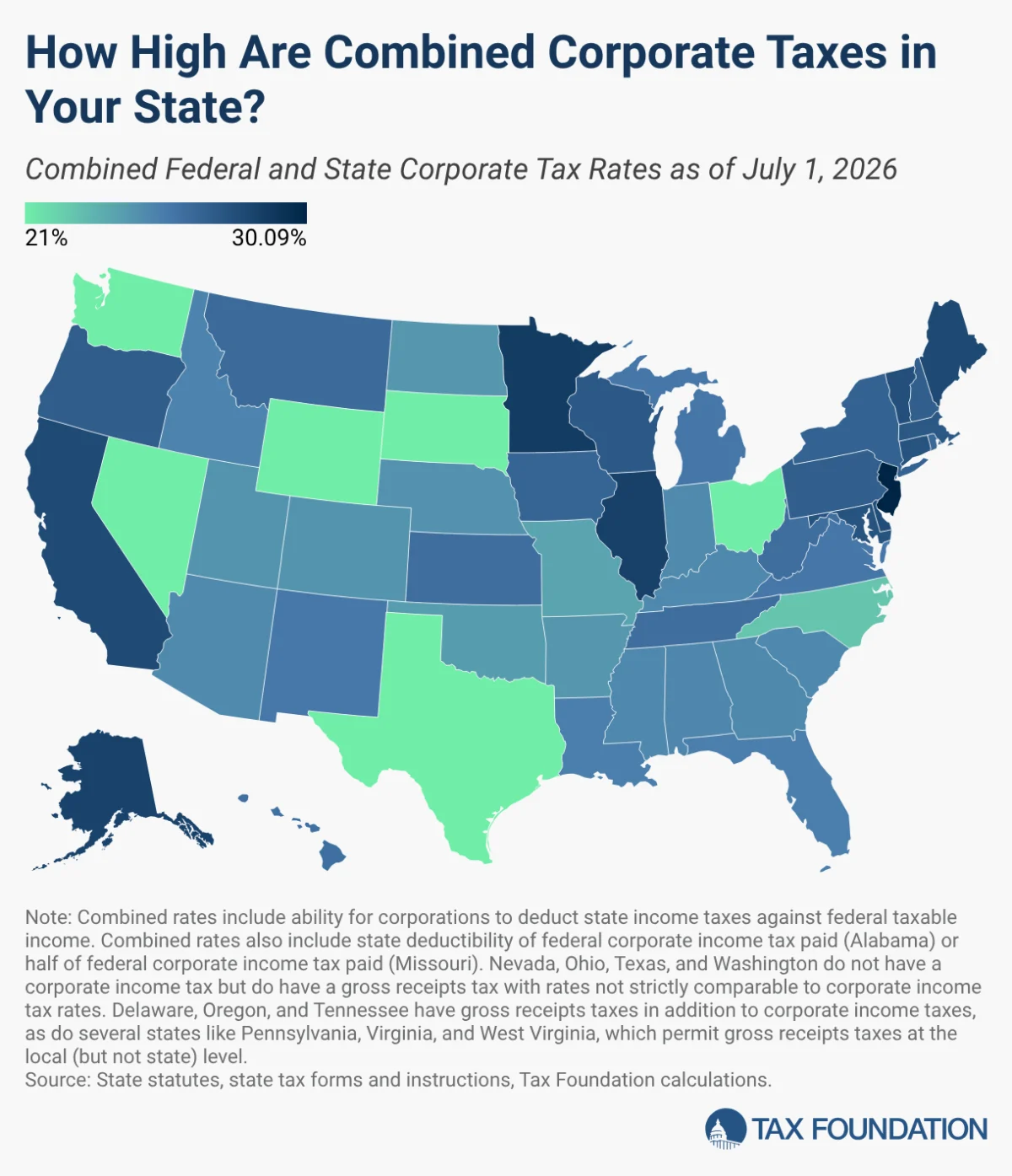
Colorado currently enjoys a competitive position among states with a 4.4 percent income tax rate. However, national trends show a clear divergence in state income tax policies. Many states are actively pursuing lower, flatter income tax rates, or even eliminating them, to attract businesses and residents. Conversely, a smaller number of states are "doubling down" on higher, more progressive rates, often citing social equity and increased public service funding as motivations.
The decision Coloradans make on Election Day will place the state firmly on one side of this growing divide. A vote for Amendment 87 would signal a shift towards a more progressive tax structure, with the potential for increased revenue for specific programs but also the risks of economic disincentives, business flight, and a less competitive tax environment. A vote for Proposition 136 would reinforce Colorado’s commitment to a flat, predictable tax system, prioritizing economic stability and competitiveness, but potentially limiting future revenue options for public services.
Beyond the immediate fiscal impacts, the outcome will reflect Colorado’s fundamental philosophy regarding economic growth, wealth distribution, and the role of government. It is a choice between two distinct visions for the state’s future, with far-reaching consequences for its residents, businesses, and public institutions. Voters must carefully weigh the stated benefits and potential drawbacks of each proposal, considering both immediate impacts and long-term implications for the state’s economic health and social well-being.