Dwi Wanna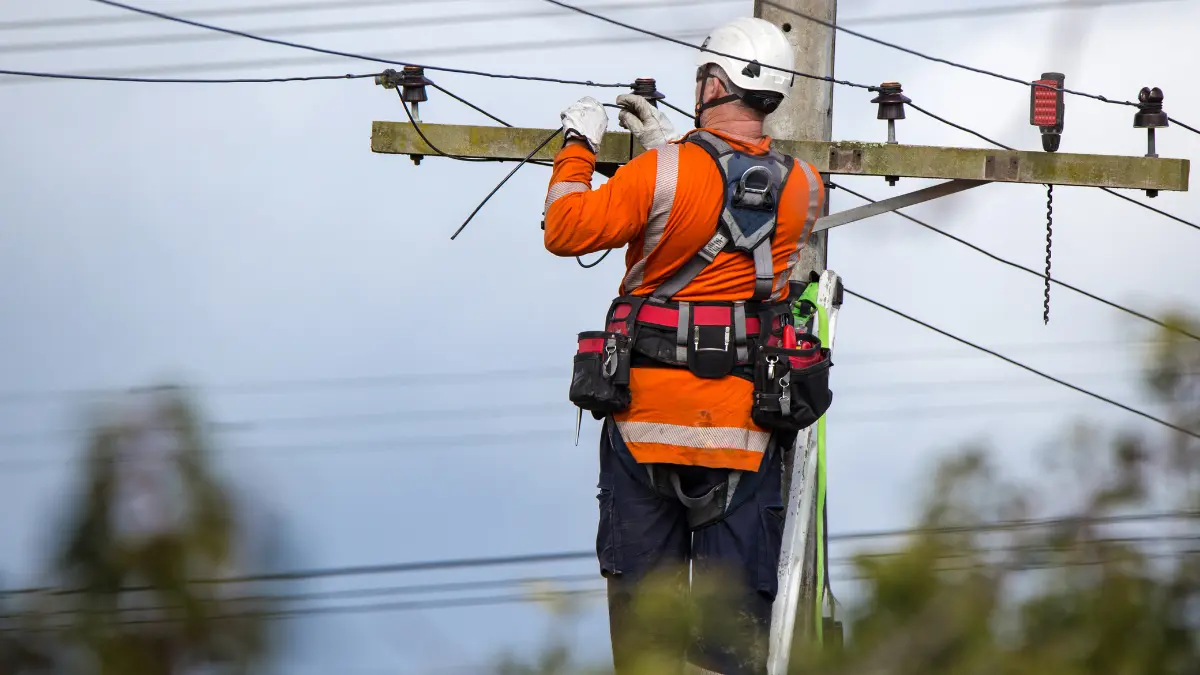
Callback pay represents a critical yet often misunderstood component of American labor compensation, serving as a specialized wage supplement for employees who are required to return to the workplace after their regularly scheduled shift has concluded. As modern business operations increasingly demand flexibility and rapid response to emergencies, the legal and financial frameworks governing callback pay have become essential knowledge for human resources departments and small business owners alike. While federal law provides a baseline for these payments, a complex tapestry of state-level regulations and Department of Labor (DOL) interpretations dictates how these funds must be calculated, taxed, and reported.
The Fundamental Framework of Callback Pay
At its core, callback pay is defined as the extra compensation provided to an employee who is summoned back to work after having clocked out and left the employer’s premises. This scenario typically arises in industries requiring 24-hour maintenance, emergency services, or urgent client support. For instance, if a nonexempt technician completes a shift at 5:00 p.m. and is subsequently called at 8:00 p.m. to repair a critical server failure, the wages earned during that emergency window—and any associated premiums—constitute callback pay.
The implementation of callback pay serves a dual purpose. For the employer, it ensures that essential tasks are addressed outside of standard hours, maintaining operational continuity. For the employee, it provides a financial incentive to sacrifice personal time and incur the additional commute and disruption associated with an unscheduled return to the job site.
Federal Regulation and the Fair Labor Standards Act
The primary federal statute governing wages in the United States is the Fair Labor Standards Act (FLSA). Under current FLSA guidelines, employers are not explicitly required to offer a "callback" premium. However, the act mandates that all hours actually worked during a callback period must be compensated at no less than the federal minimum wage. Furthermore, these hours must be factored into the employee’s total weekly hours to determine eligibility for overtime pay.
The complexity arises when an employer chooses to pay a "premium" or a "guarantee" for callbacks. The DOL’s Wage and Hour Division (WHD) stipulates that if an employer guarantees a minimum of three hours of pay for a callback, even if the work only takes one hour, the treatment of the "unworked" two hours becomes a matter of regulatory scrutiny. According to the DOL’s regular rate guidance updated in 2019, certain callback premiums can be excluded from the "regular rate of pay" used to calculate overtime, provided the payments are infrequent and unpredictable. If these payments become a regular, expected part of compensation, they may need to be included in the regular rate, potentially increasing the cost of any overtime hours worked during that week.
Chronology of Regulatory Evolution
The concept of callback pay has evolved significantly since the inception of the FLSA in 1938.
- 1938–1950s: Early labor standards focused on the 40-hour workweek. Callback pay was largely a matter of private contract or union negotiation rather than statutory mandate.
- 1960s–1990s: As the industrial and service sectors expanded, the DOL began issuing interpretive bulletins to clarify how "show-up" and "call-back" pay affected the regular rate of pay.
- 2019 Regular Rate Update: The DOL issued a final rule to modernize the "regular rate" definitions. This update clarified that certain "perks" and "callback" payments could be excluded from overtime calculations, providing employers with more flexibility to offer these incentives without being penalized by exponentially higher overtime costs.
- 2020–Present: The rise of remote work and digital "on-call" status has blurred the lines of the "workplace." Current legal debates focus on whether a "callback" occurs when an employee logs into a VPN from home versus physically returning to a brick-and-mortar office.
State-Level Mandates and Reporting Time Pay
While federal law is silent on the requirement of callback pay, several states have enacted "Reporting Time Pay" or "Call-In Pay" laws. these regulations require employers to pay a minimum amount if an employee is called to work but is given less than a certain number of hours of labor.
- California: California is among the most stringent. If an employee is required to report for work a second time in any one workday and is furnished less than two hours of work, they must be paid for at least two hours at their regular rate.
- New York: New York’s "Call-In Pay" rule requires that employees in certain industries be paid for at least four hours (or the number of hours in the regular shift, if less) at the minimum wage if they are called into work outside of their schedule.
- Massachusetts: The state requires that if an employee is scheduled for three or more hours and is sent home early, they must be paid for at least three hours at the minimum wage.
These state laws are designed to prevent "clopenings" and unpredictable scheduling that creates financial instability for hourly workers. Employers operating in multiple jurisdictions must maintain a matrix of these varying requirements to ensure localized compliance.
Technical Analysis: Calculating the "Regular Rate"
One of the most significant risks for employers involves the miscalculation of overtime when callback premiums are involved. The "regular rate" is not simply the hourly wage; it is the total compensation divided by the total hours worked.
Consider an employee who earns $20 per hour. In a specific week, they work 40 hours. They are called back for an emergency that takes 1 hour, but the company policy guarantees a 3-hour minimum callback pay.
- Actual hours worked: 41 hours.
- Pay received: 40 hours ($800) + 3 hours guarantee ($60). Total = $860.
- Overtime Calculation: Under certain DOL interpretations, the "extra" 2 hours of pay for time not worked may be excluded from the regular rate. However, the 1 hour actually worked must be paid at time-and-a-half ($30).
If the employer fails to distinguish between "hours worked" and "premium pay," they risk an underpayment of overtime, which can lead to costly class-action litigation or DOL audits.
Industry Perspectives and Official Responses
Labor advocacy groups generally support expanded callback and reporting-pay protections. Organizations such as the Economic Policy Institute (EPI) have argued that unpredictable scheduling is a form of "wage theft" because it prevents employees from securing second jobs or managing childcare. They advocate for "fair workweek" laws that include mandatory callback premiums.
Conversely, business groups like the National Federation of Independent Business (NFIB) emphasize the need for flexibility. They argue that rigid callback pay mandates can discourage small businesses from offering emergency services or responding to client needs after hours, as the administrative burden and potential for legal error outweigh the operational benefits.
Legal experts often advise a conservative approach. "The most common error we see is the failure to document the specific nature of the callback," says one employment litigator. "Without a clear policy in the employee handbook, a one-time callback premium can be interpreted by a court as a permanent shift differential, which changes the entire overtime math for that employee."
Strategic Implementation for Employers
To mitigate risk and maintain a productive workforce, businesses are encouraged to follow a structured approach to callback compensation:
- Written Policy Definition: The employee handbook should clearly define what constitutes a "callback." Does it include remote log-ins? Does it apply if the employee is called back within 30 minutes of leaving?
- Eligibility Criteria: Most policies limit callback pay to nonexempt employees. Exempt (salaried) employees generally do not receive callback pay, though some firms offer "discretionary bonuses" for significant after-hours contributions to maintain morale.
- Standardized Tracking: Utilizing digital timekeeping systems that allow employees to select a "callback" code ensures that these hours are partitioned from regular shift hours, simplifying the payroll audit process.
- Regular Rate Review: Payroll departments must perform periodic audits to ensure that any premiums paid are being handled correctly according to the latest DOL Fact Sheets.
Broader Implications and Economic Impact
The shift toward "predictive scheduling" laws in cities like Seattle, Chicago, and Philadelphia suggests that callback pay is becoming part of a larger conversation regarding worker rights and the "right to disconnect." As labor markets tighten, callback pay is no longer just a legal obligation; it is a competitive necessity for attracting talent in high-stress fields like healthcare and infrastructure maintenance.
Data from the Bureau of Labor Statistics (BLS) indicates that industries with high callback frequencies—such as utilities and specialized manufacturing—often report higher-than-average hourly earnings, partly due to these premiums. However, the psychological impact of "on-call" life remains a point of contention, with studies suggesting that the "anticipatory stress" of a potential callback can lead to higher burnout rates.
In conclusion, callback pay is a vital mechanism for modern labor flexibility, but it requires rigorous administrative oversight. By balancing the operational need for after-hours work with the legal requirements of the FLSA and state mandates, employers can foster a culture of transparency and compliance while protecting their bottom line from the pitfalls of wage and hour litigation. As the legal landscape continues to shift toward greater worker protection, staying informed on the nuances of callback pay remains a top priority for the modern enterprise.