Nila Kartika Wati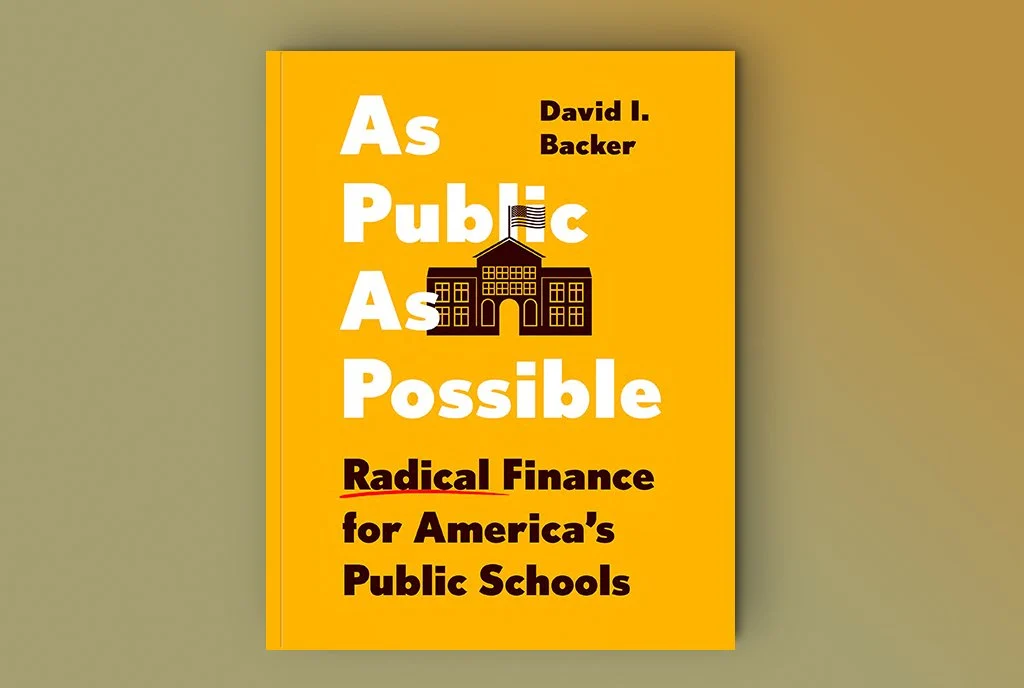
The Structural Roots of Educational Disparity
The central thesis of Backer’s research is that the financial health of a school district is determined long before a local school board convenes to vote on a budget. By examining the West Contra Costa Unified School District in Northern California, Backer illustrates how historical forces—including deindustrialization, racialized property markets, and systemic segregation—dictate the resources available to a community. In the early 1990s, West Contra Costa became the first district in California to enter state receivership. While the dominant narrative at the time focused on the alleged incompetence of local administrators, Backer highlights the structural trap the district faced: it was positioned in a geographic and economic zone where property values lagged significantly behind neighboring affluent enclaves like Piedmont or Orinda.
When the state intervened, it did so by providing loans with high interest rates, effectively turning a public crisis into a revenue stream for the state’s financial apparatus. This "technocratic" approach, Backer argues, assumes that districts have total control over their economic destiny. In reality, districts have no power over the housing market or state-level policy, yet they are penalized for the outcomes of these external forces. The book notes that the only significant relief for West Contra Costa came not from financial experts, but from grassroots organizing. Community members engaged in a month-long hunger strike and marched to the state capital in Sacramento, eventually forcing lawmakers to lower the interest rates on the stabilization loans. This history serves as a foundational example of how political agency, rather than market-based management, is the primary tool for correcting financial injustice.
The Transition from Inequity to the Language of Theft
One of the more provocative arguments in Backer’s framework is the rejection of the term "inequity" in favor of "theft." He posits that "inequity" implies a passive, accidental drift away from balance, whereas the history of school funding reveals a series of intentional political choices designed to concentrate wealth. Drawing on the work of historian Esther Cyna, Backer points to the 1970s debate in Halifax County, North Carolina, as a primary example of this "kleptocracy."
In Halifax County, a conflict arose between wealthier, predominantly white districts and larger, more diverse working-class districts regarding how local tax revenues should be distributed. The wealthier districts successfully lobbied for an "ad valorem" system, which ensures that tax revenue stays within the specific community where it was generated. This stands in contrast to a "per-capita" system, which distributes funds based on the number of students. By winning this political fight, the wealthier districts essentially captured a disproportionate share of public resources, leaving the working-class districts in a state of permanent scarcity. Backer argues that calling this "inequity" masks the reality that resources were actively taken from one group to benefit another.
The Debt Trap: Municipal Bonds and the Hierarchy of Priorities
A critical component of modern school finance that often escapes public scrutiny is the role of the municipal bond market. According to Backer’s research, the average American school district spends between 8 and 10 percent of its annual operating budget simply servicing debt. This means that nearly one out of every ten dollars intended for textbooks, teacher salaries, and student services is redirected to repay loans with interest to private investors.
The necessity of this debt arises from the way capital projects are funded in the United States. When a district needs to build a new facility, repair a crumbling roof, or upgrade its digital infrastructure, it rarely has the liquid cash to do so. Instead, it must issue municipal bonds. This system creates a "hierarchy of priorities" that places bondholders at the top. To maintain the high credit ratings required for affordable future borrowing, districts must demonstrate a commitment to debt repayment above all else. In times of fiscal austerity, a district may lay off teachers or cut extracurricular programs, but it cannot legally default on its bond payments without facing catastrophic financial consequences. This pressure forces school administrators to function more like financial managers than educators, constantly calibrating their policies to appease the sensibilities of Wall Street analysts.
The Financial Nexus of Schools and the Firearms Industry
The book further explores the ethical contradictions inherent in the current financial model by tracing the connections between the banking sector and the firearms industry. Major financial institutions—such as JPMorgan Chase, Wells Fargo, and Citibank—serve a dual role: they underwrite the municipal bonds that fund school construction, and they provide the capital and credit lines that sustain firearms manufacturers.
This relationship became a point of intense political friction following the 2018 shooting at Marjory Stoneman Douglas High School in Parkland, Florida. In response to activist pressure, several large banks signaled they would limit their business with gun companies. However, this move was met with swift legislative retaliation in states like Texas. Lawmakers there passed statutes requiring any bank seeking state or municipal bond business to certify that they do not "discriminate" against the firearms industry. Faced with the potential loss of billions of dollars in the Texas bond market, many of these banks reaffirmed their ties to gun manufacturers. Backer characterizes this as a self-reinforcing cycle where the same capital flows finance both the infrastructure of public education and the industry that produces the weapons used in school violence.
The Minnesota Miracle: A Lost Path to Regional Equity
Despite the systemic challenges, Backer identifies historical precedents that offer a different vision for school finance. Chief among these is the 1971 "Minnesota Miracle," formally known as the Fiscal Disparities Act. This policy, which passed the Minnesota Senate by a single vote, created a system of regional tax-sharing in the Twin Cities area.
The mechanism is unique: instead of each municipality keeping 100 percent of the tax revenue from new commercial and industrial growth, 40 percent of that growth is pooled into a regional fund. This fund is then redistributed to communities whose tax bases are growing more slowly. Since its implementation, the act has reduced disparities in local tax-base wealth by approximately 20 percent. Backer notes that while the model is not a panacea, it acknowledges that neighboring communities are part of a shared regional economy.
The failure of this model to spread to other states is attributed to the rise of neoliberalism in the late 20th century. This era saw a shift toward "local responsibility" and competition, exemplified by the "Homevoter Hypothesis." This theory suggests that homeowners often vote against regional tax-sharing because they view their local school district’s funding as a primary driver of their individual property values. This localized self-interest has historically blocked the kind of regional cooperation seen in Minnesota.
Green Banks and the Future of Fiscal Mutualism
Looking toward the future, Backer advocates for the adoption of "green banks" and a return to "fiscal mutualism" as ways to decouple school finance from traditional private markets. Green banks are public or quasi-public institutions designed to move private capital toward public goods, specifically energy-efficient infrastructure.
Under the Inflation Reduction Act, the federal government established the $27 billion Greenhouse Gas Reduction Fund to capitalize these banks nationwide. Backer suggests that schools, which are among the largest sources of public-sector carbon emissions, could use green banks to finance facility modernizations on much better terms than the traditional municipal bond market offers.
Furthermore, Backer proposes "green fiscal mutualism," a concept where public pension funds—which represent trillions of dollars in collectively owned retirement savings—are used to invest directly in school infrastructure. Historically, pension funds were major purchasers of municipal bonds, a practice that kept public money within the public sphere. By reconnecting pension capital with school modernization needs through green banks, Backer argues that the U.S. can build a more democratic political economy. This transition would allow public institutions to rely less on the extractive logic of Wall Street and more on a sustainable, community-focused investment strategy that serves both the current generation of students and the future of the planet.