Candice Horbacz
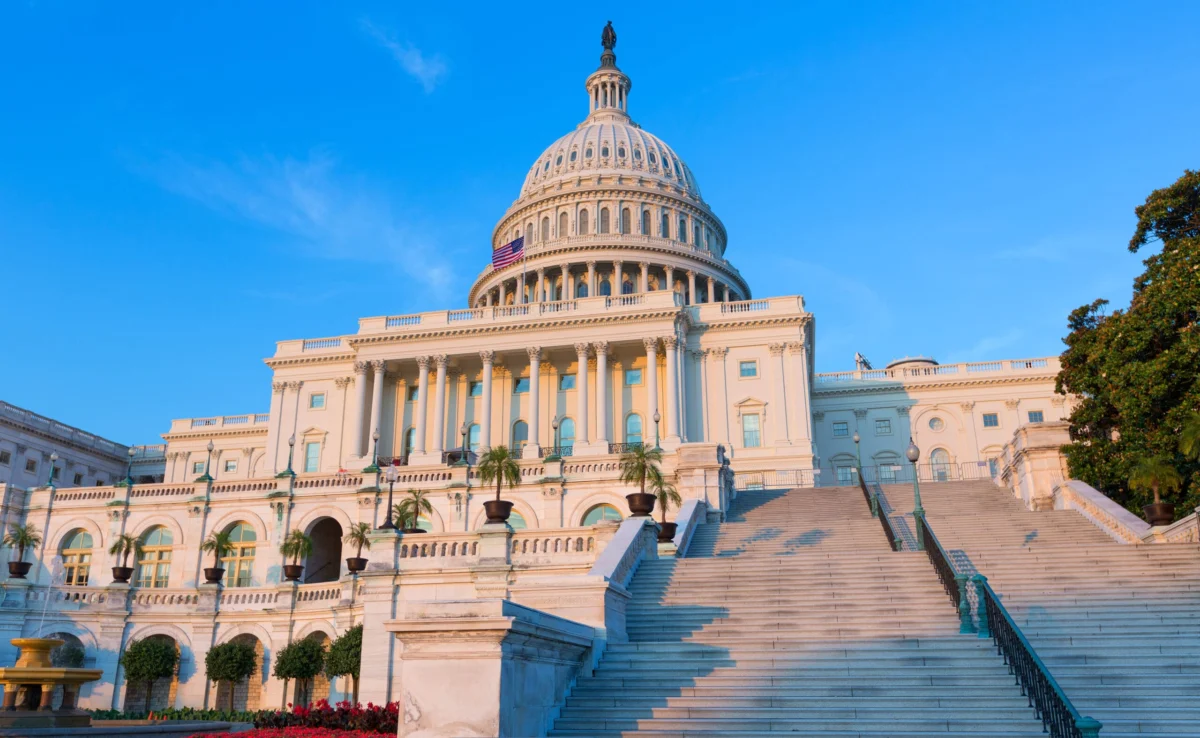
Early results from the recent US midterm elections have solidified a significant shift in Washington’s political landscape, with Democrats successfully retaking control of both the US House of Representatives and the US Senate. This pivotal change, effective with the commencement of the 120th Congress on January 3, 2027, ushers in a new era for federal tax policy, dictating the nature of discussions, legislative proposals, and potential reforms over the next two years. While the immediate legislative path remains constrained by Republican control of the White House, the Democratic agenda promises a vigorous debate on both new tax cuts and substantial tax increases, shaping the future trajectory of the nation’s fiscal framework.
The Shifting Political Landscape and Immediate Implications
The recapture of both chambers of Congress by Democrats marks a critical juncture following a period of divided government. Midterm elections, often seen as a referendum on the sitting president’s party, have historically led to shifts in congressional power, allowing the opposition party to gain ground. In this instance, the Democratic victory provides them with the legislative leverage to advance their policy priorities, even if a Republican president holds veto power. This dynamic necessitates a strategic approach, where messaging bills and legislative negotiations will become paramount, influencing not only the next two years but also the 2028 presidential election cycle. The immediate implication is a renewed focus on progressive tax policies, aiming to expand social safety nets and address income inequality through the tax code.
Key Democratic Tax Policy Proposals: A Dual Approach
The Democratic agenda for the upcoming Congress outlines a comprehensive approach to tax policy, characterized by a dual focus on expanding social benefits through enhanced tax credits and funding these initiatives by increasing taxes on high-income individuals and corporations. This strategy, while ambitious, must navigate the realities of a divided government and the nation’s challenging fiscal environment.
I. Proposed Tax Cuts and Credits: Bolstering Social Programs
A top priority for Democrats is the restoration and expansion of several key tax credits designed to support families, improve healthcare access, and address housing affordability. These proposals represent a significant revenue cost, underscoring the trade-offs inherent in their legislative blueprint.
-
Premium Tax Credits (PTCs) for Health Insurance: Central to the Democratic healthcare platform is the restoration of expanded premium tax credits, which expired at the end of 2025. These credits, established under the Affordable Care Act (ACA), subsidize the purchase of health insurance on ACA exchanges, making coverage more accessible and affordable for millions of Americans. During their temporary expansion from 2021 to 2025, these subsidies significantly lowered out-of-pocket costs for beneficiaries. House Democratic Leader Hakeem Jeffries (D-NY) has publicly championed the restoration of more generous PTCs, indicating its prominence in the upcoming legislative session. While Republican opposition is anticipated, the impending debt limit debate could offer Democrats an opportunity to leverage their position. The Congressional Budget Office (CBO) previously estimated that extending the PTC expansion would cost approximately $350 billion over a decade, a substantial investment aimed at enhancing healthcare affordability.
-
Child Tax Credit (CTC) and Earned Income Tax Credit (EITC) Expansions: Building on temporary expansions enacted in 2021, Democrats are also prioritizing increases to the Child Tax Credit (CTC) and the Earned Income Tax Credit (EITC). The 2021 CTC expansion notably increased the per-child credit from $2,200 to $3,000 or more, making it fully refundable and impacting millions of low- and middle-income families. Similarly, the 2021 EITC expansion focused on providing greater support for childless adult workers, a demographic often overlooked in tax benefit discussions. Reinstating the 2021 CTC expansion could entail a cost exceeding $500 billion over the next decade, while the childless EITC expansion could range from $60 billion to $120 billion, depending on specific parameters. These credits are seen by proponents as crucial tools for poverty reduction and economic mobility, directly injecting funds into households to support child-rearing and incentivize work.
-
Housing Tax Policy: LIHTC and Full Expensing: Addressing the nation’s housing crisis also features prominently in the Democratic agenda. Expansions to the Low-Income Housing Tax Credit (LIHTC) are under consideration. While Republicans expanded the LIHTC in the 2025 "One Big Beautiful Bill Act" (OBBBA), Democrats may seek further enhancements to this critical program which incentivizes the construction and rehabilitation of affordable rental housing. Furthermore, some Democrats advocate for extending full expensing—allowing businesses to immediately deduct the full cost of certain investments—to multifamily residential housing construction. This policy aims to lower the after-tax cost of building new housing units, thereby stimulating supply and potentially easing affordability pressures. Repealing the LIHTC and new markets tax credit, as one estimate suggests, would raise $202.7 billion over 10 years, highlighting the significant financial impact of these housing-related tax expenditures.
II. Revenue-Raising Proposals: Targeting Corporations and High Earners
To offset the costs of expanded credits and new spending, Democrats are poised to propose aggressive measures to increase tax revenue, primarily from corporations and the wealthiest Americans. While these proposals face the formidable hurdle of a presidential veto, they will serve as crucial messaging vehicles, shaping the future debate on tax reform.
-
Raising the Corporate Tax Rate: A primary target for revenue generation is the corporate income tax rate. Democrats aim to raise the rate from its current 21 percent, a level set by previous Republican tax reforms. Discussions will likely revolve around the extent of the increase, whether to implement a graduated corporate rate structure, and accompanying changes to the corporate tax base. The rationale often centers on ensuring corporations pay their "fair share" and restoring revenue lost from past tax cuts. However, opponents argue that higher corporate rates could diminish American competitiveness, discourage domestic investment, and lead to job losses.
-
Revisiting International Tax Rules: The global nature of modern corporations necessitates a reevaluation of international tax rules. Democrats may seek to reform tax rules for foreign earnings, potentially moving towards a system that calculates corporate liability on a country-by-country basis. Efforts to raise guardrails against "profit shifting"—where multinational companies move profits to lower-tax jurisdictions—are also anticipated. These measures aim to curb tax avoidance and ensure that profits generated from US economic activity are taxed domestically.
-
Novel Taxation on Data Centers and AI: Reflecting the evolving digital economy, some congressional Democrats are prioritizing new tax treatments for data center and artificial intelligence (AI) investments. Recent proposals have included disallowing bonus depreciation for data centers, either conditionally or entirely, enacting a novel "tax on bits," and imposing a new excise tax on data center electricity use. These unconventional tax ideas aim to capture revenue from rapidly growing sectors, but they also introduce administrative complexities and potential economic risks, as they could stifle innovation and investment in critical emerging technologies.
-
Income Surtaxes on Millionaires: Democrats in both chambers have proposed income surtaxes on high-income individuals. Senator Chris Van Hollen’s (D-MD) proposal, for instance, suggests a surtax on taxpayers earning over $1 million, with a top rate of 12 percent. Such surtaxes aim to increase the tax burden on the wealthiest Americans, contributing to revenue generation and addressing wealth inequality.
-
Capital Gains Tax Reforms and Wealth Taxation: Capital gains taxes are another area of intense focus. Proposals include raising capital gains tax rates, ending the "step-up in basis" at death for inherited assets (which eliminates capital gains tax for heirs), and annually taxing "unrealized capital gains" for very-high-net-worth individuals. Further still, some lawmakers, such as Representatives Jayapal and Warren, have advocated for levying a direct "wealth tax" on billionaire assets each year. These measures represent a fundamental shift in how wealth is taxed, sparking debate about their economic impact, legal enforceability, and administrative feasibility. Critics often argue that such taxes could lead to capital flight, discourage investment, and face constitutional challenges.
Legislative Challenges and Economic Realities
Despite their unified control of Congress, Democrats will face significant headwinds. President Trump’s Republican administration holds veto power, severely limiting the scope of legislative action without bipartisan compromise. This dynamic means that many of the more ambitious Democratic tax proposals, particularly those involving substantial tax increases, may serve primarily as messaging vehicles rather than immediate legislative enactments.
-
The Debt Limit as a Point of Leverage: The recurring debate over the national debt limit could become a critical arena for Democratic leverage. Historically, these moments have provided opportunities for the party in power in Congress to extract concessions from the White House. House Democratic Leader Jeffries has indicated that restoring more generous PTCs could be tied to debt limit negotiations.
-
The Broader US Budgetary Outlook: The nation’s fiscal health presents a formidable challenge. Federal debt has soared to over $32 trillion, surpassing 100 percent of Gross Domestic Product (GDP). The CBO projects persistent large budget deficits, with the government spending $2 trillion more than it took in during the most recent fiscal year. This unsustainable trajectory, coupled with rising government borrowing costs (the benchmark 10-year Treasury yield recently hovered around five percent), places immense pressure on lawmakers to address the growing gap between spending and revenue. Consumer borrowing costs have also risen in tandem, impacting everything from mortgages to auto loans, potentially increasing public demand for fiscal responsibility.
-
Economic Trade-offs: The proposed tax increases, particularly those targeting corporate profits and capital, come with significant economic trade-offs. Economists warn that such measures could dampen long-term US economic growth by discouraging saving, investment, and entrepreneurial activity. Balancing the desire for increased revenue and social spending with the imperative of fostering a robust economy will be a central challenge for the 120th Congress.
Tariffs and Trade Policy: A Nuanced Debate
The Trump administration’s imposition of hundreds of billions of dollars in tariffs has been a contentious issue, and the Democratic-controlled Congress may seek to roll back some of these measures. While many Democrats have opposed President Trump’s unilateral approach to tariffs—criticizing their broad application to allies and adversaries alike—the issue does not neatly split along party lines. Some Democrats support targeted tariffs on specific goods, such as aluminum and steel, reflecting a broader sentiment of protecting domestic industries. However, assembling a veto-proof majority to overturn presidential tariffs remains an unlikely prospect in the next two years, underscoring the limitations of congressional power in this domain.
The Looming Social Security Crisis
Beyond immediate legislative priorities, the 120th Congress will confront the looming crisis of Social Security. The Social Security Trustees project that the trust fund will be fully depleted in 2032. Without congressional action, Social Security would be unable to pay out benefits in full, threatening the financial security of millions of retirees and beneficiaries. The cohort of US senators elected this fall will face this critical issue during their six-year terms, necessitating urgent, bipartisan solutions. The Tax Foundation, in its publication Options for Reforming America’s Tax Code 3.0, has outlined various approaches to bolster the trust fund, emphasizing that any enduring reform package will require a blend of benefit reductions and additional revenue. This existential challenge will likely force lawmakers to consider difficult choices that transcend partisan divides.
The OBBBA Tax Cut Expirations: A 2028 Deadline
A critical tax deadline awaits Congress and President Trump on December 31, 2028, when several tax cuts enacted in the 2025 OBBBA are set to expire. These include deductions for tips, overtime pay, auto loan interest, and an enhanced senior deduction. Additionally, a provision allowing manufacturers to immediately deduct the full cost of new factory buildings will also lapse. The political and economic implications of these expirations are substantial. Extending these deductions beyond 2028, as estimated, would cost $577.3 billion over 10 years. While some Democratic lawmakers support extending and even expanding the tips and overtime deductions, the broader approach to these expiring provisions will be a complex negotiation, likely influenced by the 2028 presidential election and the prevailing fiscal environment.
Big Picture: A Consequential Period Ahead
The shifting balance of power in Washington promises a busy and impactful session for the 120th Congress. Even in the face of potential legislative gridlock due to a divided government, the proposals put forth by Democrats on tax and trade policy will serve as crucial signals, delineating the party’s priorities and laying the groundwork for more consequential legislative battles in the years ahead. From the 2028 presidential election to the expiration of significant tax cuts and the persistent budgetary challenges, federal tax policy is poised to remain a central focus. Democrats, with their ambitious agenda of tax cuts for families and increases for the wealthy, must skillfully navigate the constraints of a Republican presidential veto and the broader national trends of rising budget deficits and an uncertain economic outlook. The choices made, or deferred, in the coming years will profoundly shape the nation’s economic future and the daily lives of American citizens.