Candice Horbacz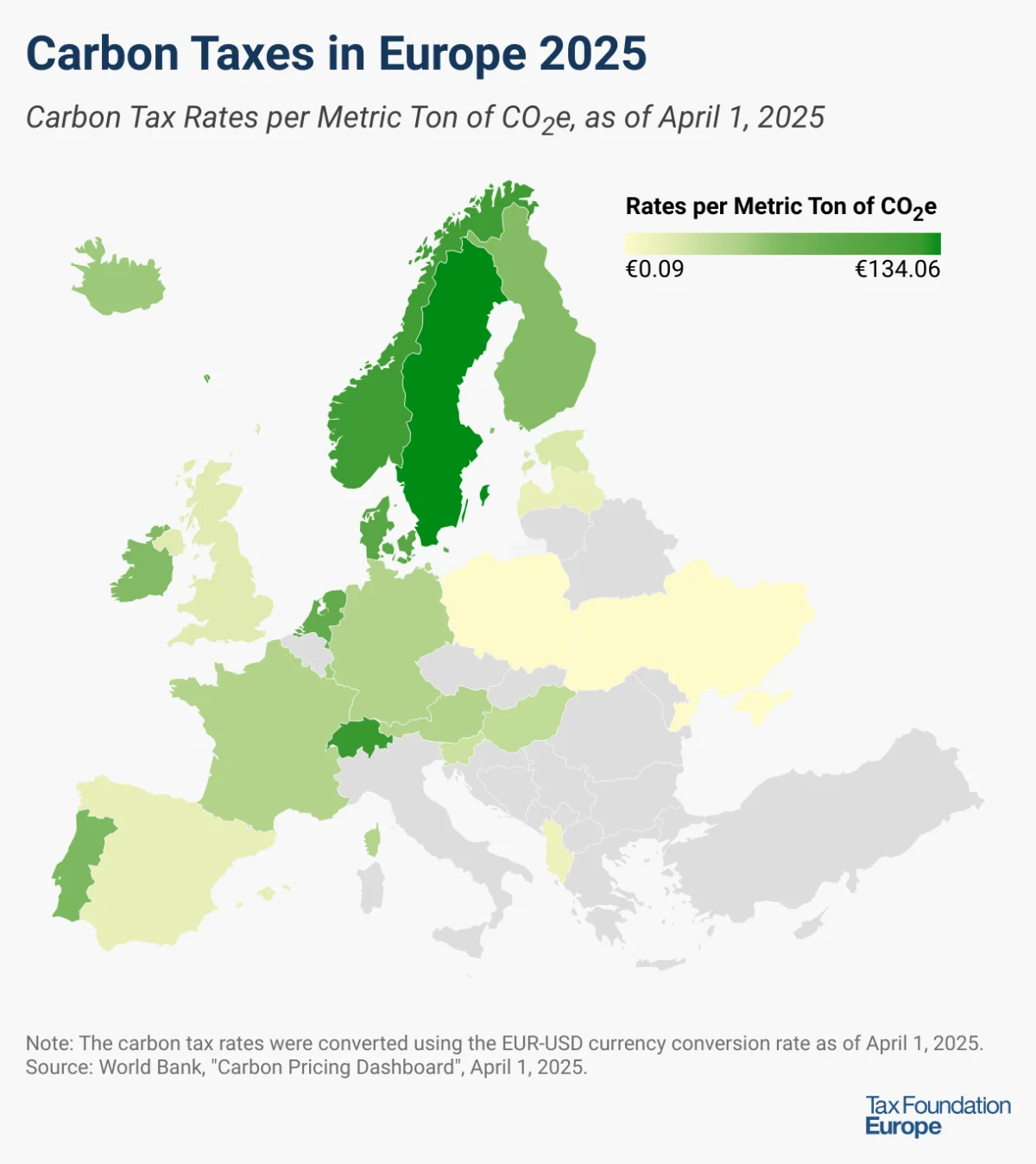
In a concerted global effort to mitigate the escalating impacts of climate change, a growing number of nations have embraced a spectrum of policy instruments aimed at curtailing carbon emissions. Among these, environmental regulations, emissions trading systems (ETSs), and carbon taxes stand out as primary tools. Europe, in particular, has emerged as a vanguard in this crucial endeavor, pioneering and continuously refining these mechanisms. This continent’s journey into carbon pricing began decisively in 1990 when Finland made history as the world’s first country to introduce a carbon tax. This seminal move marked a pivotal shift in environmental policy, setting a precedent that would eventually be adopted by numerous other nations seeking to internalize the external costs of carbon pollution.
The Dawn of Carbon Pricing: Finland’s Pioneering Move
Finland’s decision to implement a carbon tax over three decades ago was a bold and forward-thinking response to early scientific warnings about climate change. A carbon tax, at its core, is a levy imposed on the carbon content of fossil fuels, though the term can broadly encompass taxes on other greenhouse gas emissions like methane. Its fundamental purpose is to assign a monetary cost to these emissions, thereby incentivizing consumers, businesses, and governments to reduce their carbon footprint and seek cleaner alternatives. By placing a direct price on pollution, Finland aimed to create economic signals that would drive sustainable practices and foster innovation in low-carbon technologies. This early initiative, while modest in its initial scope, laid the groundwork for the more complex and widespread carbon pricing systems seen across Europe today.
Since Finland’s pioneering step, the adoption of carbon taxes has steadily gained traction across the continent. As of early 2026, 24 European countries have implemented some form of carbon taxation. These taxes exhibit a remarkable range in their rates, reflecting diverse national economic conditions, environmental ambitions, and political landscapes. At one end of the spectrum, countries like Ukraine and Poland levy relatively low rates, less than €1 per metric ton of carbon emissions. Conversely, nations at the forefront of climate ambition, including Norway, Sweden, Switzerland, and Liechtenstein, impose significantly higher taxes, exceeding €125 per metric ton. This wide disparity underscores the varied approaches and levels of commitment to carbon pricing across the European continent.
A Patchwork of Policies: Carbon Taxes Across Europe
Currently, Norway stands out with the highest carbon tax rate, imposing a formidable €146.23 ($169.71) per ton of carbon emissions. This robust tax reflects Norway’s long-standing commitment to environmental stewardship and its strategic use of resource wealth to fund green initiatives. Closely following are Sweden, with a rate of €133.17 ($154.55), and Switzerland and Liechtenstein, both levying €129.09 ($149.81). These high rates in Scandinavian and Alpine nations are indicative of their strong political will to drive decarbonization across their economies, often accompanied by comprehensive welfare states capable of mitigating potential regressive impacts on citizens.
In stark contrast, the lowest carbon tax rates are found in Poland, at a nominal €0.09 ($0.11), and Ukraine, at €0.59 ($0.68). These lower rates often reflect different economic priorities, levels of industrialization, and energy mixes, as well as the challenges of transitioning away from carbon-intensive industries without jeopardizing economic stability. Despite these variations, the average carbon tax rate among the 24 European countries stood at a notable €53.63 as of April 1, 2026, signaling a growing consensus on the importance of pricing carbon across the region. This average, however, masks the complexities of individual country approaches and the ongoing debate about optimal tax levels to achieve ambitious climate targets.
Defining the Scope: What Gets Taxed?
The effectiveness and reach of a carbon tax are not solely determined by its rate but also by its scope – specifically, which greenhouse gases (GHGs) it targets and what percentage of a country’s total emissions it covers. Carbon taxes can be applied to various GHGs, including carbon dioxide (CO2), methane (CH4), nitrous oxide (N2O), and fluorinated gases (F-gases). The design of each country’s carbon tax scheme varies considerably, leading to significant differences in the share of national greenhouse gas emissions effectively brought under the tax’s umbrella.
For instance, Spain’s carbon tax currently applies exclusively to fluorinated gases, a decision that results in the taxation of only approximately 2 percent of the country’s total greenhouse gas emissions. While F-gases are potent GHGs, this narrow focus limits the overall impact of the tax on Spain’s broader emissions profile. In contrast, countries like Albania, Andorra, Liechtenstein, and Luxembourg have designed their carbon taxes to, in principle, cover 72 percent or more of their greenhouse gas emissions. This broader scope aims for a more comprehensive approach to decarbonization, encompassing a wider array of polluting activities and sources.
However, even with a seemingly broad scope, the real-world collection efficiency of many carbon tax schemes is often compromised by various exemptions and reduced rates. These concessions are frequently introduced to protect energy-intensive industries from international competition, shield vulnerable households from rising energy costs, or provide relief to specific sectors deemed critical for national economies. While such exemptions can address legitimate concerns, they inevitably dilute the price signal of the carbon tax, reducing its effectiveness in driving widespread emission reductions and creating a less level playing field across different economic actors.
The Role of Emissions Trading Systems (ETS): A Parallel Approach
Complementing national carbon taxes, Emissions Trading Systems (ETSs) represent another cornerstone of Europe’s climate policy architecture. The EU Emissions Trading System (EU ETS), launched in 2005, is the world’s first and largest carbon market. It operates on a cap-and-trade principle, setting a cap on the total amount of certain greenhouse gases that can be emitted by installations covered by the system. Within this cap, companies buy and sell emission allowances as needed, creating a market price for carbon. This system covers emissions from power and heat generation, energy-intensive industrial sectors, and aviation within the EU, Iceland, Liechtenstein, and Norway.
The relationship between national carbon taxes and the EU ETS is multifaceted. With the exception of Albania, Andorra, Serbia, Switzerland, Ukraine, and the United Kingdom, all European countries that levy a national carbon tax are also participants in the EU ETS. This dual-policy environment introduces both synergies and complexities. Switzerland, while not an EU member, operates its own ETS, which has been formally linked to the EU ETS since January 2020, allowing for mutual recognition of emission allowances. Following its departure from the European Union, the UK established its own UK ETS in January 2021, mirroring many features of its European counterpart to maintain a carbon price signal for its industries.
Navigating Policy Overlap: The Challenge of Double Taxation
One of the significant policy challenges arising from the coexistence of national carbon taxes and the EU ETS is the potential for harmful double taxation. In several countries, including Andorra, Finland, France, Ireland, the Netherlands, Norway, and Portugal, the national carbon tax base overlaps with the emission base already covered by the EU ETS. This means that certain emissions are effectively taxed twice – once through the national carbon tax and again through the cost of purchasing allowances under the ETS.
From an economic efficiency perspective, this overlap can be problematic. When national carbon taxes apply to emissions already capped by an ETS, they tend to shift emissions to sources outside their tax base rather than achieving an overall reduction in total emissions. Because the ETS sets a fixed cap on total emissions within its scope, a national carbon tax applied to activities already covered by the ETS primarily influences the distribution of emissions among participants within the ETS, but it does not reduce the total emissions allowed under the cap. Instead, it can lead to higher compliance costs for businesses without necessarily yielding additional environmental benefits for the covered sectors, potentially undermining the cost-effectiveness of the ETS. Ideally, a carbon tax should apply to the carbon emissions of all sectors at the same rate, avoiding such distortions and promoting a consistent price signal across the economy.
Recent Momentum and Future Horizons
The landscape of carbon pricing in Europe is continuously evolving, with several countries having introduced new carbon taxes or ETSs in recent years, reflecting a renewed impetus to meet ambitious climate targets. Germany, for instance, implemented a carbon tax in 2021, followed by Austria in 2022. Germany’s approach was particularly innovative, as it phased its national carbon tax into a national ETS in 2026. Both these national systems are designed to automatically expire once the broader-based successor to the EU ETS, known as EU ETS-2, becomes fully applicable to the covered sectors.
EU ETS-2 represents a significant expansion of carbon pricing in Europe. It is designed to extend emissions trading to new sectors, specifically buildings and road transport, which were previously largely outside the scope of the original EU ETS. This move signals a strategic shift towards a more comprehensive pricing of carbon across the economy, aiming to capture a larger share of national emissions and accelerate decarbonization in hard-to-abate sectors.
Beyond the EU, other European nations are also strengthening their carbon pricing frameworks. Albania and Hungary implemented carbon taxes in 2022 and 2023, respectively, demonstrating a growing regional commitment to these tools. Serbia introduced a new national carbon tax in 2026, further expanding the network of carbon pricing initiatives in the Western Balkans. Looking ahead, subnational entities are also exploring these mechanisms, with the autonomous region of Catalonia in Spain considering its own carbon tax. Furthermore, Turkey, a significant economic player in the region, is actively considering the establishment of a national ETS, which could dramatically alter its emissions trajectory. These ongoing developments underscore a widespread recognition of carbon pricing as an indispensable instrument in the fight against climate change.
Economic and Environmental Impact: A Mixed Picture
The implementation of carbon taxes and ETSs across Europe has yielded a mixed but generally positive picture in terms of their economic and environmental impacts. Environmentally, these policies have demonstrably contributed to emission reductions, particularly in the power sector where the EU ETS has been a key driver in the shift from coal to natural gas and renewables. By making carbon-intensive activities more expensive, they have incentivized investments in cleaner technologies, energy efficiency, and renewable energy sources. However, the exact magnitude of emission reductions attributable solely to carbon taxes, separate from other policies and technological advancements, remains a subject of ongoing research and debate.
Economically, carbon pricing mechanisms generate significant revenue for national governments. These revenues can be recycled in various ways: funding green infrastructure projects, investing in research and development for low-carbon technologies, reducing other taxes (such as income or labor taxes to improve competitiveness), or providing compensatory measures for vulnerable households. For example, some countries use carbon tax revenues to lower electricity bills or fund public transport, thus addressing potential regressive impacts. The strategic recycling of carbon revenues is crucial for ensuring the political acceptability and long-term sustainability of these policies.
However, concerns about economic competitiveness and carbon leakage persist. Industries in countries with high carbon prices fear being at a disadvantage compared to competitors in regions without similar pricing mechanisms, potentially leading to production relocating to less regulated areas (carbon leakage). The EU’s planned Carbon Border Adjustment Mechanism (CBAM) is designed precisely to address this concern by imposing a carbon levy on imports from countries with less stringent climate policies, aiming to level the playing field and encourage global decarbonization.
Social equity is another critical consideration. Carbon taxes can disproportionately affect lower-income households, as energy costs typically consume a larger share of their disposable income. Policy design must therefore incorporate compensatory measures, such as targeted rebates, subsidies for energy efficiency improvements, or progressive tax adjustments, to ensure a just transition and prevent adverse social impacts. The effectiveness of these policies hinges not only on their design but also on their ability to garner public support and address potential distributional concerns.
Conclusion: Europe’s Evolving Leadership in Carbon Pricing
Europe’s journey with carbon pricing, from Finland’s groundbreaking tax in 1990 to the sophisticated and expanding network of ETSs and national levies seen today, represents a testament to its commitment to tackling climate change. While the continent’s approach is characterized by a diverse array of rates, scopes, and policy interactions, the overarching trend is towards deeper integration and broader application of carbon pricing. The ongoing refinement of the EU ETS, the introduction of EU ETS-2, and the continuous implementation of national carbon taxes reflect a dynamic and adaptive policy landscape.
As Europe continues to lead in this crucial domain, the lessons learned from its successes and challenges – particularly regarding policy coherence, managing overlaps, ensuring equitable impacts, and driving genuine emission reductions – offer invaluable insights for the global community. The evolution of carbon pricing mechanisms across the continent underscores a fundamental truth: putting a price on carbon is an indispensable tool for steering economies towards a sustainable, low-carbon future, requiring continuous innovation, careful calibration, and robust international cooperation.