Nila Kartika Wati
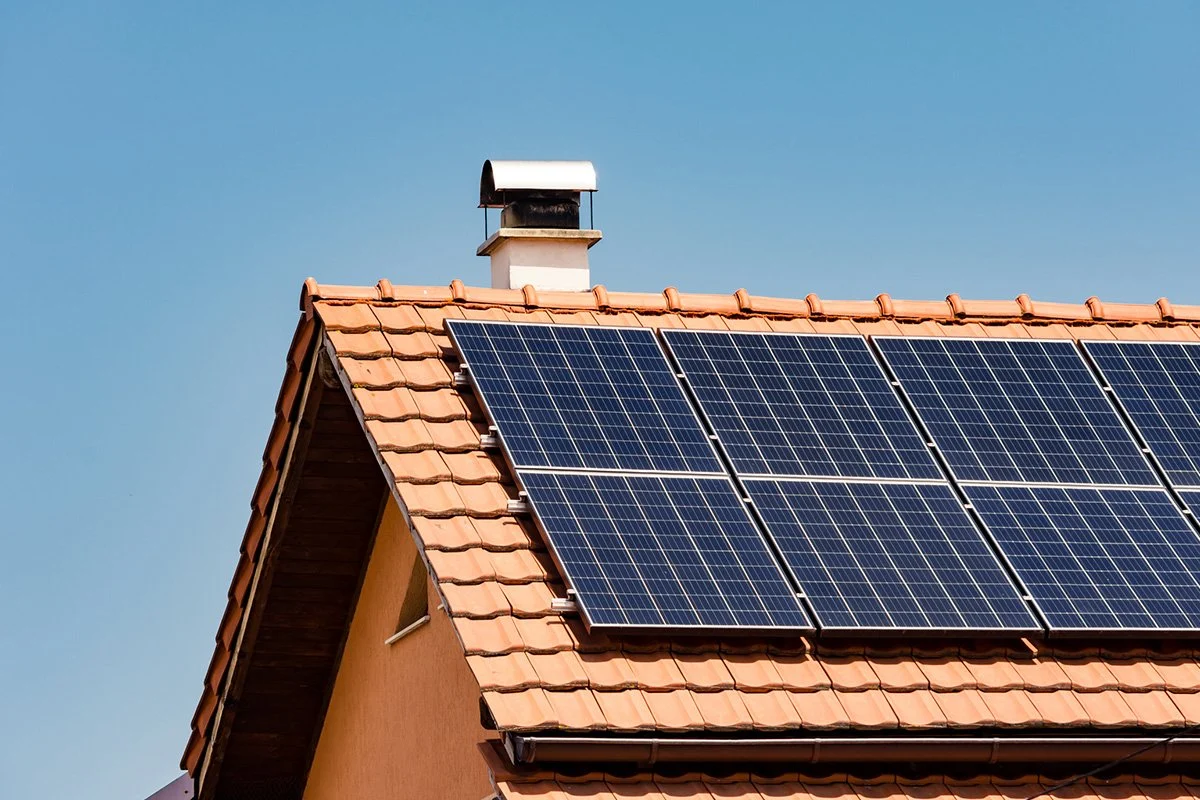
The federal judiciary has intervened in a high-stakes standoff between the executive branch and environmental advocates, with U.S. District Judge Mary McElroy ruling that the Environmental Protection Agency (EPA) acted unlawfully when it moved to terminate the $7 billion Solar for All program. The decision, handed down in September 2026, marks a pivotal moment for a federal initiative designed to bring renewable energy to nearly one million low-income households across the United States. While the legal victory restores the immediate flow of obligated funds, it has simultaneously cast a spotlight on the fragile nature of what experts call "civic infrastructure"—the complex web of nonprofits, private businesses, and local governments that organize around federal mandates to deliver services at the community level.
The conflict began in earnest in August 2026, when EPA Administrator Lee Zeldin announced the abrupt termination of the program, characterizing the multi-billion-dollar initiative as an unsustainable "boondoggle." The administration argued that the agency no longer possessed the legal authority to administer the funds, citing a need to rein in federal spending and pivot away from programs established under previous legislative cycles. However, the move was immediately met with a lawsuit from an diverse coalition of plaintiffs, including labor unions, solar developers, legal advocacy groups, and individual citizens like Anh Nguyen, an Atlanta homeowner who had applied for a no-cost solar installation through the Georgia BRIGHT program.
The Genesis of Solar for All and the Greenhouse Gas Reduction Fund
To understand the weight of the court’s decision, it is necessary to examine the origins of the Solar for All initiative. The program was established as a cornerstone of the $27 billion Greenhouse Gas Reduction Fund (GGRF), a federal effort intended to mobilize capital for clean energy projects in communities that have historically been left behind by the green energy transition. Of that total, $7 billion was specifically earmarked for the Solar for All competition, which awarded grants to states, territories, Tribal governments, and nonprofit "lead applicants."
The program’s primary objective was to enable over 900,000 households in disadvantaged communities to benefit from distributed solar energy. By providing subsidies for rooftop solar arrays and community solar projects, the initiative aimed to lower residential electricity bills, improve grid reliability, and reduce carbon emissions. In Georgia, this manifested as the Georgia BRIGHT Communities program, led by the Capital Good Fund, a nonprofit Community Development Financial Institution (CDFI). The Capital Good Fund was awarded $156 million to implement a state-wide strategy that prioritized households earning 80 percent or less of their area’s median income (AMI).
A Chronology of Uncertainty and Litigation
The timeline of the Solar for All program has been marked by significant volatility, creating a challenging environment for the organizations tasked with its implementation.
- April 2024: The EPA officially announces the 60 recipients of the $7 billion Solar for All grants. Organizations begin the multi-year process of setting up local programs, hiring staff, and vetting contractors.
- Late 2024 – 2025: Local "civic infrastructure" begins to take shape. In Georgia, the Georgia BRIGHT program convenes a 40-member Community Advisory Board to ensure the program meets the specific needs of local residents.
- February 2026: Following a change in executive priorities, an executive order from the White House freezes the program’s funding. The freeze lasts for approximately one month before the funds are released under intense political and legal pressure.
- August 2026: EPA Administrator Lee Zeldin declares the program terminated. The agency claims that while some funds were "obligated" (legally committed to specific recipients), the authority to continue the program had expired.
- September 2026: A coalition of plaintiffs, represented by Lawyers for Good Government, files suit in federal court.
- September 18, 2026: Judge Mary McElroy issues a ruling declaring the EPA’s termination unlawful under the Administrative Procedure Act (APA), effectively restoring the program.
The Legal Argument: Authority and the Administrative Procedure Act
The core of the legal dispute centered on the distinction between "obligated" and "unobligated" funds. The EPA argued that because Congress had rescinded certain unobligated balances within the broader Greenhouse Gas Reduction Fund, the agency was no longer required—or permitted—to maintain the Solar for All program.
However, Judge McElroy’s ruling clarified that the $7 billion in question had already been obligated through signed grant agreements. Under the Administrative Procedure Act, federal agencies cannot arbitrarily rescind such commitments without a clear mandate from Congress or a robust, legally sound justification. The court found that the EPA had failed to provide such a justification, noting that the agency’s attempt to "ax" the program was an overreach of executive power that bypassed the legislative intent of the original funding bill.
Jillian Blanchard, Senior Vice President of Climate Change and Environmental Justice at Lawyers for Good Government, emphasized that the termination had left billions of dollars "out of reach" for families who were already seeing rising energy costs. The court’s decision was viewed not just as a win for solar energy, but as a reaffirmation of the rule of law regarding federal grant obligations.
The Invisible Network: Solar for All as Civic Infrastructure
Perhaps the most significant revelation of the lawsuit was the sheer scale of the network built around the federal funding. The list of plaintiffs in the case illustrates that Solar for All was never just a top-down government handout; it was a catalyst for a multi-sector ecosystem. The plaintiffs included:
- Labor and Workforce: The Rhode Island AFL-CIO, representing workers who had been trained or were being recruited for solar installation roles.
- Legal Advocacy: The Rhode Island Center for Justice and Lawyers for Good Government, providing the legal framework for equitable distribution.
- Private Industry: Small and mid-sized solar companies such as Sunpath Solar, 2KB Energy Services, and Energy Independent Solutions (EIS). These businesses reported that they had already invested in new personnel, specialized software, and heavy equipment based on the promised federal contracts.
- Nonprofits and Residents: Organizations like Solar United Neighbors and individuals like Anh Nguyen, who represented the end-users of the service.
This "civic infrastructure" acts as the connective tissue between a federal check and a solar panel on a roof. In Georgia, for instance, the Georgia BRIGHT program did not just buy hardware; it created a 40-member Community Advisory Board consisting of residents, community leaders, and technical experts. This board was designed to advise on resource allocation and program strategy, ensuring that the federal money addressed local realities such as roof repairs or electrical upgrades that often prevent low-income homes from being "solar-ready."
Data and Economic Implications
The disruption of the program had immediate economic consequences. According to filings from the solar energy company plaintiffs, the "pause" in funding led to a freeze in hiring and a delay in infrastructure projects that were already in the pipeline.
From a broader economic perspective, the $7 billion Solar for All program was projected to generate significant long-term savings. The EPA’s original estimates suggested that the program would save low-income households an average of 20 percent on their monthly utility bills. For a household in Atlanta earning 80 percent of the AMI, these savings could represent hundreds of dollars annually—money that is typically reinvested into the local economy for necessities like food, healthcare, and education.
Furthermore, the program was intended to catalyze the "distributed energy" market. By funding rooftop solar rather than large utility-scale farms, the program aimed to make the national power grid more resilient. When power is generated at the point of consumption, it reduces the strain on long-distance transmission lines and provides a buffer during extreme weather events—a growing concern in the Southeast.
Official Responses and the Path Forward
The EPA has reacted to the court ruling with caution. While the agency has resumed some administrative functions related to the grants, it is currently reviewing the decision to determine whether to file an appeal. A spokesperson for the EPA stated that the agency remains committed to "fiscally responsible environmental policy," leaving the door open for further legal challenges.
On the other side, advocates are celebrating but remain wary. The "limbo" period between the August termination and the September restoration has already caused damage. Nonprofits like the Capital Good Fund were forced to pause their outreach and enrollment, losing momentum and, in some cases, the trust of community members who were skeptical of government programs to begin with.
"The court can restore the legal basis for the grants, but it cannot restore the time and the momentum lost," noted one industry analyst. "For a small solar installer who hired five new people in anticipation of this work, a one-month freeze can be the difference between growth and bankruptcy."
Analysis: The Vulnerability of Locally Built Infrastructure
The Solar for All case serves as a cautionary tale for the nonprofit sector and local governments. It highlights a fundamental paradox: while federal funding is often necessary to launch large-scale social and environmental initiatives, the dependency on that funding makes local "civic infrastructure" vulnerable to the shifting winds of federal politics.
The lesson for civil society organizations is the importance of "durability planning." The coalition that won the lawsuit succeeded because they had built a broad, multi-sector alliance that could move quickly in court. However, the survival of these programs in the long term may depend on their ability to diversify funding sources and embed themselves so deeply into local economies that they become difficult to extract, regardless of who occupies the administrator’s office at the EPA.
As the Solar for All program resumes, the focus will likely shift from legal battles to implementation. The challenge now is to prove that the "civic infrastructure" so meticulously built over the last two years can deliver on its promise: a cleaner, more equitable energy future that survives beyond the next election cycle. For homeowners like Anh Nguyen, the hope is that the legal victory in a Rhode Island courtroom will finally translate into lower power bills on the streets of Atlanta.