Lina Irawan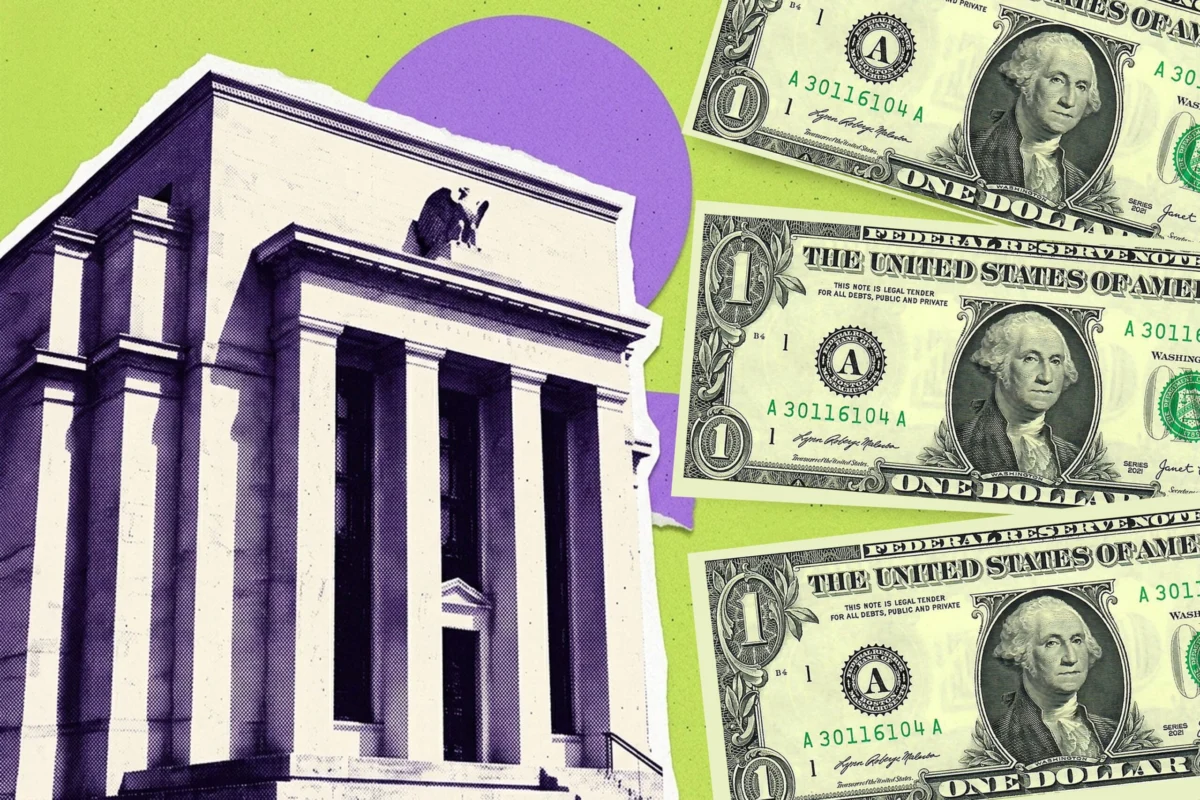
The Federal Reserve implemented a widely anticipated interest rate hike on Wednesday, increasing the federal funds rate by a quarter of a percentage point, bringing it to a new range of 3.75% to 4%. This decision, driven by persistently high inflation in the U.S. economy, marks a significant pivot in the central bank’s monetary policy, representing the first rate increase since its aggressive tightening campaign concluded in 2023. This move effectively reverses the easing trajectory that began in early 2024, catching many market observers off guard who had initially anticipated continued rate cuts through 2026.
A Shift in the Economic Landscape
The Federal Reserve operates under a dual mandate: to achieve maximum employment and maintain stable prices. For much of 2022 and 2023, the central bank was primarily focused on combating runaway inflation, which had reached multi-decade highs. During this period, the Fed embarked on one of its most aggressive series of rate hikes in recent history, pushing the federal funds rate from near zero to over 5% in a bid to cool an overheating economy. This campaign successfully brought down the headline inflation figures from their peak, leading to a sense of optimism by late 2023 and early 2024 that a "soft landing" – bringing inflation down without triggering a recession – was achievable.
Consequently, at the beginning of 2024, the Fed initiated a series of rate cuts, signaling a belief that inflation was under control and the economy needed less restrictive monetary policy. Market forecasts, including those from major financial institutions, largely aligned with this view, projecting several more cuts over the subsequent years. However, the economic reality proved more stubborn than anticipated. Inflation, while having receded from its peaks, has consistently remained above the Fed’s long-term target of 2%.
Several factors have contributed to this "sticky inflation." Geopolitical tensions, particularly the escalating conflict in Iran, have exerted upward pressure on global energy prices and supply chains. Additionally, new tariffs imposed on various goods have increased import costs, which are often passed on to consumers. Changes in immigration policy, impacting labor supply in certain sectors, may also be playing a role in wage pressures. These external shocks, combined with robust domestic demand and a resilient labor market, have made the inflation fight more challenging than initially forecast.
Understanding the Federal Reserve’s Rationale
The Federal Open Market Committee (FOMC), the Fed’s primary policymaking body, voted unanimously for the latest hike, underscoring a collective concern about the persistence of inflationary pressures. "The decision reflects the Committee’s assessment that despite progress, inflation risks remain elevated, necessitating a recalibration of our monetary stance to ensure price stability," stated a senior Fed official, speaking anonymously to discuss internal deliberations. This sentiment echoes the cautious tone adopted by Fed Chair Jerome Powell in recent public appearances, where he emphasized the data-dependent nature of policy and the commitment to achieving the 2% inflation target, even if it means prolonged higher rates.
Chris Zaccarelli, Chief Investment Officer for Northlight Asset Management, had previously articulated this concern, telling Money that "sticky inflation" could compel the Fed to adopt a more hawkish stance. His analysis proved prescient, especially given the continued strength of the labor market. The latest report from the Bureau of Labor Statistics indicated an August unemployment rate of 4.1%, marginally up from previous months but still remarkably low by historical standards. The economy added 162,000 jobs, significantly exceeding many economists’ expectations, further demonstrating the labor market’s resilience. This robust employment picture, while positive for workers, can also fuel inflation through strong wage growth and consumer spending, presenting a complex challenge for policymakers trying to cool demand.
The implications of this renewed tightening cycle extend beyond the immediate rate adjustment. A growing consensus among Wall Street professionals and policy analysts now suggests that a second rate hike could be on the horizon later this year. Furthermore, projections for interest rates are being revised upwards, with many experts now believing that higher rates could persist into 2027 and potentially beyond. This shifts the fundamental "math" for households and businesses, as borrowing money becomes more expensive across the board, impacting everything from mortgage payments to business investment. The Fed’s objective is clear: by making credit more costly, it aims to slow down economic activity, thereby reducing demand and bringing inflation back down to its target. However, this strategy carries significant consequences for various segments of the population.
Broader Impact: A Deep Dive into Key Stakeholders
The Federal Reserve’s latest interest rate hike sends ripples throughout the U.S. economy, affecting different groups in distinct ways. Understanding these varied impacts is crucial for navigating the evolving economic landscape.
1. Savers and Investors: Navigating a Volatile Environment
For individuals diligently saving for retirement or other long-term goals, the rate hike presents a complex scenario, often described as a double-edged sword. On one hand, higher borrowing costs are generally seen as a drag on economic growth, which can weigh on corporate earnings and, consequently, stock market valuations. A rapidly rising interest rate environment can disproportionately affect "growth" stocks, particularly younger, fast-growing companies that rely heavily on debt financing for expansion. As borrowing becomes more expensive, these companies face increased operational costs and may be forced to slow their expansion plans, potentially impacting their stock performance.
However, the alternative – unchecked inflation – poses an even greater threat to long-term wealth. Rapidly climbing prices erode the purchasing power of savings and investments, making it harder to meet future financial goals. In this context, the Fed’s action, aimed at taming inflation, can be seen as a necessary measure to preserve the real value of assets over time.
Investment professionals universally advise against knee-jerk reactions to single economic events like a rate hike, especially for those with a long investment horizon. Markets inherently experience cycles of ebb and flow, and sharp declines are often followed by swift recoveries. Selling off positions during a downturn can lead to missing out on subsequent bounce-backs and the potential for long-term growth. As Seema Shah, Chief Global Strategist at Principal Asset Management, noted, "For investors, risk assets can comfortably absorb two or three hikes provided economic growth and earnings remain strong."
Nevertheless, the current environment is an opportune time to review portfolio allocations. If an investor’s portfolio has become overly concentrated in asset classes particularly sensitive to interest rate fluctuations, such as aggressive growth stocks, rebalancing might be prudent. Emily Safford, a wealth advisor at Girard, a Univest Wealth Division, emphasizes the importance of diversification: "Staying diversified is one of your biggest shields from a whipsawing market." This strategy helps cushion portfolios against volatility by spreading risk across different asset classes, industries, and geographies.
On the flip side, higher interest rates offer a clear benefit for cash savings. Keeping money in a traditional, low-interest checking or savings account during periods of high inflation effectively means losing purchasing power. With the Fed’s hike, high-yield savings accounts, money market accounts, and Certificate of Deposit (CD) ladders become more attractive, offering significantly better returns. For emergency funds, which should ideally be held in easily accessible, low-risk accounts, these higher-yielding options provide a crucial opportunity to earn more interest and combat inflation’s corrosive effects.
2. Retirees: Managing Fixed Incomes and Investment Strategies
Retirees, often living on fixed incomes, are particularly vulnerable to the corrosive effects of inflation. Unlike working individuals who might benefit from wage increases during inflationary cycles, retirees typically do not have this buffer, meaning their purchasing power diminishes more rapidly. Ted Rossman, principal consumer finance analyst at Money Management International, highlighted this concern, stating, "On average, everything we buy costs about 30% more than it did in 2019. A rate hike could actually be seen as a good thing for consumers in the sense that a rate hike should help bring inflation down." For retirees, the potential for inflation to abate is a significant positive.
Moreover, higher interest rates generally provide a silver lining for retirees’ investment portfolios. A substantial portion of many retirement portfolios is allocated to safe-haven assets such as savings instruments, bonds, and U.S. Treasurys. These types of investments directly benefit from rising interest rates, generating more income for retirees. For instance, new bond issuances will offer higher yields, and existing bond funds may see increased income streams, providing a much-needed boost to retirement income.
Another advantage for older Americans, according to data from credit bureau Experian, is that they tend to carry less debt compared to younger age groups. This is particularly beneficial in a rising rate environment, as they are less exposed to the increased costs of variable-rate debt, such as credit card balances or home equity lines of credit, which are most sensitive to Fed rate hikes. This reduced debt burden means that the negative impact of higher borrowing costs is less pronounced for many retirees, allowing them to better capitalize on the positive aspects of higher rates.
3. Borrowers: Increased Costs for Credit and Loans
For borrowers, the Fed’s rate hike translates almost immediately into higher Annual Percentage Rates (APRs) across a range of consumer loans and credit products. Banks and other financial institutions use the federal funds rate as a benchmark for setting their prime lending rates, which in turn influence the APRs offered on various debts. Data consistently shows that interest rates on products like personal loans, auto loans, and especially credit cards, closely and quickly track fluctuations in the federal funds rate.
For variable-interest-rate products such as credit cards and Home Equity Lines of Credit (HELOCs), consumers can expect their minimum monthly payments to edge up in the coming weeks. TransUnion, a credit reporting agency, estimates that a consumer carrying an average credit card balance of $6,610 at a 22% APR could see an increase of approximately $1.38 in their minimum monthly payment. While this might seem modest on a monthly basis, Michele Raneri, head of U.S. research and consulting at TransUnion, cautions that "While the near-term impact on minimum monthly credit card payments may be relatively small, higher borrowing costs can add up over time, particularly for consumers carrying larger balances or making only minimum payments." The cumulative effect over months and years can significantly increase the total cost of debt.
For fixed-interest-rate loans, such as most personal loans and auto loans, existing borrowers are typically shielded from the immediate impact of a rate hike; their rates remain unchanged. However, anyone seeking to take out a new personal loan or finance a car purchase will encounter higher APRs, making new borrowing more expensive. This necessitates a careful assessment of one’s debt-to-income ratio and a proactive approach to maintaining a high credit score to secure the most favorable rates available. The era of cheap credit is receding, demanding greater financial discipline from borrowers.
4. Homebuyers and Sellers: A Continuously Challenging Market
The relationship between the Fed’s interest rate hikes and mortgage rates is more nuanced than with other types of consumer loans. Unlike short-term lending rates, mortgage rates are not directly controlled by the federal funds rate. Instead, they tend to track the yield on the 10-year Treasury bond, which reflects broader market expectations for inflation and economic growth. As Michele Raneri pointed out, "The implications for mortgage borrowers may be less immediate."
However, this does not mean mortgage rates are immune. The underlying inflationary pressures that prompted the Fed’s hike are also influencing the 10-year Treasury yield. Consequently, mortgage rates have already been observed creeping back up, lately nearing the 7% mark. Higher mortgage rates directly impact housing affordability, as they increase the monthly cost of homeownership, thereby reducing the pool of eligible buyers and typically leading to a slowdown in home sales.
Interestingly, a Fed rate hike does not guarantee a corresponding increase in mortgage rates. Bond market dynamics are complex, and lenders often "price in" anticipated Fed actions. If the market interprets the Fed’s hike as a strong signal that it is effectively tackling inflation, it could potentially lead to a modest decrease in long-term bond yields and, subsequently, mortgage rates, as inflationary expectations subside. This scenario, while less common, highlights the unpredictable nature of bond markets.
Regardless of the precise direction of mortgage rates in the immediate aftermath of the hike, the overarching sentiment is that the U.S. housing market will remain sluggish. The combination of high home prices, limited inventory, and elevated interest rates continues to create a challenging environment for both buyers and sellers, suggesting a prolonged period of subdued activity.
5. Job Seekers: Potential Headwinds in the Labor Market
Federal Reserve rate hikes are rarely welcome news for job seekers. The primary mechanism through which higher interest rates combat inflation is by cooling off economic activity. This often translates to businesses facing higher borrowing costs, which in turn can lead to reduced investment, slower expansion plans, and, critically, less money available for hiring new employees. The ultimate goal for the Fed is to bring the labor market into better balance with available workers, thereby easing wage pressures that contribute to inflation.
The silver lining in the current environment is the remarkable resilience of the U.S. labor market. The August jobs report, which saw 162,000 new jobs added and the unemployment rate holding at a historically low 4.1%, indicates a strong starting position. This robust foundation could provide some cushion, allowing the labor market to absorb the rate hike without experiencing a significant immediate downturn in employment. This is the ideal outcome of the Fed’s dual mandate: to achieve stable prices while maximizing employment.
However, achieving this "perfect" balance is a delicate act and by no means guaranteed. Mark Zandi, chief economist at Moody’s, has articulated the inherent challenge: "If the Fed tightens to bring inflation down faster, it must push growth below potential, and that is hard to do without layoffs, rising unemployment, and igniting a self-reinforcing negative cycle." This highlights the risk that aggressive tightening could inadvertently trigger a more significant economic slowdown, leading to job losses and a weakening labor market.
Furthermore, recent data from the New York Fed in July suggested that job seekers were already feeling a degree of pessimism about their prospects. Even if the immediate effects of this rate hike on overall employment prove negligible, it is unlikely to make the process of landing a new job any easier. The potential for a softening labor market could also lead to a deceleration in wage growth, which, while beneficial for combating inflation, could reduce the financial leverage and bargaining power of workers.
Conclusion: A Tightrope Walk for the Economy
The Federal Reserve’s decision to resume interest rate hikes underscores the persistent challenge of inflation and the central bank’s unwavering commitment to price stability. This pivot marks a critical juncture, reversing earlier expectations for continued monetary easing and signaling a more prolonged period of restrictive policy. While aimed at cooling an overheating economy and bringing inflation back to target, these actions carry significant and varied implications across all sectors of the economy. From shaping investment strategies and influencing retirement planning to impacting borrowing costs for consumers and the dynamism of the job market, the Fed’s monetary policy decisions continue to be the most influential factor in the nation’s economic trajectory. The path forward remains data-dependent, with policymakers carefully balancing the risks of entrenched inflation against the potential for an economic slowdown, navigating a complex landscape that demands vigilance from all stakeholders.