Nila Kartika Wati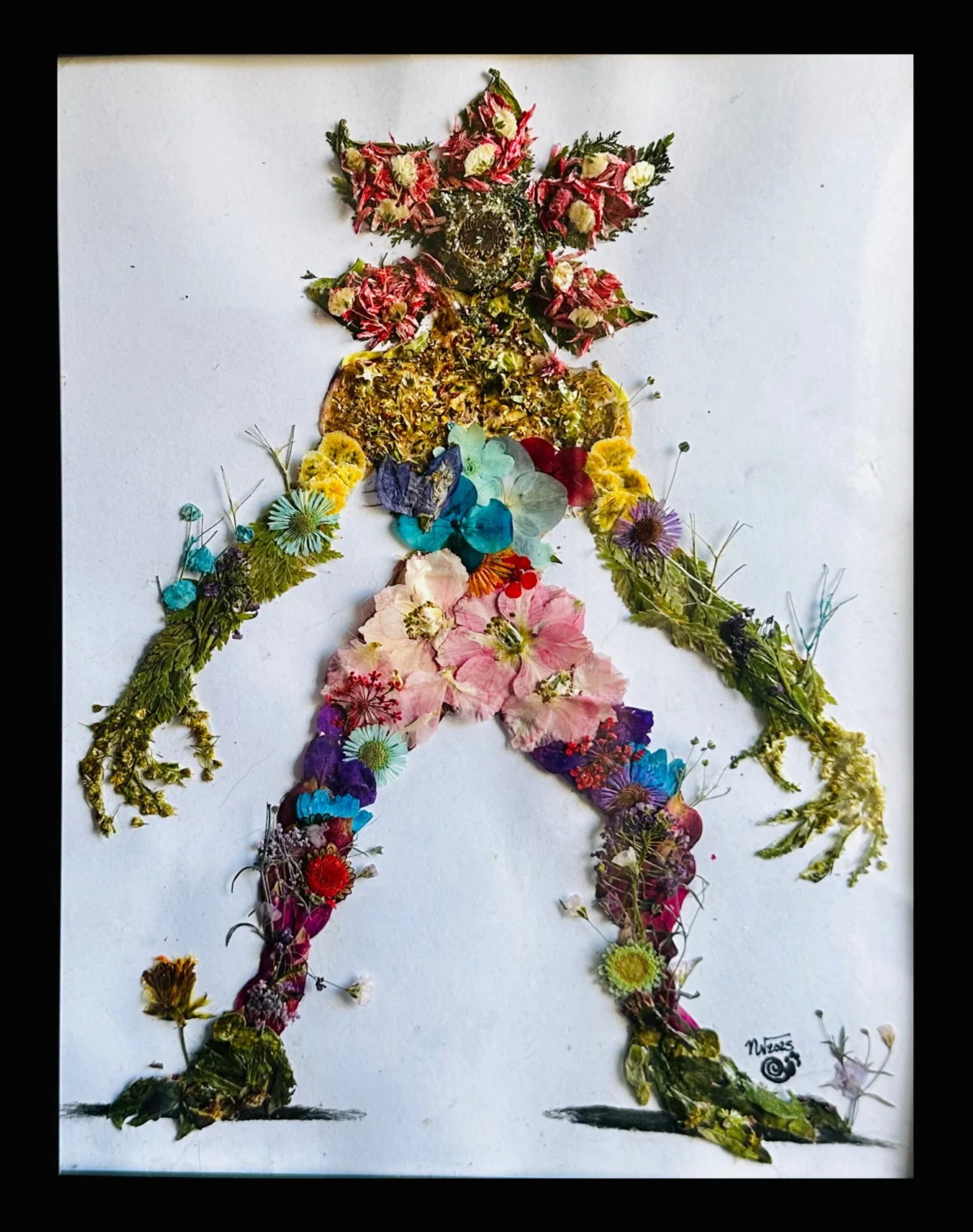
Flowers in the Bones serves as a profound meditation on the intersections of disability justice, communal care, and the enduring nature of human connection in the face of systemic collapse. Created by Nae Vallejo, a multidisciplinary artist and archivist, the work utilizes the traditional Japanese art of oshibana—pressed flowers—to explore the tension between the fragility of the human condition and the resilience of the communities that sustain it. Published through the Nonprofit Quarterly (NPQ), the piece arrives at a critical juncture for the nonprofit and social justice sectors, where traditional institutions are increasingly scrutinized for their ability to meet the needs of marginalized populations.
The Artistic Methodology of Oshibana and Symbolic Resilience
The central medium of the work, oshibana, dates back to 16th-century Japan. Historically, the practice was used by samurai to promote patience and a connection to nature, but in Vallejo’s hands, it is repurposed as a record of survival. The process involves the meticulous drying and pressing of botanical specimens to preserve their form and color long after their biological life has ceased.
In a journalistic context, this medium serves as a metaphor for the "rememory" and "trace" that Vallejo explores in their practice. By preserving flowers—biological entities that are inherently ephemeral—Vallejo creates a physical archive of grief and love. The artist suggests that these preserved specimens represent the relationships that remain when "systems, credentials, and promises fail." This thematic focus aligns with broader sociological observations regarding the "loneliness epidemic" and the increasing reliance on informal care networks in the United States.
Biographical Context and the Intersectionality of the Artist
Nae Vallejo (they/he) identifies as a Black, Caddo, Mexican, queer, trans, and disabled artist. This intersectional identity is fundamental to the narrative of Flowers in the Bones. As the founder of naeborhood projects, Vallejo’s work is rooted in "experiential archiving" and "access design." Their background as a hard-of-hearing, neurodivergent service dog guardian informs a practice that prioritizes sensory attunement and disability justice.
The inclusion of Caddo and Mexican heritage suggests a grounding in ancestral memory and indigenous practices of land stewardship and community. By framing survival as a "collective achievement" rather than an individual one, Vallejo’s work challenges the Western, neoliberal emphasis on self-reliance. This perspective is particularly relevant to the disability community, where the concept of "interdependence" is a core tenet of political and social liberation.
Chronology of Development and the Rise of Mutual Aid
The development of Flowers in the Bones reflects a specific timeline of social and political upheaval in the United States. While the specific dates of the piece’s creation are tied to Vallejo’s ongoing practice, the themes resonate with the post-2020 landscape of mutual aid.
- Pre-2020: The disability justice movement, led largely by queer and trans people of color (QTPOC), established the framework of "collective care."
- 2020–2022: The COVID-19 pandemic exposed significant gaps in the state-sponsored safety net. According to data from the Mutual Aid Hub, the number of documented mutual aid groups in the U.S. surged from fewer than 50 to over 800 within the first six months of the pandemic.
- 2023–Present: As pandemic-era protections (such as the continuous enrollment provision for Medicaid) were rolled back, the reliance on "chosen family" and community-centered experiences became a permanent fixture of survival for disabled and marginalized individuals.
Vallejo’s work documents this transition, moving away from a reliance on "credentials" and toward a "village" model of care. The artist’s return to "the same answer: people" mirrors a broader shift in the nonprofit sector toward trust-based philanthropy and grassroots organizing.
Data and the Failure of Institutional Systems
The premise of Flowers in the Bones—that systems often fail to hold those in need—is supported by recent socioeconomic data. In the United States, approximately 61 million adults live with a disability, according to the Centers for Disease Control and Prevention (CDC). However, this demographic faces significant barriers to healthcare, employment, and social services.
- Economic Disparity: Data from the Bureau of Labor Statistics (2023) indicates that the employment-population ratio for persons with a disability is 22.5 percent, compared to 65.8 percent for those without.
- Healthcare Access: A 2022 report by the National Council on Disability found that individuals with disabilities often face "diagnostic overshadowing" and systemic bias within medical institutions, leading to poorer health outcomes.
- Funding Gaps: In the arts and nonprofit sectors, organizations led by and serving BIPOC (Black, Indigenous, and People of Color) disabled individuals receive a disproportionately small fraction of philanthropic funding. A study by Americans for the Arts noted that while interest in "diversity" has increased, actual capital flow to intersectional disability-led projects remains stagnant.
Vallejo’s work serves as a qualitative counter-narrative to these statistics, highlighting the "mutual aid, chosen family, and disability community" that function as a shadow safety net.
Love as a Civic Practice: A Shift in Social Theory
One of the most provocative assertions in Flowers in the Bones is the idea that "love itself can be a civic practice." This concept redefines civic engagement, moving it beyond the traditional confines of voting, jury duty, or institutional volunteerism.
In political theory, this aligns with the work of scholars like bell hooks and Leah Lakshmi Piepzna-Samarasinha, who argue that care is a political act. By framing love as a "civic practice," Vallejo suggests that the maintenance of community ties and the "quiet acts of devotion" required for survival are essential components of a functioning democracy.
This perspective is gaining traction within the nonprofit sector. Organizations are increasingly recognizing that "social capital"—the networks of relationships among people who live and work in a particular society—is as vital as financial capital. Vallejo’s art provides a visual and emotional vocabulary for this shift, honoring the "people who have carried me" and the "people I carry in return."
Implications for the Nonprofit Sector and Future Outlook
The publication of Vallejo’s work by the Nonprofit Quarterly highlights a strategic pivot in how the sector views its role. As NPQ notes in its mission statement, journalism and nonprofits are "under attack," and the survival of a multiracial democracy depends on sharing "essential insights from nonprofit leaders and workers."
The implications of Vallejo’s "Flowers in the Bones" for the sector are manifold:
- Redefining Leadership: Leadership is increasingly seen through the lens of "access design" and "sensory attunement," moving away from top-down management toward a model of "interdependence."
- Valuing Lived Experience: The "credentials" that Vallejo identifies as failing are being replaced by the value of lived experience. For nonprofits, this means prioritizing staff and board members who are directly impacted by the issues they seek to address.
- The Role of Art in Advocacy: Art is no longer viewed merely as a decorative or secondary element of social movements but as a primary tool for "rememory" and "resisting erasure." Vallejo’s use of oshibana serves as a blueprint for how archives can be made accessible and community-centered.
As the nonprofit sector grapples with the limitations of institutional philanthropy, the "village" model celebrated in Flowers in the Bones offers a sustainable alternative. The work suggests that the future of community care lies in "tender, imperfect, and resilient" relationships rather than rigid systems.
In conclusion, Flowers in the Bones is more than an aesthetic achievement; it is a sociological and political statement. By documenting the "trace" left by survivors across "body, land, and story," Nae Vallejo provides a framework for understanding how marginalized communities bloom in the face of adversity. The work stands as a testament to the fact that when systems fail, the enduring practice of mutual care remains the bedrock of survival and the most potent form of civic engagement.