Nila Kartika Wati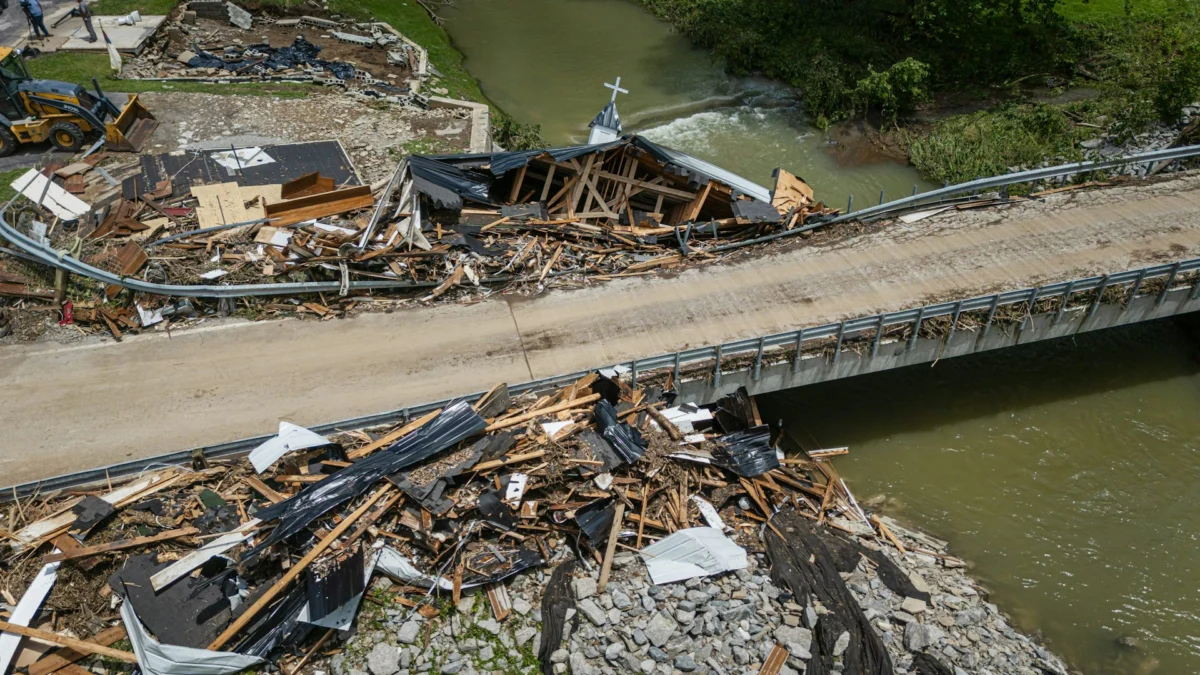
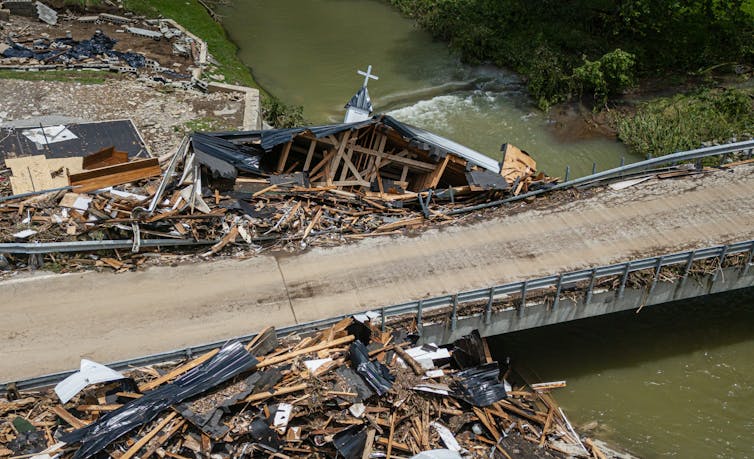
The United States is currently grappling with a relentless cycle of atmospheric volatility that has transformed flash flooding from an occasional seasonal threat into a chronic regional crisis. Throughout the summer of 2026, heavy downpours have systematically dismantled infrastructure and displaced thousands across a vast geographic corridor stretching from the Gulf Coast of Texas to the rural valleys of the Northeast. In Missouri, the National Guard was recently forced to deploy helicopters to evacuate dozens of campers from a summer camp as rising waters turned recreational grounds into life-threatening traps. In Richmond, Kentucky, the Million Bible Church—a local landmark—was reduced to rubble after being swept off its foundation by the Tates Creek, a scene that has become an emblem of the intensifying hydraulic power of modern storms.
This wave of destruction is not an isolated event but the latest chapter in a multi-year sequence of extreme weather that has left many communities in a state of "disaster fatigue." As global temperatures continue to rise, the atmosphere’s capacity to hold moisture has increased, leading to what meteorologists describe as "rain bombs"—localized, high-intensity precipitation events that overwhelm traditional drainage systems and historical flood maps. For many residents, the process of recovery has shifted from a finite goal to a perpetual state of being, as the interval between disasters shrinks to the point where reconstruction is often interrupted by the next deluge.
A Chronology of Recurring Devastation in 2026
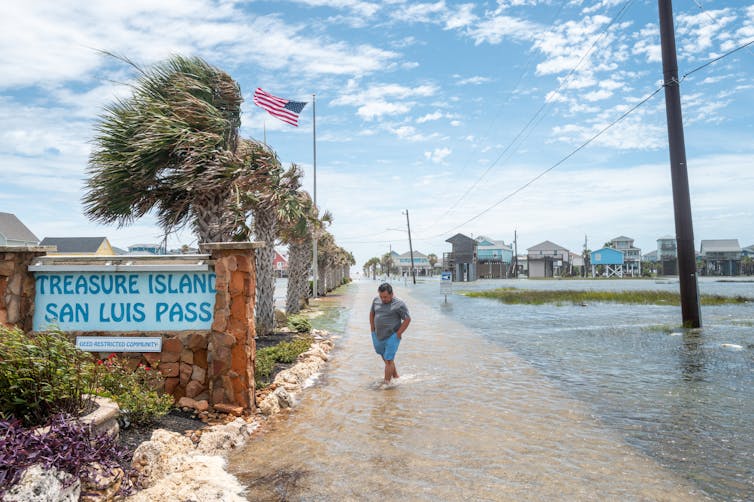
The timeline of the 2026 flood season illustrates a pattern of compounding trauma. The crisis began in mid-June when a stalled weather system over Texas drenched the state, causing urban flash flooding in Houston and Galveston. By late June, the system migrated toward the Heartland and the South. In Madison County, Kentucky, several hours of unprecedented rainfall sent Tates Creek over its banks, destroying homes and bridges in Richmond.
By early July, the focus shifted to the Midwest and the Mid-Atlantic. In Missouri, Governor Mike Parson was forced to declare a state of emergency as flash floods claimed at least one life and necessitated the high-stakes rescue of 200 campers. Simultaneously, in Tioga County, Pennsylvania, and Cocke County, Tennessee, residents found themselves reliving nightmares from only two years prior. In Tennessee, communities were still mending the scars left by Hurricane Helene’s 2024 mountain floods when June 2026 storms turned small creeks into raging torrents once again. Similarly, Pennsylvania residents in Potter Brook, who were hit by the remnants of Hurricane Debby in 2024, saw their newly repaired homes inundated before the paint had even dried on their walls.
This rapid succession of events has created a "new normal" where the disaster management cycle—typically defined by phases of preparedness, response, and recovery—has become a blurred, overlapping continuum. The traditional assumption that a community returns to a baseline of stability after a disaster is increasingly becoming an obsolete concept in the face of climate-driven frequency.
Defining Community Disaster Fatigue
The term "community disaster fatigue" is increasingly used by sociologists and emergency management scholars to describe the systemic deterioration of a community’s ability to function and recover. According to Dr. Victoria Ingham, a prominent scholar in emergency management, this fatigue manifests when repeated disruptions overwhelm a community’s collective resources, fraying the social networks that are essential for resilience.
Unlike individual trauma, which affects persons or families, community disaster fatigue represents a collective exhaustion. It is characterized by:
- Resource Depletion: Municipalities and local non-profits find their "rainy day" funds exhausted, and their physical stockpiles of emergency supplies (sandbags, bottled water, medical kits) constantly in use.
- Infrastructure Fragility: Roads and bridges that are repaired quickly following one flood may not be built to the standards required to withstand a second or third event within a short timeframe.
- Leadership Burnout: Local officials, who must manage both their personal recovery and the public’s needs, report feeling overwhelmed by the constant pressure of decision-making under duress.
Research into resilience fatigue suggests that when hazards occur in quick succession, the psychological "bounce-back" becomes harder to achieve. Residents report heightened anxiety at the sound of rain on a tin roof, and the emotional labor of navigating insurance claims and government assistance programs becomes a secondary source of trauma.
The Economic Reality of Repeated Rebuilding
The financial implications of disaster fatigue are profound and extend beyond the immediate cost of property damage. As floods become more frequent, the economic landscape of at-risk regions is shifting.
Insurance Instability: In many flood-prone areas, private insurers have begun to pull out or significantly raise premiums, citing the lack of "predictable risk." When communities are hit by two major floods in 24 months, the actuarial models used to determine premiums are rendered ineffective. This leaves homeowners dependent on the National Flood Insurance Program (NFIP), which is already facing significant debt and administrative hurdles.
Housing Shortages: Repeated disasters exacerbate existing housing crises. When a home is flooded, it often becomes uninhabitable for months due to mold and structural damage. If a second flood hits during the renovation phase, the property may be deemed a total loss. In areas like the Gulf Coast and rural Appalachia, this has led to a permanent displacement of the workforce, as residents find it cheaper and safer to relocate than to rebuild for a third or fourth time.
Municipal Bankruptcy Risks: Small towns often rely on a narrow tax base. When businesses are forced to close repeatedly due to flood damage, the local government loses the revenue needed to maintain the very infrastructure required to mitigate future floods. This creates a "death spiral" where the lack of mitigation funding leads to more damage, which further shrinks the tax base.
Cascading and Compounding Hazards
Emergency managers are no longer dealing with "isolated" floods. Instead, they are managing "cascading hazards"—where one disaster triggers a series of secondary crises. For example, the 2026 floods in Missouri and Kentucky occurred during a period of extreme heat. When power lines are downed by floodwaters, residents lose access to air conditioning, leading to a spike in heat-related illnesses among the elderly and vulnerable populations.
Furthermore, these floods disrupt critical supply chains. In the Midwest, flooded interstate highways have delayed the delivery of medical supplies and food, creating shortages that persist long after the water recedes. For the agricultural sector, the timing of these floods has been catastrophic. Farmers in the heartland, already struggling with erratic planting seasons, have seen entire crops washed away, leading to long-term economic hardship that ripples through the national food supply.
The Human Cost: Social Cohesion and Volunteer Burnout
One of the most overlooked aspects of disaster fatigue is the strain on social capital. In the immediate aftermath of a disaster, there is usually a surge of "altruistic social behavior"—neighbors helping neighbors, and volunteers arriving from across the country. However, research shows that this surge is unsustainable when disasters become chronic.
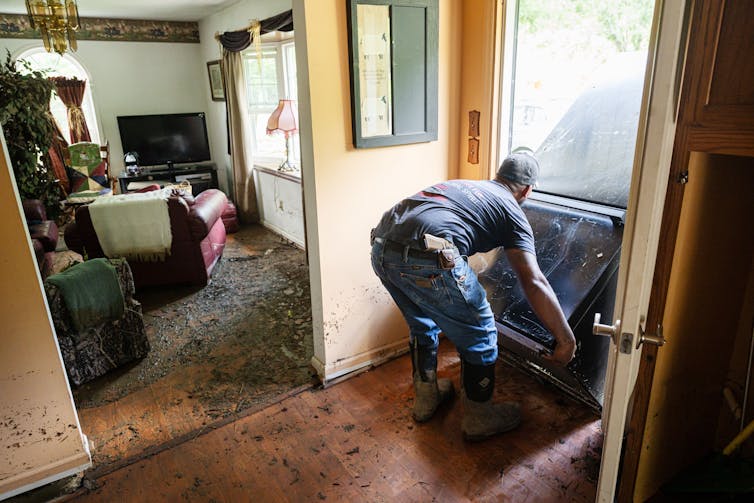
Volunteers, particularly those in faith-based organizations and local non-profits, are experiencing unprecedented burnout. In Richmond, Kentucky, local relief groups noted that the number of volunteers available to help clear mud from homes in 2026 was significantly lower than during previous events. Many regular volunteers were themselves victims of the flood, or they were simply too exhausted by the continuous cycle of labor.
When the social fabric of a community begins to fray, the recovery process slows down. Coordination becomes more difficult, and the "informal" support networks that usually catch those who fall through the cracks of government aid begin to disappear.
Rethinking the Recovery Model for a Volatile Future
The current federal and state models for disaster recovery are largely reactive. They are designed to provide a "burst" of aid following a presidential disaster declaration, with the goal of returning the community to its pre-disaster state. However, experts argue that "pre-disaster" states are no longer safe baselines.
To combat community disaster fatigue, a shift toward "proactive resilience" is required. This includes:
- Strategic Relocation and Buyouts: Instead of funding the rebuilding of homes in high-risk floodplains for the fifth time, government programs may need to prioritize "managed retreat," helping entire neighborhoods move to higher ground.
- Integrated Aid Systems: Recovery efforts must go beyond physical rebuilding. Long-term support for mental health, childcare, and healthcare must be integrated into the disaster response framework to address the psychological toll of fatigue.
- Nature-Based Mitigation: Rather than relying solely on concrete levees and dams—which can fail catastrophically—communities are increasingly looking at "spongy" infrastructure. This involves restoring wetlands and creating urban green spaces that can naturally absorb excess rainfall.
Conclusion: A Call for Enduring Systems
The events of 2026 serve as a stark reminder that the climate has changed faster than our systems for managing its impacts. Community disaster fatigue is not a sign of a lack of will or strength; it is a rational response to an irrational frequency of catastrophe.
As the recovery efforts in Missouri, Kentucky, Tennessee, and Pennsylvania continue into the autumn, the focus must shift from "getting back to normal" to "building for the future." Recognizing and addressing the exhaustion of residents, leaders, and infrastructure is the first step toward creating a recovery model that is as resilient as the people it serves. Without a fundamental shift in how we fund, plan, and execute disaster recovery, the cycle of fatigue will only deepen, leaving more American communities in a permanent state of repair.