Candice Horbacz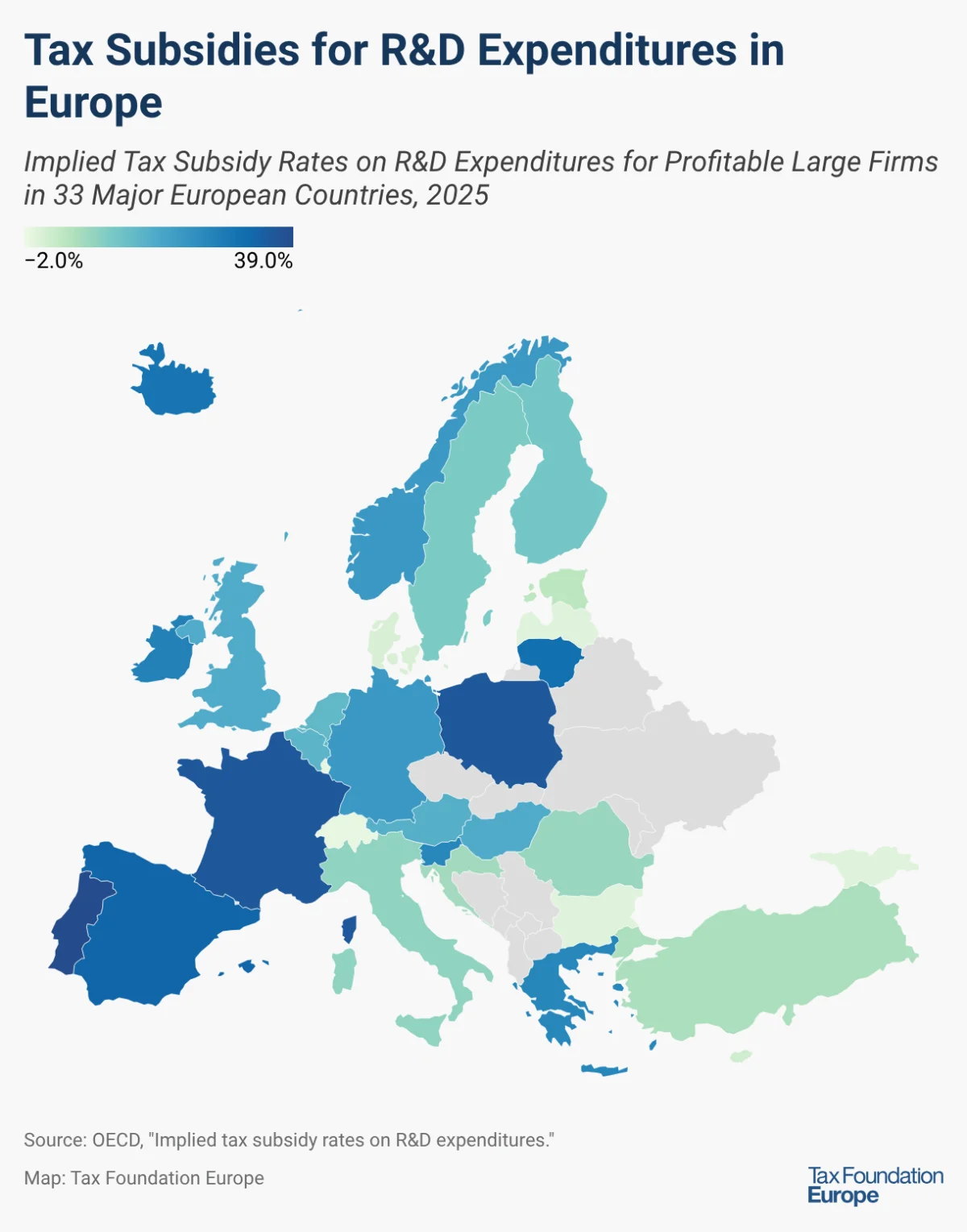
The implied tax subsidy rates for large profitable firms exhibit substantial variance across nations providing notable research and development (R&D) relief, ranging from a modest 1 percent in Denmark to a robust 39 percent in Portugal. This significant spread underscores a fragmented global approach to incentivizing corporate innovation, with profound implications for national competitiveness, economic growth, and the allocation of investment capital. France and Poland emerge as the second and third most generous nations within this framework, both offering an implied tax subsidy rate of 36 percent, signaling their strong commitment to fostering an environment conducive to technological advancement and industrial modernization. These figures, primarily drawn from comprehensive analyses by organizations like the Organisation for Economic Co-operation and Development (OECD), offer a critical benchmark for understanding how different economies leverage fiscal policy to stimulate private sector R&D expenditure.
The Economic Rationale Behind R&D Incentives
R&D tax incentives are a cornerstone of many governments’ industrial policies, primarily designed to correct market failures associated with innovation. The economic rationale is rooted in the concept of positive externalities, or "spillovers," where the benefits of R&D activities extend beyond the innovating firm to the broader economy and society. These spillovers can manifest as new knowledge, improved productivity across sectors, and the creation of entirely new industries. However, firms, when making investment decisions, typically do not fully internalize these wider societal benefits, leading to a potential underinvestment in R&D from a societal perspective. Tax subsidies, through mechanisms such as deductions, credits, or accelerated depreciation, aim to bridge this gap by reducing the effective cost of R&D for businesses, thereby encouraging greater investment in innovative activities. The implied tax subsidy rate quantifies this effective reduction, expressed as a percentage of the R&D outlay; a higher percentage indicates a more generous incentive.
The global landscape, as revealed by recent OECD data, presents a complex tapestry of national priorities and fiscal capacities. Countries like Portugal, France, and Poland, with their high implied subsidy rates, often reflect deliberate policy choices aimed at positioning themselves as attractive destinations for R&D-intensive industries or compensating for other perceived economic disadvantages. Policymakers in these nations frequently articulate objectives such as enhancing long-term economic growth, improving productivity, and creating high-value jobs by nurturing a vibrant innovation ecosystem. Such generous incentives are often viewed as strategic investments in future economic prosperity, particularly in sectors with high growth potential, such as biotechnology, digital technologies, and advanced manufacturing.
Conversely, nations like Denmark (1 percent), Cyprus (2 percent), and Estonia (4 percent) represent the more restrained end of the spectrum among those offering notable relief. Their comparatively lower implied subsidy rates do not necessarily indicate a lack of commitment to innovation but may reflect a different philosophical approach to economic stimulus or a preference for alternative, non-tax-based support mechanisms. For instance, some countries might prioritize direct grants, public-private partnerships, or a generally lower corporate tax burden across the board, rather than specific R&D tax preferences. Policymakers in these nations might argue for a more neutral tax system that minimizes distortions and administrative complexities, allowing market forces to guide investment decisions more freely. Furthermore, a group of countries including Bulgaria, Georgia, Latvia, Luxembourg, Malta, and Switzerland, according to the available data, do not exhibit any significant expenditure-based R&D tax relief, suggesting either a complete absence of such incentives or reliance on other, perhaps less quantifiable, forms of innovation support.
European Averages and Global Comparisons
Focusing on Europe, the average implied subsidy rate for profitable large firms across 33 major European countries with available data stands at 16 percent for 2025. This average, while useful for benchmarking, masks the significant internal variations, underscoring the diverse economic structures and policy priorities within the continent. The European Union, as a collective entity, has consistently emphasized the importance of R&D and innovation for achieving its long-term economic strategies, aiming to increase R&D intensity and foster a knowledge-based economy. The varied approaches among its member states reflect different national economic contexts, industrial specializations, and fiscal capacities.
Beyond the European continent, the approaches of global economic powerhouses like the United States and China offer crucial comparative insights. The United States, a global leader in innovation and technological advancement, provides an implied subsidy rate of 7 percent to large profitable firms. This figure, while seemingly modest compared to some European counterparts, represents a complex interplay of federal and state-level incentives, alongside a robust venture capital ecosystem and strong intellectual property protections. Historically, the U.S. has relied on a mix of direct funding (e.g., through agencies like the National Institutes of Health and the National Science Foundation), defense contracts, and tax incentives.
China, on the other hand, grants a substantially higher implied subsidy rate of 32 percent. This aggressive stance underscores China’s strategic national imperative to accelerate its technological self-sufficiency and become a global innovation leader. The Chinese government has systematically implemented a suite of policies, including generous tax incentives, direct subsidies, and state-backed investment funds, to propel its domestic industries up the value chain and reduce reliance on foreign technology. This high subsidy rate is a clear signal of its determination to dominate key emerging technologies, from artificial intelligence to renewable energy and advanced manufacturing. The comparison between these three major economic zones highlights the strategic importance attached to R&D in the global race for innovation and economic influence.
Tailoring Incentives: Support for SMEs and Loss-Making Firms
The design of R&D tax incentives often requires careful consideration of different types of firms, particularly small and medium-sized enterprises (SMEs) and loss-making firms, which face unique challenges in financing R&D. The OECD’s analysis frequently extends to these categories, revealing nuances in policy generosity. SMEs, often characterized by limited access to capital, higher risk profiles, and fewer internal resources for navigating complex tax codes, are frequently targeted with more generous or simplified R&D support schemes. The rationale is that SMEs are crucial drivers of innovation, job creation, and economic dynamism, but face greater hurdles in undertaking risky, long-term R&D projects.
In many countries covered by the OECD’s analysis, the expenditure-based R&D tax relief provided to large firms and SMEs is identical, indicating a broad-brush approach. However, some nations exhibit a deliberate differentiation. France, for instance, in the specific case of loss-making firms, demonstrates greater generosity towards SMEs. Similarly, Germany, Iceland, and the Netherlands also provide relatively more generous R&D tax relief to SMEs than to large firms. This tailored approach acknowledges the distinct financial constraints and risk appetites of smaller businesses, aiming to level the playing field and ensure that nascent innovative ventures are not stifled by a lack of initial profitability or scale. By offering enhanced incentives, these countries aim to stimulate a broader base of innovation across their economies.
Conversely, Croatia is noted for offering slightly higher relief to large firms than to SMEs, which could be indicative of a policy focus on established industrial players or specific sectors where large firms dominate R&D investment. This approach might prioritize consolidating R&D capabilities within larger entities that possess the infrastructure and resources for significant technological breakthroughs.
A critical aspect of R&D tax incentives concerns their interaction with firms’ profitability status. Innovative activities inherently carry risk, and many R&D-intensive firms, especially startups and those in early growth stages, may experience periods of losses before achieving profitability. To address this, some countries’ R&D tax incentives include provisions for refunds or carryover mechanisms. Refundable tax credits allow loss-making firms to receive a cash payment for their R&D expenditures, even if they have no tax liability, providing immediate liquidity. Carryover provisions permit firms to utilize R&D deductions or credits against future tax liabilities once they become profitable. The presence or absence of these provisions significantly impacts the implied tax subsidy rates for loss-making firms relative to profitable firms. When refunds or robust carryover mechanisms are not in place, the immediate value of R&D deductions or credits is diminished for loss-making entities, resulting in lower average implied tax subsidy rates for them compared to profitable firms, both for SMEs and large firms. This dynamic highlights a potential weakness in incentive design if the goal is to support the full spectrum of innovation, particularly during the crucial early, high-risk phases where profitability is not yet assured.
Recent Policy Shifts and Their Rationale
The landscape of R&D tax incentives is not static; it is subject to ongoing policy adjustments in response to evolving economic conditions, national priorities, and international competitive pressures. Several European countries have recently increased their tax subsidies for R&D expenditures, reflecting a renewed focus on innovation-driven growth in the post-pandemic recovery phase and amidst geopolitical shifts.
Lithuania and the Slovak Republic, for example, raised their corporate tax rates starting in 2025. While a corporate rate increase might initially seem counterintuitive for stimulating investment, it can enhance the value of certain preferential R&D deductions. For deductions, a higher corporate tax rate means that each unit of deductible R&D expenditure results in a larger tax saving. Consequently, Lithuania saw its implied subsidy rate for large profitable firms rise from 31 percent to 34 percent, and the Slovak Republic experienced an increase from 28 percent to 33 percent. These adjustments demonstrate how changes in the broader corporate tax regime can inadvertently or deliberately amplify the impact of existing R&D incentives, often aiming to strengthen the overall attractiveness of their tax system for innovation.
The Netherlands took a more direct approach, explicitly raising tax credit rates for in-scope R&D activities. This direct increase in the generosity of its R&D tax credit (known as WBSO, or Wet Bevordering Speur- en Ontwikkelingswerk) boosted its implied subsidy rate from 31 percent in 2024 to 35 percent in 2025. Such targeted adjustments signal a clear governmental intention to provide stronger direct support for R&D investments, often in specific high-tech sectors where the country aims to build competitive advantage and maintain its position as an innovation hub.
Across the Atlantic, the United States also implemented a significant policy reversal concerning R&D cost recovery. From 2022, a provision from the 2017 Tax Cuts and Jobs Act (TCJA) mandated that R&D expenses be amortized over five years (or 15 years for foreign R&D) instead of being immediately expensed. This change dramatically increased the upfront cost of R&D for businesses, effectively diminishing the value of R&D investment and attracting widespread criticism from industry and economists alike. Industry groups, particularly in the tech and manufacturing sectors, consistently lobbied for a reversal, arguing that requiring amortization rather than immediate expensing acted as a significant disincentive to innovation, increasing the cost of capital for R&D projects. Responding to persistent pressure and economic analysis highlighting the negative impact on U.S. competitiveness, the U.S. government scrapped these temporary R&D amortization requirements and restored its pre-2022 expensing regime. This restoration, combined with existing R&D tax credits, raised the implied subsidy rate for large profitable firms from a meager 3 percent to 7 percent. This move was widely welcomed by the business community as it alleviated a significant financial burden on innovative companies and reaffirmed the government’s commitment to fostering domestic R&D.
Challenges and Debates in R&D Tax Policy
Despite the clear economic benefits, designing and implementing effective R&D tax incentives is fraught with challenges. One of the primary difficulties lies in defining "qualified expenditures." The distinction between genuine R&D with broad societal spillovers and routine product development or minor improvements can be blurry, leading to disputes between firms and tax authorities. This ambiguity can result in increased administrative and compliance costs for both the government (to contain fiscal losses and monitor claims) and businesses (to document and justify their R&D activities). Tax authorities often face the challenge of distinguishing between legitimate innovative activities and efforts by firms to reclassify existing expenses to benefit from the incentives, which can lead to significant fiscal leakage.
Another significant debate revolves around the "additionality" of R&D incentives. Additionality refers to the extent to which incentives induce R&D spending that would not have occurred otherwise. If incentives merely subsidize activities firms would undertake anyway, they represent a deadweight loss to the public purse. Critics argue that generous R&D tax breaks can sometimes lead to firms prioritizing tax benefits over genuine innovative impact. Measuring additionality is notoriously difficult, making it challenging for policymakers to assess the true return on their investment in these schemes.
Furthermore, the design of R&D tax incentives can inadvertently create biases. For instance, an over-reliance on volume-based incentives (e.g., a percentage of R&D expenditure) might favor larger firms with established R&D departments over smaller, more agile startups that might be more disruptive. The administrative burden of claiming complex tax credits can also disproportionately affect SMEs, despite intentions to support them.
Alternative Strategies for Fostering Innovation
Recognizing these challenges, some economists and policy experts advocate for alternative or complementary approaches to support innovation that focus on improving the general tax treatment of risky investments. Instead of R&D-specific preferences, they propose creating a more neutral tax environment that inherently favors productive investment across the board. Key recommendations often include:
- Full Capital Cost Recovery (Expensing): Allowing businesses to immediately deduct the full cost of capital investments (including R&D, machinery, and equipment) rather than depreciating them over several years. This reduces the cost of capital and encourages investment by aligning the tax treatment with the economic reality of investment outlays. The recent U.S. reversal on R&D amortization is a move in this direction for R&D specifically, but the principle can be applied more broadly to all capital investments.
- Net Operating Loss (NOL) Offsetting: Permitting firms to fully and immediately offset their operating losses against past or future profits without limitations. This is particularly crucial for innovative firms that often incur losses in their early stages due to high upfront R&D costs and delayed revenue streams. By allowing full loss offsetting, governments reduce the financial risk associated with pioneering ventures and improve cash flow for struggling but promising companies, fostering resilience in the innovation ecosystem.
Advocates of these general tax treatments argue that they reduce distortions, simplify the tax code, and are less prone to the definitional challenges and administrative complexities associated with targeted R&D incentives. They contend that a neutral tax system that lowers the cost of all productive investment is more efficient in stimulating overall economic activity and innovation, as it lets market forces determine the most promising areas for investment without government picking winners and losers through specific subsidies.
Looking Ahead: Implications for Global Competitiveness
The wide disparity in R&D tax subsidy rates across countries highlights a strategic divergence in national innovation policies. As the global economy becomes increasingly knowledge-intensive and competitive, the choices made by governments regarding these incentives will have profound implications for where R&D investment flows, where innovative talent congregates, and ultimately, which nations lead in the next wave of technological advancement. For multinational corporations, these varying rates create opportunities for strategic R&D location decisions, potentially leading to ‘subsidy shopping’ where R&D activities are disproportionately directed to jurisdictions offering the most attractive tax benefits. This dynamic can intensify competition among nations to offer compelling incentives, raising questions about the sustainability of such policies and their overall impact on global tax revenues.
Policymakers face the ongoing challenge of striking a delicate balance: fostering genuine innovation with positive spillovers, containing fiscal costs, minimizing administrative burdens, and ensuring that incentives are accessible and effective for all types of firms. The continuing evolution of R&D tax policies, as seen in recent changes in the U.S. and several European countries, underscores the dynamic nature of this policy area and its central role in shaping the