Layla Zulfa
In a significant assertion of municipal authority, the city of Hollywood, Florida, has successfully pushed forward a contentious 30-story residential tower project slated to include vital workforce housing, effectively sidestepping the objections of its home county, Broward. The city’s decisive action, leveraging newly acquired powers under a state law, marks a pivotal moment in the ongoing tension between local governance and broader state mandates, with the county’s next move now resting on the outcome of a judicial proceeding.
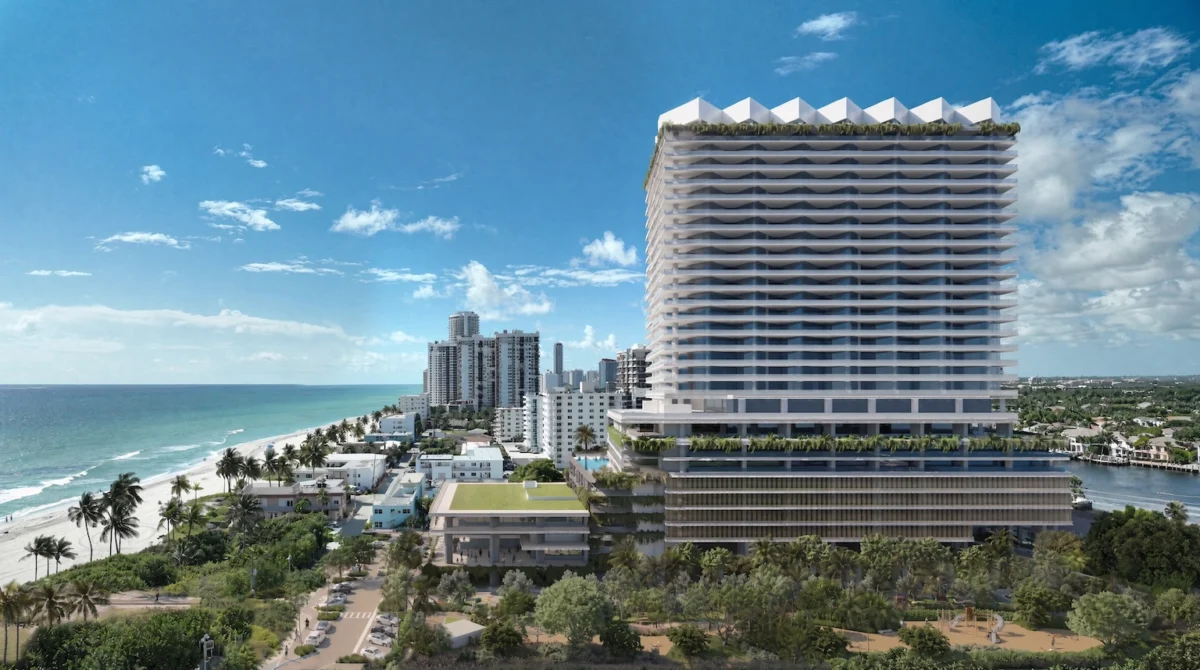
City commissioners, in a marathon session that extended into the early hours of last Thursday, cast a decisive 6-1 vote to approve a series of agreements enabling the Related Group to develop the Portofino Hollywood project. This landmark decision followed a protracted 12-hour period of public commentary, underscoring the depth of community engagement and division surrounding the development. The project, which will rise on a 4-acre parcel at 1301 S. Ocean Drive, is anchored by a 99-year ground lease agreement between the city and the developer for city-owned land.
The sole dissenting vote came from Commissioner Caryl Shuham, who has been a vocal opponent of the development throughout its lengthy gestation. Her objections have centered on multiple facets of the project, including its proposed utilization of the existing community center site and concerns regarding plans that could potentially create separate entrances and amenities for workforce housing tenants, differentiating them from condominium owners.
A Six-Year Battle Culminates in Legal Maneuvering
The recent city commission vote represents the culmination of a six-year struggle, during which a coalition of environmental advocates and residents from a neighboring 1970s condominium tower mounted persistent opposition, seeking to derail the project at every turn. Their efforts initially gained traction when Broward County officials rejected the development proposal in February, citing the site’s designation solely for community use, a ruling that appeared to halt the project in its tracks.
However, the landscape of local zoning and development authority was dramatically altered by the recent passage of Florida’s Live Local Act 4.0. This legislation, designed to incentivize the creation of workforce housing, introduced an ironic twist to the usual dynamics of municipal control. While the law generally pre-empts local authority over zoning, density, and height restrictions for private developments, it concurrently empowers cities with enhanced home-rule authority specifically concerning government-owned properties. This dual nature of the legislation created a unique situation where Hollywood could leverage its provisions to assert control over its own land.
"You’re in a situation where most municipalities frown upon the application of Live Local because of their belief that Live Local took away their ability to govern their own jurisdiction," explained Keith Poliakoff, attorney for the Related Group, in a prior statement. "Then in the end, Hollywood used Live Local to retain its home rule." This strategic application of the state law allowed Hollywood to move forward with a project that county officials had previously deemed unacceptable.
Project Evolution: From Rejection to Live Local Mandate
The genesis of the Portofino Hollywood project dates back to 2020, when the Related Group initially submitted an unsolicited proposal for the site. At that juncture, the developer envisioned a project comprising 111 condominium units. Broward County officials, however, rejected this initial iteration of the plan, deeming it unsuitable for the designated site.
Following this setback, Hollywood’s mayor initiated a pivot towards a project explicitly designed to align with the objectives of the Live Local Act. This recalibration involved increasing the project’s height and incorporating 84 workforce housing units. These units are intended for renters earning up to 120% of the area median income, a key threshold for eligibility under the state’s workforce housing provisions. The revised proposal received approval from Hollywood city commissioners in May.
Broward County officials remained steadfast in their opposition, refusing to concede ground even as the Live Local 4.0 legislation was progressing through the state legislature. The bill’s subsequent passage, signed into law by Governor Ron DeSantis, provided Hollywood with the legal backing to revive the Portofino Hollywood project. As part of the development agreement, the Related Group is also committed to constructing a new community center, a crucial component of the deal that aims to address concerns about the loss of public space.
Broward Commissioner Beam Furr, whose district encompasses the project site, expressed his disappointment with the bill’s enactment, having reportedly hoped for a gubernatorial veto. His opposition persisted, and at an August commission meeting, he advocated for an indefinite deferral of a public hearing concerning Hollywood’s rezoning request. This delay tactic, while not an outright rejection, has left the county in a position to potentially re-engage the issue should a resident-led lawsuit aiming to invalidate the city’s approval prove successful. Commissioner Shuham is slated to assume the county commission seat previously held by the term-limited Furr, positioning her to lead continued opposition efforts.
Legal Challenges and Uncertain Futures
The core of the county’s opposition and the resident-led legal challenge stems from a lawsuit filed in June. The plaintiffs contend that the city’s ground lease agreement with the Related Group violates a deed restriction that mandates the 4-acre site be maintained for public use. This legal action has been a significant hurdle for the development.
However, the trajectory of this lawsuit has become increasingly precarious due to unforeseen circumstances. The lead plaintiff in the case, a resident of the adjacent condominium tower, has recently filed for personal bankruptcy. This financial predicament, compounded by significant unpaid assessments and legal fees totaling approximately $55,000, has placed their legal standing in jeopardy and potentially stalled the litigation.
"As a result of the bankruptcy, it sort of stays the litigation unintentionally," Poliakoff noted. "There are some issues that the court needs to decide before it can even look at the matter. It’s crazy." This development introduces a layer of complexity to the legal battle, as the bankruptcy proceedings must be resolved before the merits of the deed restriction claim can be addressed by the court.
Poliakoff further expressed skepticism regarding the plaintiffs’ ultimate chances of success, even if the legal proceedings were to move forward unimpeded. "The courts in Florida generally side with the municipality because they believe that the municipality has the right to interpret and to govern itself," he stated. "It will get thrown out, and they will lose. But they did it as a mechanism to try to delay the eventual development."
Broader Implications: Home Rule, Workforce Housing, and Development Authority
The Hollywood, Florida, case highlights a growing tension between state-level legislative priorities and the traditional powers of municipal governments. The Live Local Act, while intended to address Florida’s acute housing affordability crisis by encouraging workforce housing development, has also been criticized by some local officials for encroaching upon their autonomy.
For cities like Hollywood, the Act presents a complex balancing act. While it offers incentives for affordable housing, it also redefines the boundaries of local control. In this instance, Hollywood skillfully navigated these complexities by utilizing the Act’s provisions concerning government-owned land to overcome county opposition. This strategic maneuver suggests a potential playbook for other municipalities seeking to advance development projects that may face local or regional resistance.
The outcome of the legal challenges and the continued implementation of the Live Local Act will be closely watched by developers, local governments, and housing advocates across Florida. The case underscores the ongoing debate about how to best address the state’s housing needs while respecting the diverse interests and governance structures within its numerous municipalities. The success of the Portofino Hollywood project, or its eventual derailment through legal means, will have significant implications for future development patterns and the evolving definition of local control in Florida’s rapidly changing urban landscape. The project’s inclusion of workforce housing also brings into focus the critical need for such developments in tourist-heavy coastal areas where the cost of living often outpaces the wages of essential service workers. The inclusion of separate entrances and amenities, while a point of contention for Commissioner Shuham, raises broader questions about integration and equity within mixed-income developments.