admin
admin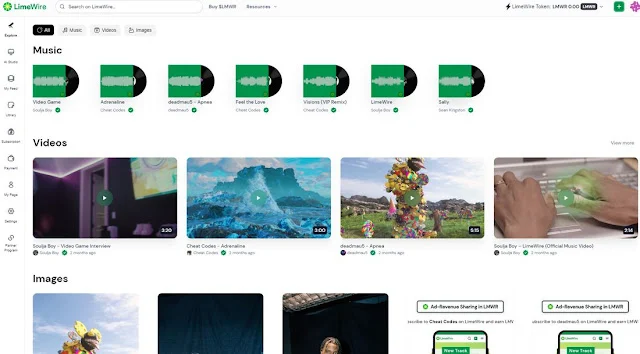
In a significant pivot from its controversial past, LimeWire has re-emerged in the digital landscape, transforming from a notorious peer-to-peer file-sharing service of the early 2000s into a sophisticated, forward-thinking platform dedicated to generative AI content creation and Web3 monetization. This strategic evolution positions LimeWire as a unique player at the intersection of artificial intelligence, digital art, and the burgeoning creator economy, offering tools for users to not only generate AI content but also to share, own, and monetize their creations through innovative blockchain integration.
The new LimeWire platform is designed to empower a broad spectrum of creators, from emerging artists to established figures, by providing accessible AI tools for content generation, initially focusing on advanced image creation. Beyond simply facilitating content production, the platform integrates robust monetization models, including automatic Non-Fungible Token (NFT) minting, ad revenue sharing, and a proprietary cryptocurrency token, LMWR, creating a comprehensive ecosystem for digital artists and content producers to earn from their work in novel ways. This reinvention marks a profound shift, leveraging modern technological advancements to build a legitimate and sustainable model for digital content distribution and ownership, starkly contrasting with its previous incarnation.
A Phoenix from the Ashes: The Legacy of Old LimeWire
To truly appreciate the scope of LimeWire’s transformation, it is essential to revisit its origins. The name "LimeWire" first gained prominence in the early 2000s as one of the most popular peer-to-peer (P2P) file-sharing applications. Operating on the Gnutella network, it allowed users worldwide to directly share digital files—primarily music, movies, and software—with each other, often without the consent of copyright holders. This era was characterized by a fervent debate over digital rights, copyright infringement, and the future of content distribution.
LimeWire, alongside services like Napster and Kazaa, became a symbol of this digital Wild West. Its user-friendly interface and vast content library attracted millions, but also drew the ire of the recording industry. The Recording Industry Association of America (RIAA) initiated numerous lawsuits against P2P services, alleging massive copyright infringement. These legal battles culminated in a landmark case against LimeWire, leading to a federal injunction in 2010 that ordered the company to cease operations. The protracted legal saga concluded with a substantial settlement of $105 million paid to a consortium of record labels in 2011, effectively shutting down the original LimeWire. This historical context underscores the dramatic nature of the current platform’s re-emergence, signaling not just a rebrand but a fundamental philosophical shift towards empowering creators within a legal and transparent framework.
LimeWire Studio: The New Frontier of Generative AI
The modern LimeWire is built around its "LimeWire Studio," a dedicated creative hub where users can harness the power of generative AI. Currently, the platform’s primary focus is on AI Image Generation, providing a versatile suite of tools for both the creation and editing of visual content. This strategic entry point into the generative AI market capitalizes on the widespread interest and technological advancements in text-to-image models.
LimeWire Studio supports several cutting-edge AI models, including Stable Diffusion 2.1, Stable Diffusion XL, and DALL-E 2. This multi-model approach offers users significant flexibility and access to diverse generative capabilities, allowing for a wide range of artistic styles and outputs. Creators can initiate their projects with prompts ranging from simple keywords to intricate, detailed instructions, tailoring the AI’s output to their specific artistic vision. The platform’s interface is designed to be user-friendly, providing intuitive controls for prompt engineering, customization options, and various samplers to fine-tune the quality and detail levels of generated images.
A distinctive feature of LimeWire Studio is its seamless integration of different AI models and a broad spectrum of design styles. Users can effortlessly switch between various artistic paradigms, exploring options such as cinematic, digital art, pixel art, anime, and analog film. Each style imparts a unique visual identity, enabling creators to experiment and produce highly specialized content. This flexibility positions LimeWire as a robust platform for both novice enthusiasts and experienced digital artists seeking to push the boundaries of AI-assisted creativity. Furthermore, LimeWire is actively developing its proprietary AI model, signaling a commitment to continuous innovation and the potential for even more unique creative capabilities in the future.
Looking ahead, LimeWire has ambitious plans to expand its generative AI offerings beyond images. The platform aims to introduce AI music and video generation tools in the near future. This strategic expansion is poised to transform LimeWire Studio into a comprehensive multi-modal content creation platform, offering creators even more avenues for expression and engagement with their audience. Industry analysts suggest that this move positions LimeWire to compete directly with emerging multi-modal AI platforms while potentially attracting a broader base of creators across different artistic disciplines, from music producers to filmmakers.
Democratizing Ownership: NFTs and the Creator Economy
One of the most innovative aspects of the new LimeWire platform is its deep integration with Web3 technologies, particularly Non-Fungible Tokens (NFTs). This integration directly addresses the challenges of digital ownership and monetization that plagued the original file-sharing era. Upon completing a creative endeavor within LimeWire Studio, creators are given the option to publish their content. An intriguing and transformative feature then automates the process of minting their creation as an NFT, utilizing either the Polygon or Algorand blockchain. This step imbues the digital artwork or content with a unique digital signature, securing its authenticity, verifiable ownership, and provenance in a decentralized manner.
The choice of Polygon and Algorand blockchains is significant. Both are known for their scalability, lower transaction costs, and energy efficiency compared to other networks, making them practical choices for mass-market NFT adoption. This automatic minting process significantly lowers the barrier to entry for creators who may not be familiar with the intricacies of blockchain technology, democratizing access to the NFT market.
Creators on LimeWire retain considerable control over the accessibility and distribution of their NFT creations. They can opt for a public release, making their content discoverable by anyone within the LimeWire community and beyond, fostering engagement and interaction. This public option also facilitates the trading of these NFTs, adding a layer of community involvement and a secondary market for digital collectibles. Alternatively, creators can choose to share their posts exclusively with their premium subscribers, creating an intimate and personalized experience for dedicated fans. This flexibility in sharing options underscores LimeWire’s commitment to empowering creators with choices in how they connect with their audience and distribute their digital creations, catering to both broad appeal and exclusive fan engagement strategies.
A key differentiator and incentive for creators is the royalty structure. Creators earn a 2.5% royalty each time their content is traded on the secondary market. This mechanism provides a continuous revenue stream beyond the initial sale or subscription, aligning the platform with the long-term success of its creators and fostering a vibrant, self-sustaining creator economy. This model contrasts sharply with traditional platforms where creators often lose control and monetization potential once their content is distributed.
Multi-faceted Monetization: Beyond NFTs
LimeWire’s approach to creator monetization extends beyond NFTs, offering a diversified revenue model designed to empower artists and designers. In addition to the direct revenue from NFT sales and royalties, creators can also earn a substantial share of ad revenue generated from their content. When a user publishes content on LimeWire, they receive 70% of all ad revenue generated from other users who view their images, music, and videos on the platform. This generous ad revenue split is notably higher than what many traditional content platforms offer, making LimeWire an attractive option for creators seeking to maximize their earnings from audience engagement.
This revenue model is particularly beneficial for designers and artists who actively experiment with AI image and content generation. It provides an immediate and ongoing income stream, allowing creators to explore their artistic vision, share their creations with a wider audience, and earn revenue simultaneously. The combination of NFT sales, secondary market royalties, and ad revenue sharing creates a robust and flexible earning ecosystem that caters to various creator strategies.
The revenue earned by creators is distributed in the form of LMWR tokens, LimeWire’s native cryptocurrency. This integration of a platform-specific token further embeds LimeWire within the broader Web3 ecosystem. Earnings are paid monthly in LMWR, which creators can then trade on many popular cryptocurrency exchange platforms such as Kraken, ByBit, and UniSwap. This liquidity ensures that creators can convert their digital earnings into fiat currency or other cryptocurrencies, providing real-world value to their creative efforts. Furthermore, LMWR tokens have utility within the LimeWire platform itself; creators can use their tokens to pay for prompts when utilizing LimeWire’s generative AI tools, creating a closed-loop economy that incentivizes continued engagement and creation.
Accessibility and Tiered Access: Pricing for Every Creator
LimeWire is committed to democratizing access to generative AI tools while offering premium benefits for more dedicated creators. The platform allows users to sign up and utilize its AI tools for free, providing a welcoming entry point for anyone curious about AI-powered content creation. The free tier offers 10 credits per month, enabling users to generate up to 20 AI images per day, along with a 50% share of ad revenue generated from their content. This free offering is crucial for attracting a broad user base and allowing individuals to experiment with the platform’s capabilities without financial commitment.
For creators seeking more extensive resources and enhanced benefits, LimeWire offers a range of premium subscription plans:
- Basic Premium Plan ($9.99/month): Provides 1,000 credits per month (up to 2,000 image generations), early access to new AI models, and a 50% ad revenue share.
- Mid-Tier Premium Plan ($29/month): Offers 3,750 credits per month (up to 7,500 image generations), early access to new AI models, and a higher 60% ad revenue share.
- Advanced Premium Plan ($49/month): Grants 5,000 credits per month (up to 10,000 image generations), early access to new AI models, and a substantial 70% ad revenue share.
- Professional Premium Plan ($99/month): Delivers 11,250 credits per month (up to 22,500 image generations), early access to new AI models, and the maximum 70% ad revenue share.
All premium plans come with additional perks designed to enhance the creator experience, including a Pro profile badge, access to a full creation history, faster image generation speeds, and an ad-free experience on the platform. This tiered pricing model strategically balances accessibility with premium features, catering to casual users, hobbyists, and professional creators alike. It ensures that as creators’ needs and ambitions grow, LimeWire can provide the necessary tools and benefits to support their journey.
Broader Impact and Industry Implications
LimeWire’s re-emergence as an AI and Web3 content platform carries significant implications for several key industries. For the creator economy, it represents a powerful democratizing force, providing inclusive tools that lower the barrier to entry for digital content creation and monetization. By integrating AI-powered generation with blockchain-based ownership and diverse revenue streams, LimeWire empowers designers, musicians (with future tools), and artists to publish their creations and earn revenue with unprecedented ease. This model challenges traditional platforms that often centralize control and extract a larger share of creator earnings, aligning with the Web3 ethos of decentralization and creator ownership.
In the generative AI landscape, LimeWire carves out a unique niche by combining advanced AI models with robust monetization and community features. While many AI art generators exist, few offer such a comprehensive ecosystem for publishing, owning, and earning from generated content. Its planned expansion into AI music and video generation positions it as a potential multi-modal leader, competing with giants while offering a distinct Web3-centric value proposition. This move reflects a broader industry trend where AI tools are not just for creation, but for enabling new forms of digital commerce and intellectual property.
For blockchain adoption, LimeWire’s automatic NFT minting on Polygon and Algorand serves as a practical, user-friendly onramp for creators into the Web3 space. By abstracting away the technical complexities of blockchain, it helps mainstream the concept of digital ownership and verifiable authenticity for a new generation of content producers. This integration could significantly contribute to increasing the utility and public perception of NFTs beyond speculative trading, focusing instead on their fundamental role in proving ownership and enabling new royalty models.
Furthermore, LimeWire’s model touches upon evolving legal and ethical considerations surrounding AI-generated content. As platforms like LimeWire facilitate the creation and commercialization of AI art, questions of authorship, copyright, and originality in the age of generative models become increasingly pertinent. While the platform grants creators ownership via NFTs, the underlying training data for AI models and potential for derivative works remain areas of ongoing discussion in the legal and artistic communities. Platforms that proactively address these issues, through clear terms of service and ethical AI development, will be better positioned for long-term success. Legal experts in digital rights note that platforms like LimeWire are at the forefront of defining ownership in the age of AI, setting precedents for future digital economies.
In conclusion, LimeWire’s transformation from a notorious file-sharing service to an innovative AI and Web3 content platform is a remarkable testament to technological evolution and strategic foresight. It emerges as a democratizing force in the creative landscape, providing an inclusive platform where anyone can unleash their artistic potential and effortlessly share their work. With the integration of AI for content generation and Web3 for ownership and monetization, LimeWire eliminates many traditional barriers, empowering designers, and soon, musicians and video artists, to publish their creations and earn revenue with just a few clicks. The ongoing commitment of LimeWire to innovation, evident in its plans to enhance generative AI tools with new features and models, promises a future brimming with creative potential and endless artistic exploration. For those eager to explore, LimeWire’s AI tools are readily accessible for free, providing an opportunity to experiment and delve into the world of generative art, marking a new chapter for a storied name in digital history.