admin
admin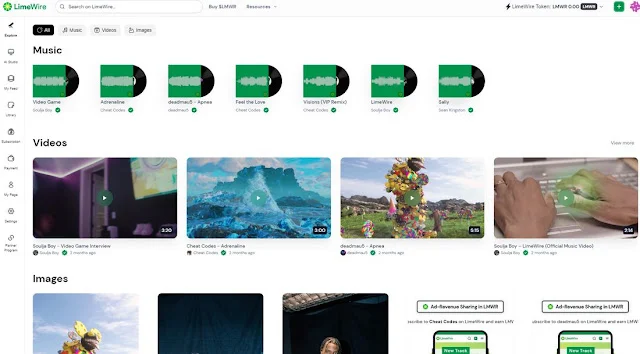
In the rapidly evolving landscape of artificial intelligence and digital content creation, a name once synonymous with peer-to-peer file sharing from the early 2000s has re-emerged with a radically different identity: LimeWire. This transformed entity is no longer a platform for illicit music downloads but a cutting-edge generative AI content publishing hub, positioning itself at the nexus of AI innovation and the burgeoning Web3 creator economy. This significant pivot marks a strategic re-entry into the digital sphere, aiming to empower creators with advanced AI tools, robust monetization pathways, and true digital ownership through blockchain technology.
From Controversial Past to Innovative Future: The LimeWire Transformation
The original LimeWire, which operated from 2000 to 2010, carved out a notorious reputation as a dominant force in the file-sharing world. Its open-source client allowed users worldwide to share digital files, primarily music, leading to widespread copyright infringement and a protracted legal battle with the Recording Industry Association of America (RIAA). This culminated in a permanent injunction against the company in 2010, effectively shutting down the platform and marking what many believed was its definitive end. However, more than a decade later, the brand has been resurrected under new ownership and with an entirely distinct vision, capitalizing on the exponential growth of generative AI and the decentralized principles of Web3.
This strategic re-emergence is not merely a rebranding exercise but a fundamental re-engineering of the platform’s core purpose. The new LimeWire is built from the ground up to address the demands of the modern creator economy, offering tools that streamline the creation of digital assets and provide mechanisms for creators to retain ownership and earn revenue. The decision to pivot into generative AI aligns with current technological trends, where AI models are democratizing content creation by enabling users, regardless of their technical or artistic skill, to produce high-quality images, and soon, music and videos.
Navigating the Generative AI Revolution
The generative AI market has exploded in recent years, with technologies like text-to-image models becoming increasingly sophisticated and accessible. Analysts project the global generative AI market to reach over $100 billion by the end of the decade, underscoring the immense potential and demand for such tools. Platforms like Midjourney, DALL-E, and Stable Diffusion have captured public imagination, demonstrating AI’s capability to transform simple text prompts into intricate visual masterpieces.
LimeWire enters this competitive arena not as just another AI generator, but as a comprehensive ecosystem. Its AI Studio currently specializes in image generation, supporting industry-leading models such as Stable Diffusion 2.1, Stable Diffusion XL, and DALL-E 2. This multi-model approach ensures versatility and allows creators to leverage different AI strengths for varied artistic outcomes. Users can initiate the creative process with prompts ranging from a few descriptive words to highly detailed instructions, fine-tuning the output to match their specific artistic vision. Furthermore, the platform offers a diverse array of design styles—including cinematic, digital art, pixel art, anime, and analog film—each imparting a distinct visual identity to the generated art. This flexibility, combined with customization options and prompt guidance, aims to make generative AI accessible and powerful for both novice and seasoned creators.
Beyond its current offerings, LimeWire has ambitious plans to expand its suite of tools to include AI music and video generation in the near future. This strategic expansion is particularly significant given the rapid advancements in AI-powered audio and visual content synthesis. The global market for AI in media and entertainment is also experiencing substantial growth, indicating a ripe environment for platforms that can integrate these capabilities. By enabling creators to generate diverse content types, LimeWire seeks to position itself as a holistic platform for digital artistry. The ongoing development of LimeWire’s proprietary AI model further signals its commitment to continuous innovation and enhancement of its creative capabilities.
Empowering Creators Through Web3 and Digital Ownership
A cornerstone of LimeWire’s re-envisioned platform is its deep integration with Web3 technologies, particularly Non-Fungible Tokens (NFTs). NFTs, unique digital assets verifiable on a blockchain, provide irrefutable proof of ownership for digital content. This concept is revolutionary for creators, offering a direct pathway to authenticate their work and establish a verifiable history of ownership and provenance.
Upon creating content on LimeWire, users are given the option to publish it, triggering an automated NFT minting process. The platform utilizes either the Polygon or Algorand blockchain for this purpose. These choices are strategic: Polygon is known for its scalability and lower transaction fees compared to the Ethereum mainnet, making NFT minting more cost-effective and environmentally friendlier. Algorand also offers high transaction speeds and low costs, appealing to a broad user base. This automated process significantly lowers the barrier to entry for creators who may be unfamiliar with the complexities of blockchain technology, transforming their digital creations into unique, tradable assets with minimal effort.
Creators on LimeWire retain significant control over the accessibility and distribution of their NFT creations. They can opt for a public release, making their content discoverable and tradable by anyone within the LimeWire community and beyond. Alternatively, creators can choose to share posts exclusively with premium subscribers, fostering a more intimate and personalized experience for their dedicated fanbase. This flexibility empowers artists to curate their content distribution strategies, catering to different audience segments. A compelling feature for creators is the 2.5% royalty they earn each time their content is traded on the platform. This passive income stream offers a sustainable model for artists, allowing them to benefit from the secondary market activity of their work long after the initial creation and sale.
A Multi-faceted Monetization Model for the Creator Economy
Beyond NFT royalties, LimeWire introduces several monetization avenues designed to provide creators with robust and diversified income streams, a critical factor in the evolving creator economy. The platform offers a generous ad revenue share model, where creators receive 70% of all ad revenue generated from users viewing their images, music, and videos. This is a significantly higher share compared to many traditional content platforms, which often retain a larger portion of ad earnings, making LimeWire an attractive proposition for those looking to maximize their income from digital content. This revenue model is particularly beneficial for designers and artists who can experiment with AI generation tools, share their creations, and simultaneously earn a passive income.
All creator earnings on LimeWire are paid in LMWR tokens, the platform’s native cryptocurrency. This integration of a utility token reinforces LimeWire’s commitment to the Web3 ecosystem. LMWR tokens are not just a payment method; they serve as a versatile asset within the platform. Creators can use their earned LMWR tokens to pay for prompts when utilizing LimeWire’s generative AI tools, creating a circular economy. Furthermore, these tokens are tradable on popular cryptocurrency exchange platforms such as Kraken, ByBit, and UniSwap, providing creators with liquidity and the flexibility to convert their earnings into fiat currency or other digital assets. This approach aligns with the broader trend of tokenized economies within decentralized applications, offering transparency and direct value transfer.
The platform also supports a subscription model, allowing creators to offer exclusive content to their premium subscribers. This direct fan-to-creator interaction bypasses traditional intermediaries, enabling artists to build stronger communities and derive more direct financial support from their most dedicated followers. This multifaceted monetization strategy – combining NFT royalties, ad revenue sharing, and subscriber-based exclusive content – positions LimeWire as a comprehensive solution for creators seeking financial independence and control over their digital assets.
Accessibility and Premium Offerings
LimeWire aims for broad accessibility, offering a free tier that allows users to explore its AI tools without initial financial commitment. Upon signing up, users receive 10 credits, enabling them to generate up to 20 AI images per day. The free tier also includes a 50% ad revenue share, providing an initial taste of the platform’s monetization potential.
For creators seeking more extensive capabilities and higher earning potential, LimeWire offers several premium subscription plans:
- Basic Plan ($9.99/month): Provides 1,000 credits (up to 2,000 image generations), early access to new AI models, and a 50% ad revenue share.
- Pro Plan ($29/month): Offers 3,750 credits (up to 7,500 image generations), early access to new AI models, and a 60% ad revenue share.
- Advanced Plan ($49/month): Includes 5,000 credits (up to 10,000 image generations), early access to new AI models, and a 70% ad revenue share.
- Max Plan ($99/month): Delivers 11,250 credits (up to 22,500 image generations), early access to new AI models, and a 70% ad revenue share.
All premium plans come with additional benefits, including a Pro profile badge, full creation history, faster image generation speeds, and an ad-free experience. These tiers are designed to cater to a spectrum of creators, from hobbyists to professional artists, providing scalable resources and enhanced features as their needs grow.
Industry Reactions and Broader Implications
LimeWire’s strategic pivot has garnered attention, particularly with its integration of high-profile artists like Deadmau5, Soulja Boy, and Sean Kingston, who have utilized the platform to publish NFT music, videos, and images. Their involvement lends credibility to LimeWire’s Web3 ambitions and showcases the platform’s potential to attract established creators.
Industry analysts suggest that "LimeWire’s move is a shrewd capitalization on two of the most dynamic technological trends: generative AI and Web3. By combining accessible AI creation with robust blockchain-based monetization and ownership, they are carving out a unique niche that could attract a significant segment of the global creator economy, which is projected to surpass $480 billion by 2027." The platform’s emphasis on creator empowerment and direct fan engagement resonates strongly with the evolving demands of artists seeking alternatives to traditional, often opaque, distribution and monetization channels.
The implications of platforms like the new LimeWire are far-reaching. For the creator economy, it represents a democratizing force, lowering the technical barriers to entry for digital content creation and providing more equitable revenue sharing models. For generative AI, it highlights a practical application of advanced models, moving beyond experimental stages into integrated creative workflows. For Web3 adoption, LimeWire serves as an accessible gateway, allowing artists to engage with NFTs and blockchain technology without needing deep technical knowledge, thereby accelerating the mainstream acceptance of decentralized digital ownership.
However, challenges remain. The volatility of cryptocurrency markets, including LMWR tokens, introduces a degree of financial risk for creators. Furthermore, the broader ethical considerations surrounding AI-generated content, such as potential copyright issues, deepfake concerns, and the impact on human artistry, will require ongoing attention and robust platform policies. Despite these considerations, LimeWire’s re-emergence signifies a bold step into a future where technology empowers creators with unprecedented tools for creation, ownership, and monetization.
Conclusion: A New Chapter for Digital Creativity
LimeWire’s transformation from a controversial file-sharing service to a pioneering generative AI and Web3 content platform is a testament to the dynamic nature of technology and market adaptation. By integrating advanced AI tools for image, and soon music and video generation, with blockchain-powered NFT minting and diversified monetization streams, LimeWire is positioning itself as a significant player in the evolving digital creative landscape.
The platform’s commitment to democratizing access to cutting-edge AI, fostering true digital ownership, and offering creators a substantial share of generated revenue marks a distinct departure from traditional content models. As LimeWire continues to develop its proprietary AI models and expand its content generation capabilities, it holds the potential to reshape how digital art is created, owned, shared, and monetized. For creators eager to explore the frontiers of generative AI and Web3, LimeWire offers an inclusive and innovative ecosystem, promising a future brimming with creative potential and new economic opportunities.