Lina Irawan
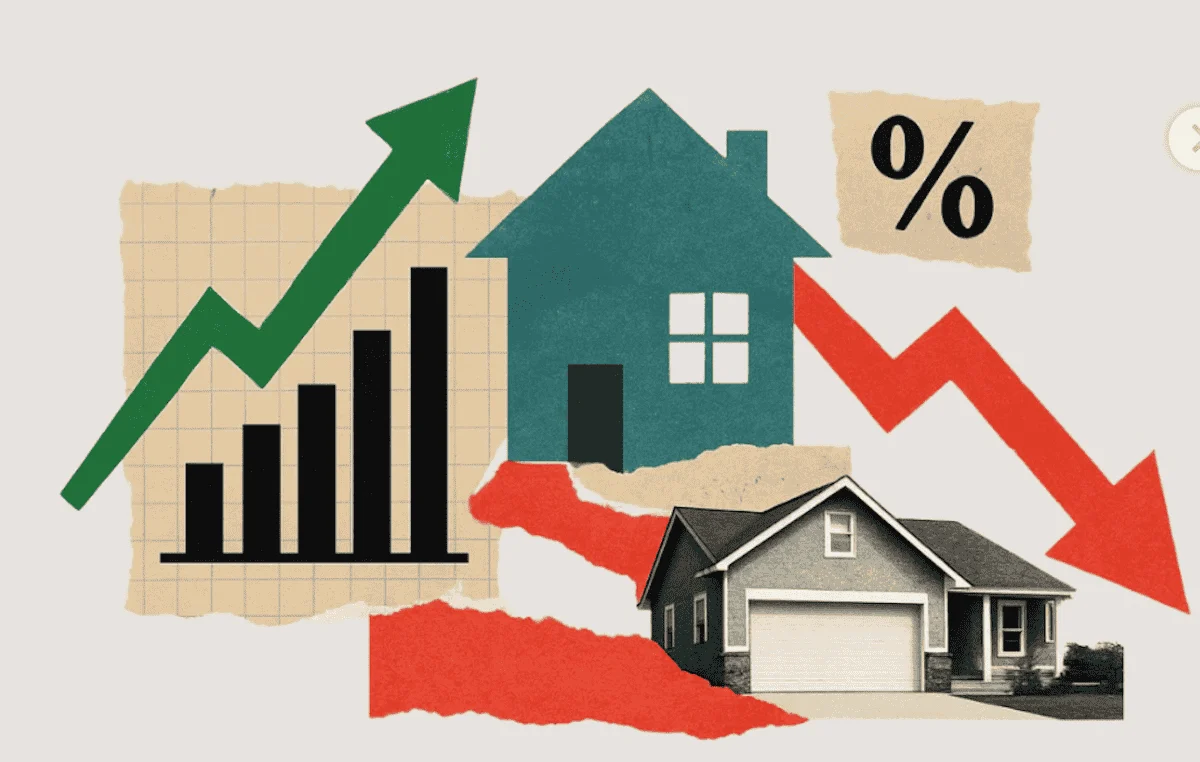
Mortgage rates experienced an upward shift on Monday, effectively nullifying the slight decrease observed last week. The average rate for a 30-year fixed-rate mortgage escalated to 7.44%, marking an increase of 0.11 percentage points. This renewed ascent in borrowing costs is placing further pressure on an already constrained housing market, consequently deterring a growing number of prospective buyers.
Current Market Dynamics and Economic Undercurrents
The latest uptick in mortgage rates reflects a complex interplay of macroeconomic factors. Foremost among these are persistent concerns regarding elevated consumer prices and the burgeoning levels of government debt. These anxieties, combined with a series of robust economic data releases, are collectively exerting upward pressure on Treasury yields, which serve as a crucial benchmark for long-term interest rates across a spectrum of credit products, including mortgages. The Federal Reserve’s sustained hawkish stance on monetary policy, aimed at taming inflation, continues to underpin this environment of higher interest rates. While the central bank directly influences short-term rates, its actions significantly ripple through financial markets, impacting longer-term borrowing costs.
Expert Insights on Housing Market Impact
Economists are closely monitoring the ramifications of these elevated rates on the housing sector. Kara Ng, a senior economist at Zillow Home Loans, highlighted the direct impact on affordability. "Higher rates are fundamentally increasing borrowing costs, which inevitably sidelines a segment of buyers who are priced out of the market," Ng stated in emailed comments. Beyond the immediate financial calculations, Ng also pointed to a significant psychological barrier that rates breaching the 7% mark present. This threshold can "spook some buyers before they even check if they can afford to buy," creating a preemptive chill in demand. This dual effect — actual reduced affordability and perceived unattainability — is intensifying pressure on homeowners who had hoped to capitalize on the fall selling season.
Ng further elaborated on strategic considerations for sellers in this challenging environment. "Incrementally worse affordability, combined with that psychological hurdle, means sellers may need to be deliberate with strategy," she advised. "Pricing correctly from the start and being flexible in negotiations could mean the difference between selling this season or holding out for spring." This suggests a shift from a seller’s market, where competitive bids and rapid sales were common, to one requiring more nuanced and adaptable approaches.
Historical Context and Recent Rate Fluctuations
The current landscape of mortgage rates stands in stark contrast to the historically low rates observed during the initial phases of the COVID-19 pandemic. In 2020 and 2021, 30-year fixed rates frequently dipped below 3%, fueling an unprecedented surge in housing demand and price appreciation. However, as inflation began to accelerate in late 2021 and throughout 2022, the Federal Reserve initiated an aggressive campaign of interest rate hikes. This monetary tightening quickly translated into a rapid ascent of mortgage rates, pushing them from the 3-4% range to above 6% by mid-2022, and eventually past 7% in the latter half of the year.
The brief downward jog observed last week provided a momentary reprieve but ultimately proved temporary. This volatility underscores the sensitivity of the mortgage market to incoming economic data, particularly inflation reports, employment figures, and the Fed’s commentary. Bond market traders constantly adjust their expectations for future interest rate movements, directly influencing the yields on Treasury bonds, which in turn dictate mortgage pricing. The current 30-year average of 7.44% represents a return to a level that significantly impacts purchasing power for most households.
A Deeper Look at Key Economic Indicators
The trajectory of mortgage rates is intrinsically linked to several key economic indicators:
- Inflation: The primary driver behind the Federal Reserve’s aggressive rate hikes. While headline inflation has moderated from its peak, core inflation (excluding volatile food and energy prices) remains stubbornly elevated, prompting concerns that the Fed may need to maintain higher rates for longer. Any signs of re-accelerating inflation can quickly push bond yields and mortgage rates higher.
- Federal Reserve Policy: The Federal Open Market Committee (FOMC) meetings and subsequent statements are closely watched. The Fed’s commitment to achieving its 2% inflation target, even at the risk of slowing economic growth, directly influences market expectations for the federal funds rate, which in turn impacts longer-term rates.
- Treasury Yields: The yield on the 10-year Treasury note is a critical barometer for mortgage rates. As investors demand higher returns for holding government debt due to inflation fears or increased supply, these yields rise, pulling mortgage rates up with them.
- Economic Growth and Employment: Strong economic data, such as robust job growth or higher-than-expected GDP figures, can paradoxically lead to higher rates. This is because a strong economy might indicate persistent inflationary pressures, compelling the Fed to keep rates elevated. Conversely, signs of economic slowdown or recession could lead to a flight to safety, driving bond yields down and potentially lowering mortgage rates.
Navigating the Mortgage Landscape: Choosing the Right Loan
In an environment of fluctuating and elevated interest rates, understanding the various mortgage options becomes paramount for prospective homebuyers and those considering refinancing. The "best" loan type is highly individualized, depending on a borrower’s financial profile, long-term goals, and risk tolerance.
- 30-Year Conventional Mortgage: This remains the most popular choice due to its predictable fixed payments spread over a long term, resulting in lower monthly installments compared to shorter terms. It is generally ideal for borrowers with strong credit scores (typically above 620), who can afford a down payment of at least 3% (though 20% is often recommended to avoid private mortgage insurance), and who seek flexibility in property types.
- 30-Year Federal Housing Administration (FHA) Mortgage: FHA loans are government-insured mortgages particularly beneficial for first-time homebuyers, individuals with less-than-perfect credit scores (often accepted with scores as low as 580 with a 3.5% down payment), or those with higher debt-to-income ratios. While they offer more lenient qualification criteria, they do require mortgage insurance premiums for the life of the loan in most cases.
- 30-Year U.S. Department of Veterans Affairs (VA) Loan: Exclusively designed for eligible active-duty service members, veterans, members of the National Guard and Reserves, and surviving spouses, VA loans are highly advantageous. They often feature 0% down payment options, competitive interest rates, and more flexible credit requirements, making homeownership accessible to those who have served the nation.
- 30-Year Jumbo Loan: For homebuyers looking to purchase properties priced above the Federal Housing Finance Agency (FHFA) conforming loan limit, a jumbo loan is necessary. In 2026, this limit is set at $832,750 in most parts of the U.S., increasing to $1,249,125 in high-cost areas. Jumbo loans typically require higher credit scores and larger down payments due to the increased risk associated with their size.
- 15-Year Fixed-Rate Loan: Borrowers who are financially capable of making higher monthly payments can significantly reduce the total interest paid over the life of the loan and build equity much faster with a 15-year mortgage. While the monthly payments are higher, the interest rate is typically lower than a 30-year fixed loan, making it an attractive option for those prioritizing long-term savings and quicker debt repayment.
- 7/6 Adjustable-Rate Mortgage (ARM): ARMs, particularly hybrid ARMs like the 7/6, are gaining renewed interest in a high-rate environment. This loan type offers a fixed interest rate for an initial period (7 years in this case), after which the rate adjusts every six months based on a specified index. This can be suitable for buyers who anticipate selling or refinancing before the fixed period ends, or those who are comfortable with potential payment fluctuations and can absorb higher payments if rates rise after the adjustment period.
- Home Equity Line of Credit (HELOC): A HELOC allows homeowners to tap into the accumulated equity in their home as a revolving line of credit. It’s a flexible option for those needing funds for renovations, education, or debt consolidation, offering an open line of credit that can be drawn upon as needed, with interest only paid on the amount borrowed.
- Home Equity Loan: Unlike a HELOC, a home equity loan provides a lump sum of money, repaid through fixed monthly payments over a set term. It essentially acts as a second mortgage and is suitable for homeowners who require a specific amount of funds and prefer the predictability of a fixed payment schedule.
Impact on Affordability: A Tangible Example
The prevailing mortgage rates significantly dictate a homeowner’s purchasing power and monthly financial commitments, whether for a primary residence, an investment property, or a refinance. Even small shifts in rates can translate into substantial differences over the loan’s lifetime.
Consider a hypothetical scenario: a buyer purchases a $250,000 home with a 20% down payment of $50,000, leaving a loan balance of $200,000.
- At a 3.0% interest rate (common in 2020-2021), the principal and interest payment on a 30-year fixed loan would be approximately $843 per month.
- At a 5.0% interest rate, the payment would rise to approximately $1,074 per month.
- At the current average of 7.44%, the monthly payment would jump to approximately $1,392 per month.
This example illustrates a dramatic increase of over $500 per month from the lowest rates seen recently, representing a significant portion of a household budget. Such an increase directly impacts how much home a buyer can afford, potentially requiring them to seek less expensive properties or delay their purchase. Tools like a mortgage calculator can help prospective buyers visualize these costs, while a home affordability calculator can estimate maximum loan amounts based on individual financial metrics like income and debt-to-income ratio. The Consumer Financial Protection Bureau also provides valuable resources to compare rates offered by various lenders.
Outlook and Future Projections
The immediate outlook for mortgage rates suggests continued volatility, with a strong likelihood of rates remaining elevated or even trending slightly higher in the near term. The consensus among economists is that a return to the ultra-low rates of 3% or 4% is highly improbable under current economic conditions. Such a scenario would likely necessitate a severe economic downturn, prompting aggressive rate cuts from the Federal Reserve. However, it is not entirely out of the question for rates to eventually moderate to the mid-3% range, a level observed before the pandemic, but this would require a sustained period of cooling inflation and a more dovish stance from the Fed.
For now, buyers and sellers must adapt to a market defined by higher borrowing costs. Strategic pricing, diligent financial planning, and a thorough understanding of available loan products will be crucial for navigating the housing market effectively in the coming months.