Lina Irawan
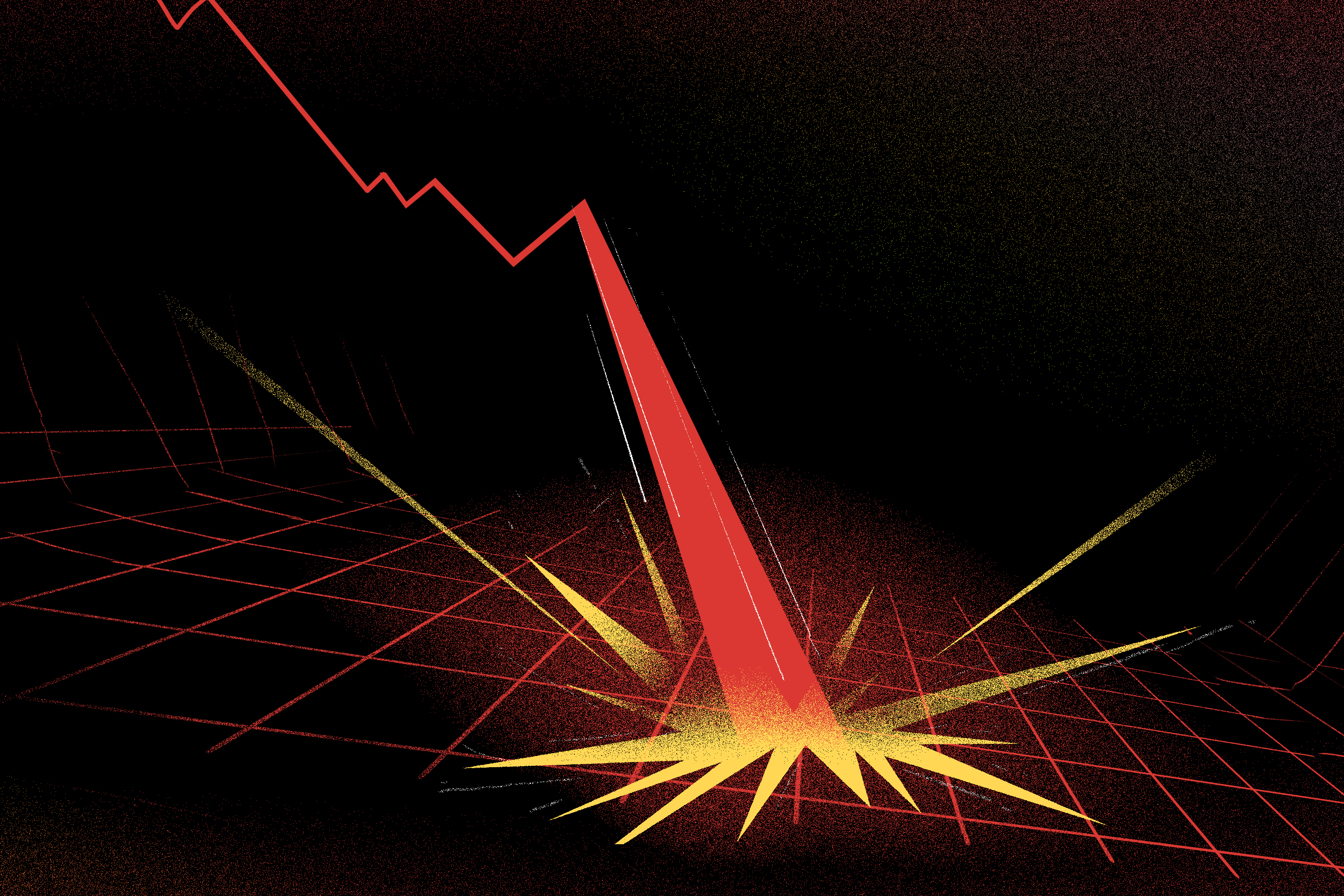
The technology-heavy Nasdaq Composite index has officially entered a market correction, registering a decline exceeding 10% from its recent highs. Following a 2.38% loss through Thursday’s market close, the index has now fallen by 10.27% since its year-to-date high recorded on January 28. This downturn represents a 10.65% drop from its all-time high established on October 29 of the previous year, as persistent losses in bellwether "Magnificent Seven" stocks and escalating geopolitical unrest continue to destabilize global markets.
The Nasdaq’s Correction: Key Figures and Triggers
A market correction is officially defined as a decline of 10% to 20% from a market index’s recent peak. The Nasdaq’s current trajectory firmly places it within this statistical threshold, marking a significant shift from its previous bullish run. The immediate catalyst for the formal declaration of a correction was the substantial loss observed on Thursday, pushing the cumulative decline past the critical 10% mark. This rapid descent underscores a growing unease among investors, driven by a complex interplay of factors ranging from sector-specific pressures to broad macroeconomic challenges and international conflicts. The index’s performance is particularly noteworthy given its robust gains in the preceding two years, with the tech sector leading the broader market.
A Confluence of Factors: Geopolitical Tensions and Economic Headwinds
The current market turmoil is not an isolated event but rather the culmination of several interconnected pressures that have been building over recent months. An extended pullback, which initially manifested in the final quarter of 2025, was largely fueled by mounting concerns over the potential disruptive impact of artificial intelligence (AI) on Software-as-a-Service (SaaS) firms. Investors began to re-evaluate the long-term growth prospects and competitive landscape for these companies, anticipating a future where AI could both enhance and fundamentally alter traditional software delivery models. This initial apprehension carried through the first quarter of 2026, setting a cautious tone for the new year.
More recently, these losses have been significantly amplified by the escalating conflict in Iran. The war has had profound repercussions on global energy markets and trade routes, most notably disrupting critical energy infrastructure. This disruption has sent crude oil costs surging above $100 per barrel, fueling inflationary pressures and adding a layer of uncertainty to an already fragile global economy. The ripple effects extend beyond energy, impacting supply chains and raising production costs across various industries. While President Donald Trump extended a pause on striking Iran’s energy infrastructure until April 6, citing ongoing diplomatic talks, the absence of any concrete indications of a forthcoming ceasefire suggests that market volatility tied to the region is likely to persist. This geopolitical overhang has instilled a heightened sense of risk aversion among investors, prompting a flight away from riskier assets.
The Tech Sector’s Tumultuous Turn in 2026
The technology sector, a dominant force in market performance over recent years, has experienced a notable reversal of fortune in 2026. After posting market-leading gains of 40% in 2024 and 34% in 2025, the sector has faltered, recording an 8% loss year-to-date. This performance places it as the fifth-worst performer among the S&P 500’s eleven sectors, a stark contrast to its previous leadership.
The impact of this tech sector downturn is particularly pronounced within the Nasdaq Composite due to its concentrated nature. The "Magnificent Seven" – a group of highly influential technology and growth companies – collectively account for a substantial 40% to 45% of the Nasdaq’s total weighting. This is significantly higher than their 30% to 35% weighting in the broader S&P 500, making the Nasdaq inherently more susceptible to the performance fluctuations of these mega-cap tech giants. While the collective performance of these companies has failed to inspire investor confidence, some individual constituents have experienced particularly sharp declines. Tesla, for instance, has seen its shares tumble by 15% year-to-date, while Microsoft, despite its robust cloud business, has recorded a 23% loss.
However, the underperformance of some Magnificent Seven stocks pales in comparison to the struggles faced by certain Software-as-a-Service (SaaS) firms. Companies like The Trade Desk have seen their shares plummet by 43% this year. Project management software developer Atlassian has fared even worse, with year-to-date losses exceeding 55%. This downturn in SaaS stocks is particularly striking given their historically appealing business models, characterized by high-margin subscription revenues and recurring income streams that typically generate comparatively healthy earnings. The market’s shift against these companies can be attributed to several factors:
- AI Disruption Concerns: Investors are grappling with the potential for generative AI to disrupt existing software workflows, automate tasks previously handled by SaaS applications, and potentially lower the barrier to entry for new competitors. There’s a fear that established SaaS providers may need to heavily reinvest in AI integration, impacting short-term profitability.
- Valuation Reset: After years of rapid growth and elevated valuations, some analysts argue that SaaS stocks were priced for perfection. As interest rates remain sticky and economic growth slows, investors are demanding more immediate profitability and less speculative growth.
- Increased Competition: The advent of AI-native solutions and the rapid evolution of technology mean that the competitive landscape for SaaS firms is becoming increasingly crowded and dynamic, potentially eroding market share and pricing power.
Macroeconomic Pressures: Inflation, Labor, and Consumer Sentiment
Compounding the sector-specific challenges, the broader market-cap-weighted indices have suffered as investors continue to rotate out of higher-risk sectors, such as technology and communication services, and into more resilient cyclical and defensive sectors like energy and consumer staples. This strategic rotation is a classic response to deteriorating macroeconomic conditions.
Several key economic indicators highlight the underlying fragility:
- Waning Consumer Confidence: The Conference Board’s Consumer Confidence Index has shown a noticeable decline, reflecting widespread concerns among households about current business and labor market conditions, as well as their short-term outlook for income, business, and employment. Reduced consumer confidence often translates into decreased discretionary spending, impacting retail and service sectors.
- Tepid Labor Market: While not in full recession, the labor market has shown signs of cooling. While unemployment rates remain relatively low, job growth has slowed, wage gains have moderated in some sectors, and anecdotal evidence suggests increased caution among employers regarding hiring and expansion. A less robust labor market can dampen overall economic activity and consumer purchasing power.
- Sticky Inflation: Despite efforts by central banks to bring inflation under control, price pressures have proven to be more persistent than anticipated. Core inflation, which excludes volatile food and energy prices, remains elevated, indicating that inflationary forces are entrenched in various parts of the economy. This sticky inflation erodes purchasing power for consumers and squeezes profit margins for businesses, particularly those unable to pass on higher costs.
- Interest Rate Environment: Although not explicitly mentioned in the original text, the Federal Reserve’s stance on interest rates is a critical factor influencing market dynamics. Persistent inflation typically necessitates a "higher-for-longer" approach to interest rates. Higher interest rates increase borrowing costs for businesses, making it more expensive to fund growth and innovation, especially for tech companies that rely on future earnings potential. Furthermore, higher discount rates used in valuation models reduce the present value of future earnings, disproportionately affecting growth stocks with distant profit horizons. This environment makes safer, income-generating assets more attractive compared to speculative growth stocks.
Historical Context and Market Volatility
Market corrections, defined as losses of between 10% and 20% from recent highs, are a normal and recurring feature of financial markets. On average, they occur approximately once a year. However, their duration can vary significantly. Historical data since 1987 indicates that corrections have lasted anywhere between 74 and 155 days. This means that such periods of downturn can have substantial and prolonged impacts on the portfolios of unprepared investors. The psychological toll of sustained losses can lead to panic selling, often locking in losses rather than weathering the storm.
The current climate is characterized by heightened market volatility, as reflected by the CBOE Volatility Index (VIX), often referred to as the stock market’s "fear gauge." The VIX has surged by more than 94% year-to-date, including a significant 14% increase over the past week alone. This elevated VIX reading signals a pervasive sense of uncertainty and fear among market participants, indicating an expectation of larger and more rapid price swings in the near future. Such periods of extreme volatility test the resolve of investors and often lead to disproportionate reactions to both positive and negative news.
Navigating the Correction: Strategies for Investors
In times of market correction and heightened volatility, different investment strategies become relevant depending on an individual’s financial goals, risk tolerance, and time horizon.
- For Long-Term Investors: For those with a long-term investment horizon, ongoing market losses can present a unique opportunity. Corrections allow investors to purchase shares of fundamentally strong, former market-leading companies at notable discounts. This strategy aligns with the principle of "buying low." Passive index fund investors, who aim to track the market’s performance over time, can largely disregard the day-to-day fluctuations of a correction. Furthermore, investors practicing dollar-cost averaging – a strategy that involves buying shares on a recurring basis regardless of price – can particularly benefit during downturns, as their fixed investments purchase more shares when prices are lower, effectively reducing their average cost over time.
- For Shorter-Term Investors and Those Nearing Retirement: Investors with shorter horizons, especially those approaching or already in retirement, typically have a lower capacity for risk. For this group, participating in a "flight to safety" is a prudent consideration. This involves lowering exposure to higher-risk, higher-volatility stocks in favor of lower-risk, lower-volatility assets. This shift aims to preserve capital and protect against significant drawdowns.
- Low-Risk Asset Options: This could involve a combination of near-zero risk Treasury bonds, which are backed by the full faith and credit of the government and offer predictable returns. Certificates of deposit (CDs) from banks provide guaranteed returns for a specified period, offering stability. Additionally, equal-weight or income-generating exchange-traded funds (ETFs) can offer diversification with potentially lower volatility. Equal-weight ETFs reduce concentration risk by giving the same weight to each stock, rather than market-cap weighting, while income-generating ETFs focus on assets that provide regular dividends or interest payments, offering a cushion during market downturns.
The Road Ahead: Outlook and Ongoing Uncertainty
The current market environment suggests that the path forward will likely remain volatile. The geopolitical landscape, particularly the conflict in Iran, continues to be a significant wild card. While President Trump’s extension of the pause on military action provides a temporary reprieve, the absence of a definitive ceasefire agreement means that the risk of renewed escalation and further disruption to global energy markets remains high.
Market strategists widely acknowledge the dual pressures stemming from international conflicts and persistent domestic economic challenges. The interplay between sticky inflation, a cautious Federal Reserve, and fluctuating consumer confidence will continue to shape the economic narrative. Investors should anticipate continued ups and downs, with market sentiment highly susceptible to news related to geopolitical developments, corporate earnings reports, and incoming economic data. Prudence, diversification, and a clear understanding of one’s investment objectives and risk tolerance will be paramount in navigating this complex and uncertain period. The Nasdaq’s correction serves as a potent reminder of the inherent cyclicality of financial markets and the importance of a well-considered, long-term investment strategy.