Nila Kartika Wati
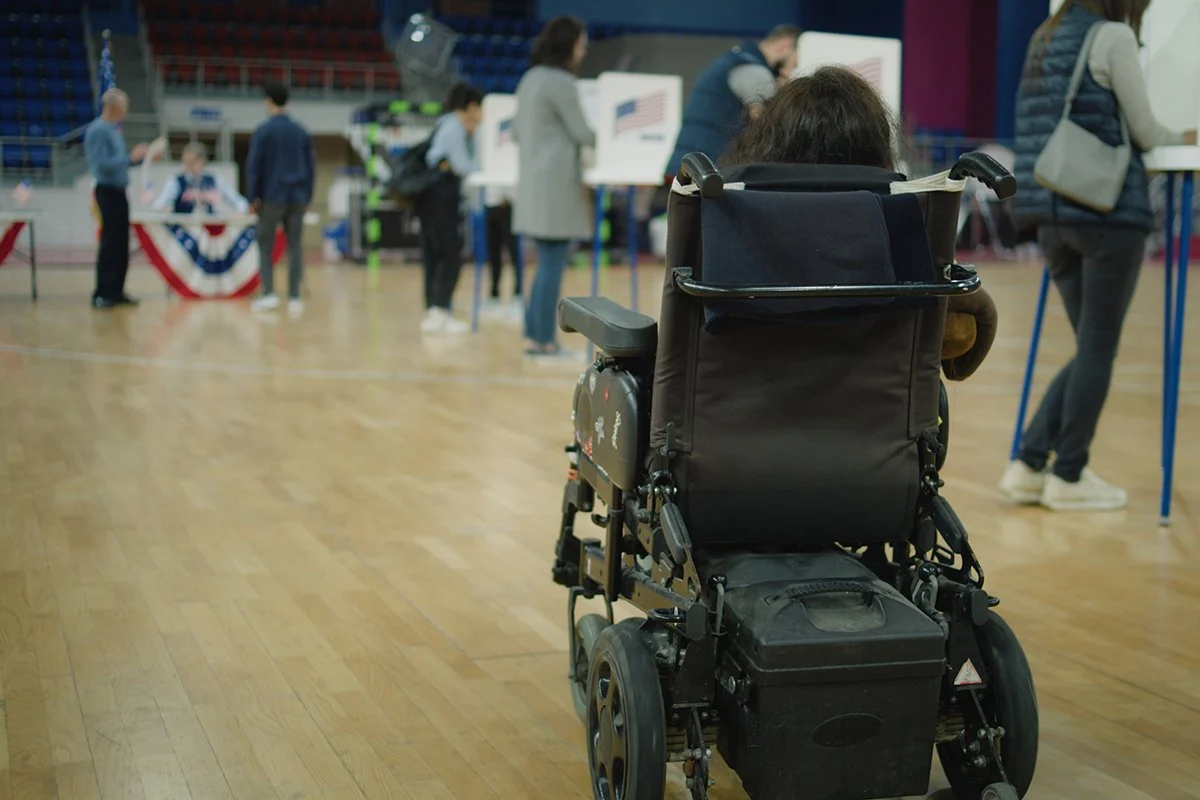
During the 2025 election cycle in Michigan, a comprehensive assessment of more than 400 polling locations revealed a stark reality for voters with disabilities: only 10 percent of the sites visited met basic legal accessibility standards. The audit, conducted by dozens of trained monitors fanning out across the state, suggests that for the one in three adult Michiganders living with a disability, the fundamental right to cast an independent and private ballot remains a significant challenge. These findings, while localized to Michigan, are indicative of a broader national crisis in election infrastructure that has persisted for decades despite federal mandates intended to ensure equal access to the democratic process.
The Michigan audit represents the largest effort of its kind in the United States, spearheaded by Detroit Disability Power (DDP). The results of the 2025 study show a declining trend in compliance when compared to previous years, a shift that organizers attribute to a larger, more representative sample size rather than a degradation of existing facilities. In 2022, 16 percent of audited sites passed; by 2024, that number dropped to 13 percent, finally hitting the 10 percent mark in the most recent assessment. This data underscores the persistent gap between the protections promised by federal law and the on-the-ground reality at local precincts.
The Legal Framework and the Reality of Inaccessibility
The right of disabled citizens to vote is anchored in four major pieces of federal legislation: the Voting Rights Act of 1965, the Americans with Disabilities Act (ADA) of 1990, the Help America Vote Act (HAVA) of 2002, and the Rehabilitation Act of 1973. Specifically, Title II of the ADA requires that state and local governments provide people with disabilities an equal opportunity to benefit from all of their programs, services, and activities, including elections. HAVA further mandated that every polling place must have at least one voting system that is accessible to individuals with disabilities, including non-visual accessibility for the blind and visually impaired, in a manner that provides the same opportunity for access and participation as for other voters.
Despite these decades-old mandates, enforcement remains inconsistent. While Boards of Elections can face litigation for discriminatory practices or inaccessible sites, legal proceedings often take years to resolve and rarely provide immediate relief for voters during a specific election cycle. This lack of real-time accountability has placed the burden of monitoring on nonprofit organizations and advocacy groups. When the last nationwide audit was conducted by the Government Accountability Office (GAO) nearly ten years ago, it found that 83 percent of polling locations across the country featured at least one barrier to access. The recent Michigan data suggests that the national landscape may not have improved significantly since that federal study.
Methodology of the Michigan Audit
To conduct the 2025 audit, DDP utilized a rigorous training program to credential auditors as "election challengers." This status provides monitors with greater legal standing to move within polling locations and observe the setup of equipment compared to standard poll watchers. Auditors were tasked with completing a 24-question survey based on four primary legal criteria:
- Accessible Parking and Pathways: Ensuring that there are designated van-accessible spaces and a smooth, unobstructed route from the parking lot to the building entrance.
- Accessible Entrances: Verifying that doors are wide enough, have appropriate handles, and are either automatic or easily opened, with clear signage directing voters to the accessible route.
- Functional Voting Machines: Confirming that the specialized Voter Assist Terminals (VATs) are powered on, fully operational, and equipped with necessary peripherals like headphones and tactile controllers.
- Privacy and Independence: Checking that wheelchair-height voting booths are positioned to allow a voter to mark a paper ballot without being observed by poll workers or other voters.
A site is labeled "inaccessible" if it fails in even one of these categories. While some barriers are structural—such as the use of historic buildings with steep stairs or deteriorating pavement in older municipal lots—auditors found that many failures were administrative and easily correctable.
Technical Barriers and Simple Solutions
A significant portion of the failures in the 2025 Michigan audit involved the Voter Assist Terminals (VATs). These machines are designed to offer multiple interfaces, including high-contrast large fonts for low-vision voters, audio ballots for the blind, and "sip-and-puff" device compatibility for those with limited manual dexterity. However, auditors frequently found these machines turned off, tucked into corners that compromised voter privacy, or missing the headphones required for the audio function.
Eric Welsby, advocacy director at Detroit Disability Power, emphasized that these issues are often a matter of training rather than budget. "The accessible voting machines and the wheelchair-height voting booth are something that really are fully in election workers’ power to fix," Welsby stated. He noted that correcting these errors does not require "major construction" or a "jackhammer," but rather a commitment to proper setup and a thorough understanding of how the equipment is intended to serve the voter.
Signage also remains a persistent hurdle. In many cases, the "main" entrance of a school or church used as a polling place may have stairs, while the accessible entrance is located at the side or rear of the building. Without clear, visible signs at every decision point, a disabled voter may be deterred before they even reach the door. DDP’s report suggests that simple improvements in directional signage could significantly increase the number of passing sites in future cycles.
Chronology of the Audit Movement
The effort to systematize poll auditing has grown from a local grassroots initiative into a sophisticated national model over the last seven years:
- 2018: Detroit Disability Power begins informal auditing of polling places in the Metro Detroit area.
- 2022: DDP formalizes its program through a partnership with The Carter Center, auditing 261 locations during the midterm elections—at the time, the largest such audit in U.S. history.
- 2024: The program expands statewide in Michigan, covering 415 Election Day sites and 32 early voting locations.
- 2025: The National Polling Access Audit Coalition is formed, launching the Voting Access Audit Fellowship to export the Michigan model to other states.
- 2026 (Projected): DDP expects to assess approximately 700 of Michigan’s 5,000 polling locations, with results slated for publication in early 2027.
By sharing audit results directly with local clerks and election officials, DDP aims to foster a collaborative rather than adversarial relationship. The goal is to provide election administrators with concrete data they can use to request budget increases for facility upgrades or to refine their poll worker training modules.
National Expansion: The Voting Access Audit Fellowship
Recognizing that the barriers found in Michigan are present nationwide, DDP, with support from the American Association of People with Disabilities (AAPD) and The Carter Center, has launched a fellowship program to train other nonprofits. This year, five organizations across the country are implementing their own audit programs based on the DDP framework:
- Georgia (Cobb County): Cobb Collaborative is focusing on the Atlanta metropolitan area, where a history of voter suppression has historically impacted marginalized communities.
- Indiana: Count US IN is working to identify barriers in a state with some of the most stringent voting requirements in the Midwest.
- Pennsylvania: Keystone Progress Education Fund is monitoring accessibility in a key swing state where election administration is highly decentralized.
- Nebraska: Civic Nebraska is adapting the audit model for both urban centers and rural precincts.
- New York: The Metropolitan Asian Deaf Association is providing a specialized lens on accessibility for the Deaf and hard-of-hearing community in New York City.
In Georgia, the initiative is particularly timely. Following the passage of Senate Bill 202 in 2021, the state has seen significant changes to its election laws, including new restrictions on absentee ballot requests and the limited availability of drop boxes. For many disabled voters, these changes have removed the "lifelines" that allowed them to vote from home, making the physical accessibility of polling places more critical than ever.
Political Implications and the Future of Voting Access
The push for physical accessibility at polling places occurs against a backdrop of increasing national tension over voting methods. In recent years, mail-in voting has become a focal point of political debate, with some factions calling for its restriction or elimination. For the disability community, however, mail-in voting is often not a matter of convenience, but of necessity. It serves voters with compromised immune systems, those who lack reliable transportation, and those whose disabilities make standing in long lines physically impossible.
Advocates argue that as attacks on mail-in voting increase, the pressure on physical polling places to be 100 percent compliant with the ADA becomes even more urgent. If a state restricts mail-in options while simultaneously failing to provide accessible physical precincts, it effectively disenfranchises a significant portion of its electorate.
As the 2026 midterm elections approach, the National Polling Access Audit Coalition plans to use its data to advocate for systemic changes. This includes pushing for better state-level funding for election infrastructure and more rigorous, mandatory training for all poll workers on how to assist voters with disabilities without infringing on their independence.
The overarching sentiment among organizers is that voter education and registration drives are insufficient if the final step of the process—the act of casting the ballot—is physically blocked. As Jacob Rogers of the Cobb Collaborative noted, "Voter education means little if a voter can’t actually get through the doors." The work of these auditors serves as a reminder that the integrity of an election is measured not just by the security of the ballots, but by the accessibility of the ballot box for every eligible citizen.