Candice Horbacz

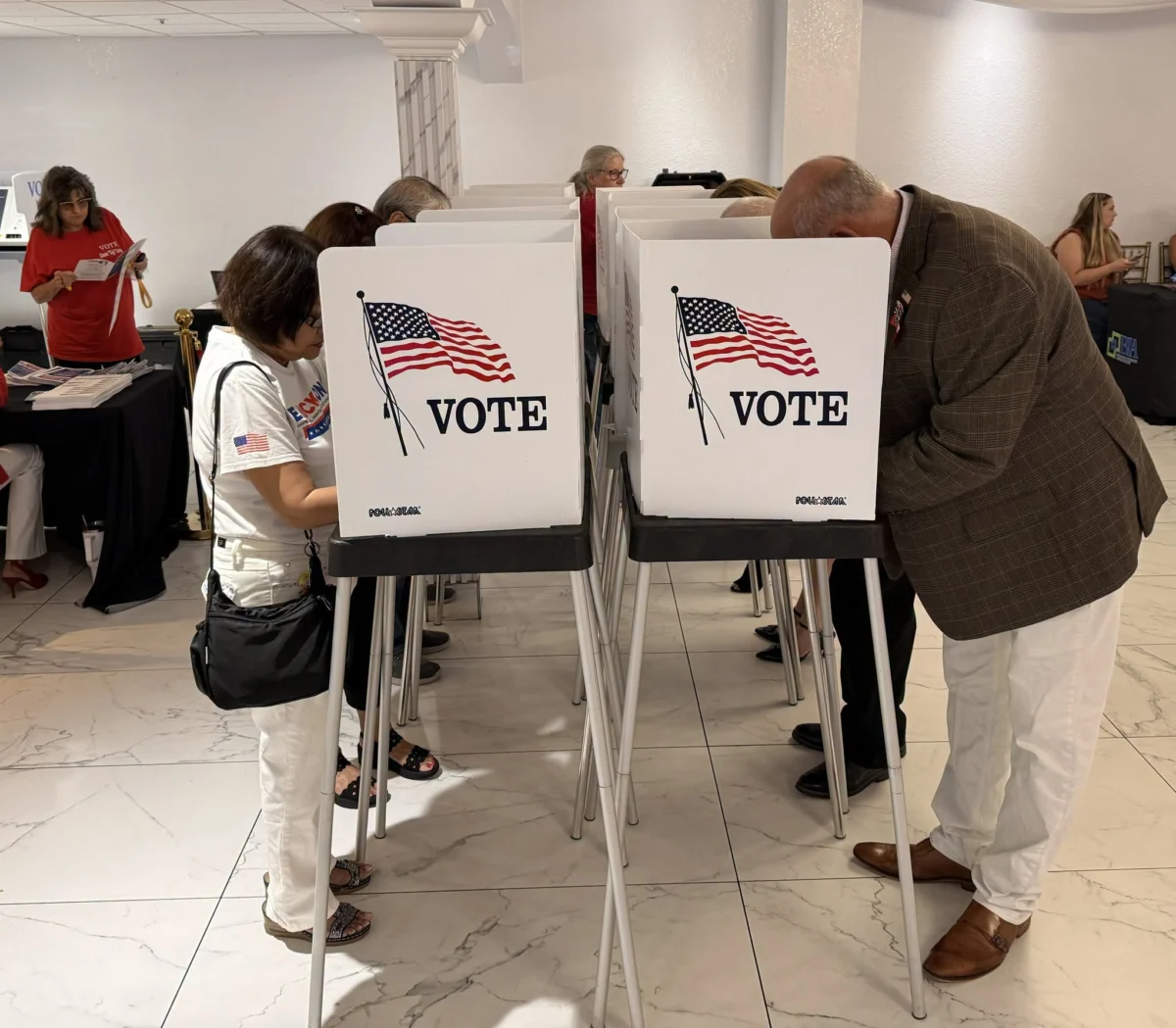
Across the United States, voters will head to the polls in November, not only to elect their representatives but also to weigh in on a crucial slate of ballot measures poised to reshape state constitutions and statutes. Among the most prominent issues commanding attention are a variety of proposed tax policy changes, particularly those targeting property taxes. The persistent rise in property values and the consequent increase in tax bills have fueled intense debate in state capitols and resonated deeply with homeowners and business owners alike. While some jurisdictions have attempted legislative remedies, a significant number of states are placing these complex issues directly before the electorate.
This November, a total of 12 property tax measures are scheduled for ballots across seven states. These proposals vary widely in their scope and potential impact, ranging from substantial increases in homestead exemptions to the implementation of tighter assessment limits. While many of these measures aim to alleviate individual tax burdens, critics warn that they could inadvertently shift financial responsibilities in economically distortionary ways. In contrast, North Carolina voters will consider a levy limit, an alternative approach designed to constrain property tax revenue growth in a structurally sound and economically neutral manner.
The Rising Tide of Property Taxes: A National Challenge
Property taxes constitute the single largest source of state and local revenue in the U.S., collectively generating hundreds of billions of dollars annually. These funds are vital for financing essential public services such as schools, roads, police departments, and fire protection. However, the past few years have seen an unprecedented surge in housing values, largely driven by a combination of low interest rates, increased demand, and limited housing supply. This boom, exacerbated by broader inflationary pressures, has translated directly into higher property tax assessments and, subsequently, larger tax bills for millions of Americans.
For many homeowners, especially those on fixed incomes or in rapidly appreciating markets, these increases have become unsustainable, threatening their ability to remain in their homes. Businesses, too, face mounting costs, which can impact profitability and competitiveness. This confluence of factors has pushed property tax reform to the forefront of political discourse, prompting states to seek solutions that balance the need for local government revenue with the demand for taxpayer relief. The upcoming ballot initiatives represent a direct response to this widespread concern, offering a glimpse into diverse strategies for addressing the affordability crisis.
Assessment Limits: A Shield with Unintended Consequences
One popular mechanism for moderating property tax increases is the assessment limit, which caps the annual percentage by which a property’s taxable assessed value can grow. Proponents argue these limits protect long-term residents from being priced out of their homes due to rapidly escalating market values. However, these policies often carry significant unintended economic consequences.
Oklahoma’s State Question 847, for instance, seeks to tighten the state’s existing assessment limit. Currently, the annual cap on fair cash value increases for homestead property and agricultural land is 3 percent, and 5 percent for other properties. If approved, SQ 847 would reduce these caps to 1.75 percent and 4 percent, respectively. The measure also proposes modifications to Oklahoma’s property tax relief provisions for seniors. Presently, the state constitution freezes the fair cash value of a homestead for qualifying seniors whose income falls below the local median. SQ 847 would replace this with a tiered, income-based structure, allowing seniors with incomes up to 180 percent of the median to receive a special assessment limit ranging from 0.35 percent to 1.4 percent, while higher-income seniors would receive the standard 1.75 percent limit.
While seemingly beneficial, assessment limits can create a "lock-in" effect, discouraging property owners from moving or making substantial improvements to their homes. This occurs because the taxable value often resets to market rates upon sale or significant renovation, penalizing those who relocate or upgrade. This phenomenon can stifle housing mobility, making it difficult for growing families to find larger homes or for older adults to downsize to more suitable residences.
Furthermore, assessment limits frequently lead to inequities, where properties of similar market value bear vastly different tax burdens based solely on their acquisition date. Newer property owners, whose assessments more closely reflect current market conditions, often end up paying a disproportionately larger share of the overall property tax burden. Oklahoma State Question 847, by widening the gap between market and assessed values—especially for homesteads, seniors, and agricultural properties—would likely shift more of the state’s property tax obligations onto non-favored properties, including commercial and industrial establishments, rental units, and second homes. This shift can impact economic development, business investment, and ultimately, the cost of living for renters.
Expanding Homestead Exemptions: Targeted Relief, Broad Impact
Another common approach to property tax relief involves homestead exemptions, which reduce the taxable value of primary residences by excluding a portion of their assessed value from taxation. This November, two states, Florida and Wyoming, are asking voters to consider significantly expanding their existing homestead exemptions, measures that promise substantial relief to qualifying homeowners but raise questions about broader fiscal impacts.
Florida’s Amendment 3, a proposal that has garnered considerable attention, aims to dramatically increase the state’s homestead exemption for non-school district property taxes. Under current Florida law, eligible homeowners receive an exemption on the first $25,000 of assessed value. A second, inflation-adjusted $25,000 exemption applies to assessed values beginning at $50,000, though this does not apply to school district property taxes. Amendment 3 would maintain the existing $25,000 exemption for school district property taxes. However, for all other property taxes, the amendment proposes a substantial increase in the homestead exemption: to $150,000 starting in 2027, and further to $250,000 beginning in 2028. Critically, Amendment 3 would also empower the state legislature to establish a uniform procedure for counties and municipalities to further increase this exemption, potentially up to the full exclusion of all homestead property value.
This Florida initiative reflects a long-standing pattern of legislative and ballot efforts to cap or reduce property tax burdens in the state, often in response to its booming real estate market and influx of new residents. While providing significant relief to primary homeowners, particularly those in high-value areas, such a large exemption could create a considerable revenue gap for local governments, potentially forcing them to cut services or seek alternative funding mechanisms.
Similarly, Wyoming Initiative 1 seeks to add a third homestead exemption to the state’s current framework. Wyoming lawmakers in 2024 adopted a long-term homeowner exemption, offering 50 percent off the first $3 million in market value for primary residences of owners 65 or older who have paid state residential property taxes for at least 25 years and reside in the home for at least eight months annually. In 2025, a 25 percent exemption on the first $1 million in market value (land and structures) was adopted for owner-occupants residing in the home at least eight months per year. Those claiming the 50 percent exemption cannot simultaneously claim the 25 percent exemption.
Wyoming Initiative 1 would introduce a new, additional homestead exemption: 50 percent of a home’s value (excluding the underlying land), with no value cap, for owners who have been Wyoming residents for at least one year and lived in the home for at least six months during the preceding year. Eligible homeowners would be able to claim both the 25 percent exemption and this new 50 percent exemption, potentially offering substantial tax relief.
While both Florida Amendment 3 and Wyoming Initiative 1 promise considerable relief to qualifying homeowners, they do not reduce the fundamental cost of providing local government services. Consequently, the tax burden is almost inevitably shifted to other property owners. Commercial and industrial properties, which do not qualify for these exemptions, would likely see their tax liabilities increase to compensate for the lost revenue. Moreover, multi-family dwellings and commercial apartment buildings, not being owner-occupied homesteads, would also face higher taxes, a cost often passed on to renters. This creates a scenario where two properties of similar market value could face vastly different tax bills based solely on their classification and the owner’s residency status, undermining principles of tax neutrality and horizontal equity.
Levy Limits: A Structurally Sound Alternative
In stark contrast to assessment limits and expanded homestead exemptions, North Carolina voters will consider a Property Tax Levy Limit Amendment. If approved, this amendment would require the North Carolina General Assembly to enact a property tax levy limit for local governments, supplementing the state’s existing statutory property tax rate limit of $1.50 per $100 of assessed value. This approach offers a more structurally sound and economically efficient path to property tax relief.
North Carolina, like many other states, has experienced significant increases in property values in recent years, often outpacing general inflation. Between 2018 and 2023, property values in the state rose substantially faster than inflation-adjusted property tax collections. While some local jurisdictions responsibly adjusted their millage rates downward to offset these valuation increases, others chose to capture the revenue windfall generated by higher property values, leading to unlegislated tax increases for property owners. North Carolina’s current rate limit constrains tax rates but does not directly cap total property tax collections, allowing valuation increases to generate significant additional revenue if rates are not proportionally reduced.
Levy limits are widely regarded as the most effective mechanism for constraining the growth of overall property tax collections. Unlike assessment limits and expanded homestead exemptions, which can create significant economic distortions, levy limits achieve their objective in a neutral and economically efficient manner. They function as a direct control on the growth of total property tax collections, akin to an allowance for government spending. When property values rise to a point where maintaining a static millage rate would increase property tax collections from existing property beyond a predefined limit, levy limits mandate that millage rates be adjusted downward, preventing automatic tax increases. Well-designed levy limits typically permit a reasonable degree of revenue growth, often incorporating adjustments for inflation and new construction to ensure local governments can still fund necessary services and respond to population growth.
This approach offers revenue stability for local governments while preserving the fundamental relationship between a property’s value and its tax liability. Crucially, levy limits do not disincentivize moving, property improvements, or new construction, thus avoiding the "lock-in" effects and other economic distortions associated with assessment limits and expansive homestead exemptions.
Lessons from Iowa and the Path Forward for North Carolina
The efficacy of a well-designed levy limit can be observed in states that have successfully implemented them. In 2026, Iowa lawmakers enacted Senate File 2472, establishing a robust 2 percent property tax levy limit for cities and counties. This legislation includes allowances for new construction and improvements, ensuring that local governments can still account for growth while adhering to the overall limit. Local officials retain the flexibility to adjust millage rates within the established levy limit, provided they remain within Iowa’s existing rate caps. Importantly, the framework allows local governments to exceed the limit, but only with explicit voter approval through a special election, reinforcing democratic accountability.
If North Carolina voters approve their proposed amendment, lawmakers would have a valuable opportunity in 2027 to follow Iowa’s example, designing a levy limit tailored to the state’s specific needs. Such a reform would represent a structurally sound, long-term solution that protects the property tax base, provides local governments with a stable and predictable revenue source, and avoids the distortionary policies that merely shift tax burdens rather than genuinely reducing them. Among the various property tax relief options appearing on ballots this year, North Carolina’s proposed levy limit stands out as the most economically neutral and effective approach for fostering both taxpayer relief and fiscal responsibility.
As citizens across the country prepare to cast their votes in November, the debates surrounding property tax reform underscore a broader challenge: how to balance the need for affordable living with the imperative of funding essential public services. The outcomes of these ballot initiatives will not only dictate the financial landscapes for millions of households and businesses but also set precedents for how states approach property taxation for years to come.
Stay informed on the tax policies impacting you. Subscribe to our free newsletter to get the latest tax data, news, and analysis.