Lana Rhoades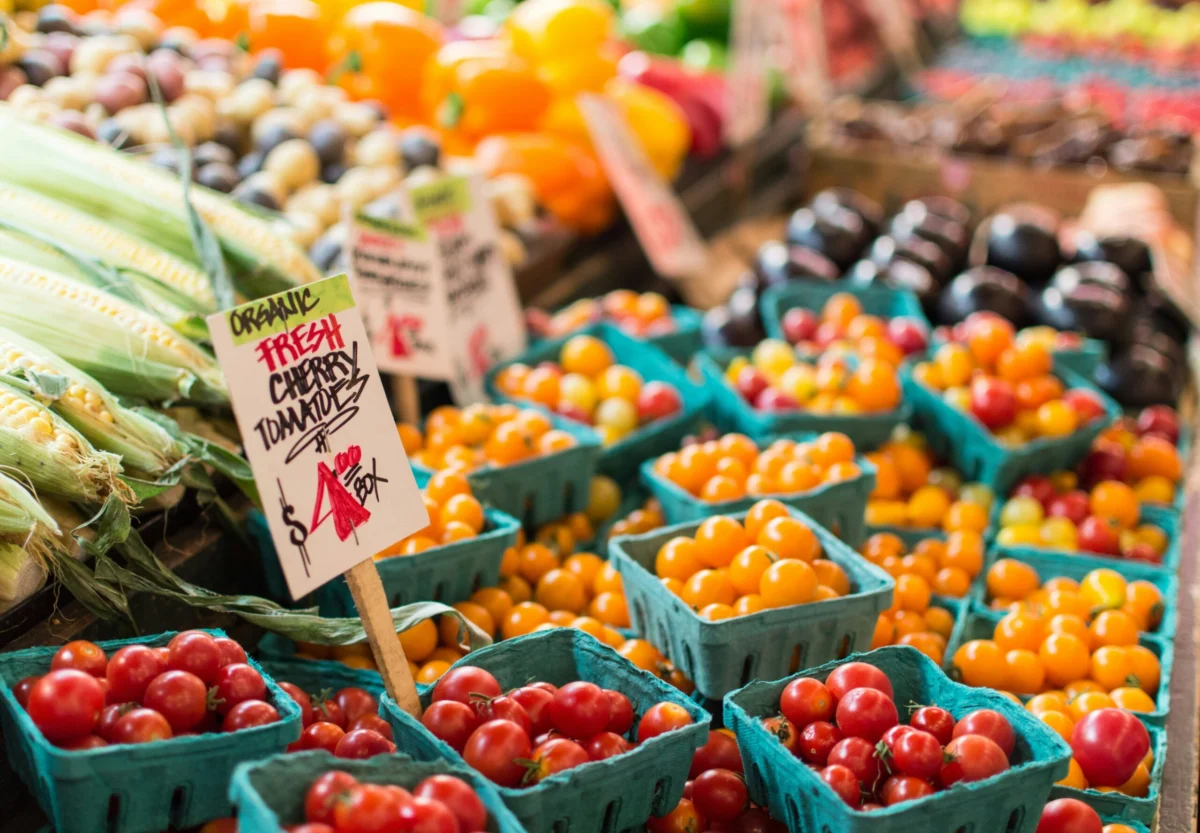
As the 2026 outdoor market season approaches, small-scale agricultural producers and artisanal vendors across the United States are facing an increasingly complex regulatory environment regarding sales tax collection and remittance. While the farmers market has traditionally been viewed as a bastion of informal commerce, state departments of revenue have increasingly standardized the tax obligations for these micro-retailers, aligning them with the requirements of brick-and-mortar establishments. The distinction between taxable and non-taxable goods remains a primary point of contention and confusion, particularly as states adjust their tax codes to account for shifting economic conditions and the rise of prepared food sales at local venues.
Under the current legal framework, sales tax is governed primarily at the state level, with significant variations in how "tangible personal property" is defined and taxed. For the modern farmers market vendor, the obligation to collect tax is not merely a suggestion but a statutory requirement that, if ignored, can lead to substantial financial penalties or the revocation of the right to participate in public markets. As direct-to-consumer sales from farms continue to grow—a sector that the U.S. Department of Agriculture (USDA) noted has seen a steady upward trajectory over the last decade—the visibility of these transactions to state tax authorities has never been higher.
The Taxonomy of Taxability: Groceries versus Prepared Foods
The most significant challenge for vendors lies in the categorization of food items. In more than half of U.S. states, grocery items—defined generally as raw agricultural products intended for home preparation—are exempt from state-level sales tax. This exemption is designed to reduce the tax burden on essential nutrition. However, the application of this rule is far from uniform. States such as Alabama and New Mexico continue to apply the full sales tax rate to all food items, including fresh produce, while others, like Illinois, apply a reduced rate (currently 1%) to groceries.
The complexity intensifies when food is altered for immediate consumption. Tax experts note that the "transformation" of a product often triggers a change in its tax status. A whole pineapple, for instance, is categorized as a non-taxable grocery item in most jurisdictions. Conversely, the same pineapple, once sliced and packaged into a "ready-to-eat" container, is reclassified as prepared food, making it subject to the full state and local sales tax rates. This distinction is critical for vendors who offer value-added products.
Interestingly, a common exception exists for baked goods. In many jurisdictions, items such as croissants, muffins, and loaves of bread are treated as grocery items even if they are ready for immediate consumption, provided they are not sold with eating utensils. This "bakery exception" highlights the granular nature of state tax laws and the necessity for vendors to conduct thorough research into the specific statutes of their operating location.
Administrative Requirements and the Permitting Process
Before a single transaction occurs, vendors must navigate the administrative hurdle of obtaining a sales tax permit. In 2026, the integration of digital registration systems has streamlined this process, yet the legal necessity remains absolute. A sales tax permit, often referred to as a seller’s permit or certificate of authority, grants the vendor the legal right to collect tax from customers on behalf of the state.
Market organizers have become de facto enforcement agents in this regard. Due to increased scrutiny from state revenue inspectors, many market managers now require proof of a valid sales tax permit as a prerequisite for booth rental. This shift is partly a defensive measure; if a market is found to be hosting non-compliant vendors, the entire event can be subject to fines or temporary closure. This "collective responsibility" model has forced a higher level of professionalism among seasonal and part-time sellers.
The timeline for compliance typically begins weeks before the market season. Vendors must register with the Department of Revenue in every state where they have "nexus"—a physical or economic presence. For most farmers market participants, this is limited to their home state, but those traveling across state lines for high-traffic regional markets must be wary of multi-state obligations.
Data and Economic Context: The Growth of Direct-to-Consumer Sales
The emphasis on tax compliance coincides with the robust economic performance of local food systems. According to recent economic data, the "local food" sector, which includes farmers markets, community-supported agriculture (CSA), and farm stands, contributes billions to the national economy annually. As this sector matures, it has moved from the periphery of the retail economy to a central component of urban and suburban commerce.
Supporting data from 2025 indicated that nearly 80% of farmers market transactions are now processed through digital point-of-sale (POS) systems rather than cash. This digital paper trail has made it easier for states to track revenue and ensure that the appropriate taxes are being remitted. It has also provided vendors with better tools to manage the bifurcated tax rates often found at markets where a single stall might sell both taxable crafts and non-taxable vegetables.
Calculating Local Rates and the Challenges of In-Person Trade
One of the most persistent difficulties for mobile vendors is the determination of the correct "combined" sales tax rate. Unlike a fixed retail store, a farmers market vendor may move between different municipalities or counties, each with its own local tax overlay. The total tax rate is typically a combination of state, county, city, and sometimes special district taxes (such as those for transportation or stadium funding).
In Georgia, for example, the state may exempt groceries from its 4% state tax, but individual counties are permitted to levy their own taxes on those same items. A vendor selling in Cherokee County must therefore navigate a different tax calculation than one selling in Fulton County. Modern POS software has mitigated this issue by using GPS-based rate lookups, but the responsibility for accuracy remains with the vendor.
Furthermore, the debate over "tax-inclusive pricing" remains a significant logistical hurdle. In the fast-paced environment of a farmers market, many vendors prefer to sell items at "round numbers" (e.g., $5.00 or $20.00) to minimize the need for small change. While some states allow vendors to include the sales tax in the advertised price, they usually require a prominent sign stating "All prices include sales tax." However, even with this practice, the vendor must "back-calculate" the tax for reporting purposes, ensuring the state receives its exact percentage of the gross sales.
Official Responses and Expert Analysis
Tax professionals and state officials emphasize that the era of "under-the-table" market sales is effectively over. "The integration of technology into the farmers market space has been a double-edged sword," says a veteran tax consultant. "While it makes record-keeping easier for the farmer, it also provides the state with a transparent view of the market’s total economic activity. Compliance is no longer optional for those who want to maintain a sustainable business."
From a policy perspective, state revenue departments argue that uniform enforcement of sales tax laws ensures a level playing field. Traditional grocery stores and retailers have long argued that exempting market vendors from tax collection creates an unfair competitive advantage. By standardizing the requirements, states aim to treat all retailers equally, regardless of whether they operate out of a permanent building or a pop-up tent.
Broader Impact and Implications for the Future
The tightening of sales tax regulations at farmers markets has several long-term implications for the local food movement. First, it increases the "cost of entry" for new, small-scale producers who may be intimidated by the administrative burden. This has led to a rise in cooperative models, where multiple small farms sell under a single umbrella entity to simplify tax and permitting requirements.
Second, the data collected through these tax filings is providing policymakers with a clearer picture of the local food economy. This information can be used to justify further investment in market infrastructure and agricultural grants, as the tax revenue generated by these markets becomes a tangible metric of their success.
As we move further into 2026, the "professionalization" of the farmers market vendor will likely continue. While the charm of the local market remains rooted in its community feel and fresh products, the underlying business operations are becoming indistinguishable from the broader retail world. For the vendor, the message is clear: success in the modern market requires not only a green thumb or a creative hand but also a firm grasp of the state’s tax code. Compliance is the price of participation in an increasingly regulated—and increasingly lucrative—local marketplace.