Layla Zulfa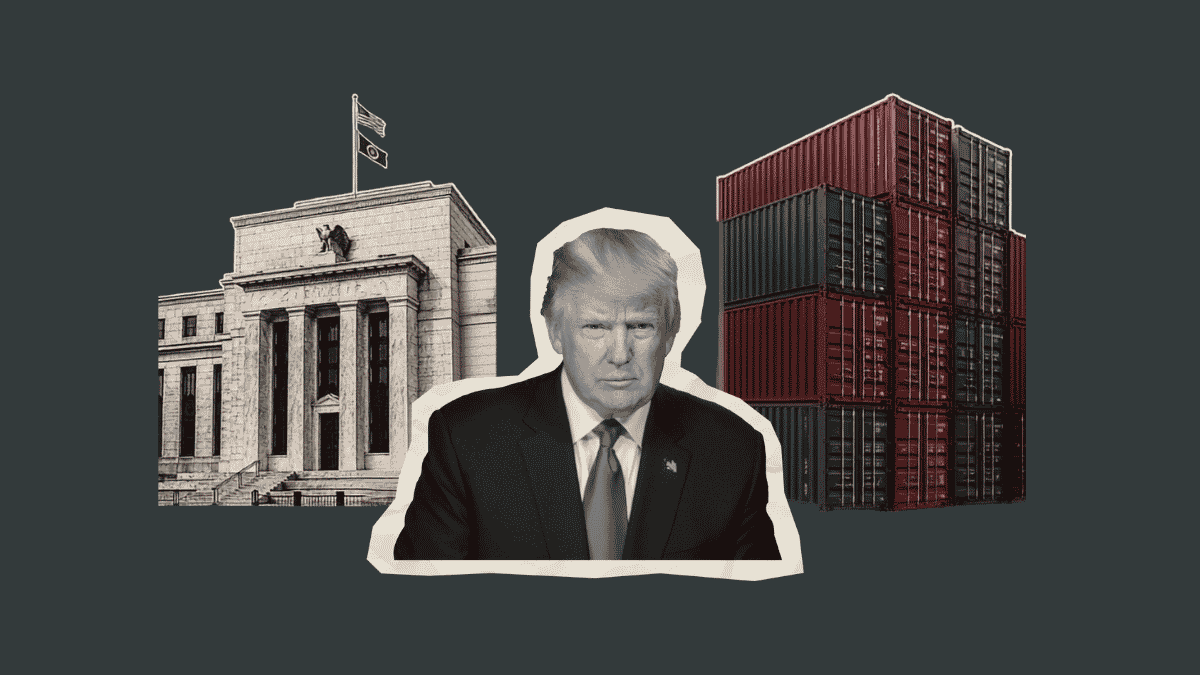
President Donald Trump reignited his contentious relationship with the Federal Reserve on Friday, issuing a stark ultimatum: slash interest rates or face a drastic trade embargo against countries with whom the United States maintains a trade deficit. The declaration, made via a post on his social media platform Truth Social, signals a significant escalation in the President’s ongoing efforts to influence monetary policy and leverage trade as a punitive tool.
The President’s demand follows the release of a robust August jobs report, which indicated that employers added 162,000 jobs. This figure significantly surpassed economists’ forecasts, which had predicted a gain of approximately 56,000 jobs. The unemployment rate remained steady at 4.1%. Despite this seemingly positive economic indicator, market reactions were muted, with the 10-year Treasury yield and mortgage rates exhibiting minimal movement. This lack of significant market response appears to have further fueled President Trump’s frustration.
In his Truth Social post, Trump directly addressed Fed Chair Kevin Warsh and the central bank’s board, urging them to "get smart" and reduce borrowing costs. He articulated a rationale that a strong U.S. economy should naturally correlate with lower interest rates, evoking a past era where, in his view, the U.S. enjoyed the "LOWEST RATE of any country in the World."
The most striking element of his statement, however, was the direct linkage between his call for lower rates and his trade policy. Trump declared, "LOWER THE RATE OR I’LL STOP TRADING WITH COUNTRIES WITH WHICH WE HAVE A DEFICIT." He further asserted that this move would be a more effective strategy than imposing tariffs, referencing a U.S. Supreme Court decision that he believes grants the President broad authority to implement such trade restrictions. This assertion draws upon a Supreme Court ruling, albeit one that primarily addressed the President’s authority regarding tariffs, not necessarily a unilateral halt to all trade. The White House, according to Trump, acknowledges his "absolute right" to take such actions.
This aggressive stance by the President comes in the wake of the annual Jackson Hole Economic Policy Symposium, a gathering of central bankers and economists. At the symposium, Fed Chair Kevin Warsh adopted a notably hawkish tone, emphasizing persistent inflation and attributing 65 consecutive months of elevated price levels to the Federal Reserve’s policy decisions. Warsh’s remarks appeared to influence market sentiment, as the implied probability of a 25-basis-point rate hike at the Fed’s September meeting increased significantly. According to CME Group’s Fed Watch tool, this probability rose from 35.4% to 55.7% following Warsh’s comments. By Friday, this probability had further climbed to 58.4%.
Global Economic Landscape and Trade Tensions
The implications of President Trump’s threat to halt trade with deficit nations are far-reaching. The U.S. engages in trade deficits with a considerable number of countries, including many of its most significant economic partners. This threat arrives at a time when other major economies are grappling with their own inflationary pressures and are implementing or considering monetary policy tightening measures.
In late August, the U.S. imposed 50% tariffs on approximately $20 billion worth of Canadian goods following the collapse of trade negotiations. Canada has vowed to retaliate with its own matching tariffs, set to begin in September. This move underscores the escalating trade friction and the potential for retaliatory measures to disrupt global supply chains and economic stability.
The President’s pronouncements also contrast with global monetary policy trends. A poll of economists conducted by Reuters on September 3rd indicated that the European Central Bank (ECB) was expected to implement its second and final interest rate hike on September 10th. This would mark the ECB’s shortest hiking campaign in 15 years, reflecting a broader effort among central banks to combat inflation.
Furthermore, reports from The New York Times and CNBC highlighted significant shifts in bond markets. The 10-year Japanese government bond yield surpassed 3% for the first time since 1996, while the German 10-year bond yield reached 3.33%, a level not seen since 2011. These movements suggest that central banks in these regions are also under pressure to adjust their monetary policies, potentially in response to inflation or to shore up their currencies against economic headwinds. The Bank of Japan, for instance, was reportedly debating a rate hike in September.
A History of Presidential Pressure on the Federal Reserve
President Trump’s latest intervention marks a renewed and intensified effort to exert pressure on the Federal Reserve for lower interest rates. This campaign has been a consistent theme throughout his presidency, particularly during the tenure of former Fed Chair Jerome Powell, whom Trump repeatedly criticized and even threatened with dismissal.
The pressure campaign on Powell began shortly after Trump assumed office in early 2025. In July of that year, Trump publicly stated his intention to "likely" fire Powell, a move that would have been unprecedented and potentially destabilizing for financial markets. While he later walked back the direct threat of termination, he reportedly explored grounds for removing Powell "for cause," citing, among other reasons, alleged cost overruns in renovations at the Federal Reserve headquarters.
The administration’s efforts to influence the Fed extended beyond public statements and rhetoric. In January of the following year, the Department of Justice served the Federal Reserve with grand jury subpoenas related to former Fed Chair Powell’s Congressional testimony from the previous summer. This probe, which hinted at potential criminal indictment, was later dropped.
President Trump also directly targeted individual Fed governors. In August 2025, he attempted to remove Fed Governor Lisa Cook, citing allegations of mortgage fraud. Governor Cook subsequently filed a lawsuit, and a federal judge ruled that the President had not demonstrated sufficient cause for her removal. This ruling was upheld by a federal appeals court, and the case was subsequently appealed to the Supreme Court. In late June of that year, a Supreme Court ruling placed limitations on the President’s ability to terminate Fed governors without providing adequate notice and an opportunity for them to respond to allegations.
The internal composition of the Federal Reserve’s Board of Governors has also seen changes during this period. Fed Governor Adriana Kugler announced her resignation in August 2025, and Fed Governor Raphael Bostic indicated in November 2025 that he would retire upon the conclusion of his term in February. These departures, occurring amidst heightened political pressure on the central bank, add another layer of complexity to the evolving dynamics of U.S. monetary policy.
Analysis of Implications
President Trump’s demand for lower interest rates, coupled with his threat to halt trade with deficit nations, presents a complex set of potential economic and geopolitical ramifications.
Economic Implications:
- Interest Rate Policy: The Federal Reserve operates under a mandate to maintain price stability and maximize employment, with its independence from political pressure considered crucial for effective monetary policy. Direct presidential demands to alter interest rates, especially under threat of trade sanctions, undermine this independence. If the Fed were to succumb to such pressure, it could lead to policies that are not in the best long-term interest of the U.S. economy, potentially fueling inflation or creating asset bubbles.
- Trade and Global Markets: A halt in trade with countries with which the U.S. runs a deficit would be a seismic event. Such a move would disrupt global supply chains, potentially leading to shortages of goods, increased prices for consumers, and significant economic repercussions for both the U.S. and its trading partners. It could also trigger retaliatory measures, escalating into a full-blown trade war. The interconnectedness of the global economy means that such a drastic action would likely have widespread and unpredictable consequences.
- Currency Valuation: Lower interest rates can, in some circumstances, lead to a weaker U.S. dollar. While this could theoretically make U.S. exports more competitive and reduce the trade deficit, it can also increase the cost of imports, contributing to inflation. The interplay between interest rate policy and currency valuation is multifaceted.
Geopolitical Implications:
- International Relations: The threat to unilaterally halt trade would severely damage diplomatic relations with numerous countries, including key allies and trading partners. It could lead to a fracturing of international economic cooperation and a move towards regional trading blocs.
- Credibility of Institutions: The President’s sustained attacks on the Federal Reserve and his attempts to exert direct control over its monetary policy decisions erode the credibility of independent institutions. This can have long-term consequences for investor confidence and economic stability.
- Legal and Constitutional Challenges: The President’s assertion of authority to halt trade based on Supreme Court interpretations of tariff powers would likely face significant legal and constitutional challenges, given the separation of powers between the executive and legislative branches, and the established mechanisms for trade policy.
In conclusion, President Trump’s latest pronouncements signal a significant confrontation between the executive branch and the Federal Reserve, with potentially profound implications for both domestic economic policy and international trade relations. The Fed’s response, and the broader reactions from global economic actors, will be closely watched in the coming weeks and months. The economic landscape is already dynamic, with inflationary pressures and geopolitical uncertainties shaping monetary policy decisions worldwide, making this period particularly sensitive to such high-stakes pronouncements.