Candice Horbacz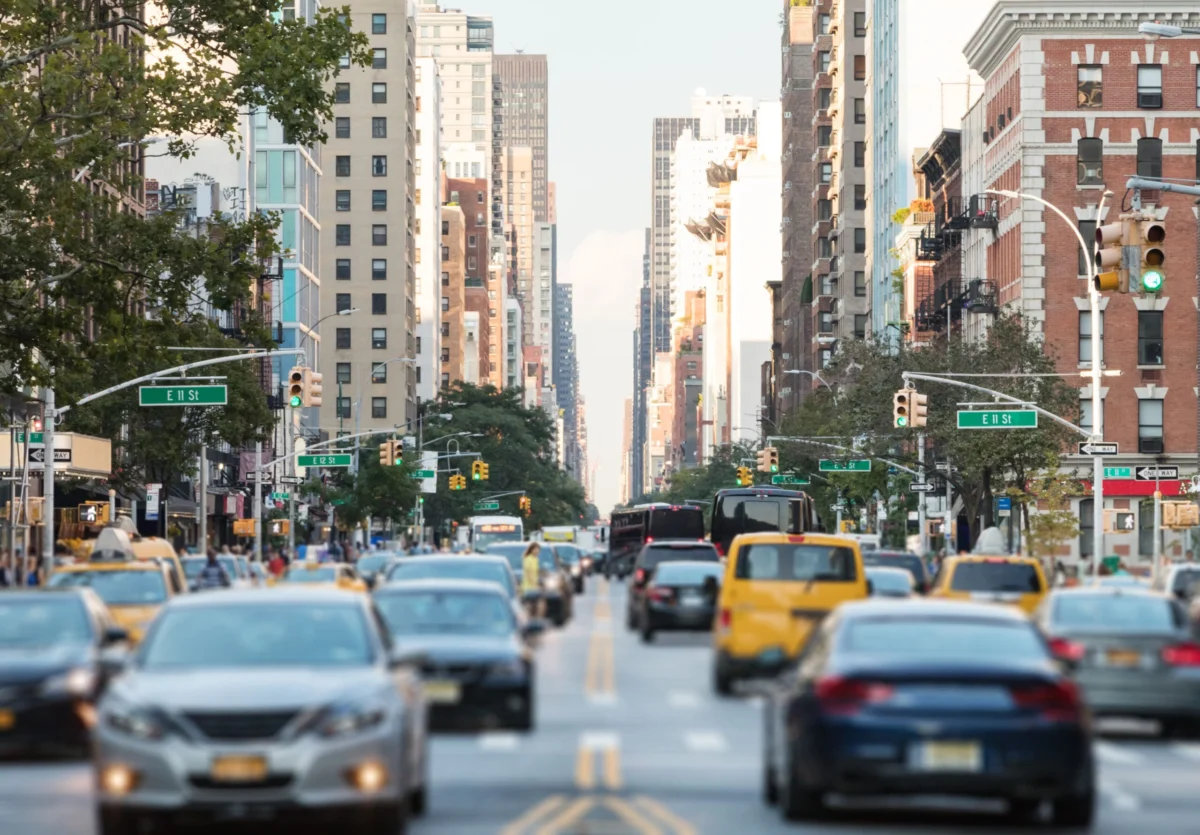
New York City, long synonymous with iconic landmarks and an unparalleled cultural tapestry, has also earned an unenviable reputation for its traffic gridlock. In 2024, the city experienced the dubious distinction of having the worst traffic congestion in the United States, with the average driver enduring a staggering 102 hours of delays over the year. This pervasive congestion was not merely an inconvenience; it represented a critical symptom of a deeper, systemic challenge facing the metropolis: the precarious financial health of its vital public transportation network. The Metropolitan Transportation Authority (MTA), the sprawling entity responsible for New York’s subways and commuter rail, faced an alarming deficit of $8.3 billion in the same year. This convergence of factors created a self-reinforcing negative feedback loop: as the MTA struggled to maintain service quality amidst its fiscal woes, frustrated commuters increasingly abandoned public transit for personal vehicles, further exacerbating traffic, depressing MTA revenues, and intensifying delays for those still driving. In a bold and unprecedented move for an American city, New York City launched its congestion pricing program in January 2025, a pioneering initiative designed to break this cycle by simultaneously alleviating traffic, incentivizing public transit use, and generating much-needed revenue for the MTA’s capital improvements.
The Chronic Crisis of Congestion and Public Transit Funding
For decades, New York City’s streets have grappled with an ever-increasing volume of vehicles, leading to chronic congestion that has tangible economic, environmental, and social costs. Beyond the personal frustration of lost time, traffic jams impede commerce, delay emergency services, and contribute significantly to air and noise pollution. Studies have consistently shown that the economic cost of congestion in major U.S. cities runs into billions of dollars annually, encompassing lost productivity, increased fuel consumption, and higher freight costs. New York, with its exceptionally dense urban core and vital economic engine in Manhattan, felt these impacts acutely.
Simultaneously, the MTA, the lifeblood of the region’s transit, found itself in a deepening financial quagmire. Operating the largest public transportation system in North America, with an average weekday ridership of millions, the MTA relies heavily on farebox revenue, state and local subsidies, and federal funding. However, shifting demographic patterns, deferred maintenance, and particularly the dramatic drop in ridership following the COVID-19 pandemic, severely strained its budget. Even as ridership slowly recovered, it remained below pre-pandemic levels, leaving a significant gap in funding for essential upgrades, accessibility improvements, and operational costs. The MTA’s extensive capital plan, critical for maintaining and modernizing its aging infrastructure—much of which dates back over a century—faced a multi-billion-dollar shortfall, threatening the very reliability and future viability of the system. This dire situation made innovative funding solutions not just desirable, but imperative.
A Global Inspiration: The Precedent of Urban Congestion Charges
The concept of charging drivers for access to congested urban areas is not novel. New York City’s congestion pricing program draws directly from the successful models implemented in leading global cities such as Singapore, London, and Milan. These cities pioneered the use of electronic road pricing to manage traffic demand and fund public transit, offering invaluable lessons in implementation, technology, and public acceptance.
- Singapore, a pioneer in the field, introduced its Area Licensing Scheme in 1975, evolving it into a sophisticated Electronic Road Pricing (ERP) system in 1998. Its success in managing traffic flow and reducing congestion served as an early blueprint for other cities.
- London launched its Congestion Charge in 2003, covering a central zone and imposing a daily fee on most vehicles. The program demonstrably reduced traffic volumes, improved bus speeds, and generated substantial revenue for public transport improvements, despite initial public apprehension and ongoing debates.
- Milan’s "Area C" program, implemented in 2012, followed a similar model, targeting pollution and congestion in its historic city center. Like London, it has shown positive results in reducing traffic and improving air quality.
These international precedents provided a robust evidence base for New York City’s planners, demonstrating that such a system could effectively achieve its twin goals of congestion reduction and revenue generation, provided it was meticulously planned and transparently implemented.
The Road to Implementation: A Decade-Long Battle
The idea of congestion pricing in New York City is not new. It was first seriously proposed by Mayor Michael Bloomberg in 2007, aiming to reduce traffic and fund transit, but it failed to gain traction in the state legislature amidst public skepticism and political opposition. The proposal was revived with renewed urgency in the late 2010s as the MTA’s financial crisis deepened and traffic worsened.
Key milestones in its arduous journey to implementation include:
- 2017-2019: Advocacy groups, led by the "Fix the MTA" campaign, pushed aggressively for congestion pricing. Governor Andrew Cuomo became a vocal proponent, recognizing its potential to address both traffic and transit funding.
- April 2019: The New York State Legislature passed a bill authorizing the creation of a congestion pricing program, making New York the first U.S. city to adopt such a measure. The legislation mandated the MTA to develop the specific framework and secure federal approvals.
- 2020-2023: The process faced significant delays due to the COVID-19 pandemic and a complex federal environmental review process. The Federal Highway Administration (FHWA) required a thorough Environmental Assessment, which involved extensive studies on potential impacts on traffic patterns, air quality, and communities, particularly those bordering the Congestion Relief Zone (CRZ). This lengthy review involved numerous public hearings and consultations.
- June 2023: After years of environmental analysis and public outreach, federal regulators granted final approval, clearing the last major hurdle for the program to move forward.
- December 2024: The MTA finalized the fee structure and operational details after extensive public comment periods and board approvals.
- January 2025: The Congestion Relief Zone (CRZ) Tolling officially commenced operations.
The CRZ encompasses Manhattan south of 60th Street, excluding the West Side Highway and the FDR Drive. The system was designed to be as non-disruptive as possible, utilizing existing electronic toll collection technology. Entries into the CRZ are tracked via E-ZPass, the widely used electronic toll collection system across the Northeast, supplemented by a network of over 1,400 license plate scanners. This automated compliance minimizes traffic disruption and ensures efficient fee collection.
The Financial and Philosophical Underpinnings of the Charge
The $9 daily fee for most passenger vehicles entering the CRZ serves a dual purpose, rooted in sound economic principles:
- User Fee: Like other road use charges, the toll acts as a user fee. Driving within the city’s infrastructure contributes to wear and tear on roads, bridges, and tunnels. The revenue generated partially offsets the costs of maintaining and improving this critical infrastructure, ensuring that those who directly benefit from the road network contribute to its upkeep.
- Pigouvian Tax: More fundamentally, the charge functions as a Pigouvian tax, a levy designed to correct negative externalities. Driving in congested areas imposes costs on others in the form of increased traffic, longer travel times, and elevated pollution. By charging drivers a fee for these external harms, the program forces them to internalize these "hidden" costs into their decision-making. This economic incentive encourages drivers to consider alternative modes of transportation, carpooling, or adjusting their travel times, ultimately leading to a reduction in overall congestion and its associated negative impacts.
The fee structure is tiered to reflect varying impacts and vehicle types:
- Passenger Vehicles: $9 per entrance, capped at once per day.
- Large Trucks and Sightseeing Buses: Charged the highest, at $21.60 per entrance, reflecting their greater contribution to congestion and road wear.
- Motorcycles: Pay $4.50.
- Taxis: Charged $.75 per entrance, without a daily cap, acknowledging their role in public transportation but also their contribution to frequent zone entries.
- Rideshare Vehicles: Charged $1.50 per entrance, also without a daily cap.
Fees also vary by time of day, implementing a demand-responsive pricing strategy. During peak periods—5 a.m. to 9 p.m. on weekdays and 9 a.m. to 9 p.m. on weekends—drivers pay the full toll. An off-peak discount of 75 percent is applied during other hours, encouraging drivers with flexibility to shift their travel to less congested times. Exemptions were also built into the system for emergency vehicles, certain government vehicles, and qualifying low-income residents within the CRZ.
Initial Impacts: A Glimpse of Success
The MTA’s First Evaluation Report, released shortly after the program’s initial year of operation in 2025, presented compelling evidence of its early success. Comparing data from 2024 to 2025, the report highlighted significant shifts in transportation behavior and urban efficiency:
- Reduced CRZ Traffic: Vehicle entries into the Congestion Relief Zone decreased by a remarkable 11 percent, indicating a substantial diversion of traffic away from the city’s most congested core.
- Increased Transit Ridership: Mirroring the drop in car entries, public transit ridership saw a corresponding increase of 9 percent. This suggests that a significant portion of former drivers opted for subways, buses, and commuter rail, validating a key objective of the program.
- Improved Vehicle Speeds: Average vehicle speeds within the CRZ increased by 4.6 percent, translating into quicker commutes for essential services and those still needing to drive. More dramatically, speeds on crossings into Manhattan—key arteries like bridges and tunnels—saw an impressive 23 percent increase, significantly easing bottlenecks.
- Faster Emergency Response: Perhaps one of the most critical and life-saving impacts was the reduction in emergency medical service (EMS) response times. Estimates suggest a 5-6 percent improvement, translating to 63 to 70 seconds saved on average. In medical emergencies where "time is tissue," such improvements can be the difference between life and death.
- Traffic Reallocation: The pricing mechanism successfully reallocated traffic to less congested times. The hours immediately before and after the peak toll period were the only times that saw an increase in vehicle travel in 2025 compared to 2024, indicating that some drivers adjusted their schedules to take advantage of off-peak discounts.
- Substantial Revenue Generation: During its first year, the Congestion Relief Zone Tolling program recorded an average monthly revenue of $55 million. This consistent funding stream allowed the MTA to secure bonding for a substantial $15 billion towards its ambitious capital plan, essential for modernizing its aging infrastructure, improving accessibility, and expanding capacity.
Beyond these quantitative measures, the program also yielded qualitative benefits, including a noticeable reduction in ambient noise and, presumably, an improvement in local air quality due to fewer idling vehicles.
Challenges and the Ongoing Legal Battle
Despite its initial successes, New York City’s congestion pricing journey has not been without turbulence. Shortly after its launch, the tolling scheme faced significant federal legal challenges. In February 2025, Secretary of Transportation Sean Duffy, citing concerns over potential environmental impacts on communities outside the CRZ and alleging violations of federal restrictions, attempted to withdraw federal approval and funding for the program. This culminated in a high-profile lawsuit, with the Secretary asserting that the program had not adequately addressed all federal requirements.
The legal battle is ongoing. While the court has thus far issued orders rejecting federal attempts to halt the program, allowing it to continue operating, the case is currently awaiting a hearing by the 2nd Circuit Court of Appeals. The outcome of this lawsuit could set a crucial precedent for future urban transportation policies across the nation, making it a closely watched development.
Beyond the federal lawsuit, the program also faced criticism from various quarters. Some suburban commuters decried the additional cost as a regressive tax, arguing it disproportionately burdened lower-income individuals who might have fewer public transit alternatives. Businesses, particularly those reliant on deliveries, expressed concerns about increased operational costs, though proponents argued that faster delivery times due to reduced congestion could offset some of these expenses. Community groups in areas adjacent to the CRZ voiced worries about "traffic spillover," fearing that drivers would reroute to avoid the toll, increasing congestion and pollution in their neighborhoods. The MTA and city officials have largely dismissed these claims, citing the comprehensive environmental review that found no significant adverse impacts and highlighting ongoing monitoring efforts.
Broader Implications and the Future of Urban Mobility
New York City’s congestion pricing initiative represents a watershed moment for urban policy in the United States. Its early results strongly suggest that it is an economically efficient mechanism that simultaneously reduces traffic, generates essential revenue for public transit, and improves quality of life. The success in New York has already inspired proposals for similar congestion tolling programs in other major U.S. cities, including Los Angeles and Washington, D.C., both of which face their own severe congestion challenges and are exploring innovative solutions.
However, the transferability of New York’s success remains a complex question. The "Big Apple" possesses a unique urban profile that differentiates it from nearly every other American city:
- Nation’s Largest Population and Density: Its sheer population size and unparalleled urban density create a critical mass of transit users and justify the extensive public transit network.
- Severe Traffic Congestion: NYC’s congestion levels are extreme, providing a clear and urgent problem for the program to solve.
- Sprawling Mass Transit System: Critically, New York boasts the nation’s largest and most comprehensive mass transit system, offering robust and viable alternatives to driving for a vast segment of the population. This pre-existing infrastructure is a key enabler for congestion pricing.
- Dense Concentration of Jobs: Lower and Midtown Manhattan represent one of the densest concentrations of jobs globally, making the CRZ a primary destination for commuters, many of whom are well-served by public transit.
No other American city fully matches this unique combination of factors. Many U.S. cities, particularly in the post-pandemic "work-from-home" era, are actively struggling to attract businesses and workers back into their downtowns. Implementing congestion pricing in such contexts, especially in cities with less developed public transit infrastructure or more car-centric cultures, could potentially be counterproductive, deterring economic activity without offering sufficient alternatives.
Nevertheless, New York’s positive experience provides invaluable real-world data and a compelling case study. It demonstrates that with careful planning, robust public transit alternatives, and political will, congestion pricing can be a powerful tool for urban transformation. As cities worldwide grapple with climate change, urbanization, and the demands of modern mobility, New York City’s pioneering venture stands as a crucial experiment, offering lessons that will undoubtedly shape the future of urban transportation policy for decades to come. The ongoing debates and legal challenges will further refine the understanding of this complex policy, but for now, New York has definitively shifted the paradigm for urban mobility in America.