Candice Horbacz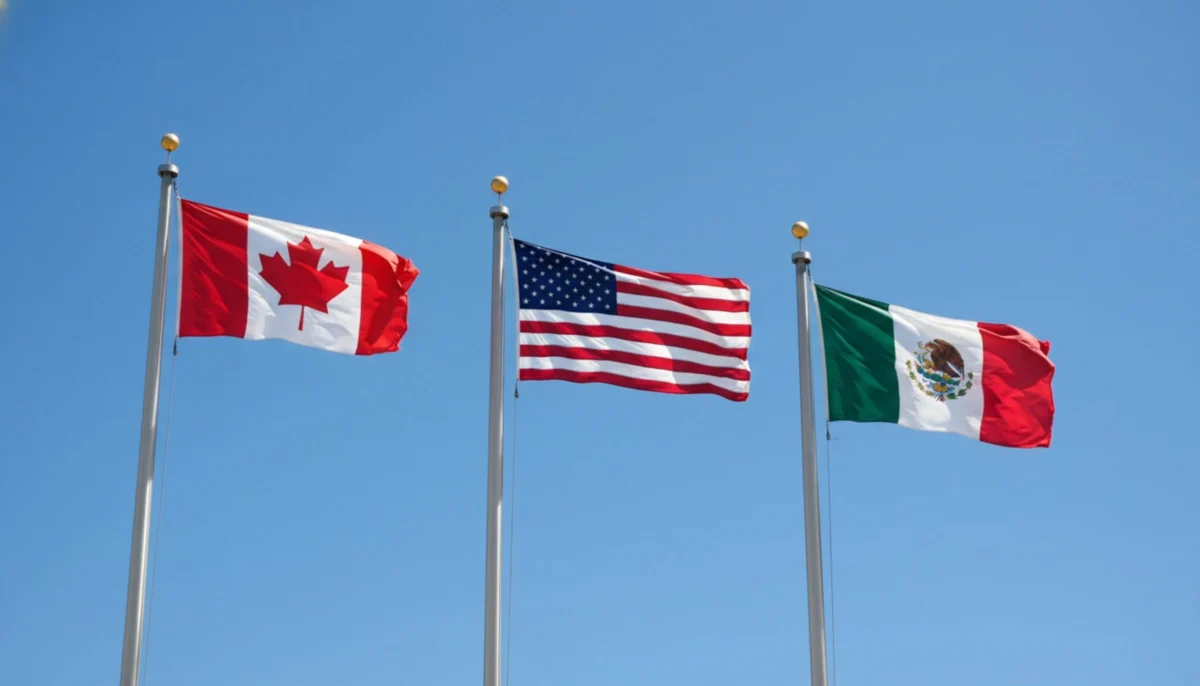
As the United States, Mexico, and Canada approach the first formal review deadline for the US-Mexico-Canada Agreement (USMCA) this July, policymakers face a straightforward choice that could define the economic landscape of North America for years to come. The decision is stark: either extend the agreement and preserve at least some semblance of stability in North American trade, or open the door to years of economic uncertainty, potentially higher tariffs, and a fundamental reordering of continental supply chains. Former President Donald Trump has already indicated a preference against a clean extension, a stance that, given his administration’s past track record on trade, may come as no surprise to many observers. This decision threatens to allow the bloc of countries to enter a prolonged period of annual reviews, renegotiations, and, possibly, a disruptive shift towards bilateral trade deals, unraveling the integrated framework that has underpinned regional prosperity for decades. No matter what theater may follow this critical decision, a failure to extend the USMCA in its current or a slightly modified form would be a significant misstep, risking trillions in trade and millions of jobs across all three nations. Despite existing disagreements and areas ripe for improvement, the USMCA deserves to remain at the center of the three nations’ intertwined economic relationship, providing a necessary anchor in an increasingly volatile global economy.
The Looming Deadline and Political Stakes
The upcoming July 1, 2026, deadline is not merely a bureaucratic checkpoint; it is the first activation of the USMCA’s "sunset clause," a controversial provision that mandates a joint review six years after the agreement’s entry into force on July 1, 2020. This clause requires the three parties to affirm their desire to continue the agreement for another 16-year term. If all parties agree, the agreement is extended, and another review is scheduled for six years later. However, if any party signals a desire not to extend, the agreement would then enter a 10-year winding-down period, providing a decade for the nations to negotiate a new arrangement or revert to World Trade Organization (WTO) most-favored-nation tariffs, which would be significantly higher for many goods. The political stakes are exceptionally high, particularly in the United States, where trade policy has become a potent electoral issue. Former President Trump’s stated inclination against a "clean extension" suggests a preference for leveraging the review process to extract concessions, potentially in sectors like automotive manufacturing, agriculture, or digital trade. This approach, while appealing to certain segments of his political base, introduces considerable unpredictability into an economic relationship that thrives on stability.
From NAFTA to USMCA: A Brief History of North American Trade
Understanding the current juncture requires a look back at the evolution of North American trade agreements. The predecessor to USMCA, the North American Free Trade Agreement (NAFTA), came into effect on January 1, 1994. NAFTA was groundbreaking, creating one of the world’s largest free trade areas by eliminating tariffs on the vast majority of goods traded between the U.S., Canada, and Mexico. Its proponents argued it would stimulate economic growth, foster cross-border investment, and create jobs through increased trade and specialization. Indeed, NAFTA led to a dramatic increase in trilateral trade, which soared from approximately $290 billion in 1993 to over $1.2 trillion by 2019, creating deeply integrated supply chains, particularly in the automotive and manufacturing sectors.
However, NAFTA also faced significant criticism. In the United States, labor unions and some manufacturing sectors blamed the agreement for job losses, arguing that companies moved production to Mexico to take advantage of lower wages and less stringent environmental regulations. Concerns also grew over perceived unfair trade practices and an imbalance in benefits among the three nations. These criticisms became a central theme of Donald Trump’s 2016 presidential campaign, where he famously labeled NAFTA "the worst trade deal in history" and pledged to either renegotiate or withdraw from it.
The renegotiation process, initiated in 2017, was contentious and protracted. After intense negotiations, often marked by threats of tariffs and withdrawal, the three nations reached an agreement on the USMCA in late 2018, which was ratified by all three countries and entered into force on July 1, 2020. The USMCA retained many core elements of NAFTA but introduced significant updates and modifications. Key changes included:
- Automotive Rules of Origin: A major overhaul requiring a higher percentage of vehicle content (75% from 62.5%) to be produced in North America to qualify for tariff-free treatment, along with a new labor value content requirement (40-45% of auto content must be made by workers earning at least $16 per hour).
- Labor Protections: Stronger and more enforceable labor provisions, including commitments to protect workers’ rights to organize and bargain collectively, particularly in Mexico.
- Digital Trade: New chapters addressing digital trade, data localization, and cross-border data flows, reflecting the growth of the digital economy.
- Intellectual Property: Enhanced protections for intellectual property, including longer patent terms for certain products.
- Dispute Settlement: Modifications to the dispute settlement mechanisms, though some core elements of NAFTA’s investor-state dispute settlement (ISDS) were retained or revised.
- Sunset Clause: The introduction of the controversial 16-year term with a mandatory six-year review, designed to ensure the agreement remains relevant and is periodically scrutinized.
The USMCA was hailed by its proponents as a "21st-century trade deal" that addressed many of the shortcomings of NAFTA, modernizing the agreement for contemporary economic realities. Its implementation brought a degree of stability after years of uncertainty, allowing businesses to plan and invest within a clear regulatory framework.
Key Provisions and Economic Impact of USMCA
The USMCA governs a staggering volume of trade and investment. In 2023, total goods and services trade between the U.S. and Canada reached approximately $950 billion, while trade between the U.S. and Mexico exceeded $850 billion. The trilateral trade relationship supports millions of jobs across all three countries, directly and indirectly. For instance, according to the U.S. Chamber of Commerce, trade with Canada and Mexico supports nearly 12 million American jobs.
The agreement’s impact extends far beyond simple trade volumes. It has fostered deep integration of supply chains, particularly in critical sectors like automotive, aerospace, electronics, and agriculture. The rules of origin for automobiles, for example, have incentivized significant investment in North American manufacturing. Data from the U.S. Department of Commerce indicates that foreign direct investment (FDI) from Canada and Mexico into the U.S. totals hundreds of billions of dollars, similarly, U.S. FDI into its neighbors plays a crucial role in their economies. This interconnectedness means that disruptions to the trade agreement ripple through entire industries, affecting jobs, prices, and consumer choice.
The agricultural sector is another significant beneficiary. Mexico and Canada are the largest and second-largest export markets for U.S. agricultural products, respectively. The USMCA maintains largely tariff-free access for a wide range of agricultural goods, from corn and soybeans to dairy and meat products, providing crucial stability for farmers and agribusinesses across the continent. Similarly, Canadian and Mexican agricultural producers rely heavily on access to the vast U.S. market.
The digital trade provisions are also increasingly vital. With the rapid growth of e-commerce and digital services, these provisions provide certainty for businesses operating across borders, prohibiting customs duties on electronic transmissions and ensuring the free flow of data, subject to legitimate public policy objectives.
Stakeholder Perspectives: Calls for Stability vs. Demands for Revision
The impending review has elicited a range of responses from various stakeholders across the three nations.
Business and Industry Leaders: Major business associations, manufacturing groups, and companies with integrated North American supply chains have consistently voiced strong support for a clean extension of the USMCA. They emphasize the critical need for predictability and stability in trade policy. Organizations like the U.S. Chamber of Commerce, the Business Council of Canada, and Mexico’s Consejo Coordinador Empresarial have issued statements highlighting the importance of avoiding disruption, which could lead to deferred investment, supply chain reconfigurations, and increased costs for consumers. They argue that the existing framework, while not perfect, provides a reliable foundation for cross-border commerce and investment. Any move towards renegotiation, particularly one driven by unilateral demands, would inject significant uncertainty, making long-term planning exceedingly difficult.
Agricultural Sector: Farmers and agricultural exporters in all three countries are keenly aware of the benefits of stable market access. U.S. agricultural groups, for instance, have expressed concerns that a failure to extend USMCA could jeopardize tariff-free access to their largest and second-largest export markets, potentially leading to retaliatory tariffs and significant financial losses. Canadian and Mexican agricultural sectors share similar anxieties regarding access to the U.S. market.
Labor Unions: While some labor unions might be open to renegotiations if they believe it could lead to even stronger labor protections or address specific industry concerns, there is also an understanding of the broader economic risks. The USMCA’s enhanced labor provisions were a significant win for many unions, and any process that could unravel those gains or lead to economic instability and job losses would be viewed with caution.
Government Officials (Inferred):
- United States: While former President Trump has signaled a desire to renegotiate, the broader U.S. trade policy establishment, including many within the current U.S. Trade Representative’s office, generally acknowledges the benefits of the USMCA. Any administration would weigh the potential for gains through renegotiation against the risks of economic disruption and diplomatic strain. The U.S. Congress, particularly members from states with significant trade ties to Canada and Mexico, would likely advocate for stability.
- Canada: Canadian officials, including Prime Minister Justin Trudeau and Minister of International Trade, Export Promotion, Small Business and Economic Development Mary Ng, have consistently underscored the importance of the USMCA to Canada’s economy and have expressed a strong desire for its continued stability. They would likely push for a straightforward extension, emphasizing the benefits of the integrated market.
- Mexico: Mexican leaders, including President Andrés Manuel López Obrador and his potential successors, would also prioritize the stability of the USMCA. The agreement is crucial for Mexico’s export-oriented economy and its significant manufacturing sector. Mexican officials would likely advocate for continuity and warn against actions that could destabilize foreign investment and trade flows.
The Specter of Uncertainty: Economic Implications of Non-Extension
Should the three nations fail to agree on a clean extension, or if the process devolves into protracted and contentious renegotiations, the economic implications could be severe.
- Investment Chill: The most immediate impact would be a chilling effect on foreign direct investment. Companies planning investments in North America, particularly those relying on cross-border supply chains, would likely pause or divert funds to more predictable regions. This would stifle job creation and economic growth.
- Tariff Reversion: If the agreement ultimately lapses, trade would revert to WTO most-favored-nation tariffs, significantly increasing costs for exporters and importers. For example, the average U.S. tariff on imports from Mexico and Canada could rise from near zero to 3-4%, with some sectors facing much higher rates. This would translate into higher prices for consumers, reduced competitiveness for businesses, and potential job losses in industries unable to absorb the increased costs.
- Supply Chain Disruption: The highly integrated North American supply chains, particularly in the automotive industry, would face immense pressure. Companies might be forced to restructure their operations, potentially leading to reshoring of some production, nearshoring to other regions, or outright closures, all of which are costly and disruptive. The intricate network of parts crossing borders multiple times during production would become economically unviable under higher tariffs.
- Economic Slowdown: The cumulative effect of reduced investment, higher tariffs, and supply chain disruptions could lead to a significant slowdown in economic growth across all three economies. Trade is a powerful engine of growth, and its impediment would have broad consequences.
- Diplomatic Strain: A contentious renegotiation process or a failure to extend the USMCA would inevitably strain diplomatic relations between the three close allies, potentially impacting cooperation on other critical issues such as security, immigration, and environmental protection.
The Path Forward: Diplomatic Challenges and Strategic Choices
The path ahead is fraught with diplomatic challenges. If former President Trump were to pursue his stated preference for renegotiation, it would set the stage for intense and potentially aggressive trade talks. The leverage of the "sunset clause" allows any party to threaten non-extension, forcing others to the bargaining table. However, the costs of failure are borne by all.
One potential outcome could be a limited renegotiation, focusing on specific provisions that one or more parties believe need updating or strengthening, without unraveling the entire agreement. This would require careful diplomacy and a willingness to compromise from all sides. Another scenario, as suggested by Trump, could involve a shift towards bilateral deals. While bilateral agreements can sometimes be more tailored, they would dismantle the regional integration that has benefited North America for decades, leading to a complex patchwork of rules and potentially less efficient trade flows.
Ultimately, the choice facing policymakers this July is a strategic one, balancing immediate political considerations with long-term economic stability. The USMCA, while imperfect, represents a foundational pillar of North American economic prosperity. Its clean extension would signal confidence in regional cooperation, foster continued investment, and provide much-needed predictability for businesses and workers. Conversely, allowing it to lapse or subjecting it to prolonged, uncertain renegotiation risks undermining decades of economic integration and unleashing a wave of instability that would affect millions across the continent. The decision will not only shape the future of North American trade but also serve as a litmus test for the enduring commitment to multilateral cooperation in an increasingly protectionist global environment.